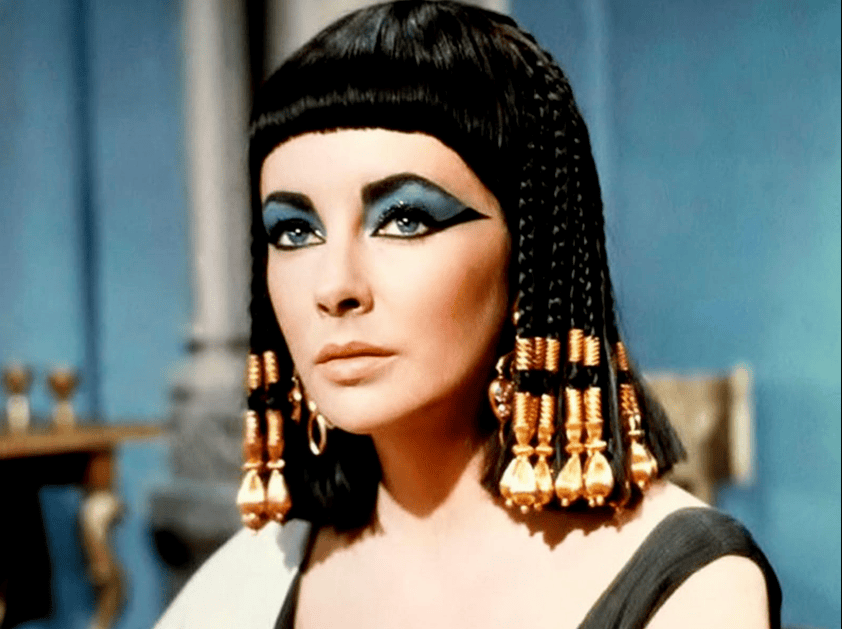
Get the Look: The Cleopatra Effect (1963): How Elizabeth Taylor’s Cat Eye Went Global, Plus Tips to Re-Create from her Make-up Artist

When Cleopatra premiered in 1963, the film would be known for more than the story of Cleopatra, for a few reasons, one of which is the cat-eye hits the global stage which it wasn’t something audiences were expecting. What audiences were expecting upon watching the premiere of Cleopatra was a spectacle that included the sets, the jewels, the scandalous budget, the romance that nearly toppled a studio. What they didn’t expect was a beauty revolution that in the process of making, that would not only make a long-lasting impression, such impact. Elizabeth Taylor’s Cleopatra didn’t just revive ancient glamour; she launched the most influential eyeliner trend of the 20th century.

The cat eye existed before Taylor, it was however, Cleopatra that made it global.

The Moment: 
A New Kind of Cinematic Beauty

By the early 1960s, Elizabeth Taylor was already a beauty icon with her violet eyes, double lashes and a softly elongated liner that had become her signature. But Cleopatra demanded something bigger, bolder, and more architectural.

Elizabeth Taylor’s primary make-up artist for Cleopatra, Alberto de Rossi designed a look that fused with ancient Egyptian motifs, 1960s graphic eyeliner and Taylor’s naturally almond‑shaped eyes.

The result was a hybrid style that felt both historical and futuristic. A cat eye sharpened into a cultural symbol.

This became more than a make-up look or even a trend; it was iconic!

The Extended Wing

A dramatic, upward‑sweeping line that stretched far beyond the outer corner, lifting the entire face.

The Floating Crease Line
A bold, graphic stripe drawn above the natural crease, a technique almost un-heard of in mainstream beauty at the time.

The Lower‑Lid Emphasis
A thick, kohl‑inspired line along the lower lashes, echoing ancient Egyptian art.

The Colour Story
Golds, lapis blues, emerald greens, shades pulled from ancient Egyptian murals and the make-up look worn by hers truly, Cleopatra, the last Pharaoh of Egypt.

The Global Shockwave: 
When the Cat Eye Became a Phenomenon

After Cleopatra hit theatres, the audience instantly fell in love with this eye make-up look, the effect was immediate.

Beauty Counters Sold-Out of Eyeliner
Revlon, Max Factor, and Helena Rubinstein all of whom reported surges in liquid liner sales despite Elizabeth Taylor had not worn liquid liner to curate her cat-eye look, she opted for kohl pencils. Nonetheless people re-created Taylor’s cat-eye with liquid liner.

Today make-up artists will use either gel liner or cake liner as opposed to liquid liner. 

Magazines Flooded With Tutorials
Vogue, Harper’s Bazaar, and Cosmopolitan published step‑by‑step guides on “How to Get Cleopatra Eyes.”

Teenagers Adopted the Look Overnight
The graphic cat eye became a staple of 1960s youth culture from London’s Mod scene to American high‑school yearbooks.

Hollywood Followed
Sophia Loren, Brigitte Bardot, and Diana Ross all adopted Cleopatra‑inspired liner variations.

While Taylor influence beauty. She also reset it.

The Editorial Shift: 
Avedon, Penn & the Cleopatra Aesthetic

The Cleopatra Effect didn’t stop at make-up, it transformed fashion photography.

Irving Penn
Used stark, sculptural lighting to emphasize the graphic liner, treating the eye as a geometric focal point.

Richard Avedon
Captured movement and drama, using Cleopatra‑inspired beauty to create some of the decade’s most iconic portraits.

The 1960s editorial landscape became sharper, bolder, more architectural, a direct echo of Taylor’s Cleopatra film.

The Legacy: 
Why the Cleopatra Cat Eye Still Reigns

Sixty years later, the Cleopatra cat eye remains one of the most enduring beauty signatures in the world.

The cat-eye eye make-up look has shaped:

  • 1970s disco glamour.
  • 1990s supermodel beauty.
  • 2000s red‑carpet looks.
  • today’s graphic liner trends.

Because the Cleopatra Effect wasn’t just a trend; it was a global beauty trend that became iconic.

I’m Stacey Hobbs, thanks for reading. Until next time!
do you feel fabulous today?
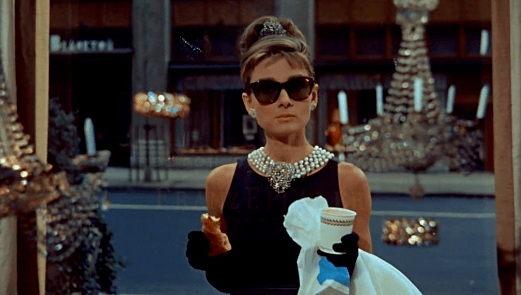
The Tiffany Dress: The Little Black Dress That Became a Legend

When Audrey Hepburn stepped out of that New York taxi in the opening scene of Breakfast at Tiffany’s (1961), she wasn’t just wearing a dress — she was wearing a moment that would define 20th‑century fashion. The Tiffany Dress, designed by Hubert de Givenchy, is arguably the most famous little black dress ever created.

What makes it extraordinary is its simplicity. A matte black satin, cut with precision, the dress skimmed Audrey’s frame without a single unnecessary detail. No embellishment. No ornamentation. Just pure, distilled elegance.

Givenchy understood Audrey’s silhouette better than anyone. He elongated her lines, emphasized her swan‑like neck and created a shape that felt modern, minimal and impossibly chic. Paired with opera gloves, oversized sunglasses and a cascade of pearls the look became instantly iconic.

The Tiffany Dress became a cultural reset. It redefined the LBD, elevated minimalism to luxury and cemented Audrey Hepburn as the eternal muse of understated glamour.

More than sixty years later, designers still reference it, stylists still study it and audiences still feel its magic. It remains the dress that turned a simple breakfast scene into fashion history.

I’m Stacey Hobbs, thanks for reading Face by Stace! Until next time.
do you feel fabulous today?

The Women Who Inspired the Scandal Collection

This isn’t Dior’s New Look — however the Parisian women preferred to forget.

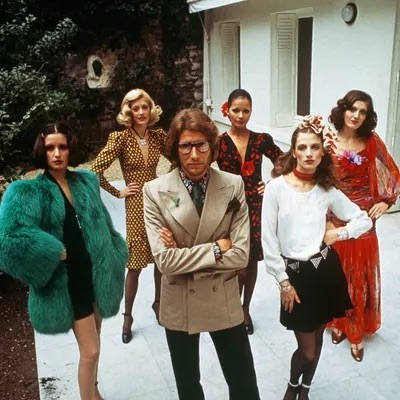
While the majority of designers in 1971 romanticized the past, Dior’s nipped waists, Balenciaga’s sculptural purity, the soft nostalgia of the 1950s — YSL chose to do the opposite. He reached back to the darkest most un-comfortable corner of French memory: occupied Paris in the 1940s.

Not the patriotic version. 
Not the Resistance myth. 
Not the elegant silhouette of Dior’s post-war revival.

YSL looked at the women who survived the war by any means necessary — the Parisian ladies tried to not discuss.

Yves Saint Laurent developed the inspiration for his Scandal Collection, with

  • platform shoes worn by nightclub dancers and black‑market couriers.
  • square, padded shouldersborrowed from men’s jackets and re-purposed by women who had to be tough.
  • tight skirts that clung to the body with a kind of defiant sexuality.
  • fox‑fur stoles that signaled glamour purchased in the shadows.
  • exaggerated make-up — red lips, rouged cheeks, penciled brows — the armor of women who lived by their wits.
  • the gritty glamour of survival not the polished elegance of couture.

These were not Dior’s women. These were women who lived through hunger, fear, scarcity and moral ambiguity — and still found ways to be glamorous.

YSL didn’t set out to design nostalgia. He was instead designing memory — the kind Paris didn’t want to face. Wasn’t ready to face. Wounds were still raw. Re-visiting those wounds the Parisian ladies, the fashion world did not want to do. Parisian ladies and the fashion world wanted to move forward not backwards. 

It was a portrait of survival as opposed to romance. A mirror held up to a past the fashion world preferred to forget. The French would react in a situation like this one by saying, “Mon Dieu!” Upon witnessing YSL’s 1971 collection as it hit the scene for Paris Fashion Week. 

And that’s the reason Yves Saint Laurent’s 1971 collection caused a scandal.

I’m Stacey Hobbs, thanks for reading Face by Stace! Until next time. 
do you feel fabulous today?

PART VII: The Era of the Cocoon: Sculpting Modernism

When the early 1950s rolled around, Balenciaga had entered the phase that would end up defining his legacy: the era of the cocoon. This was not a trend nor a seasonal experiment. It was the culmination of everything he had learned during the war — discipline, restraint, architectural thinking — now expressed with full creative freedom. While other designers returned to spectacle, Balenciaga turned inward by refining shape itself. He began sculpting silhouettes that did not cling to the body but surrounded it instead, creating volume without weight and drama without decoration. The cocoon was his quiet revolution.

Balenciaga cocoon coat, 1957
Cocoon coat by Balenciaga, 1957
Balenciaga cocoon coat, 1951
Balenciaga cocoon coat, 1957

Aren’t these coats so classy, elegant and stylish even to this day?

The cocoon silhouette emerged from his fascination with purity of form. Instead of emphasizing the waist he dissolved it. Instead of tracing the body he would abstract it. The result was a shape that felt both protective and radical — a soft, rounded volume that enveloped the wearer. It was modernism rendered in fabric. Clients described the sensation of wearing a cocoon coat as transformative: the garment didn’t follow the body; it re-defined it. 

This era marked a profound shift in fashion. While Dior’s New Look celebrated the return of post‑war femininity with cinched waists and full skirts, Balenciaga moved in the opposite direction. He rejected the idea that beauty required exaggeration or constraint. Instead, he explored silhouettes that liberated the body from structure while simultaneously creating new architectural lines. His cocoon coats, tunics and balloon jackets were not meant to flatter in the traditional sense. They were meant to challenge the eye, improve proportion and introduce a new visual language.

Designers felt the impact immediately. Hubert de Givenchy, one of Balenciaga’s closest protégés, adopted the cocoon’s purity in his own work. Younger couturiers studied Balenciaga’s patterns with awe, un-able to understand how such simple shapes could produce such complex effects. Even Dior, who dominated the headlines, privately admitted that Balenciaga’s sculptural silhouettes represented the future. The cocoon was not just a garment; it was a manifesto.

In the cocoon era, Balenciaga’s genius became un-mistakable. He had moved beyond fashion and into architecture using fabric the way a sculptor uses clay. His silhouettes were quiet but their impact was seismic. They challenged the conventions of beauty, redefined proportion and laid the foundation for modern minimalism. Part VII marks the moment when Balenciaga’s vision becomes fully realized — when he stops responding to the world and begins transforming it.

I’m Stacey Hobbs, thanks for reading Face by Stace! Until next time.
do you feel fabulous today?

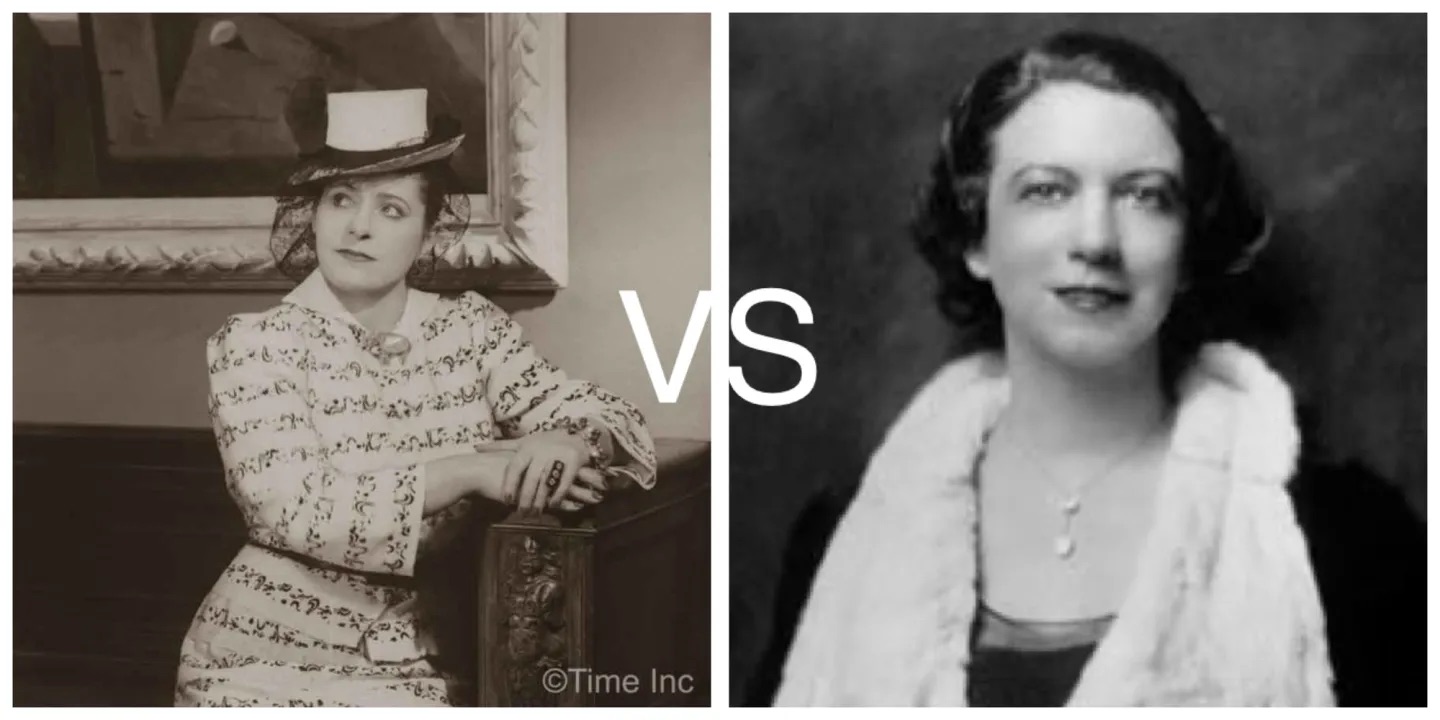
Elizabeth Arden vs. Helena Rubinstein: The Beauty War

Elizabeth Arden and Helena Rubinstein didn’t simply create beauty brands — oh, no, these ladies did much more. They engineered ideologies. Their rivalry wasn’t petty; it was architectural. Each woman built a world, a philosophy, and a clientele that reflected her deepest beliefs about beauty, class and modern womanhood.

Arden believed beauty was a discipline. A ritual. A pathway to self‑improvement.

Her salons were brought order — white, serene and aspirational. She sold the idea that beauty could be taught, refined, and perfected through routine.

Rubinstein, meanwhile, believed beauty was science. A formula. A measurable transformation.

Her clinics were laboratories of innovation, filled with chemists, dermatologists and the earliest forms of cosmetic research. She sold the idea that beauty could be engineered.

Their philosophies collided in the marketplace but more importantly, they collided in the cultural imagination. Women were choosing both a face cream, as well as choosing a worldview. A new worldview, little did the ladies of this era had realized, they were entering into the modern world of beauty.

The War for Credibility

What made their rivalry legendary wasn’t just competition — it was the battle for legitimacy. Who do you think won the battle?

Rubinstein weaponized science.

She introduced words like hormone cream, anti‑ageing and cellular rejuvenation decades before they became mainstream. Her marketing was clinical, authoritative and often intimidating.

Arden weaponized aspiration.

Arden created the “Red Door” mystique — a sanctuary where beauty felt luxurious, feminine and emotionally transformative. Elizabeth Arden marketing was elegant, romantic and socially aspirational.

Both women understood something revolutionary:

Beauty wasn’t superficial — it was psychological.

Instead of selling products, they were promoting identity.

The First Modern Beauty Industry

Their rivalry forced the beauty industry to evolve. Before Arden and Rubinstein, cosmetics were fringe — associated with actresses, dancers, and the so-called “fast women.”

After them, beauty became respectable, scientific, aspirational, modern and mainstream. 

They normalized skincare routines, salon culture and the idea that women could invest in themselves with confidence, as opposed to shame.

Their competition created:

  • the first beauty marketing campaigns
  • the first celebrity endorsements
  • the first luxury beauty salons
  • the first scientific skincare labs
  • the first global beauty brands

They didn’t just shape the industry — they invented it.

The Personal War

Behind the scenes, their rivalry was deeply personal.

They refused to speak each other’s names. 
They spied on each other’s product launches. 
They poached employees. 
They undercut prices. 
They raced to out‑innovate each other.

Rubinstein once said Arden’s salons were “too emotional.” Arden’s said Rubinstein’s creams smelled “like medicine.”

Their disdain was mutual — and legendary.

But here’s the reality:

They needed each other.

Each lady sharpened the other. 
Each lady pushed the other to innovate. 
Each lady defined herself against the other’s philosophy.

Their rivalry is what ended up being the engine of their genius.

I’m Stacey Hobbs, thanks for reading Face by Stace! Until next time.
do you feel fabulous today?

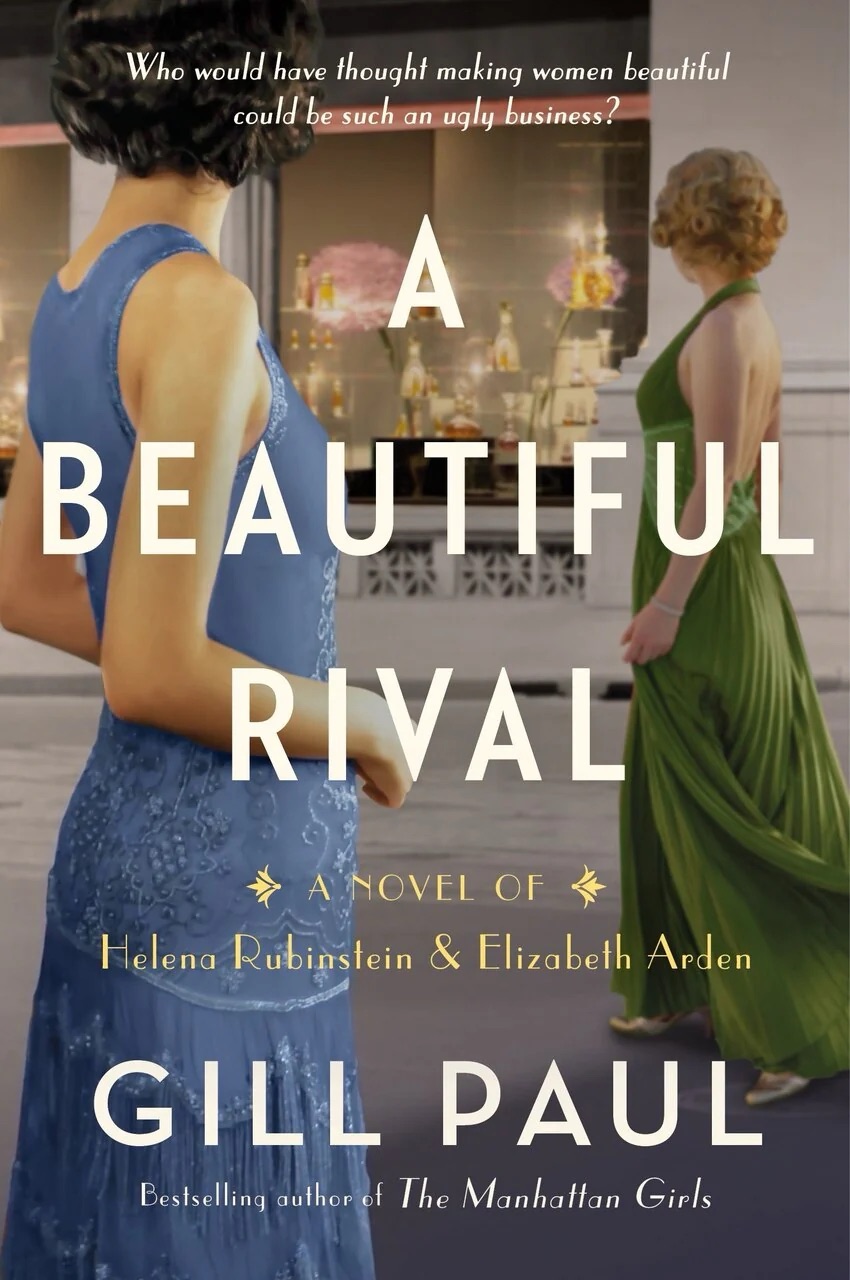
A Beautiful Rival: A Novel of Helena Rubinstein and Elizabeth Arden by Gill Paul

There are beauty stories, and then there are beauty wars, the kind that shaped an entire industry. A Beautiful Rival brings Elizabeth Arden and Helena Rubinstein to life with the kind of glamour, ambition, and unapologetic rivalry that defined 20th‑century beauty culture.

“Scandal, sabotage and spies. Who knew the beauty industry was so cutthroat! This was a thoroughly compulsive and addictive read.” — Kate Thompson, bestselling author of The Little Wartime Library

Bestselling author Gill Paul reveals the history of cosmetic titans Elizabeth Arden and Helena Rubinstein and their infamous rivalry that spanned decades in a world that was changing dramatically for women—perfect for fans of Fiona Davis, Marie Benedict, and Beatriz Williams.

They could have been allies: two self-made millionaires who invented a global industry, in an era when wife and mother were supposed to be the highest goals for their sex. Elizabeth Arden and Helena Rubinstein each founded empires built on grit and determination…and yet they became locked in a feud spanning three continents, two world wars, and the Great Depression.

Brought up in poverty, Canadian-born Elizabeth Arden changed popular opinion, persuading women from all walks of life ­to buy skincare products that promised them youth and beauty. Helena Rubinstein left her native Poland, and launched her company with scientific claims about her miracle creams made with anti-ageing herbs.

And when it came to business, nothing was off-limits: poaching each other’s employees, copying each other’s products, planting spies, hiring ex-husbands, and one-upping each other every chance they had. This was a rivalry from which there was no surrender! And through it all were two women, bold, brazen, and determined to succeed—no matter the personal cost.

In this sweeping novel from the bestselling author of Jackie and Maria and The Manhattan Girls, two larger-than life fashion icons come alive with all their passion, bitterness, and ambition as they each try to live the American dream.

Coconut (Helena Rubinstein coded)
Helena Rubinstein’s salons were known for their scientific approach to beauty. Coconut‑based treatments appeared in her early European spas as part of moisture‑restoring rituals — a precursor to modern hydration treatments.

Honey (Elizabeth Arden coded)
Elizabeth Arden famously believed in “beauty from within.” Honey, lemon and farm‑fresh ingredients were part of her early wellness philosophy, aligning with her Red Door spa’s clean, elegant vibe.

Olive Oil (shared European heritage)
Both Arden and Rubinstein borrowed heavily from European beauty traditions. Olive oil was a staple in Mediterranean skincare, used for softness, shine and elasticity — a quiet nod to the era’s salon culture.

Book Club Book Questions

1. How did Arden and Rubinstein’s rivalry shape the beauty industry we know today?
2. Which woman’s branding approach felt more modern?
3. What surprised you most about their early beauty innovations?
4. How did each woman use femininity as a business tool?
5. Whose legacy feels more present in today’s beauty culture?
6. Did you relate more to Arden’s elegance or Rubinstein’s intensity?

Signature Cocktail: The Rival Rosé Spritz

A light, elegant spritz inspired by the salons, soirées and beauty counters of Arden’s and Rubinstein’s era. 

Ingredients

  • Chilled rosé
  • Soda water
  • Splash of elderflower
  • Optional: twist of lemon or a few raspberries

How to Serve
Pour rosé over ice, add soda, finish with elderflower. Serve in coupe or wine glasses for an Old Hollywood touch.

Why It Fits the Theme
Rosé reflects Arden’s signature pink branding, while elderflower nods to Rubinstein’s European luxury roots. A drink with two personalities — just like the rivalry.

Playlist: Old Hollywood Jazz + Modern Lounge

Set the tone with a playlist that blends vintage glamour with contemporary polish.

Old Hollywood Jazz

  • Ella Fitzgerald
  • Billie Holiday
  • Nat King Cole
  • Julie London

Modern Lounge

  • Rhye
  • Charlotte Day Wilson
  • Sade
  • Café del Mar instrumentals

Why It Fits the Theme
Arden’s salons were known for elegance and refinement; Rubinstein’s for modernity and innovation. This playlist mirrors both energies — timeless glamour with a contemporary edge.

Dress Code: “Arden Pink or Rubinstein Red”

Arden Pink
Soft, feminine, polished. Think blush tones, pearls, classic silhouettes.

Rubinstein Red
Bold, confident, dramatic. Think red lipstick, structured lines, European chic.

Why It Fits the Theme
The rivalry was as much about branding as it was about beauty. Pink vs. red is a playful nod to their competing empires.

A Beautiful Rival is a fascinating novel, a novel that is a reminder that beauty has always been shaped by women who dared to compete, innovate and re-define what was possible.

Next week, get ready as we step into the archives with Elizabeth Arden vs. Helena Rubinstein: The Beauty War — the real story behind the rivalry.

I’m Stacey Hobbs, thanks for reading Face by Stace! Until next time.
do you feel fabulous today?