Imagine going to bed in Paris, knowing or at the very least thinking everything was right in the world, in Paris, in fashion, only to wake up to startling news.
It was the kind of headline that didn’t nor should it belong in the world of couture — a world built on elegance and carefully controlled illusions. Yet in 1960, Paris woke up to a shock:
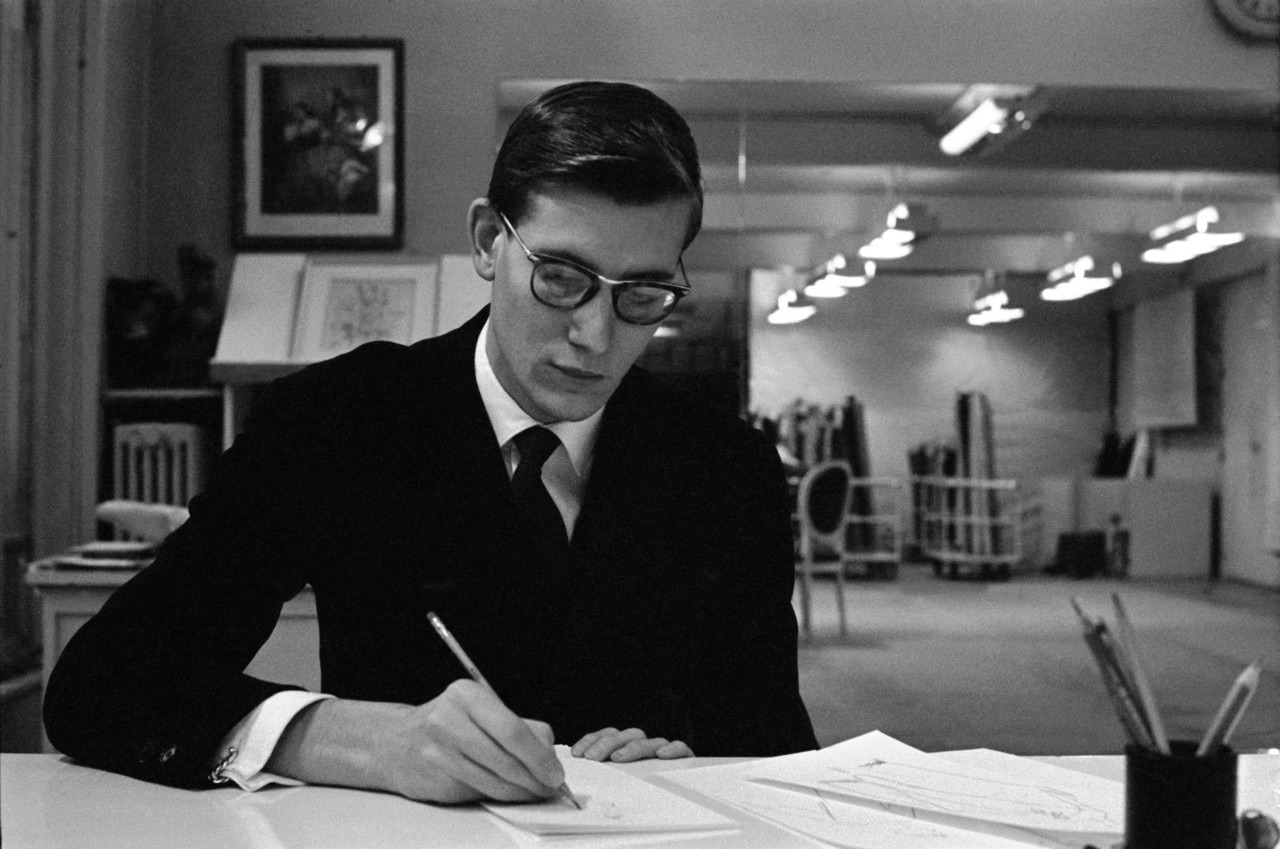
The House of Dior had fired its 24‑year‑old creative director, Yves Saint Laurent.
The prodigy Christian Dior himself had chosen. The designer who had saved the house with the Trapeze Line. Saint Laurent had vanished. Dismissed in the middle of a political storm the fashion world wasn’t prepared to understand.
The official statement was polite. The truth was anything but.
Behind the scenes, Dior executives were panicking. France was deep in the Algerian War. YSL had been drafted. His mental health was un-raveling under the pressure of fame, expectation and the impossible weight of inheriting Dior’s legacy at just twenty‑one. And instead of protecting him, the house replaced him — quietly, swiftly and without ceremony — with Marc Bohan.
It was a betrayal that would change fashion forever.
Because this wasn’t just the firing of a designer. It was the moment Yves Saint Laurent stopped being Dior’s protégé… to become someone and something far more than a creative director at the House of Dior.
He was to become Yves Saint Laurent, the legend.
I’m Stacey Hobbs, thanks for reading. Until next time! do you feel fabulous today?
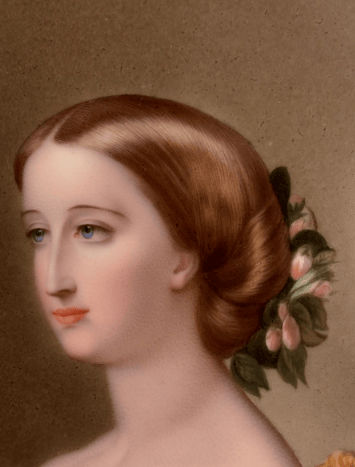
French beauty during the Second Empire was defined by spectacle — a world where appearance became a form of political theatre. No figure embodied this more fully than Empress Eugénie, whose influence shaped beauty culture across Europe. Her signature look — the luminous complexion, the smooth centre‑parted hair, the soft oval silhouette — became the template for fashionable femininity.
Portrait of Empress Eugenie/proantic.com
Beauty as Political Theatre
Under Napoleon III, court appearances were diplomatic performances. Eugénie understood that her beauty conveyed stability, refinement and imperial legitimacy. Every public appearance was a curated tableau of delicacy and grace, reinforcing the visual identity of the empire.
The Imperial Toillette
The Second Empire was a ritual of precision. Women used:
Pâte d’amande to soften the skin
Rosewater tonics for brightness
Cold cream for moisture and cleansing
Rice powder for the signature velvety finish
These products created the ethereal look associated with court femininity — a cultivated fragility that suggested virtue and aristocratic delicacy.
Hairstyle as Architecture
Hairstyles were feats of engineering. Pads, cushions and braids created height and structure. The iconic Eugénie chignon — a low, elegant knot — framed the face and emphasized the neck. It became the defining hairstyle of the 1850s and 1860s, immortalized in fashion plates and copied across Europe.
The Birth of Couture Beauty
With Charles Frederick Worth, beauty and fashion became inseparable. Gowns dictated hairstyles; jewels highlighted facial structure; powders were selected to complement fabrics. This was the beginning of beauty as styling — not just grooming — and it set the stage for modern beauty culture.
Legacy of the Second Empire Look
Eugénie’s influence extended beyond her reign. Her aesthetic shaped early photography, fashion illustration and the emerging beauty industry. The Second Empire ideal — luminous, delicate and impeccably composed — became the foundation for the beauty standards that followed.
I’m Stacey Hobbs, thanks for reading Face by Stace! Until next time. do you feel fabulous today?
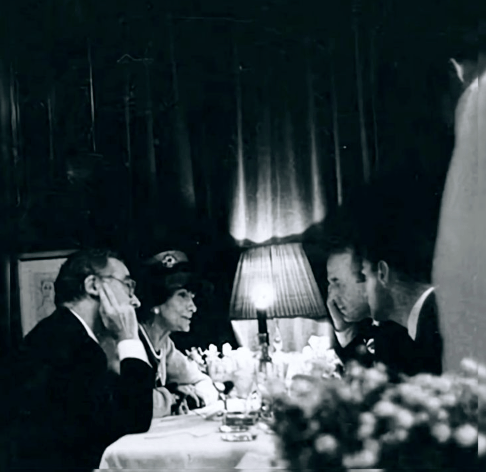
Chanel and Balenciaga stand as two of the most influential forces in twentieth‑century fashion, each re-shaping the industry through entirely different philosophies. Their legacies continue to define how designers think about silhouette, structure and the purpose of clothing.
Chanel approached design through reduction. Her work was built on clarity, comfort and a belief that elegance should feel natural. She stripped away excess, favouring clean lines, soft fabrics and a sense of ease that allowed women to move freely. Her suits, jersey dresses and understated accessories were not about spectacle — they were more about liberation. Chanel’s method was to simplify until only the essential remained.
Balenciaga worked in the opposite direction. His designs were architectural, sculptural and technically complex. He re-shaped the body through volume, structure and form, creating silhouettes that challenged traditional ideas of proportion. Where Chanel softened, Balenciaga sharpened. Where Chanel removed, Balenciaga constructed. His work demonstrated how fabric could be engineered not just draped.
Both designers changed fashion but through different means. Chanel offered a new kind of modernity rooted in ease. Balenciaga offered a new kind of modernity rooted in innovation. Chanel made elegance accessible; Balenciaga made elegance structural.
Their methods diverged, yet their impact converges in the way contemporary fashion continues to balance simplicity with experimentation. Chanel and Balenciaga remain two masters whose contrasting approaches still shape how we understand style today.
Chanel: Designing With Her Hands
Chanel did not sketch. She did not begin with a drawing or a theoretical silhouette. Her design process was tactile, instinctive and grounded in the physical reality of the body. She draped fabric directly on a mannequin or model, pinning and cutting until the garment felt effortless. Chanel trusted movement more than theory. She believed clothes should liberate women not sculpt them into artificial shapes. Her garments emerged from life — jersey that skimmed the body, cardigans that moved with it, suits that allowed women to walk, work and breathe.
Her method produced clothes that looked simple but were engineered through touch. Every adjustment was a refinement of ease: a softened shoulder, a shortened hem, a seam shifted by millimeters. Chanel’s silhouettes were not imposed; they were discovered. They followed the body’s natural lines, creating a kind of lived‑in elegance that felt modern then and still feels modern now. Chanel designed for women who needed clothing that could keep pace with them — and her process ensured that her garments carried that clarity.
Balenciaga: Designing With Architecture
Balenciaga, by contrast, was a sculptor of silhouette. He sketched, drafted, engineered and built garments with the precision of an architect. His work began not with draping but with structure — pattern pieces that defied logic, fabrics developed specifically for volume and silhouettes conceived as three‑dimensional forms. Balenciaga believed fashion was an art of proportion. He dissolved the waistline, expanded volume and created shapes that hovered around the body like architecture.
Where Chanel refined through touch, Balenciaga refined through mathematics. His garments were constructed, not discovered. He used fabric the way a sculptor uses clay, shaping space around the wearer rather than simply covering the body. His clothes required discipline, posture, and stillness. They were not designed for movement in the everyday sense; they were designed to transform the wearer into a new silhouette entirely.
Two Philosophies, One Revolution
Chanel liberated the body. Balenciaga redefined it.
Chanel created ease. Balenciaga created structure.
Chanel designed for life. Balenciaga designed for form.
Their methods produced radically different aesthetics, yet both altered modern fashion. Chanel taught designers that simplicity could be powerful, that comfort could be elegant, and that clothing should serve the woman. Balenciaga taught designers that silhouette could be language, that architecture could exist in fabric and that purity of line could be revolutionary.
Together they represent the two poles of twentieth‑century couture: instinct and engineering, drape and structure, life and architecture. And it is in the tension between their methods that modern fashion still finds its balance.
I’m Stacey Hobbs, thanks for reading Face by Stace! Until next time. do you feel fabulous today?
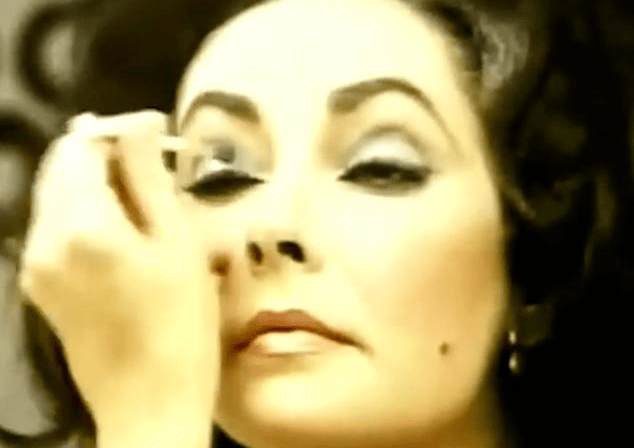
Elizabeth Taylor didn’t just wear the cat eye; she defined it. Long before the look became a 1960s beauty staple, Taylor’s almond‑shaped, violet eyes were framed by a dramatic, elongated liner that became her signature. While the cat eye make-up look existed in Hollywood before her, Taylor transformed it from a make-up technique into a cultural archetype.
Presently, cat eye make-up look is now referred to as winged liner.
While she did not invent the cat eye, Taylor’s version became one of the most recognizable and influential interpretations of the look in 1950s Hollywood. Her eyes, which are naturally almond‑shaped, framed by double lashes made the style iconic.
Taylor was wearing a softened, elongated liner as early as the mid‑1940s including during National Velvet (1944). The cat‑eye trend didn’t explode into mainstream beauty until Cleopatra in 1963.
Taylor had several make-up artists, her make-up artists especially during the MGM years emphasized her eye shape with a lifted, smudged pencil line. This became a defining feature of her screen persona.
Actresses like Hedy Lamarr, Greta Garbo, and Marlene Dietrich used early forms of the cat eye look in the 1930s–1940s. But their versions were softer, smokier and less codified.
This is accurate as a cultural statement with her cat eye that became instantly recognizable, tied to her persona, widely emulated, and foundational to the late 1950s and late 1960s make-up look and beauty aesthetics.
The Origins: A Face Made for the Cat Eye
Taylor was born with a double row of eyelashes, called distichiasis and natural violet-blue eyes that shifted with lighting, these two rare genetic traits contributed to her beauty.
These features created a naturally shadowed, feline look. MGM make-up artists quickly realized that a winged liner amplified her eye shape better than any other style.
The Cleopatra Effect (1963): The Cat Eye Goes Global
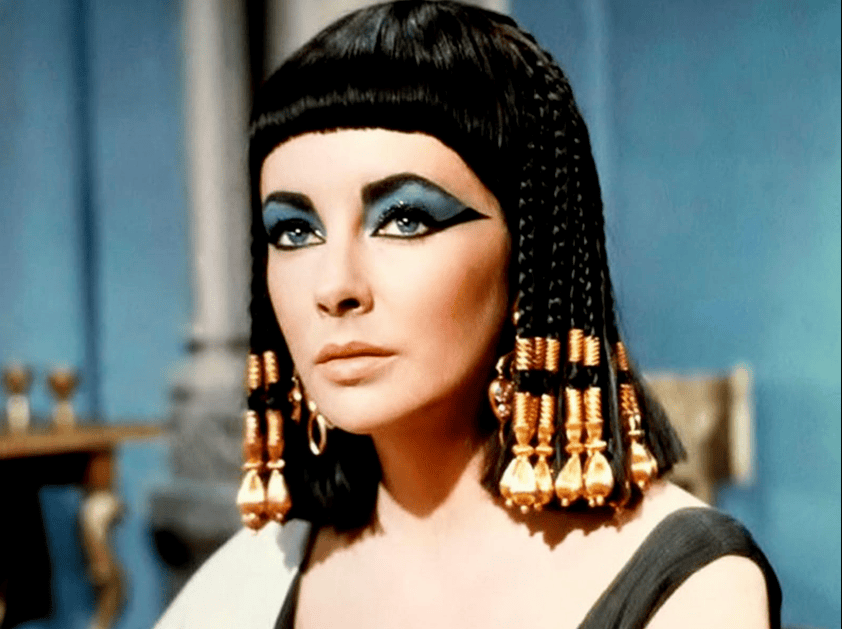
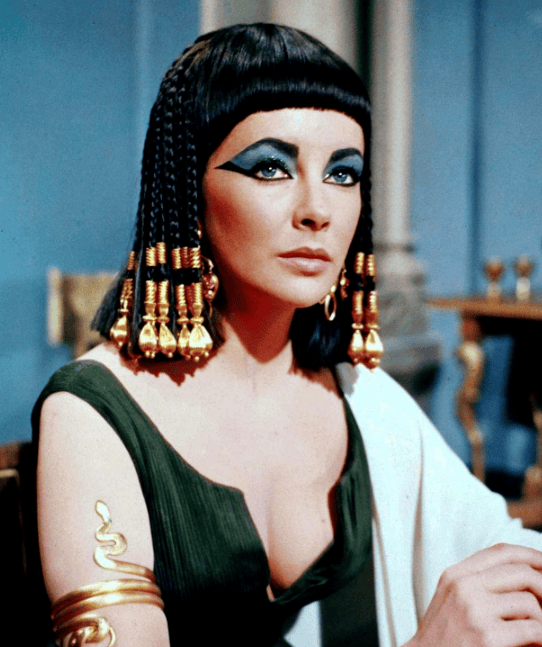
The cat eye became legendary during the filming of Cleopatra. Elizabeth Taylor’s primary make-up artist for Cleopatra, Alberto de Rossi built the look around thick kohl, extended wings, graphic Egyptian lines and bold shadow blocks.
This look from Cleopatra became a worldwide beauty trend. After Cleopatrapremiered eyeliner sales skyrocketed, beauty magazines published “Cleopatra eye” tutorials and the cat-eye became the defining make-up trend of the 1960s.
Taylor didn’t invent this eyeliner look however she originated the modern cat‑eye aesthetic that women still copy today.
Her Signature Technique
Taylor’s personal make-up routine (confirmed by her longtime make-up artist, Francesca Tolot) included:
a thick, smudged pencil line along the upper lash line
a lifted outer flick to elongate the eye
darkened waterlines for intensity
multiple coats of mascara to emphasize her double lashes
She preferred soft kohl pencils as opposed to liquid liner which is why her cat eye always looked smoky, sensual and slightly imperfect.
Why Elizabeth Taylor’s Cat Eye Endures
Her version of the cat eye became iconic because it was feminine but powerful, exotic but wearable, dramatic but timeless and it was rooted in her natural features, instead of it being just a trend.
Unlike the sharp, graphic wings of later decades, Taylor’s cat eye was lush, smoky and romantic, a look that still feels modern.
The Legacy
Today, when make-up artists reference “Cleopatra eyes” or “the classic cat eye” they are referencing Elizabeth Taylor’s cat-eye, her influence spans 1950s glamour, 1960s mod beauty, modern red‑carpet make-up, editorial fashion looks and everyday winged liner tutorials.
Elizabeth Taylor made the cat-eye iconic.
I’m Stacey Hobbs, thanks for reading. Until next time! do you feel fabulous today?
The secret behind Elizabeth Taylor’s double-layer mascara trick simply lies on what her and her make-up artists already knew, which was they didn’t rely on genetics alone. They amplified what God gave her with a mascara technique that became one of her most iconic beauty secrets: the double layer mascara trick.
Elizabeth Taylor’s mascara trick was about depth and dimension that made her eyes look impossibly expressive on camera.
Check out Elizabeth Taylor’s double-layer mascara trick!!
1. The Base Layer: Building the Foundation
Taylor’s make-up artist always began with a thin, defining coat of mascara. A first step that set the entire look into motion. This initial layer wasn’t meant to dramatize the lashes, but to separate, shape, and darken the roots, creating the clean architectural base her signature eye required. It mapped out the silhouette with precision, ensuring every lash stood in its proper place. And because it was applied so lightly and evenly, it allowed the second coat to cling beautifully, building depth and volume without a hint of clumping. Clump-free lashes!!
2. Powder Between Coats: The Old Hollywood Thickening Trick
The real alchemy happened between coats. After the initial defining layer, Taylor’s team dusted translucent powder, or sometimes a touch of dark eyeshadow over the lashes with a small eyeshadow brush. This subtle step added both grip and volume, creating the plush, velvety texture that became synonymous with her gaze. It was an old Hollywood thickening trick used by many, but Elizabeth Taylor perfected it, transforming a simple technique into a signature element of her iconic lash look.
3. The Second Coat: Depth, Drama, and Dimension
The second layer of mascara was applied with absolute intention. Taylor’s make-up artist pressed the pigment of the mascara deep into the roots, then pulled upward to create lift, adding a subtle wiggle for fullness (and to ensure lashes are clump-free) and concentrating extra definition at the outer corners. This deliberate technique sculpted the feline, lifted shape that made her eyes look so sensual and expressive on camera. The effect wasn’t spiky or mod — it was lush, soft, and romantic, the kind of glamour that felt effortless yet impossibly refined.
4. The Lower Lashes: Soft, Shadowed, and Essential
Taylor always defined her lower lashes, but with a deliberate softness. She applied just a light coat of mascara, then swept through with a clean spoolie to diffuse any harshness, sometimes setting the look with the faintest touch of powder. The result was a shadowed, smoky lower lash line that intensified her gaze without ever appearing heavy. It’s one of the subtle techniques that made her eyes so hypnotic, so gorgeous on film — dramatic, yet refined.
5. The Secret Weapon: Her Natural Double Lashes
This is what is interesting about Elizabeth Taylor, she was born with distichiasis, a rare genetic trait that gave her a second row of lashes.
But here’s the important part of all this, Taylor’s double‑layer mascara trick was never meant to replace her naturally full lashes — it was designed to enhance them. Even women without her rare double row of lashes can re-create the effect by following her simple sequence: define, powder, deepen, soften. It’s the layering that creates the magic, building depth and dimension.
6. The Final Touch: Kohl + Mascara = Iconic
Taylor never relied on mascara alone. She paired it with soft black kohl, smudged tightly into the upper lash line and blended outward to create lift. This subtle combination made her lashes appear even thicker and her eyes dramatically more defined — the look captured in Cat on a Hot Tin Roof, Butterfield 8, and her iconic 1960s press photos.
Why Elizabeth Taylor’s Lash Technique Still Matters
It was always all about timeless glamour. Taylor’s double‑layer mascara technique created depth, softness, dimension, and sensuality that transcended eras. It’s the kind of beauty that never goes out of style. Elizabeth Taylor didn’t just have beautiful lashes; she understood how to make them un-forgettable.
I’m Stacey Hobbs, thanks for reading. Until next time! do you feel fabulous today?
When we think of Cleopatra’s beauty regimen we think of milk baths and yet there isn’t any actual documentation that Cleopatra bathed in milk. The first historical figure to be documented in the Roman Empress, wife of Nero, so what was Cleopatra’s skin-care regime then? In the Egyptian desert, how did she maintain beautiful skin? To combat the desert heat she would have to rely on hydration, moisturizing and possibly exfoliation? One thing is for certain, Cleopatra loved her luxurious, Let’s take a closer look and delve in.
Elizabeth Taylor as Cleopatra in the film Cleopatra
Exfoliation Since Cleopatra would have access to salt mined caves, not her personally, she would have sent her people to obtain salt from these caves with some caves that were near the Nile River. Plus sea salt from the sea, specifically it is called Dead Sea, known for its high mineral content and healing properties. Cleopatra would include a few drops of olive oil into the sea salt before exfoliating. By creating a scrub Cleopatra is removing dead skin cells, stimulate circulation and smooth texture while moisturizing her skin. To follow Cleopatra’s recipe, sea salt and olive oil to create a scrub. This would leave her skin soft and supple. Olive oil was a common ingredient used amongst Ancient Egyptians and Ancient Romans for its beauty rituals, including hair-care.
Rose Water Cleopatra is known to bathe her face and body with authentic rose water. It is also known that Cleopatra would use rose water as a natural toner to tone and revive her skin. Rose water is anti-inflammatory, and its cooling and refreshing.
Honey, Clay & Botanical Masks Historical accounts have said Cleopatra would have used this kind of mask in her beauty regimen. Cleopatra is well-known for loving her honey in her beauty routine. Honey delivers moisture and anti-bacterial benefits.
Some other ingredients Cleopatra favoured in her masks are aloe vera, white clay, grapes and herbs, and honey. All of these ingredients combined for one mask or masks, Cleopatra would use these ingredients to make several masks if not for just one mask. These masks help to brighten, purify and calm the skin.
Oils for Skin & Hair Cleopatra would use several oils for her hair and skin. Olive oil being one of them to strengthen hair and moisturize skin. Other oils that provided her with hydration is caster oil. Moringa oil and almond oil, Cleopatra would use one or the other to help nourish her scalp and hair. Cleopatra’s hair regimen was not just about hair-care as it is about sustaining strength and healthy growth. Other oils Cleopatra was fond of were essential oils such as jasmine, sandalwood, etc. for its aromatherapy and luxury. Egyptians were known for their love of perfume oils, being a huge part of their beauty culture.
Kohl eyeliner To protect eyes from the sun, some say sun glare, it was common for Pharaohs, not just with Cleopatra, to wear kohl eyeliner. It was applied under the eyes for men, while women applied kohl liner to symbolize the fish from the Nile River, and the green hue was also to represent the Nile River, as well. If you’re interested, we can discuss further how Ancient Egyptians made their make-up. From using beetles that they would crush, then apply as make-up and more, it’s really actually quite interesting.
One thing that has been made clear across all historians and with all research, Cleopatra’s beauty regimen revolved around luxury, aromatherapy, exfoliation and protection. Something Cleopatra, as some would say, understood when it pertained to beauty regimen.
I’m Stacey Hobbs, thanks for reading Face by Stace! Until next time.