PART 2: 1970s Skincare + Tanning Products

The 1970s were a decade obsessed with the sun. Beauty culture shifted away from porcelain complexions and toward a bronzed, athletic glow that symbolized freedom, leisure and California living. Skincare became less about coverage and more about cultivating a healthy, lived‑in radiance. Women wanted skin that looked touched by sunlight, softened by ocean air and warmed by long afternoons outdoors. This was the era when tanning became not just a trend but a lifestyle.

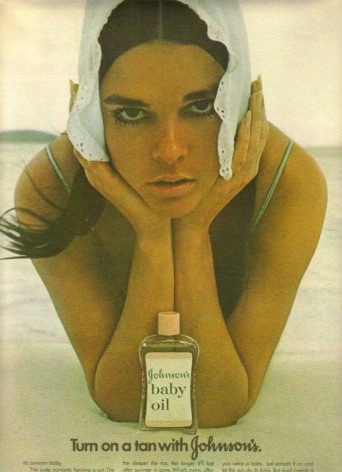
The tanning toolkit of the decade was iconic. Baby oil was the most famous product — a household staple re/purposed into a tanning accelerator. Women applied it generously before lying out on beaches, rooftops and backyards, believing the shine intensified the sun’s effects. Sun reflectors often made of aluminum panels were used to direct light onto the face, creating a deeper tan and a more sculpted glow. By the late 1970s, early tanning beds appeared offering a futuristic way to achieve the California look even in winter. The goal was always the same: a golden, sun‑lit complexion that suggested health, vitality and outdoor living.

Skincare in the 1970s was surprisingly minimal. Cold creams remained popular for cleansing and moisture, a holdover from earlier decades. Aloe vera became a household remedy for sunburns, soothing skin after long days outdoors. Cocoa butter was used for body hydration, giving the skin a soft sheen that complemented the decade’s bronzed aesthetic. Exfoliation began to enter mainstream beauty routines, with early scrubs and grainy cleansers promising smoother, more radiant skin. But overall, skincare was simple — the focus was on maintaining the tan not preventing it.

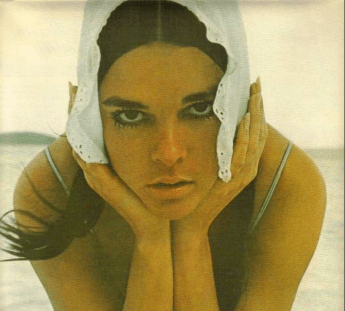
The “healthy glow” aesthetic defined the decade. Skin was meant to look natural, warm and lightly flushed. Makeup supported this look rather than masking it. Bronzer became a mainstream product for the first time, used to enhance the sun‑kissed effect. Women applied it to the cheeks, temples and collarbones, creating dimension and warmth. Glossy lips added to the dewy, effortless vibe while minimal eye makeup kept the face fresh and youthful. Brows remained natural, complementing the decade’s relaxed approach to beauty.

California beach culture played a major role in shaping skincare trends. Surfing, roller skating, jogging and outdoor sports influenced how women cared for their skin. The ideal was athletic femininity — skin that looked healthy, active and alive. Magazines promoted the idea that beauty came from lifestyle: sunshine, movement, fresh air and a carefree spirit. Skincare products were marketed as tools to enhance this natural vitality rather than transform the face.

The 1970s marked the beginning of modern tanning culture. It was a decade where beauty was intertwined with lifestyle where the sun became both a cosmetic and a symbol. The products, rituals and aesthetics of this era laid the foundation for decades of bronzing, glowing and “healthy skin” trends that followed. It was a time when radiance was not applied — it was lived.

I’m Stacey Hobbs, thanks for reading Face by Stace! Until next time.
do you feel fabulous today?
The Chanel Camellia: White as Icon

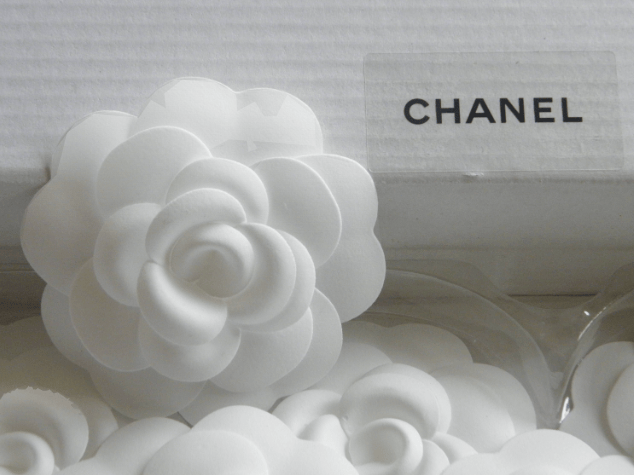
Among Chanel’s symbols, none is more quietly powerful than the camellia. It is not dramatic like Dior’s rose nor exotic like Poiret’s blooms. It is simple, symmetrical and un-mistakably modern — a flower without scent, without thorns, without excess. In choosing the camellia, Chanel chose a symbol that mirrored her own philosophy: purity without fragility, elegance without ornament, beauty without noise.

The camellia’s whiteness mattered. Chanel understood colour as intention and white carried a clarity she valued deeply. It revealed proportion, highlighted structure and softened silhouette without ever becoming sentimental. White was the colour of beginnings, of light, of the clean simplicity she believed fashion should embody. The camellia, rendered in white became her emblem of purity — not innocence but precision.

Chanel’s relationship with the camellia began long before it appeared on her garments. She admired its geometry: the perfect roundness of its petals, the balance of its form, the way it held shape without needing fragrance or colour. It was a flower that refused drama. It was, in its quiet way, architectural. Chanel saw in it the same qualities she sought in her designs — restraint, proportion and clarity.

When she began incorporating the camellia into her work, she did so with intention. It appeared on dresses, pinned to jackets, nestled into belts and later became a signature motif in jewelry and accessories. But Chanel never used the camellia as decoration. She used it as punctuation — a single, deliberate gesture that completed a look without overwhelming it. The camellia was not an embellishment; it was a philosophy made visible.

Its whiteness also connected to Chanel’s personal history. White was the colour of the convent where she grew up, the crispness of men’s shirts she borrowed, the simplicity of the seaside summers that shaped her aesthetic. Yet she never used white nostalgically. She used it to refine. The camellia, rendered in white became a symbol of her refusal to indulge in sentimentality. It was modern, clean and emotionally neutral — a flower that belonged to no season and no tradition.

The camellia’s power lies in its duality. It is soft but structured, feminine but disciplined, decorative but architectural. It embodies the balance Chanel mastered: the tension between purity and strength, simplicity and sophistication. In white, the camellia becomes a study in proportion — a reminder that elegance can be quiet, that beauty can be deliberate and that restraint can be more expressive than excess.

Today, the camellia remains one of Chanel’s most enduring icons. It appears in couture, in ready‑to‑wear, in fine jewelry, in fragrance packaging and in the rituals of the house itself. It is the flower that greets clients, adorns boxes and symbolizes the brand’s commitment to clarity and refinement. The camellia is not merely a motif; it is Chanel’s aesthetic distilled into a single, perfect form.

Chanel didn’t choose the camellia because it was pretty. She chose it because it was pure. And in her hands, the white camellia became not just a flower but an idea — a symbol of modern elegance, architectural beauty and the quiet power of restraint.

I’m Stacey Hobbs thanks for reading Face by Stace! Until next time.
do you feel fabulous today?

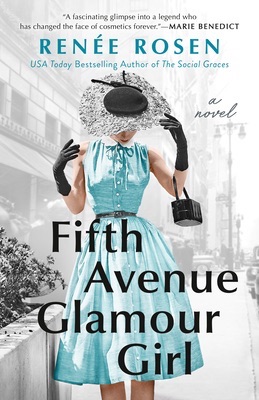
Fifth Avenue Glamour Girl by Renee Rosen

Fifth Avenue Glamour Girl is a glittering, fictionalized portrait of Estée Lauder’s rise during the golden age of American beauty. Set against the backdrop of mid‑century New York, the novel blends ambition, glamour, reinvention, and the intoxicating world of cosmetics. Rosen’s storytelling is lush and atmospheric, capturing the energy of Fifth Avenue, the elegance of department store counters, and the relentless drive behind one of beauty’s most iconic founders.

Synopsis

The novel follows Gloria Downing, a young woman whose life takes a sharp turn after a scandal threatens her reputation. Reinventing herself in New York City, she crosses paths with Estée Lauder, who is still building her empire. Gloria becomes intertwined with Estée’s world—her ambitions, her charm, her contradictions and her relentless pursuit of success. Through Gloria’s eyes, readers witness Estée’s early struggles, her marketing genius, her bold personality and the glamorous yet cutthroat beauty industry of the 1940s and 1950s.

The story explores friendship, loyalty, ambition and the cost of reinvention. Gloria’s fictional journey parallels Estée’s real rise, creating a narrative that feels both intimate and cinematic.

What’s Factual

Rosen’s novel is meticulously researched and several elements are grounded in real history:

  • Estée Lauder’s early career: 
    Her beginnings selling skincare out of beauty salons and department stores.
  • Her marketing genius: 
    The “gift with purchase,” the personal touch and her insistence on demonstrating products directly on customers.
  • Her personality: 
    Ambitious, charismatic, demanding and fiercely determined.
  • The era’s beauty culture: 
    Department store counters, early prestige cosmetics and the glamour of mid‑century New York.
  • Historical figures and settings: 
    Fifth Avenue, luxury retailers and the social world surrounding beauty entrepreneurs.

Rosen captures the spirit of Estée Lauder’s rise with accuracy, even when the details are dramatized.

What’s Fictional

The novel blends fact with creative storytelling:

  • Gloria Downing is a fictional character.
  • Her scandal, reinvention and personal journey are invented to give readers an emotional anchor.
  • Many conversations, relationships, and behind‑the‑scenes moments are fictionalized.
  • Estée’s personality is interpreted through a narrative lens—not a literal biography.
  • Certain timelines and events are adjusted for dramatic effect.

Review

Fifth Avenue Glamour Girl is a captivating blend of beauty history and character‑driven storytelling. Rosen excels at creating an atmosphere: the perfume counters, the polished marble floors, the soft glow of department store lighting and the intoxicating promise of transformation. Estée Lauder emerges as a magnetic force—flawed, brilliant and un/forgettable. Gloria’s fictional narrative adds emotional depth, allowing readers to experience the beauty industry from the inside. How delicious.

I’m Stacey Hobbs, thanks for reading Face by Stace! Until next time.
do you feel fabulous today?
Part 1: 1970s Hair Icons: Farrah, Cher, Bo Derek

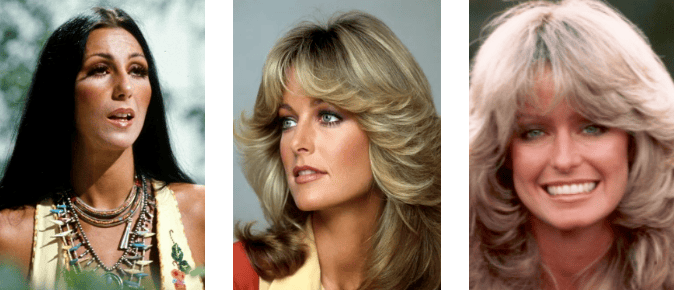
The 1970s were a decade defined by movement, bodies in motion, hair in motion, a culture in motion. Beauty shifted away from the sculpted, set styles of the 1960s and toward something freer, more athletic, more sun‑lit. Hair became a symbol of lifestyle, identity, and attitude. And at the centre of this transformation were three women who became cultural landmarks: Farrah Fawcett, Cher and Bo Derek. Each represented a different facet of 1970s femininity and together they shaped the decade’s most enduring beauty ideals.

Farrah Fawcett’s hair was not simply a style — it was a phenomenon. Her aerodynamic feathered layers captured the spirit of California glamour: bright, athletic, effortless and alive. The cut was engineered for movement, lifting away from the face in soft wings that seemed to flutter with every laugh, every run, every moment of joy. Farrah’s hair looked like it was always mid‑motion, mid‑life, mid‑sunbeam. It was the first hairstyle that felt kinetic, a visual embodiment of the decade’s obsession with outdoor living, jogging, surfing and roller skating. The blow‑dry became a cultural phenomenon because of her. Women across North America flocked to salons asking for “the Farrah,” and stylists spent years perfecting the round‑brush technique that created her signature bounce. Farrah’s hair wasn’t just glamorous — it was aspirational, a symbol of health, vitality and California freedom.

Cher, by contrast, represented the decade’s minimalist glamour. Her long, straight, centre‑parted hair was a sheet of glossy darkness, dramatic in its simplicity and powerful in its restraint. Where Farrah’s hair moved, Cher’s hair flowed. It was sleek, controlled and impossibly shiny — a 1970s re-interpretation of 1930s screen‑sirens, updated for a modern woman who commanded the stage with presence rather than ornamentation. Cher’s hair became iconic because it refused excess. It was a statement of confidence: no curls, no layers, no volume, just pure, un-interrupted length. Her silhouette influenced fashion photography, album covers and runway styling throughout the decade. Cher’s look was proof that simplicity could be just as commanding as glamour.

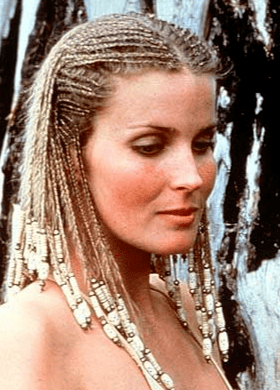
Bo Derek entered the cultural conversation at the end of the decade but her impact was immediate and un-forgettable. Her cornrow braids in the film 10 (1979) became one of the most recognizable beauty moments of the era. Sculptural, beach‑ready and sun‑lit, the braids fused California beach culture with a controversial but influential braided vibe. Bo’s look was athletic and sensual, a departure from both Farrah’s feathered softness and Cher’s sleek minimalism. Her braids became synonymous with the late‑1970s obsession with beach bodies, tanning and outdoor life. The image of Bo running along the shoreline — braids swinging, skin glowing — became a symbol of the decade’s fixation on health, fitness and natural sensuality.

Together, Farrah, Cher and Bo defined the spectrum of 1970s hair. Farrah embodied movement, Cher embodied minimalism and Bo embodied athletic sensuality. Their looks shaped not only beauty trends but the cultural imagination of the decade. The 1970s were a time when hair expressed lifestyle, identity and freedom — and these three women became its most enduring icons.

Bo Derek

I’m Stacey Hobbs, thanks for reading Face by Stace! Until next time.
do you feel fabulous today?
1970s Beauty: The Era of Tanning + Dieting

The 1970s marked a dramatic shift in American beauty culture. Gone were the powdered faces and sculpted bouffants of the 1960s. In their place emerged a new ideal: sun‑kissed skin, athletic bodies and a lifestyle built around tanning, dieting and California‑coast vitality. Beauty was no longer something applied — it was something lived.

This decade produced a new archetype of femininity: the woman who looked like she spent her days outdoors, moving, laughing, glowing. And at the centre of this cultural transformation were icons like Farrah Fawcett, whose effortless radiance became the blueprint for an entire generation.

The Tanning Craze: Sunlight as a Beauty Ritual

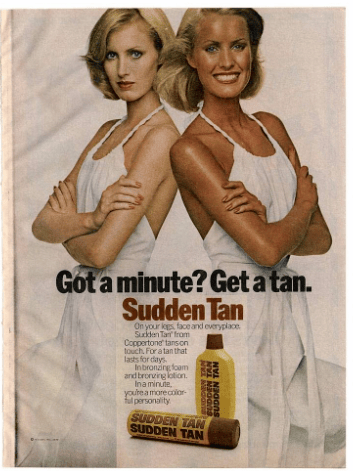
The 1970s were the first decade where tanning became a mainstream beauty goal. A bronzed complexion symbolized:

  • youth
  • health
  • athleticism
  • leisure
  • California freedom

Women flocked to beaches, backyards and tanning beds (which emerged late in the decade) to achieve the golden glow associated with Farrah, Cheryl Tiegs, and the emerging “jogging culture.”

Baby oil, tanning accelerators, and sun reflectors were common tools — long before SPF became a household word. A tan wasn’t just a look; it was a lifestyle. It suggested you had time, freedom and access to the outdoors.

This was the era when the tan became aspirational, a symbol of modern American femininity.

Dieting Culture: The Pursuit of the Athletic Body

Alongside tanning came the rise of dieting culture — a defining feature of 1970s beauty. The ideal body was no longer the hourglass of the 1950s or the waifish mod silhouette of the 1960s. The new standard was:

  • lean
  • toned
  • athletic
  • lightly muscular
  • “California healthy”

This shift was fueled by:

  • the jogging boom
  • the rise of aerobics
  • the popularity of health clubs
  • the emergence of diet books and fad diets
  • the cultural obsession with “slimming down”

Women were encouraged to be active, to move, to sculpt their bodies through lifestyle rather than corsetry or cosmetics. Dieting became a daily ritual — grapefruit diets, liquid diets, calorie counting and early versions of “clean eating” dominated magazines and talk shows.

Beauty was no longer just about the face. It was about the body as a visual statement.

The California Aesthetic: Effortless, Athletic, Sun‑Lit

The 1970s aesthetic was deeply tied to California culture — beaches, roller skating, surfing, jogging and outdoor life. This aesthetic shaped everything:

  • feathered hair that moved with the wind
  • bronzed skin
  • glossy lips
  • minimal makeup
  • natural textures
  • white teeth
  • athletic figures

Farrah Fawcett embodied this perfectly. Her glow was cultural. She represented a new kind of beauty: active, approachable, sun‑lit and alive.

stockcave.com

The Legacy of 1970s Tanning + Dieting

The 1970s set the stage for decades of beauty trends that followed. The obsession with bronzers, self‑tanners, fitness culture, diet culture, “healthy glow” aesthetics and athletic femininity all trace back to this era.

It was a decade where beauty became intertwined with lifestyle — where the pursuit of radiance and slimness shaped not only how women looked but how they lived.

groetro.com

I’m Stacey Hobbs, thanks for reading Face by Stace! Until next time.
do you feel fabulous today?
The night Yves Saint Laurent Shocked Paris, and Re-wrote the Rules of Fashion w/ His 1971 Scandal Collection

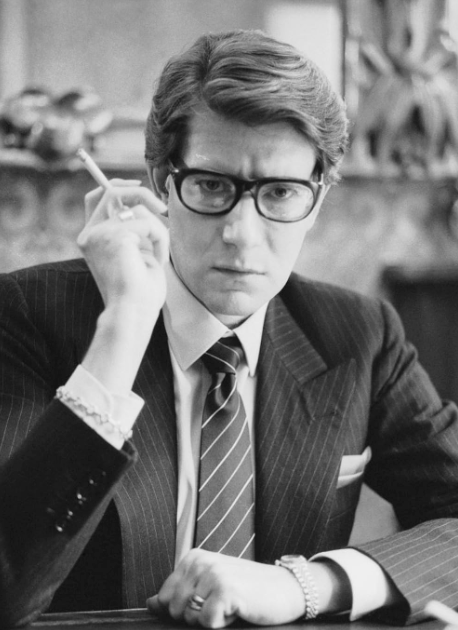
On January 29, 1971, little did Yves Saint Laurent knew, he would be walking into the history books — and at the exact same time, straight into a firestorm. His Spring/Summer haute couture show, later known simply as “The Scandal Collection,” was unlike anything Paris had ever seen. It wasn’t elegant. It wasn’t polite. It wasn’t nostalgic in the way couture preferred. It was provocative, political, and deliberately confrontational. And this collection of YSL’s collection changed the structure of fashion forever.

The Inspiration: 
1940s Wartime Paris, But Not the Romantic Version

YSL refused the soft-focus nostalgia that other designers clung to. Instead, he turned toward the Paris no one wanted to remember, ever. A time when the occupied city of the 1940s, with its black‑market glamour, nightclub girls, and women who survived by their wits, their bodies, or their style. His references weren’t Dior’s New Look but the raw, improvised elegance of wartime: platform shoes worn thin on dance floors, square shoulders borrowed from men’s jackets, tight skirts that moved like defiance, fox‑fur stoles bought in the shadows, and exaggerated makeup applied like armor. What he sent down the runway wasn’t a revival of the past but a reckoning with it — a portrait of survival, not nostalgia.

The Clothes That Caused the Outrage

The collection marched out in boxy, padded shoulders, knee‑length skirts that felt almost defiantly dowdy, bright colours bordering on vulgar, fox‑fur stoles, platform shoes, tight belted waists, and retro curls paired with red lips. It looked less like couture and more like the wardrobe of a nightclub hostess in 1942 — a woman navigating occupied Paris with charm, grit, and whatever glamour she could assemble. It was a jarring, provocative tableau that shattered the refined expectations of the couture salon. Critics were horrified, clients un-settled, and the press un-leashed a fury that only confirmed what YSL already knew: he had struck a nerve.

The Reaction: “A Fashion Faux Pas”

The French press erupted. They called the collection “ugly,” “vulgar,” “an insult to couture,” going so far as to call the collection “a bad joke.” Le Figaro delivered the final blow, dismissing it as “une faute de goût” —meaning, a mistake in taste. Clients cancelled their orders. Some walked out mid‑show. Others swore they would never return. But YSL didn’t flinch. He stood firm as the room recoiled, knowing exactly what he had done: he had forced Paris to confront a past it preferred to forget, and in doing so, he had pushed couture into the future.

What Critics Missed: 
YSL Was Predicting the Future

The Scandal Collection wasn’t a backward glance — it was a forecast. Within just a few years, the fashion world embraced everything Paris had mocked: 1940s shoulders, platform shoes, retro glamour, bold makeup, and vintage silhouettes. YSL had seen the 1970s before the 1970s understood themselves. What the French press dismissed as “vulgar,” the world soon recognized as modern.

Why It Was Classified as a Scandal — 
And Why It Matters

The outrage wasn’t really about the clothes — it was more about what they forced Paris to confront. YSL dragged the city back into the trauma of the Occupation, the women who survived by any means, and the uncomfortable truth that glamour can rise from darkness. He shattered the un-spoken rule that couture must be tasteful, polite, and apolitical. In 1971, he showed that fashion could be dangerous and that was, perhaps, the real scandal.

The Legacy: A Turning Point in Fashion History

Today, the 1971 collection is recognized as visionary — influential, ahead of its time, and a blueprint for every retro revival that followed. What Paris once mocked is now preserved in museums. YSL didn’t just provoke the couture establishment; he dragged it into the future. The scandal wasn’t a misstep. It was a masterpiece.

Paris wasn’t prepared or ready for what Yves Saint Laurent had presented with his 1971 Scandal Collection, but the world was, despite it causing the real scandal that walked the halls, the seats, the runways that Paris had not ever encountered before until YSL’s 1971 Scandal Collection. Fashion was never going to be the same again. Fashion changed forever. 

I’m Stacey Hobbs, thanks for reading Face by Stace! Until next time.

do you feel fabulous today?