Bette Davis’s beauty routine was surprisingly simple, built around products that soothed and refreshed rather than masked. One of her staples was witch hazel, used as a skin freshener after cleansing. Witch hazel’s cooling, toning properties helped calm the skin after long days under hot studio lights, keeping her complexion clear and tight.
She paired this with cold cream, often applied under her eyes between takes to protect the delicate skin from dryness and irritation. These rituals supported the expressive power of her eyes—her most famous feature.
Davis’s approach shows how Old Hollywood beauty wasn’t always about excess. Sometimes, it was about protecting the face that carried the story.
I’m Stacey Hobbs, thanks for reading Face by Stace! Until next time. do you feel fabulous today?
Claudette Colbert’s beauty was inseparable from the soft‑focus aesthetic that dominated 1930s Hollywood. Cinematographers used diffused lighting and powder‑rich makeup to create a velvety, dreamlike finish on her skin. Colbert embraced this fully, preferring soft‑focus powder techniques that smoothed texture and enhanced her luminous screen presence.
This approach wasn’t about hiding flaws—it was about crafting atmosphere. Soft‑focus glamour made Colbert appear timeless, elegant and slightly untouchable, aligning perfectly with the sophisticated characters she portrayed.
Her beauty became a study in texture, proving that finish can be as powerful as colour.
I’m Stacey Hobbs, thanks for reading Face by Stace! Until next time. do you feel fabulous today?
This dish is a warm, tropical reinterpretation of classic Brazilian moqueca, traditionally a coastal stew made with coconut milk, peppers, tomatoes, lime and dendê oil.
The acorn squash brings natural sweetness, the coconut milk adds lush creaminess and the lime brightens everything with a tropical sparkle.
It’s cozy enough for Canadian Autumn, yet sunny enough to feel like a culinary vacation.
1 medium acorn squash, peeled and cubed 1 tbsp olive oil 1 yellow onion, sliced 1 red bell pepper, sliced 3 cloves garlic, minced 1 tsp paprika 1/2 tsp turmeric 1/4 tsp chili flakes (optional) 1 can (400 ml) full‑fat coconut milk 1/2 cup vegetable broth 1 lime (zest + juice) 1/4 cup fresh cilantro, chopped to taste salt & pepper
Instructions
Prepare the squash Peel and cube the acorn squash. Toss with a drizzle of olive oil and a pinch of salt. Roast at 400°F (200°C) for 20 minutes until tender and lightly caramelized.
Sauté aromatics In a large pot, heat olive oil over medium. Add onion and bell pepper; cook 5–7 minutes until softened. Stir in garlic, paprika, turmeric, and chili flakes.
Build the broth Pour in coconut milk and vegetable broth. Stir gently and bring to a simmer.
Add the squash Fold the roasted acorn squash into the coconut broth. Simmer 10 minutes to allow flavors to meld.
Finish with lime Add lime zest and juice. Taste and adjust seasoning with salt and pepper.
Serve Ladle into bowls and top with fresh cilantro. Serve with jasmine rice or crusty bread.
Moqueca Capixaba (Espírito Santo) Tomato‑forward, lighter, no coconut milk. More Mediterranean in feel.
Your version is inspired by Moqueca Baiana, the coastal, coconut‑rich style.
Replacing seafood with acorn squash is a modern, plant‑forward twist that mirrors how Brazilian cooks often adapt moqueca with vegetables, hearts of palm, or plant‑based proteins. The lime and coconut keep it authentically tropical, while the squash adds a cozy autumn note that reflects your Canadian culinary roots.
Substitutions
Squash
Butternut squash (creamier, sweeter)
Delicata squash (no peeling required)
Pumpkin (more traditional in some Brazilian home cooking)
Coconut Milk
Cashew cream
Oat cream
Light coconut milk (for lower fat)
Lime
Lemon (milder)
Tamarind (for deeper tang)
Peppers
Yellow or orange bell peppers
A touch of chili for heat
Tomatoes for a more Capixaba‑style moqueca
Herbs
Cilantro → parsley (if preferred)
Green onions for extra brightness
Protein Add‑Ins (optional)
Shrimp
White fish
Chickpeas
Tofu cubes
Storage
Refrigerator: 3–4 days
Freezer: Up to 2 months (coconut milk freezes well)
Reheat: Gentle simmer to preserve texture
Make‑ahead tip: Flavour deepens after 24 hours — excellent for batch cooking or meal‑prep content.
I’m Stacey Hobbs, thanks for reading Face by Stace! Until next time. do you feel fabulous today?
Bette Davis understood the emotional power of a lip colour. In an era when Hollywood relied on bold, expressive makeup to translate feeling onto black‑and‑white film, Davis gravitated toward deep red lipstick, a shade that amplified her intensity and sharpened her already magnetic presence. Red lips framed her famous eyes, balancing their volatility with a grounded, dramatic focal point.
Her makeup artists often paired these reds with matte skin and sharply defined brows, creating a look that felt both commanding and feminine. The red lip became part of her cinematic identity—an anchor for characters who were fierce, complicated and unforgettable.
Today, Davis’s lip choices read like early lessons in character design. She didn’t wear red for glamour alone; she wore it because it communicated strength. Her beauty was never ornamental—it was narrative.
I’m Stacey Hobbs, thanks for reading Face by Stace! Until next time. do you feel fabulous today?
Claudette Colbert was one of the first actresses to understand that beauty on film is architectural. She famously insisted on being filmed from her left side, believing it showcased her strongest angles. Directors accommodated her, adjusting blocking, lighting and camera placement to honour her preference.
This wasn’t vanity—it was strategy. Colbert recognized that film immortalizes angles, not moments. By controlling her presentation, she shaped her own myth.
Her beauty was engineered through precision, proving that glamour is as much about geometry as cosmetics.
I’m Stacey Hobbs, thanks for reading Face by Stace.
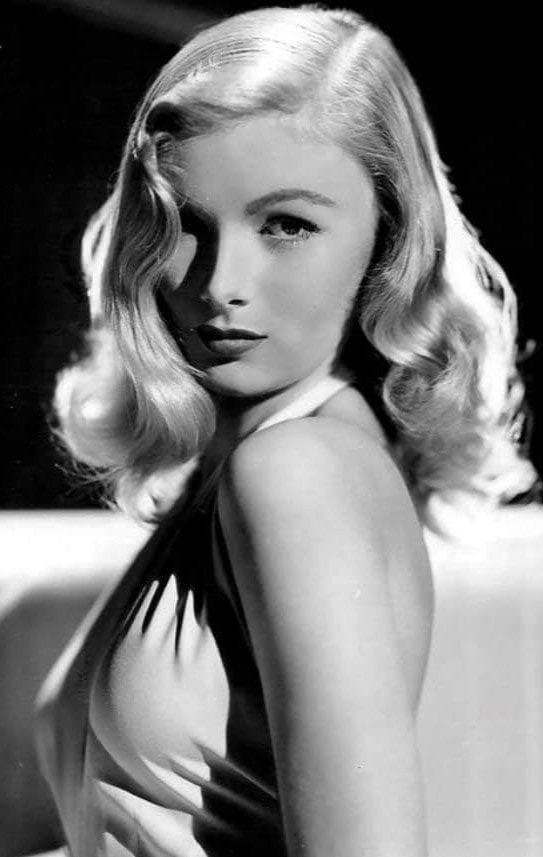
Veronica Lake’s peek‑a‑boo wave remains one of the most recognizable beauty signatures in film history—a curtain of glossy blonde hair falling over one eye, transforming her silhouette into something instantly iconic. Yet the secret behind this look wasn’t effortless glamour; it was technique. Lake’s wave was created through pin curl wet sets, a meticulous styling method that shaped her hair into controlled, sculpted cascades. Each curl was set by hand, dried, brushed out and coaxed into the smooth, diagonal fall that became her trademark.
The peek‑a‑boo wave worked because Lake understood proportion. Her hair was the focal point, so she kept her makeup intentionally understated. She wore minimal eye makeup, allowing the shadow of the wave to frame her face naturally. Soft liner, subtle lashes and neutral tones ensured nothing competed with the dramatic sweep of hair. The result was a look that felt mysterious, sensual and modern—a look that set her apart from the heavily made‑up glamour of the era.
Lake’s wave didn’t just influence beauty; it shaped culture. Women across America copied the style, and its popularity became so widespread that it affected wartime factory safety, prompting Lake to publicly modify her look. Even then, the wave remained synonymous with her name.
Today, the peek‑a‑boo wave is still referenced in fashion, film and editorial beauty. It wasn’t just a hairstyle—it was a cinematic invention, engineered through craft and restraint, proving that sometimes the most powerful beauty statements are built from a single, un-forgettable line.
I’m Stacey Hobbs, thanks for reading Face by Stace! Until next time. do you feel fabulous today?