Marcel Wave Irons (Hot Irons for Finger Waves)

The Marcel wave iron is one of the most defining beauty tools of the 1920s—an instrument that shaped the flapper era as much as fashion, film or jazz. Invented in the late 19th century by French hairdresser François Marcel, the iron became essential in the 1920s when women embraced sculpted, S‑shaped waves that framed the face with elegance and precision. These waves were not accidental; they were engineered with heat, skill and a tool that demanded respect.

A true Marcel iron was a manual hot iron, heated over a stove or spirit lamp. It featured two long metal tongs with a curved barrel and wooden handles that protected the stylist’s hands from extreme heat. Unlike modern curling irons, Marcel irons had no electrical cord. Stylists controlled temperature by touch, experience and intuition—too cool and the wave wouldn’t hold; too hot and the hair could scorch instantly. Many stylists kept multiple irons heating at once, rotating them rapidly to maintain the perfect working temperature.

The technique itself was an art form. Stylists clamped, twisted, and shaped the hair into rhythmic S‑curves, creating the iconic finger wave pattern that defined 1920s glamour. Silent‑film stars, chorus girls and fashionable socialites all relied on Marcel irons to achieve the sculpted, glossy waves that photographed beautifully under studio lights.

Though eventually replaced by electric irons and modern waving tools, the Marcel iron remains a symbol of craftsmanship. It represents a moment when hairstyling was both technical and theatrical—an era when beauty was shaped by hand, heat and mastery.

I’m Stacey Hobbs, thanks for reading Face by Stace! Until next time.
do you feel fabulous today?

Pardon Your French Inspired: Leeks au Gratin with Gruyère & Dijon

This rustic Picardy‑style gratin transforms tender leeks into a rich, comforting French classic. A silky Dijon béchamel wraps around sweet braised leeks, while Gruyère melts into a bubbling golden crust. It’s countryside elegance — simple ingredients elevated through technique, seasonality and subtle sophistication.

Prep 15 min Cook 35 min Serves 4

Leeks au Gratin with Gruyère Cheese

Ingredients

4 large leeks, trimmed and sliced lengthwise
2 tbsp un-salted butter
1 tbsp olive oil
2 tbsp all-purpose flour
1 cup whole milk
1/2 cup dry white wine
1 tbsp Dijon mustard
1 cup Gruyère cheese, grated
1/4 cup breadcrumbs
To taste salt & pepper
Optional fresh thyme for garnish

Instructions

  1. Prep the leeks
    Slice leeks lengthwise, rinse thoroughly to remove grit, and pat dry.
  2. Sauté
    In a skillet, melt butter with olive oil. Add leeks and cook until soft, about 8–10 minutes.
  3. Make the Dijon béchame
    lSprinkle flour over the leeks and stir. Add milk and white wine gradually, whisking until smooth. Stir in Dijon mustard.
  4. Add Gruyère
    Fold in half of the Gruyère until melted and creamy.
  5. Assemble
    Transfer mixture to a baking dish. Top with remaining Gruyère and breadcrumbs.
  6. Bake
    Bake at 375°F (190°C) for 20–25 minutes until golden and bubbling.
  7. Serve
    Garnish with thyme and serve warm as a French countryside comfort dish.

Beauty Benefits

Leeks make this gratin surprisingly glow‑forward:

  • Vitamin A precursors → smooth, even skin
  • Vitamin C → collagen support + brightness
  • Polyphenols → anti‑inflammatory, anti‑pollution
  • Sulfur compounds → detoxification + clarity
  • Potassium → hydration + reduced puffiness
  • Prebiotic fiber → gut‑skin radiance

Gruyère adds healthy fats for skin suppleness, while Dijon’s antioxidants support a calm, balanced complexion.

Health Benefits

  • Prebiotic fiber → gut health
  • Antioxidants → reduced oxidative stress
  • Folate + potassium → heart support
  • Sulfur compounds → immune health
  • Low‑glycemic leeks → stable energy
  • Protein + calcium → bone + muscle support

Comfort food with nutritional integrity.

Substitutions

Leeks: shallots, green onions, fennel
Gruyère: Comté, Emmental, Parmesan blend, vegan Gruyère
Dijon: whole‑grain mustard, tarragon mustard
Milk: oat milk, almond milk, crème fraîche
Breadcrumbs: panko, crushed crackers, almond meal

Storage

  • Fridge: 3–4 days
  • Freezer: 2 months
  • Reheat: low oven, splash of broth/wine
  • Make‑ahead: assemble fully, refrigerate un-baked 24 hours

History

Leeks au gratin is rooted in northern French home cooking, especially Picardy, where leeks thrive and appear in iconic dishes like Flamiche. French gratins date back to the 17th century, when ovens became common and cooks began finishing dishes with cheese or breadcrumbs. Gruyère’s nutty melt and Dijon’s Burgundy tang elevate humble leeks into refined, bistro‑worthy comfort.

I’m Stacey Hobbs, thanks for reading Face by Stace! Until next time.
do you feel fabulous today?

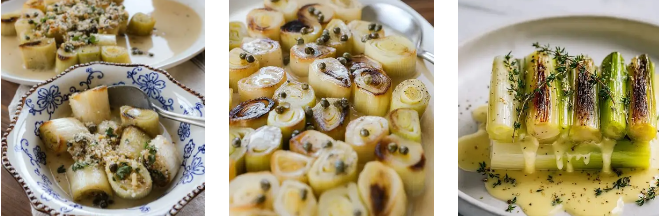
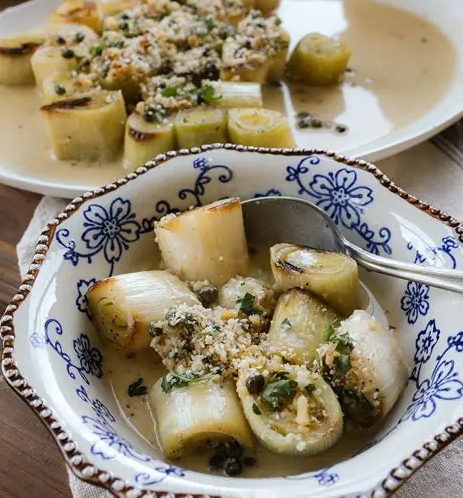
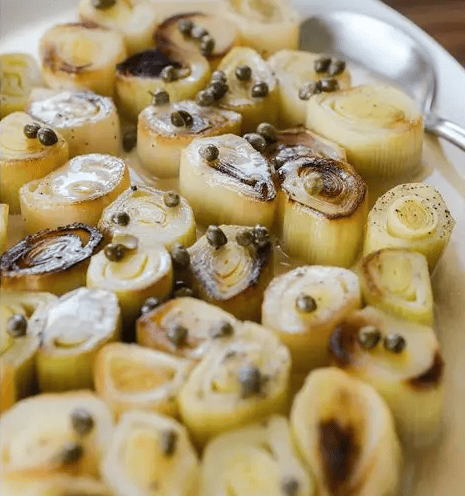
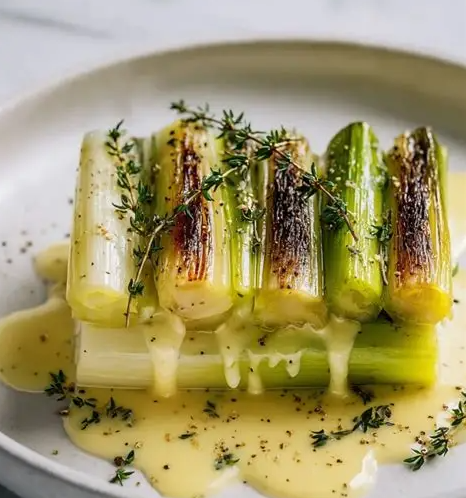
Pardon Your French Inspired: French Braised Leeks with White Wine & Thyme

This classic French dish transforms humble leeks into something silky, aromatic, and effortlessly elegant. Slowly braised in white wine, broth, and fresh thyme, the leeks soften into tender layers that taste both delicate and deeply flavourful. A touch of Dijon or butter enriches the braising liquid, creating a glossy finish that feels straight out of a countryside bistro. This is the kind of recipe Pardon Your French excels at — simple ingredients elevated through technique, seasonality and sophistication. It’s gentle and comforting.

Prep 10 min Cook 30 min Serves 4

Braised Leeks with Beurre Blanc (Elegant French Recipe) – MyWorldWideRecipe/myworldwiderecipe.com

Ingredients

4 large leeks, trimmed and halved lengthwise
2 tbsp butter
1 tbsp olive oil
2 cloves garlic, minced
1/2 cup dry white wine
1/2 cup vegetable or chicken broth
1 tsp fresh thyme leaves
To taste Salt & pepper
Optional 1 tbsp Dijon mustard
Optional Breadcrumbs or capers for garnish

Instructions

  1. Prep the leeks
    Trim the dark green tops, slice leeks lengthwise, and rinse thoroughly between layers to remove grit.
  2. Sauté aromatics
    Warm butter and olive oil in a skillet. Add garlic and cook until fragrant, about 1 minute.
  3. Add leeks
    Place leeks cut-side down in the pan. Cook 3–4 minutes until lightly golden.
  4. Deglaze
    Pour in white wine and simmer 2 minutes to reduce slightly.
  5. Braise
    Add broth, thyme, salt, and pepper. Cover and simmer 20–25 minutes until leeks are tender.
  6. Finish
    Stir in Dijon mustard if using. Reduce sauce uncovered for 2–3 minutes until glossy.
  7. Serve
    Plate leeks with sauce and garnish with breadcrumbs or capers.
White Wine French Braised Leeks recipe – Sugar Maple Farmhouse/www.sugarmaplefarmhouse.com

Beauty Benefits

Leeks are one of the most complexion‑friendly alliums:

  • Vitamin A precursors — support smooth texture and healthy cell turnover.
  • Vitamin C — brightens skin and boosts collagen formation.
  • Antioxidants (kaempferol + polyphenols) — reduce inflammation and protect against environmental stressors.
  • Sulfur compounds — support detoxification and clearer skin.
  • Potassium — helps maintain hydration and reduces puffiness.
  • Prebiotic fibre — nourishes gut health, directly improving skin radiance.

The white wine braise adds polyphenols, and the olive oil or butter enriches the dish with healthy fats that support a supple, hydrated complexion.

Health Benefits

This dish is nutrient‑dense, gentle on digestion, and wellness‑forward:

  • High in prebiotic fiber — supports gut microbiome and digestion.
  • Rich in antioxidants — reduces oxidative stress.
  • Heart‑healthy — folate, potassium, and polyphenols support cardiovascular balance.
  • Immune‑supportive — sulfur compounds help fight pathogens.
  • Low‑glycemic — stabilizes blood sugar.
  • Low‑calorie, high‑volume — ideal for clean‑eating and beauty‑nutrition cooking.

The slow braise makes leeks easy to digest, making this a perfect dish for gentle, nourishing meals.

Substitutions

Leeks

  • Shallots (sweeter, more delicate)
  • Green onions (lighter, sharper)
  • Fennel (aromatic, soft texture)

White Wine

  • Dry vermouth
  • Apple cider + splash of vinegar
  • Vegetable broth + lemon

Thyme

  • Tarragon (classic French herb)
  • Rosemary (stronger, more rustic)
  • Herbes de Provence

Butter / Olive Oil

  • Ghee
  • Vegan butter
  • Walnut oil (adds a French countryside note)

Broth

  • Vegetable broth
  • Light chicken broth
  • Mushroom broth (earthier)

Storage

  • Fridge: 3–4 days in an airtight container
  • Freezer: Up to 2 months (texture softens but flavor remains excellent)
  • Reheat: Gentle warm‑through in a skillet or low oven
  • Make‑ahead:
    • Braise fully
    • Store with its cooking liquid
    • Reheat with a splash of broth or wine to revive glossiness

History

Leeks have been cherished in French cuisine for centuries, valued for their subtle sweetness and ability to elevate simple dishes through aroma and texture. In traditional French cooking, leeks often form part of the mirepoix or serve as the star of veloutés, gratins and braises. Braising leeks in white wine is rooted in classic French farmhouse cooking, where wine was used not only for flavour but also for tenderizing vegetables and creating silky sauces. Thyme, a staple herb in French kitchens, pairs naturally with leeks, adding a gentle earthiness that complements their mild allium character. This dish reflects the essence of French culinary philosophy: take a humble ingredient, treat it with care and transform it into something refined, comforting and luxurious.

I’m Stacey Hobbs, thanks for reading Face by Stace! Until next time.
do you feel fabulous today?

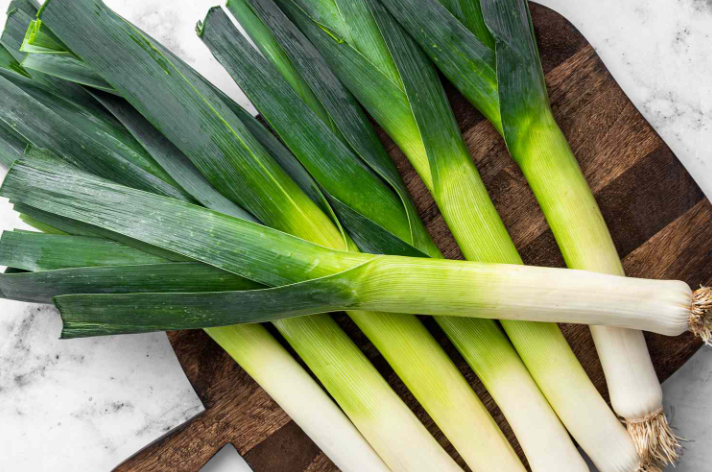
Leeks: What are the Beauty and Health Benefits? Plus, History?

French‑inspired · Clean‑eating friendly · Beauty‑nutrition rich

Leeks are one of the most refined vegetables in French cuisine — subtle, sweet, aromatic and beautifully versatile. Their pale green and white layers melt seamlessly into soups, veloutés, gratins, and braises, adding gentle allium warmth without overpowering a dish. They bring a soft, elegant perfume that instantly elevates everyday cooking into something bistro‑worthy. Whether used in rustic comfort dishes or polished French classics, leeks embody sophistication.

Beauty Benefits

Leeks are a glow‑supportive ingredient packed with complexion‑enhancing nutrients:

  • Vitamin A precursors — encourage smooth texture and healthy cell turnover.
  • Vitamin C — brightens skin and supports collagen formation.
  • Antioxidants (kaempferol + polyphenols) — reduce inflammation and protect against environmental stressors.
  • Sulfur compounds — support detoxification and clearer skin.
  • Potassium — helps maintain hydration and reduces puffiness.
  • Prebiotic fibre — nourishes gut health, directly improving skin radiance.

They’re one of the most beauty‑friendly alliums — gentle, nourishing, and ideal for glow‑forward recipes.

Health Benefits

Leeks are nutrient‑dense and supportive of overall wellness:

  • High in prebiotic fibre — strengthens digestion and gut microbiome.
  • Rich in antioxidants — reduces oxidative stress and inflammation.
  • Heart‑healthy — folate, potassium, and polyphenols support cardiovascular balance.
  • Immune‑supportive — sulfur compounds help fight pathogens.
  • Blood‑sugar friendly — naturally low glycemic and stabilizing.
  • Bone‑supportive — contain vitamin K for bone strength.
  • Low‑calorie, high‑volume — ideal for clean‑eating and wellness‑forward cooking.

Substitutions

Leeks are unique, but here are the closest swaps depending on the recipe:

Closest Flavour Matches

  • Shallots — delicate, sweet, perfect for French dishes.
  • Green onions (scallions) — lighter, sharper, great for salads and garnishes.
  • Sweet onions — stronger but workable for soups and sautés.

Storage

Leeks store beautifully when handled correctly:

  • Refrigerator:
    • Whole leeks: up to 2 weeks wrapped loosely in a damp paper towel.
    • Cut leeks: 3–4 days in an airtight container.
  • Freezer:
    • Sliced leeks freeze well for up to 3 months (best for soups and sautés).
    • Blanch before freezing for best texture.
  • Prep Tip:
    • Wash thoroughly — dirt hides between layers.
    • Slice lengthwise and rinse under running water to remove grit.

History on Leeks

Leeks have one of the longest and most culturally rich histories of any vegetable in the allium family. They were cultivated over 4,000 years ago in ancient Egypt, where they were prized not only for their gentle flavour but also for their medicinal qualities. Egyptian laborers and royalty alike consumed leeks for strength, digestion, and respiratory health, and they appear in early hieroglyphic records as a valued crop.

From Egypt, leeks spread through the Mediterranean, becoming a staple in Greek and Roman cuisine. The Romans adored leeks for their refined flavour — milder than onions and garlic — and used them in broths, porridges and early versions of veloutés. Roman naturalist Pliny the Elder even wrote that leeks were favoured by Emperor Nero, who believed they improved his singing voice. This association with refinement and wellness carried leeks into European culinary tradition.

Leeks became deeply rooted in French cuisine, where their subtle sweetness and velvety texture made them essential in soups, gratins, braises, and classic dishes like potage parmentier (leek and potato soup). French cooking elevated leeks from a simple vegetable to a symbol of rustic elegance — an aromatic base that transforms dishes without overpowering them.

In Wales, leeks took on symbolic meaning. They became a national emblem, worn by soldiers in battle and celebrated in folklore, poetry and cultural tradition. Their resilience, simplicity and nourishing qualities made them a symbol of strength and heritage.

As global cuisine evolved, leeks found their way into Japanese, Korean, and Chinese cooking, where long alliums like negi and pa share similar flavour profiles. Today, leeks appear in wellness‑forward recipes, beauty‑nutrition dishes and clean‑eating cuisine.

Leeks have travelled through civilizations, cuisines and cultures, always maintaining their identity as a gentle, elegant, nourishing ingredient. Their history is long, layered, and deeply intertwined with both culinary tradition and holistic wellness.

Stacey Says: I love leeks as much as I love winter squash and soup.

I’m Stacey Hobbs, thanks for reading Face by Stace! Until next time.
do you feel fabulous today?

Eating Bird Food Inspired: Acorn Squash Protein Breakfast Bake

This cozy, protein‑forward breakfast bake blends roasted acorn squash with warm spices, eggs, and protein powder to create a nourishing, autumn‑inspired morning dish. It’s soft, lightly sweet and naturally energizing — the kind of wholesome comfort Eating Bird Food is known for. The squash adds creaminess, the cinnamon adds warmth, and the pepitas add crunch, making this a beautiful seasonal breakfast that feels both indulgent and clean‑eating friendly.

I love how this is a high protein dish, thanks to the Greek yogurt, pepitas (pumpkin seeds) and eggs. Also, makes for a great meal-prep. Check out the meal prep tip below.

Prep 10 minutes Cook 35 minutes Serves 4

Protein-Packed Breakfast Acorn Squash Tours

Protein-Packed Breakfast Acorn Squash Tours/www.bakingrecipesjoy.com

Ingredients

2 medium acorn squash, halved and seeded
2 tbsp olive oil
1/2 tsp sea salt
1/4 tsp black pepper
1 cup Greek yogurt (or dairy‑free yogurt)
1/3 cup granola or high‑protein granola
2 tbsp chopped pecans
2 tbsp dried cranberries
1 tbsp peanut butter or almond butter
1–2 tbsp maple syrup (optional)

Instructions

  1. Roast the Squash
    Preheat oven to 400°F (200°C). Brush acorn squash halves with olive oil, salt, and pepper. Place cut‑side down on a baking sheet and roast for 30–35 minutes until fork‑tender.
  2. Prepare the Filling
    In a bowl, mix Greek yogurt with maple syrup if desired. Set aside your granola, pecans, cranberries, and nut butter.
  3. Assemble
    Flip roasted squash halves upright. Spoon yogurt into the center of each squash bowl.
  4. Add Toppings
    Top with granola, pecans, dried cranberries, and a drizzle of peanut or almond butter.
  5. Serve
    Enjoy warm for a cozy, protein‑packed breakfast inspired by Eating Bird Food’s clean, balanced style.

Beauty Benefits

Acorn squash is rich in beta‑carotene, which converts to vitamin A and supports smooth, bright even skin tone. Eggs and protein powder provide amino acids essential for collagen formation and skin repair. Pepitas add zinc, a mineral crucial for clear skin and hormonal balance. Cinnamon helps regulate blood sugar, reducing inflammation that can contribute to breakouts. The healthy fats and antioxidants in this bake support a hydrated, resilient complexion — making it a glow‑boosting breakfast.

Health Benefits

This breakfast bake is nutrient‑dense and balanced. Acorn squash provides fibre, potassium, and slow‑release carbohydrates for steady morning energy. Eggs and protein powder deliver high‑quality protein to support muscle repair, satiety, and hormone health. Pepitas contribute magnesium, iron, and healthy fats. Cinnamon supports blood‑sugar stability, while vanilla adds natural sweetness without added sugar. It’s naturally gluten‑free, antioxidant‑rich and ideal for clean‑eating meal prep.

Substitutions

Squash:

  • Butternut squash (creamier, sweeter)
  • Delicata squash (no peeling required)

Protein:

  • Vanilla collagen powder
  • Plant‑based protein powder
  • ½ cup Greek yogurt (for added moisture and protein)

Eggs:

  • Flax eggs (vegan option)
  • Egg whites (lighter, higher protein)

Pepitas:

  • Walnuts
  • Pecans
  • Almonds
  • Sunflower seeds (nut‑free)

Spices:

  • Add nutmeg or ginger
  • Swap cinnamon for pumpkin spice

Sweetener (optional):

  • Maple syrup
  • Honey
  • Coconut sugar

Storage

  • Fridge: 3–4 days in an airtight container
  • Freezer: Up to 2 months; thaw overnight
  • Reheat: 300°F (150°C) for 10–12 minutes or microwave gently
  • Make‑ahead:
    • Bake fully, cool, slice into squares
    • Store individually for grab‑and‑go breakfasts
  • Meal‑prep tip:
    • Add fresh toppings (berries, yogurt, nut butter) right before serving

History

Acorn squash has been cultivated in North America for thousands of years, originally grown by Indigenous communities who valued its sweetness, long storage life, and versatility. Its gentle flavor and natural starches made it a staple in autumn and winter meals. Modern wellness creators like Eating Bird Food helped bring squash into breakfast recipes by pairing it with protein‑rich ingredients, warm spices and nutrient‑dense toppings. Your Acorn Squash Protein Breakfast Bake continues this evolution — blending Indigenous ingredients, contemporary nutrition, and cozy seasonal flavors into a clean‑eating breakfast that feels both comforting and energizing.

The Early Hood Dryer (late 1920s–1930s)

The early hood dryer of the late 1920s and 1930s represents one of the most important turning points in salon history. Before this invention, drying hair meant sitting beneath gas‑heated hoods from the 1890s or navigating the chaotic airflow of multi‑nozzle machines. The hood dryer changed everything by enclosing the head in a single, helmet‑like chamber that delivered consistent, controlled heat. For the first time, stylists could dry hair evenly without disturbing the sculpted shapes of finger waves, Marcel sets, or the sleek flapper bob.

Clients sat upright beneath the heavy metal hood, connected to a large fan or motor positioned behind the head. The machine circulated warm air throughout the chamber, reducing drying time and improving styling precision. This uniform heat distribution made the hood dryer far more efficient than earlier devices, transforming salon workflow and elevating the quality of finished styles.

Visually, the early hood dryer embodied the industrial elegance of the era. Its metallic shell, exposed screws, and mechanical base reflected the 1930s fascination with engineering and modernity. It looked like a hybrid between a beauty tool and a laboratory device, yet it quickly became a staple in salons across North America and Europe.

The early hood dryer paved the way for the rigid‑hood dryers of the 1950s and the plastic home bonnet dryers of the 1960s. It represents the moment when drying technology became standardized, reliable, and central to professional hairdressing. In the evolution of beauty machinery, the early hood dryer stands as the first truly modern salon dryer.

I’m Stacey Hobbs, thanks for reading Face by Stace! Until next time.
do you feel fabulous today?