The heated lash curler of the early 20th century is one of the most daring beauty tools ever introduced — a small, all‑metal device that promised dramatic, wide‑eyed glamour long before rubber pads or electric curlers existed. In the 1910s and 1920s, women relied on manual curlers crafted entirely from metal often warmed over a candle or spirit lamp to achieve a lasting curl. These tools required precision, courage, and a steady hand, reflecting an era when beauty innovation was bold, experimental, and thrillingly hands‑on.
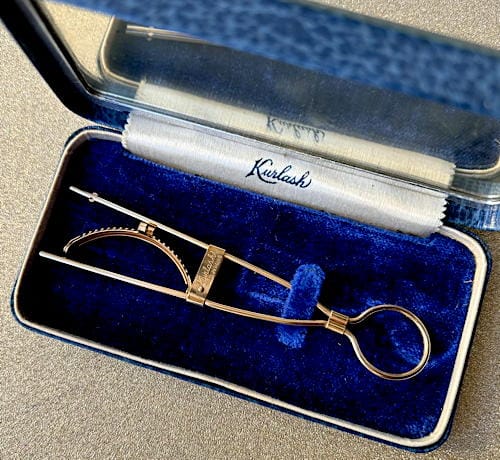
The Kurlash curler is one of the earliest surviving examples of this technology. Its elegant metal frame, curved lash pad and looped handles embody the craftsmanship of the period. Though later versions incorporated rubber pads, the earliest Kurlash models were used exactly as heated curlers had been for years: warmed gently, applied carefully and used to lift the lashes into a graceful upward arc. Silent‑film actresses and flapper women embraced the look, pairing curled lashes with mascara cakes and lash pomades to create expressive, camera‑ready eyes.
The Kurlash Natural Eyelash Curler was sold in two forms: a gold ‘F’ model (US$5.00) packaged in a blue Morocco leather case; and an ‘S’ model (US$2.00) with a silver-like finish sold in a plush-lined cardboard box.
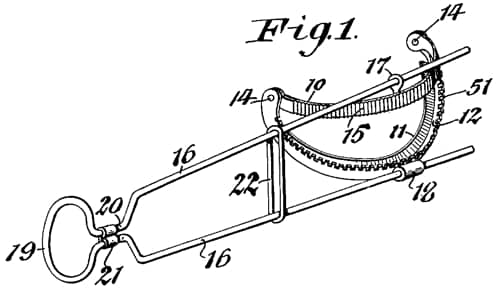
The patent drawing — shows the mechanical lineage behind these tools. The diagram reveals the engineering mindset of the era: gears, clamps and curved metal designed to shape lashes with precision. It is the closest archival representation of the heated lash curlers used before mass‑market rubber‑padded versions appeared in the 1940s.
In 1923, a group of investors founded the Stickel Company at 380 Cottage Street, Rochester, New York State to market the Kurlash Natural Eyelash Curler, a patented device invented by Charles W. Stickel [1889-1943].
Together, these images capture the spirit of early lash‑curling technology: inventive, glamorous and un-mistakably modern for its time.
I’m Stacey Hobbs, thanks for reading Face by Stace! Until next time. do you feel fabulous today?
The cold cream boom of the 1920s marked a defining shift in beauty culture, transforming skincare from a private ritual into a modern, commercialized industry. Cold cream had existed for centuries but the Jazz Age elevated it into an everyday essential. Silent‑film actresses, flapper women and beauty editors all championed cold cream as the foundation of a polished, camera‑ready complexion. It became the universal product: a cleanser, moisturizer, makeup remover and base for powder — all in one iconic jar.
A true 1920s cold cream was packaged in heavy glass jars with metal lids, often decorated with Art Deco typography. Brands like Pond’s, Daggett & Ramsdell, Pompeian, and Hinds dominated vanities across North America and Europe. Their advertisements promised “velvety skin,” “radiant youth,” and “complexions worthy of the screen,” linking cold cream directly to Hollywood glamour. Women embraced it not only for its function but for its symbolism: modern beauty, scientific skincare and the rising influence of cosmetic advertising.
The cold cream boom laid the foundation for the modern skincare industry. It introduced the concept of daily cleansing, branded beauty routines and the belief that a flawless complexion begins with proper care. In the evolution of beauty technology, cold cream stands as the decade’s most influential innovation.
Enjoy these cold cream adverts from the 1920s, below.
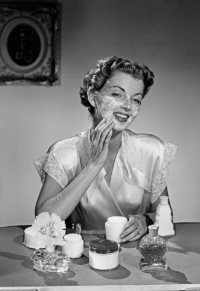
Cold cream’s texture — thick, cooling and luxuriously white — became part of the routine. Women massaged it into the skin to dissolve rouge, powder and cake mascara then wiped it away with a cloth, leaving the face soft and luminous. This tactile routine defined 1920s beauty, emphasizing care, indulgence and the new idea that skincare was as important as makeup.
Stacey Says: Pond’s Cold Cream removes makeup, including waterproof formulas. I was pleasantly surprised and thankful. All the while hydrating my skin as it removed my makeup and worked as a great cleanser too. I have yet to try it as a makeup base much like Joan Crawford had done. There are many usages to using cold cream, specifically Pond’s. It’s amazing, high-quality formula.
Have you used cold cream before? Pond’s Cold Cream? Please let me know, I’d love to hear from you!
I’m Stacey Hobbs, thanks for reading Face by Stace! Until next time. do you feel fabulous today?
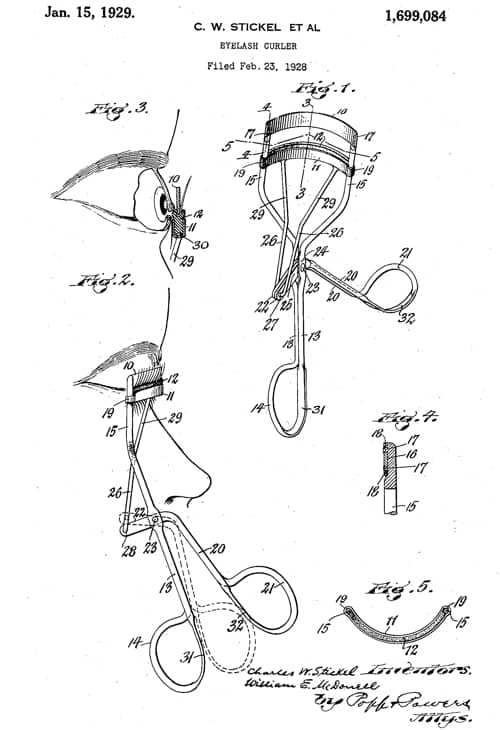
The 1928–1929 Stickel patent is the moment the eyelash curler became a true beauty technology — engineered, standardized, and ready for mass adoption. Before this patent, lash curlers existed in scattered forms: heated metal clamps, early Kurlash models, and experimental devices that varied wildly in shape and safety. The Stickel design changed everything. It introduced the precise geometry, hinge mechanics, and ergonomic structure that define the modern eyelash curler used by millions today.
The patent drawing reveals the brilliance of early cosmetic engineering. Figure 1 establishes the curler’s full form: two looped handles, a central hinge, and a curved clamping surface designed to follow the natural arc of the eye. Figures 2 and 3 show the device in use, demonstrating how the lash pad aligns perfectly with the eyelid — a revolutionary detail that ensured comfort and accuracy. Figure 5 highlights the curvature of the pad itself, the foundation of the “universal curl” shape still used in contemporary curlers.
This patent also introduced the concept of replaceable pads, a feature that transformed lash curling from a risky, heated process into a safe, pressure‑based technique. By eliminating heat and standardizing the clamp’s curvature, Stickel created a tool that could be used daily, sold widely, and manufactured consistently.
Every modern curler — from Shu Uemura to Shiseido to Tweezerman — traces its lineage directly to this patent. It is the blueprint of the beauty industry’s most enduring tool, a perfect example of how engineering and aesthetics merged to create a timeless icon.
I’m Stacey Hobbs, thanks for reading Face by Stace! Until next time. do you feel fabulous today?
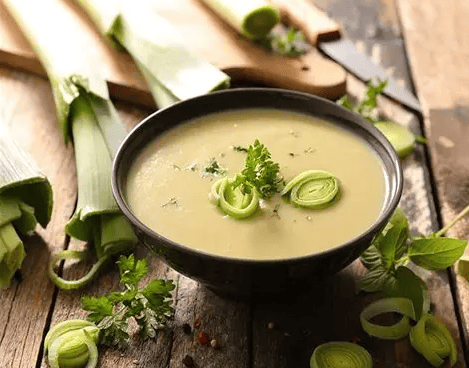
Leek velouté is one of the most refined soups in French cuisine with its silky, delicate and it’s luxurious. This version gently simmers leeks until soft, then blends them into a smooth, velvety base enriched with crème fraîche. The result is a pale green, cloud‑soft soup with a sweetness and a clean, aromatic finish. Fresh chives add brightness, while the crème fraîche gives the velouté its signature French elegance. It’s simple, seasonal and deeply aligned with Pardon Your French vibe.
Velouté is one of the five “mother sauces” of classic French cuisine, known for its silky, velvety texture. Leek velouté evolved from traditional French farmhouse soups, where leeks — abundant and inexpensive — were simmered into gentle, aromatic broths. Over time, chefs refined these rustic soups into elegant veloutés by blending them smooth and enriching them with cream. Today, leek velouté remains a staple in bistros and home kitchens across France, celebrated for its simplicity, refinement and sophistication.
Ingredients
4 large leeks, white + light green parts only, sliced 2 tbsp unsalted butter 1 small onion, chopped 3 cups vegetable or light chicken broth 1/2 cup crème fraîche 1/2 tsp fine sea salt (plus more to taste) 1/4 tsp white pepper 2 tbsp fresh chives, finely chopped 1 tbsp olive oil (optional for drizzling)
Instructions
Prepare the leeks Trim leeks, slice lengthwise, and rinse thoroughly to remove grit. Slice into thin half‑moons.
Sauté aromatics In a large pot, melt butter over medium heat. Add onion and leeks; cook 8–10 minutes until soft and fragrant.
Simmer Pour in broth, season with salt and white pepper, and bring to a gentle simmer. Cook 10–12 minutes until leeks are very tender.
Blend Use an immersion blender (or transfer to a blender) to puree until silky smooth.
Finish with crème fraîche Stir in crème fraîche until velouté becomes pale, glossy, and velvety. Adjust seasoning.
Serve Ladle into bowls, garnish with fresh chives, and drizzle with olive oil if desired.
Beauty Benefits
This velouté is a glow‑forward soup:
Vitamin A precursors → smooth texture + healthy cell turnover
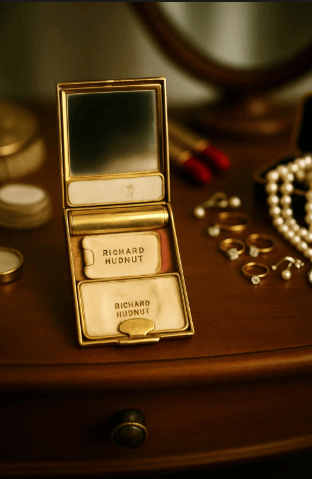
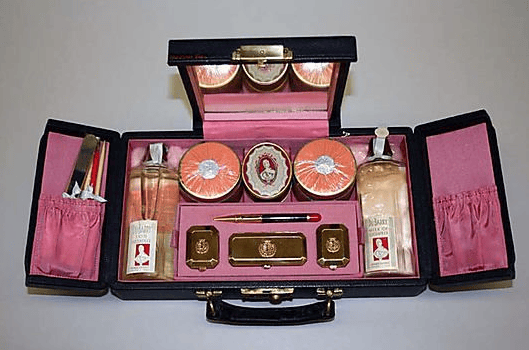
The 1920s compact case is one of the most exquisite artifacts of early beauty technology—an object where cosmetics, engineering, and Art Deco design converged. More than a simple powder holder, the compact became a symbol of womanhood, independence and the rise of portable beauty. In an era defined by chrome skyscrapers, geometric architecture and the glamour of silent‑film stars, the compact case mirrored the decade’s obsession with elegance and innovation.
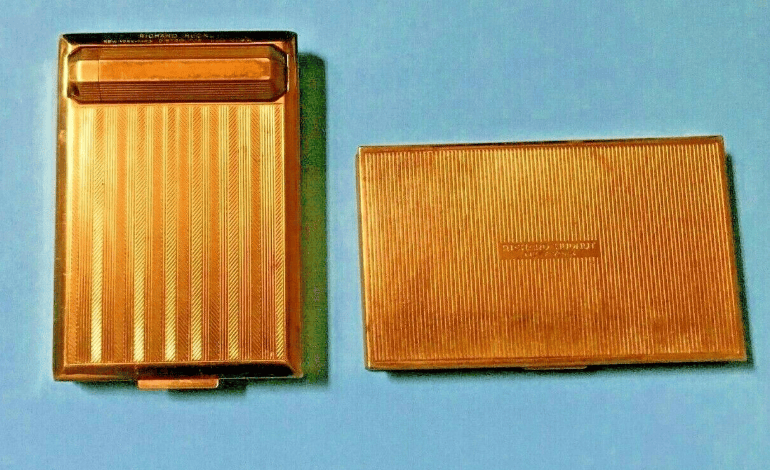
A true 1920s compact was crafted from metal—chrome, silver, brass or enamel‑coated alloys. Its exterior often featured Art Deco motifs: sunbursts, chevrons, stepped forms, lacquered panels or geometric inlays. These designs weren’t merely decorative; they reflected the decade’s fascination with symmetry, machinery and modernity. Brands like Evans, Volupté, Richard Hudnut, and Chanel produced compacts that were as coveted as jewelry.
Inside, the compact was a miniature beauty workstation. It included a built‑in mirror, a powder well, and a puff, sometimes accompanied by rouge or lipstick compartments. Women carried them to parties, nightclubs, and speakeasies, opening them with a satisfying metallic click that became part of the ritual of glamour. For the first time, beauty was portable—something a woman could apply discreetly in public, signaling confidence and autonomy.
The 1920s compact case wasn’t just a cosmetic tool; it was a cultural statement. It represented the shift toward personal expression, modern design, and the merging of beauty with technology. Today, these compacts remain collectible treasures, preserving the artistry and sophistication of the Jazz Age.
Today, these cosmetic compacts have become collectibles.
I’m Stacey Hobbs, thanks for reading Face by Stace! Until next time. do you feel fabulous today?
Traditional · Rustic French countryside · Pardon Your French Inspired
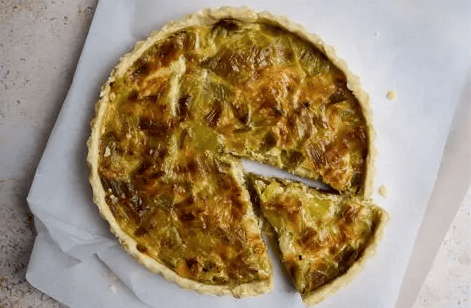
Flamiche is a beloved specialty from Picardy in northern France. Flamiche is a rustic, comforting leek tart that celebrates the region’s most iconic vegetable. Tender sautéed leeks melt into a creamy filling enriched with eggs and crème fraîche, all nestled inside a buttery pastry shell. The result is a warm, elegant tart with soft sweetness, gentle allium perfume and classic French charm. It’s humble, cozy and deeply refined.
Prep 20 min Cook 40 min Serves 6
25 Easy French Dinner Recipes for a Cozy Night In – Food Fun & Faraway Places/kellystilwell.com
History
Flamiche originates from Picardy, a northern French region known for its abundant leek fields and rustic farmhouse cooking. Traditionally, Flamiche was made with bread dough rather than pastry, evolving over time into the buttery tart we know today. Leeks have long been central to Picardy cuisine, appearing in soups, gratins and tarts that highlight their gentle sweetness. Flamiche embodies the French countryside: take a humble ingredient, treat it with care, and transform it into something comforting, elegant, and deeply satisfying.
Ingredients
2 tbsp unsalted butter 4 large leeks, cleaned and thinly sliced 1 cup crème fraîche (or heavy cream) 3 large eggs 1/2 cup Gruyère or Comté, grated (optional but traditional) 1/4 tsp nutmeg to taste salt & black pepper 1 sheet puff pastry or tart crust 1 tbsp olive oil (for sautéing, optional)
Instructions
Prepare the leeks Trim, clean, and thinly slice the leeks. Melt butter in a skillet over medium heat and sauté leeks 10–12 minutes until soft and sweet.
Season Add salt, pepper, and nutmeg. Cook 1–2 minutes more to meld flavors.
Prepare the filling In a bowl, whisk crème fraîche (or cream) with eggs until smooth. Fold in the sautéed leeks and grated Gruyère if using.
Prepare the crust Line a tart pan with puff pastry or pie crust. Trim edges and prick the base with a fork.
Assemble Pour the leek mixture into the prepared crust and smooth the top.
Bake Bake at 375°F (190°C) for 35–40 minutes until golden, set, and lightly puffed.
Cool & serve Let cool 10 minutes before slicing. Serve warm or room temperature.