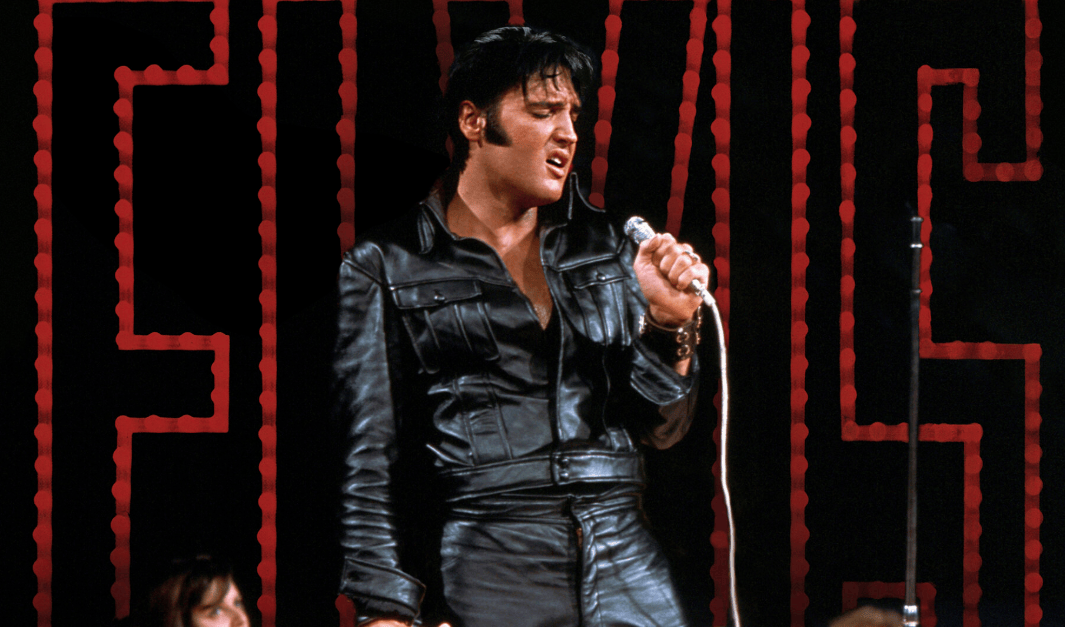
Elvis wore make-up not as vanity but more as a necessity, with his make-up mostly subtle, stage‑and‑camera focused products, foundation, powder, eyeliner, mascara, occasional lip care and eyeshadow used to sharpen his eyes, even skin tone and survive hot lights. Priscilla Presley and several make-up pros confirm he relied on eyeliner, mascara and base products for performances and film. Later in Elvis’ life he darkened his brows and lashes. This method was to keep his features visible under stage lights. He wore make-up to make his eyes more expressive and visible to audiences and cameras. These details derive from people who knew him and from photographic evidence.
Elvis getting his make-up backstage at The Ed Sullivan Show, CBS/FineArtAmerica.com
Quick summary of Elvis’s beauty routine: What Elvis used and why
Elvis’ core make-up he would use, as reported, was pan-stick or pancake foundation from Max Factor, setting powder, black kohl as his eyeliner, mascara, lip balm and lip liner. Elvis’ hair products he used were pomade, gel, which were important to his image. This has been confirmed through accounts by Priscilla Presley, contemporaries such as Tony Curtis, and make-up artists working on Elvis or on the recent Elvis film.
Pan-Stick/Pancake foundation was used to even skin and prevent shine. This created a consistent, camera‑ready base.
Black kohl was used as eyeliner, to be applied above and below the eye and mascara to make his blue eyes read from a distance and on film. Priscilla and make-up pros note he sometimes darkened his brows and lashes, as well.
Mostly lip balm or subtle liner Elvis wore to keep lips defined; regular hair grooming (pomade, strong hold products, such as gel) completed the signature pompadour.
How to recreate Elvis’s stage look (practical steps)
Base: Apply a thin layer of pan‑stick or cream foundation; set with powder to avoid shine.
Eyes: Use a soft kohl pencil along upper and lower lash lines; smudge slightly for depth; add mascara to upper and lower lashes.
Brows/lips: Darken brows subtly if needed; use clear balm or a neutral liner for lip definition.
Hair: Finish with pomade and hairspray for a high, glossy pompadour.
Key considerations and limitations
Elvis’ make-up varied by decade and by medium (’50s TV vs. ’60s films vs. ’70s concerts). What worked for film (heavier pancake makeup) can look heavy in daylight.
Much of what is known derives from interviews, memoirs and modern film re-creations; exact product lists are not exhaustively documented. This means some details are inferred from multiple accounts.
Risks, myths, and what to watch for
What is Myth: Elvis “hid” his face with make-up — false; the goal was to enhance for visibility, not concealment.
Health/safety: Heavy stage make-up and hair products used repeatedly can irritate skin; modern re-creations should use non‑comedogenic, tested products and remove make-up thoroughly.
I’m Stacey Hobbs, thanks for reading. Until next time!
The King of Rock ’n’ Roll didn’t just change music — he re-wrote the rules of menswear and pioneered what we now refer to as personal branding.
Elvis Presley played a major role in re-shaping mid‑20th‑century menswear and performance fashion, by popularizing rockabilly style, the pompadour and grooming culture and the flamboyant stage jumpsuit that influenced performers and designers for decades. As well as with popular ideas about masculine presentation, with effects that filtered into both youth culture and commercial fashion over decades.
Evidence highlights and interpretation
Stage spectacle Elvis has been credited with transforming male stage-wear into a spectacle form. His custom jumpsuits (often by Nudie Cohn and Bill Belew) set a new standard for theatricality in male performance costume.
Street and youth fashion Elvis’ early rockabilly looks (high‑waisted trousers, loafers, windowpane jackets) were widely copied by teenagers and helped create the template for youth sub-cultural dress in the 1950s and 1960s.
Grooming and commercial ripple His pompadour and polished presentation made male grooming visible and aspirational, encouraging product markets and stylistic emulation.
The next time you think of the King of Rock N Roll, the gentleman that changed the attire of rock music and menswear, the genre, you’ll be thinking of the Greatest Of All Time, Elvis Presley!
I’m Stacey Hobbs, thanks for reading. Until next time!
Elvis’ hair-care and skin-care secrets combined with stage make-up, deliberate tanning and a simple but consistent skin routine. He used heavier stage foundations and eyeliner for performances, took tanning pills and sun exposure to deepen his tan, and favoured basic cleansers and emollients (Noxzema, Neutrogena soap, Vaseline) plus careful hair and brow tinting.
Could you even envision Elvis as a natural blond, sandy blond hair that is? It’s hard to picture it when we are accustomed to his mid-night black hair shade. Elvis would dye his hair black every two weeks because blonde hair has difficulty to absorb colour. Elvis first relied on shoe polish early in his career before switching it out for more luxurious, professional hair products.
Before Black Velvet: The Shocking Homemade Secret Behind Elvis’ Iconic Pompadour
When you picture Elvis Presley, where does your mind instantly drawn towards? His fashion? His make-up? His sharp, jet-black pompadour gleaming under the ever so blinding Hollywood studio spotlights? The pompadour became the definitive visual trademark of 20th-century rock-and-roll masculinity.
In the early 1950s, long before he had access to elite studio stylists or professional salon colourists, a young Elvis was fiercely determined to engineer a bold, high-contrast visual brand that would shatter the conservative, grey-flannel norms of mid-century style. Early in Elvis’ career when his finances were tight he turned to an extremely un-conventional and some may add dangerous home-made grooming alternative. He would dye his hair with black shoe polish.
He would meticulously massage the dark shoe polish directly into his sandy-blond strands, blending it with thick layers of petroleum jelly to force the hair into that signature pompadour of his.
While the shoe polish created the high-contrast illusion that was needed at the time, despite it being volatile, drying formula that wreaked havoc on his scalp. Once he had established himself, Elvis’ routine evolved into a multi-step regimen centered around a highly specific salon formula. Elvis replaced shoe polish for Miss Clairol 51N (Black Velvet) hair dye. Elvis then would balance the hair dye with intensive Vitamin E oil treatments to restore his hair’s natural moisture barrier under hot stage lights.
Elvis understood that your image is an important aspect to your personal brand which is why he was strict on producing and executing his brand.
Elvis’ Skincare Routine: Vitamin E & Deep Hydration
The Complexion Focus. Long before it became mainstream for men to openly discuss skincare, Elvis was incredibly meticulous about his skin-care routine to combat the heavy stage make-up he wore.
The Formula. He relied on an intensive, daily multi-step regimen centered around heavy hydration and pure Vitamin E oil to keep his skin looking perfectly smooth and clear on camera. He frequently used a custom blend of moisturizing creams to prevent dehydrated skin under intense studio spotlights.
There you have it, Elvis’ Beauty Secrets! Hope you enjoyed it.
I’m Stacey Hobbs, thanks for reading. Until next time!
A battle of silhouettes, politics, ego and the future of femininity.
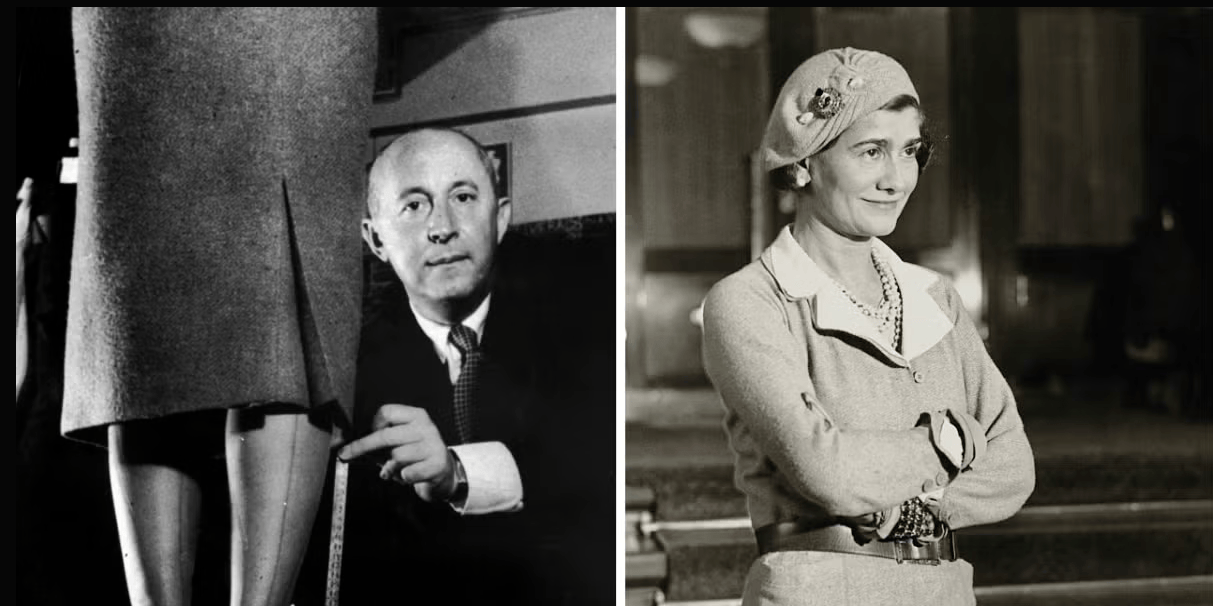
The feud between Coco Chanel and Christian Dior was just as personal as it was philosophical. It was a war between two visions of womanhood, two opposing aesthetics and two designers whose reputations were shaped by re-construction of the mid‑20th century.
When Chanel returned from retirement in 1954, she re‑entered a world Dior had already transformed. His 1947 “New Look” — tiny waists, padded hips, and sweeping skirts — revived hyper‑femininity after wartime austerity. The world adored it. Chanel despised it.
To her, Dior’s silhouette wasn’t revolutionary. It was regressive.
And she made sure everyone knew it.
The Clash of Philosophies: Utility vs. Radical Extravagance
Dior New Look, 1947Dior New Look, 1947
The Dior Disruption (1947) On 12 February 1947, Dior debuted the “New Look,” a silhouette that shocked the world. The New Look was not anything that had been seen before. The New Look was:
sloping shoulders.
padded bust.
a hand‑span waist.
yards of heavy fabric.
mid‑calf, sculptural skirts, A-Line skirts.
After years of rationing, Dior’s extravagance felt like rebirth. The press hailed him as the savior of Paris couture.
Chanel, watching from Switzerland, saw something else entirely.
The Chanel Backlash Chanel was appalled. To her, Dior’s designs were not clothing — they were cages.
She famously snapped:
“Dior doesn’t dress women. He upholsters them.”
She compared his gowns to “old armchairs” mocking the layers of tulle, buckram, boning and padding required to create the New Look.
Her critiques were not subtle. They were surgical.
Her core arguments:
Male designers didn’t understand women’s bodies. “Only a man who was never intimate with a woman could design something that un-comfortable.”
The New Look erased wartime progress. Women had run factories, driven ambulances and worked farms. Why force them back into corsets?
The silhouette was a social regression. Chanel saw Dior’s work as un-doing decades of liberation.
This wasn’t just aesthetic disagreement. It was a cultural indictment.
How the feud started (core facts)
The feud between Chanel and Dior began when Chanel had detested Dior’s New Look collection which was Dior’s first collection upon opening his fashion house, House of Dior. This first collection and his fashion house was produced after serving as Lucien Lelong’s apprentice along with Pierre Balmain.
Chanel favoured comfort, simplicity and menswear borrowing; Dior celebrated femininity through structure and volume. This was a fundamental design disagreement eventually became personal.
Dior’s rise after the war coincided with a cultural appetite for luxury; Chanel’s 1954 return framed her as defending a different idea of modern womanhood.
Chanel publicly mocked Dior’s work and questioned his understanding of women with remarks that were widely reported and intensified the rivalry.
The Feud That Re-shaped Fashion: Why Coco Chanel Hated Christian Dior’s “New Look”
On 12 February 1947, Christian Dior did something that made Coco Chanel’s blood boil. He debuted his first collection introducing the “New Look,” a hyper-feminine silhouette featuring sloping shoulders, a padded bust, a hand-span waist and an explosion of heavy mid-calf fabric.
To the fashion press, Dior was a savior who restored glamour to a bleak, post-war world. But to 64-year-old Coco Chanel, watching from self-imposed retirement in Switzerland, Dior wasn’t a savior. He was a tyrant dragging women back into the dark ages.
“He Upholsters Them”: Chanel’s Verbal Warfare
Chanel was never one to hold her tongue and she launched a relentless press campaign against Dior and his male contemporaries. She famously argued that male couturiers did not understand the physical realities of being a woman.
Her critiques were sharp, witty and deeply cutting.
The Furniture Dig. Irritated by the heavy layers of tulle, buckram and boning required to construct Dior’s dresses, Chanel snapped to reporters, “Dior doesn’t dress women, he upholsters them.” She added that a woman sitting down in a New Look gown resembled “an old armchair.”
The Intimacy Zinger. Chanel firmly believed that garment design should prioritize physical movement and ease, noting, “Only a man who never was intimate with a woman could design something that un-comfortable.”
The Regression Argument. To Chanel, forcing a generation of women who had just run factories, driven ambulances and worked farms during WWII back into waist-cinching girdles was a major social regression.
The 1954 Comeback: A Rebellion in Tweed
vintageclothingguides.com
In 1954, at the age of 71, Chanel officially came out of retirement. Her singular, driving motivation was to take down Dior. Her weapon? The Chanel Tweed Suit. Well there you have it. The reason that drove Chanel out of retirement.
It was everything Dior was not.
collarless, boxy jacket
straight, easy skirt
no corset
no padding
real pockets
silk linings
a weighted chain for perfect drape
Introduced on 5 February 1954, her comeback collection was the ultimate anti-Dior. She had a mission what can anyone say. When Chanel returned to fashion in 1954, so did Schiaparelli. Chanel gained success in her comeback whereas Schiaparelli did not find success. Chanel ran Schiaparelli out of fashion leaving Schiaparelli to close her fashion house yet again. So, Chanel believed what she did with and to Schiaparelli, she can do to Dior. She upstaged Schiaparelli in her feud with this artist, even creating a classic the Little Black Dress. This lead to Chanel to believe she could upstage Dior, and with hopes and possibility run Dior out of the fashion industry. Little did Chanel know, Dior was an apprentice of her once friend, Lucien Lelong, with whom Chanel had a falling out with (of course she did), Cristóbal Balenciaga was another friend she had alienated due to Chanel’s sharp tongue, which was legendary. She feuded with Schiaparelli, Balenciaga, Lelong, and nearly every male couturier of her era. But her hostility toward Dior was different. It was ideological.
It was comfort disguised as elegance – a direct attack on Dior’s architecture.
Chanel believed she could do to Dior what she had done to Schiaparelli: outlast her, out‑design her, and push her out of fashion entirely.
But Dior was not Schiaparelli. He was the protégé of Lucien Lelong, a man Chanel had also feuded with. He was supported by Balenciaga.
Afterall, Dior represented everything she believed fashion should never return to: corsets, padding, restriction and theatrical femininity.
Chanel represented the opposite: ease, movement, menswear influence and functional luxury.
This time the battlefield was different. Their feud was inevitable.
Two Philosophies, One Industry‑Shaping Feud
Dior Romantic fantasy. Hyper‑femininity. Architectural silhouettes. Luxury as spectacle.
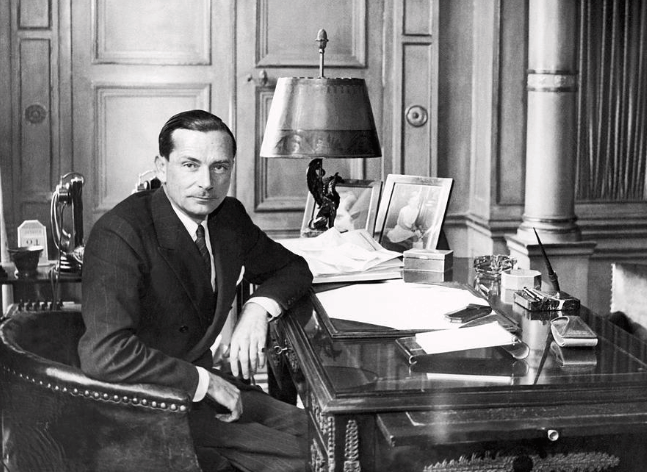
Lucien Lelong was born on 11 October 1889, in Paris, France. He was born directly into the world of fashion. His parents, Arthur Lelong and Éléonore Marie Lambelet, owned a modest but respected Parisian couture house called A. E. Lelong.
With Lelong growing up surrounded by textiles and seamstresses, Lelong developed an eye for style, but he also saw the grueling financial realities of running a fashion business. At the age of eighteen he showed his early flair for marketing by convincing his parents to completely re-model their shop, painting it entirely black to give it a dramatic, jewel-box luxury feel.
An Elite Business Education
Unlike his contemporary designers who trained as apprentices in draping and sketching, Lelong took a highly unusual route for a couturier. He chose not to study art. Instead, Lelong enrolled himself into the elite HEC Paris (École des Hautes Études Commerciales), one of Europe’s most prestigious business schools.
Lelong openly admitted throughout his life that he could not sew, drape fabric or draw a fashion sketch. Instead he viewed himself as an editor, a curator and a corporate director who understood consumer psychology, supply chains and international trade.
World War I and the Scars of Trenches
Lelong’s early career plans were violently interrupted by the outbreak of World War I in 1914. He joined the French Army, serving as an intelligence officer.
In May 1917, he was critically wounded by shrapnel in the trenches. The blast left him with severe abdominal injuries and permanent facial scars. He spent months recovering in a military hospital. Lelong was awarded the Croix de Guerre for his courage under fire.
Building the House of Lelong
Upon his release from the military, Lelong took over his parents’ fashion house in 1920, first order of business was re-naming it Lucien Lelong. He quickly moved the operations to the prestigious Place de la Madeleine in Paris.
Thanks to Lelong’s business-focused leadership, his house exploded in popularity. Lelong refrained from approaching fashion as a typical Parisian, Frenchman, instead his approach to fashion was to adopt the Americanized, corporate mindset. By the late 1920s, he employed over 1,200 people. He was one of the first designers to realize that the traditional haute couture model was too expensive for the modern era, leading him to pioneer the world’s very first luxury ready-to-wear line (Éditions) in 1934 and a highly lucrative global perfume empire (Parfums Lucien Lelong) in 1926.
1926–1930: Perfume Empire + Industry Leadership Begins
1926: Launch of Parfums Lucien Lelong
Lelong founded his perfume division of his business of his house Lucien Lelong, which became one of the most successful fragrance houses in Paris. He created over forty perfumes between 1925 and 1952, this was the age of Chanel No. 5 (isn’t the fragrance divine?), and early minimalist bottles labeled simply A, B, C, J, and N.
1926: Knight of the Legion of Honour
He was awarded the Chevalier (Knight) of the Légion d’Honneur, recognizing his rising influence in French couture
1928: Committee Member, Chambre Syndicale de la Couture
Lelong was inducted into the governing body of French couture, marking the beginning of his political and organizational influence in the industry, an impact he had imprinted for decades to come.
Lelong had stepped out of the traditional format of luxury fashion, by pioneering the world’s first luxury ready‑to‑wear line, called Éditions, in 1933–1934. This was revolutionary, couture had never offered accessible, high‑end clothing before. Luxury fashion’s tradition was all about custom-made attire, items if you will, that required fittings appointments, etc. So, for Lelong to skip over the traditionalism by offering ready-to-wear luxury line and in Paris, people didn’t know what to think, how to take this new news, a new genre of fashion attire in how consumers can acquire such items. Lelong was forward-thinking.
Lelong didn’t stop at ready-to-wear luxury line, he introduced modern management practices, large accessory lines, innovative perfume packaging and the “kinetic silhouette,” designed to look beautiful in motion.
His business ran like a corporation, which was unusual for couture at the time.
1939–1940: The War Begins — Lelong Takes Control
As WWII approached, Lelong’s role shifted from designer to industry protector by preventing Haute Couture from being re-located to Berlin by the Nazis.
He was already the head of the Chambre Syndicale, one of the larger employers in couture and a respected diplomat within the industry.
This set the stage for his wartime leadership.
I’m Stacey Hobbs, thanks for reading. Until next time!
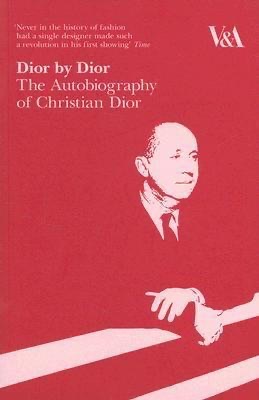
I first read Dior’s autobiography so many years ago in its original version so French, and later an English translated version was gifted to me. Reading from Dior with his time as a protégée of Lucien Lelong, along with Pierre Balmain, during the Second World War. Plus, reading from himself in how his House of Dior came to fruition, in addition to his iconic, legendary 1947 New Look collection, his first collection from his newly appointed fashion house, House of Dior. Truly amazing. Of course, reading about his curations he created, coming to fruition afterwards as well.
Also, discussing his protégée Yves Saint Laurent, also the first designer to take over the House of Dior, in 1957, when Christian Dior had passed away.
Christian Dior’s fascinating autobiography offers a rare glimpse behind the scenes of haute couture. Christian
Dior (1905-1957) rocketed to fame with his first collection in 1947 when the “New Look” took the world by storm. This charming and modest autobiography gives a fascinating and detailed insight into the workings of a great fashion house, while revealing the private man behind the high-profile establishment. It is also a unique portrait of classic Paris haute couture of the 1950s and offers a rare glimpse behind the scenes.
Dior details his childhood in Granville, the family and friends closest to him, his most difficult years and sudden success, as well as his sources of inspiration and creative processes.