Beauty Salon Culture in Canada

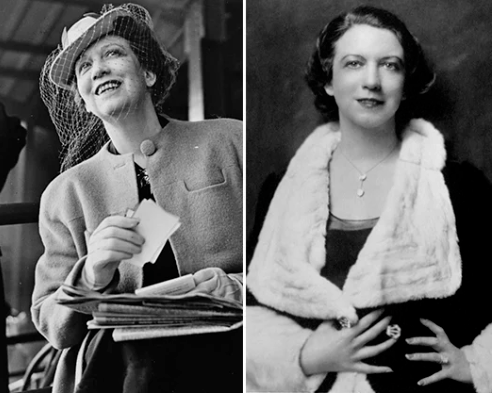
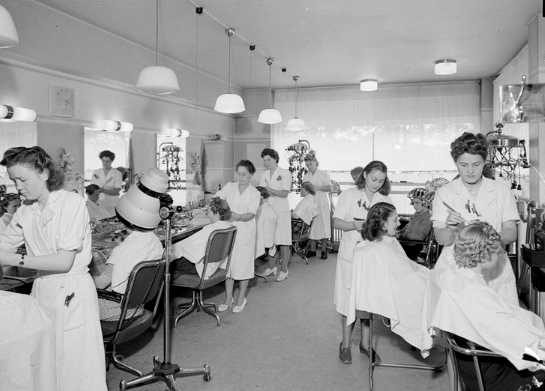
Beauty salon culture in Canada developed along a unique path shaped by immigration, women’s labour and the country’s blend of French, British, and North American influences. By the early 20th century, salons were more than places to style hair, they became community hubs, women’s workplaces, and spaces of social mobility.

vintageinn.ca
bpldcassets.blob.core.windows.net

Early Roots
Before commercial salons existed, Canadian women relied on home‑based hairdressers, traveling stylists, or male barbershops. Urban centers like Montréal and Toronto saw the earliest shift toward women‑run beauty spaces, often operated out of private homes or small storefronts.

Rise of the Beauty Parlour (1900s–1930s)
As beauty culture modernized, Canadian cities experienced a boom in beauty parlours. These spaces were women-owned, women-staffed, socially acceptable places for women to gather and early sites of female entrepreneurship.

Many early Canadian beauty parlours were influenced by European aesthetics (especially in Québec) and American business models, including the Harper Method.

A Social and Economic Lifeline for Women
By the 1920s and 1930s, beauty salons became one of the few professions where women could own businesses outright. 

They offered financial independence, flexible hours, training and skill development and community leadership roles.

For immigrant women and Black Canadian women, salons became especially important. They provided economic stability and created networks of support long before women had full legal or financial rights.

Community Hubs
Canadian salons were also social spaces. Women gathered to exchange news, discuss politics, share advice, build friendships, organize community events.

In many towns, the beauty parlour functioned like a modern-day community centre, run by women, for women.

Influence of the Harper Method
Martha Matilda Harper’s innovations spread into Canada through her franchise network.

Harper-trained salon owners brought professionalized techniques, standardized training, a focus on scalp health and a business model centered on women’s empowerment.

Her influence helped shape the professionalism and prestige of Canadian beauty culture.

I’m Stacey Hobbs, thanks for reading. Until next time!
do you feel fabulous today?
The Post‑War Clash: Industry Reactions to Balmain vs. Dior

Balmain’s 1945 success signaled that Paris (haute) couture had survived the war. Dior’s 1947 New Look proved that Paris had re-claimed global dominance from the rising American ready‑to‑wear industry.

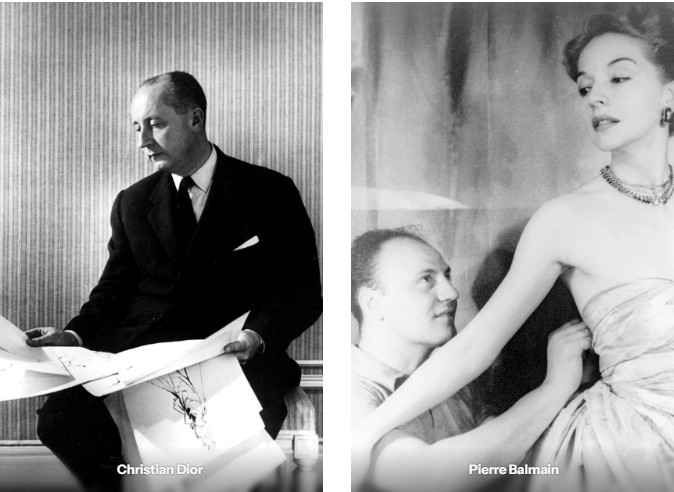
The French fashion industry re-acted to the debut collections of Pierre Balmain (1945) and Christian Dior (1947) with a mixture of relief, admiration, controversy and cultural tension. Balmain helped re-open the door for Paris couture after the war; Dior blew it wide open and re-defined the global landscape.

Balmain’s “New French Style” (October 1945)

Launching almost immediately after the Liberation of Paris, Balmain’s debut collection was an immediate critical triumph. French and American critics praised his cinched waists, full skirts and opulent draping, describing his aesthetic as a “New French Style” that the re-birth of Parisian elegance after years of occupation.

The New York Herald Tribune ranked the House of Balmain alongside Balenciaga and Molyneux, positioning him as the “golden boy” of post‑war couture. His clientele reflected this glamour with Hollywood actresses, European aristocrats and socialites who craved sensuality, movement and optimism after years of austerity.

Dior’s Explosive “New Look” (February 1947)

Although Balmain had already embraced the ultra‑feminine silhouette, Dior’s debut eighteen months later electrified the world. Carmel Snow of Harper’s Bazaar famously christened it the “New Look,” and the collection instantly re-stored Paris as the undisputed capital of fashion.

Dior’s silhouette — narrow shoulders, tiny waists and enormous skirts — was more extreme, more architectural, and more theatrical than anything seen since before the war. It appealed to aristocratic clients, diplomats’ wives and royalty who wanted formality, structure, and prestige.

Paris vs. America: A Cultural Power Struggle

During the war, American designers had risen in influence. Balmain’s 1945 success had informed the world that Paris couture had survived. Dior’s 1947 New Look proved that Paris had re-claimed global dominance.

American press coverage reflected this tension with some of whom celebrated the return of Parisian glamour while others criticized the silhouette as regressive and impractical.

Economic Impact: 
Dior Revives the French Textile Industry

Dior’s lavish use of fabric, sometimes 20 to 30 metres per dress, to be precise, contained more than just aesthetics. It revitalized the struggling French textile industry, which had been devastated by wartime shortages. This economic potential is precisely why textile magnate Marcel Boussac invested so heavily in the House of Dior, which wasn’t an overnight business partnership. 

Backlash and Public Protest

Dior’s extravagance clashed with ongoing rationing. Some Parisian women confronted models in the streets, tugging at their skirts in protest of the wastefulness. In the United States, women’s groups condemned the silhouette as excessive and regressive.

These were not full‑scale riots but they were real, documented confrontations that reflected the social tensions of the time.

Peer Critique

The industry split ideologically. Gabrielle “Coco” Chanel famously condemned Dior’s corseted, padded shapes, saying he “upholstered women” and reversed wartime progress. Early feminist writers echoed this sentiment, arguing that the New Look restricted mobility and re-inforced pre‑war gender expectations.

Yet the hunger for post‑war glamour outweighed the criticism. Both Balmain and Dior became commercial powerhouses, each representing a different vision of post‑war femininity.

Press Rivalry and Parallel Success

The fashion press loved comparing them. 

  • Balmain was seen as the golden boy of 1945.
  • Dior was crowned king of 1947.

Though framed as professional rivals, personally the two remained friends, a friendship that began when they had worked together at Lucien Lelong, and admired each other deeply. 

Together, They Defined Post‑War Couture

Balmain revived Paris. Dior reinvented it.
Their contrasting debuts shaped the entire direction of 20th‑century fashion.

I’m Stacey Hobbs, thanks for reading. Until next time!
do you feel fabulous today?
Revlon vs. Hazel Bishop: The War of Lipstick That Changed American Beauty

If Revlon and Maybelline were quiet competitors, Revlon vs. Hazel Bishop was the opposite. It was a full‑scale advertising war that defined 1950s beauty culture. It was ruthless, glamorous and un-precedented, pitting a self‑made chemist against one of the most aggressive corporate empires in cosmetics.

Hazel Bishop’s Breakthrough (1950): The First Long‑Lasting Lipstick

In 1950, chemist Hazel Bishop launched the first commercially successful “kiss‑proof” lipstick, which was a long‑lasting formula that stayed on the lips instead of rubbing off on cups, cigarettes or clothing. Her invention used a blend of lanolin, dyes and volatile oils that evaporated after application, leaving behind a durable stain.

It was a sensation. It sold-out everywhere. It made Hazel Bishop a household name.

Her ads were bold and modern:

“It stays on YOU… not on HIM.”

This was the first time a beauty product openly marketed itself around dating, kissing and female autonomy — and it worked!

By 1953, Hazel Bishop, Inc. was worth$10 million, an astronomical figure for a woman‑led start-up in the 1950s.

Revlon Strikes Back (1952): 
The Copycat That Sparked a War

As with any company, when a product gains massive success, a competitor will release their version of the product, which is precisely what Charles Revson, founder of Revlon, had done. He was known for two things. He was flawless in colour cosmetics and had ruthless business instincts. 

When he saw Hazel Bishop’s success, he immediately launched a competing product: Revlon’s “Colour‑Stay” lipstick.

Revson did what he did best — he outspent everyone.

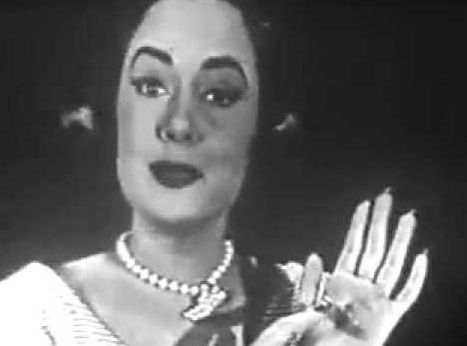
Revlon poured un-precedented money into advertising. From full‑page magazine spreads, radio jingles, early television commercials, department‑store demonstrations and celebrity endorsements.

Revson’s goal was simple. Revlon was out to crush Hazel Bishop by sheer force of marketing.

The Advertising War

This war between Revlon and Hazel Bishop became the most aggressive beauty‑industry rivalry of the 1950s. 

Hazel Bishop ads emphasized science, longevity and practicality. Revlon ads emphasized glamour, seduction and prestige.

The two brands battled for magazine placement, television airtime, drugstore shelf space, consumer loyalty and the right to claim the “real” long-lasting lipstick. 

It was the first time in American history that two beauty brands fought a public, high‑budget advertising war.

The Downfall of Hazel Bishop

Despite inventing the category, Hazel Bishop eventually lost control of her own company due to legal disputes, boardroom power struggles, lack of capital compared to Revlon, and Revson’s ruthless marketing machine. 

By the mid‑1950s, she was forced out of the company that bore her name, which was a tragic but an outcome for many women inventors of the era.

Revlon, meanwhile, became the dominant force in long‑lasting lip colour.

The Legacy of the Lipstick War

The Revlon vs. Hazel Bishop rivalry changed the beauty industry forever:. This beauty rivalry of the long-lasting lipstick introduced the concept of long-wear make-up, proved that advertising could make or break a brand, show how vulnerable women inventors were in male-dominant corporate spaces and it cemented lipstick as a cultural symbol of glamour, independence and modern femininity. 

Hazel Bishop created the innovation. Revlon turned it into an empire.

Together, they shaped the future of American beauty.

I’m Stacey Hobbs, thanks for reading. Until next time!
do you feel fabulous today?

The Invention of the Long-Lasting Lipstick

The invention of the long-lasting lipstick was invented in 1950. 

Canadian-American woman, Hazel Bishop, and her 1950 “kiss‑proof” lipstick is one of the most important beauty inventions of the 20th century.

smithsonianmagazine.com

Hazel Bishop’s Kiss‑Proof Lipstick (1950) 

The first commercially successful long‑lasting lipstick was invented in 1950 by Hazel Bishop, a chemist and entrepreneur from New York, with Canadian family roots. Her formula was revolutionary, a smudge‑proof, non‑transfer lipstick that stayed on the lips instead of rubbing off on cups, cigarettes or clothing.

Bishop’s innovation used a blend of lanolin, dyes, and volatile oils that evaporated after application, leaving behind a stain‑like pigment that adhered to the lips. It was the first lipstick marketed as “kiss‑proof” — a phrase that became a cultural phenomenon.

The Advertising Breakthrough Bishop’s marketing was as groundbreaking as the formula itself. Ads proclaimed:

“It stays on YOU… not on HIM.”

This was the first time a beauty product was openly marketed around dating, kissing, and modern female autonomy. It sold out instantly.

The Impact on 1950s Beauty CultureHazel Bishop’s invention reshaped the decade:

  • Women could wear bold red lips without constant reapplication
  • It aligned with the decade’s polished, camera‑ready aesthetic
  • It triggered a massive industry shift toward long‑wear formulas
  • It launched the first major beauty‑industry advertising war (Bishop vs. Revlon)

By 1953, Bishop’s company was worth $10 million — an astronomical figure for the time.

The Revlon Rivalry

Revlon immediately copied the concept and launched “Colour‑Stay” lipsticks, sparking one of the most aggressive advertising battles in beauty history. This competition cemented long‑lasting lipstick as a staple of 1950s glamour.

Modern Reality Check

Modern long‑wear lipsticks use safer pigments, film‑formers and silicone polymers. Hazel Bishop’s original formula was groundbreaking but drying, and early dyes could irritate sensitive skin. Today’s long‑wear lipsticks are far more comfortable and dermatologically tested.

I’m Stacey Hobbs, thanks for reading. Until next time!
do you feel fabulous today?
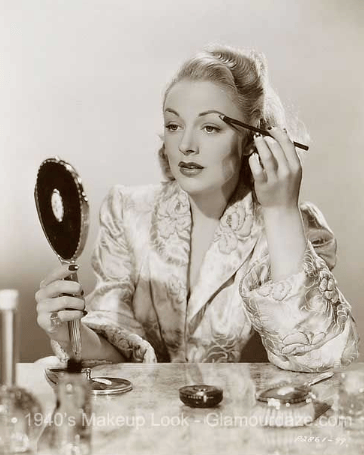
Burnt Cork: The Popular Wartime Make-up Hack for Brows and Mascara

As substitutes for mascara and brow colour when cosmetics were scarce, women in the 1930s, primarily in the 1940s during wartime, relied on creativity. 

Pinterest.com
estatesales.org

Burnt cork became one of the most ingenious beauty hacks of World War II, used by women across Canada, Britain, and the United States when cosmetics were scarce or rationed. With factories diverted to wartime production and essential ingredients like alcohol, petroleum, and metals tightly controlled, makeup became difficult to obtain. To maintain morale and keep up appearances, women turned to a resourceful substitute. This substitute in this case was the soot of a charred wine cork.

The 1940s Application Method

Charring the Cork
Women held a natural wine cork over a candle flame or match until the tip was thoroughly blackened with soot. This is a technique borrowed from pre‑war theatrical make-up.

Cooling the Cork
The cork was preferred to cool completely to avoid burning the delicate eye area.

Eyebrow Filling
The charred tip was rubbed directly onto the brows in short, hair‑like strokes to deepen colour and fill sparse areas.

Homemade Mascara
For lashes, the soot was scraped off the cork and mixed with a dab of petroleum jelly or cold cream. The mixture was then applied with a clean spoolie or a small stiff brush, creating a makeshift mascara.

This method was so common that it appeared in official wartime beauty guides, including British Ministry of Information pamphlets and North American home‑front magazines.

Why Women Used Burnt Cork

Burnt cork was a clever hack, as well as it was one of the safer homemade options compared to other wartime substitutes like boot polish, lampblack or ink. It was inexpensive, accessible and effective at a time when beauty products were considered essential to morale.

The Modern Reality Check 
(Why to Avoid This Today)

While resourceful for the 1940s, using burnt cork near the eyes carries significant health risks by modern standards:

Carcinogen Exposure
Burning organic material creates polycyclic aromatic hydrocarbons (PAHs), known carcinogens that can irritate and damage skin.

Severe Eye Irritation
Loose soot particles can fall into the eye, causing corneal scratches, inflammation or blocked tear ducts.

Bacterial Infections
Mixing un-preserved ash with petroleum jelly creates a moist environment where bacteria can thrive, it is especially dangerous near the eyes.

This is documented in:

  • British Ministry of Information wartime guides
  • American Home Front beauty manuals
  • Women’s magazines like Woman’s Own and Ladies’ Home Journal
  • Oral histories from the Imperial War Museum
  • The Housewife’s Handbook to Wartime Beauty (UK, 1942)
  • U.S. Office of Civilian Defense beauty pamphlets
  • Oral histories from the Women’s Land Army

I’m Stacey Hobbs, thanks for reading. Until next time!
do you feel fabulous today?

Elizabeth Arden: The Relentless Pioneer Who Invented Modern Beauty

Long before the beauty industry became a global empire, Elizabeth Arden was already building one. Born Florence Nightingale Graham in rural Canada, she re-invented herself in New York City and went on to create one of the most influential beauty brands of the 20th century. If Helena Rubinstein was the scientist of beauty, Arden was its builder. The woman who built the modern beauty salons (not hair salons), the coordinated make-up look and the idea that beauty was a lifestyle, not a luxury.

Red Door salons

Elizabeth Arden’s famous Red Door salons were not “beauty boutiques” in the modern sense. They were far more elevated, ritualized, and luxurious than what we think of today as a boutique. they did however function as early versions of what we now call beauty boutiques, beauty spas and prestige counters, all rolled into one.

Salons in this case are not the modern hair salons but much rather they were the blueprint for today’s beauty boutiques. However, they were much more than that.

Elizabeth Arden’s Red Door salons were the first true luxury beauty institutions in North America and Europe. 

They combined a spa, a skin-care clinic, a make-up studio, a wellness centre and a retail boutique. 

Decades before any of those concepts existed separately.

So while they weren’t called “beauty boutiques” at the time, they absolutely functioned as the earliest form of one.

ElizabethArden.com

The Reinvention: 
From Florence Graham to Elizabeth Arden

Arden understood branding decades before the word existed. She chose a name that sounded elegant, aristocratic, and unmistakably feminine. She dyed her hair red, wore tailored suits and cultivated an image of icy perfection. She wasn’t selling creams, she was promoting aspiration. The woman who built the modern beauty salon (beauty boutique), the coordinated make-up look and the idea that beauty was a lifestyle not a luxury.

The Red Door Revolution

In 1910, Arden opened her first salon on Fifth Avenue, marked by the now‑iconic Red Door. Inside, women found something revolutionary:

  • facial treatments
  • manicures
  • coordinated make-up lessons
  • skin-care regimens
  • a serene, luxurious environment

Arden created a salon, plus she created the template for every modern spa and beauty counter.

The First to Treat Beauty as Wellness

Arden believed beauty was a combination of skin-care, nutrition, exercise, grooming and mental well-being. 

Arden introduced yoga classes, exercise programs, diet plans and “scientific” beauty regimens. 

This was decades before the wellness industry existed. Arden was already stepping in to it.

The Woman Who Put Makeup on the Map

In the early 1900s, makeup was still associated with actresses and “fast” women. Arden changed that. She introduced coordinated make-up sets, taught women how-to apply cosmetics, created the first make-over rooms and normalized lipstick for regular women. 

During the 1912 suffrage marches, she famously handed out red lipstick to suffragettes. Arden turned make-up into a symbol of female power.

The Rivalry With Helena Rubinstein

Arden and Rubinstein were the original beauty titans. Both of whom were immigrant women who built empires in a male‑dominated world. Their rivalry was legendary.

They never met in person.
They spied on each other’s formulas.
They poached each other’s chemists.
They opened salons across from each other.
They competed for the same wealthy clientele.

Their competition pushed the industry forward. Together, they shaped modern beauty.

Arden’s Innovations That Still Exist Today

Elizabeth Arden invented or popularized:

  • the coordinated make-up look.
  • the travel‑size beauty kit.
  • the fragrance wardrobe.
  • the luxury spa experience.
  • the idea of beauty as self‑care.
  • the signature salon colour (her Red Door is iconic).
  • the “total beauty” philosophy.

She didn’t just sell products — she sold a lifestyle.

The Legacy

By the time of her death in 1966, Elizabeth Arden had accumulated 100+ salons worldwide, millions of loyal customers, a global brand worth hundreds of millions and a permanent place in beauty history.

She was demanding, perfectionistic and notoriously private, with that said, she was also one of the most influential businesswomen of the 20th century.

Elizabeth Arden didn’t follow the beauty industry. She helped built it.

I’m Stacey Hobbs, thanks for reading. Until next time!
do you feel fabulous today?