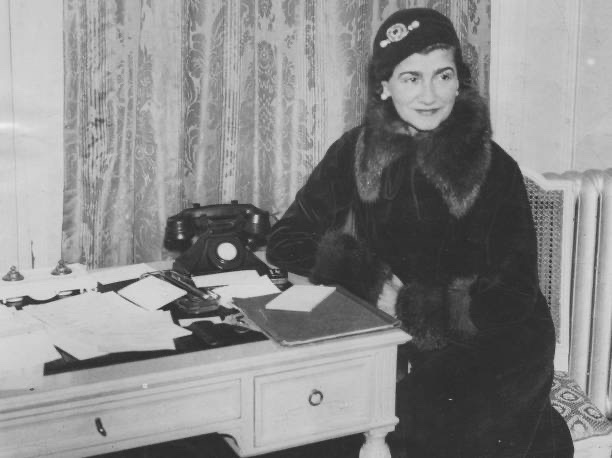
Avene: Sun Care – Intolerant Skin: Very high sun protection – Mineral fluid SPF50+ (Hydrates)

Avene’s Mineral Cream SPF50+ is designed specifically for intolerant, reactive or hypersensitive skin. It offers very high sun protection using 100% mineral filters, making it ideal for anyone who cannot tolerate chemical sunscreens. The formula is gentle, protective and created for skin that needs calm not complexity.

Texture & Application

  • Soft, creamy texture
  • Non‑greasy finish
  • Designed to soothe while protecting
  • Works well under light make-up
  • Ideal for sensitive or redness‑prone skin

Who It’s For

  • Intolerant skin
  • Post‑procedure skin
  • Hypersensitive or reactive skin
  • Anyone seeking mineral‑only SPF
  • Those who prefer fragrance‑free formulas

Key Benefits

  • SPF50+ very high protection
  • Mineral-only filters (no chemical filters)
  • Hydrating and soothing
  • Suitable for daily wear
  • Dermatologist‑trusted brand

This product fits beautifully into the modern “skin‑first” beauty movement — especially for readers who struggle with irritation from traditional sunscreens. It’s a clean, minimalist formula that is gentle and effective skincare.

Avene’s Mineral Cream SPF50+ is a strong choice for anyone who needs reliable sun protection without the risk of irritation. It’s simple, effective and elegant.

Have you tried Avene: Sun Care – Intolerant Skin: Very high sun protection – Mineral fluid SPF50+? Please let me know, I’d love to hear from you!

I’m Stacey Hobbs, thanks for reading Face by Stace! Until next time.
do you feel fabulous today?

Avene: The 18th‑Century French Thermal Water Tradition Behind Modern Mineral Skincare

Avene is not simply a contemporary pharmacy brand — it is a heritage French skincare tradition with roots stretching back nearly 300 years. Its mineral‑based formulas are the modern evolution of vintage European beauty rituals, long before chemical sunscreens existed. Let’s explore Avene’s historical origins and why it belongs in the world of beauty history.

The Discovery: 1736

The story begins in 1736, in the small village of Avène in southern France. A horse belonging to the Marquis de Rocozels suffered from severe skin irritation. After bathing in the local thermal spring, its skin healed — a moment that sparked curiosity across the region.

Word spread quickly. The mineral‑rich water was unlike anything else in France, and its soothing properties became the foundation of what would eventually become Eau Thermale Avène.

The First Hydrotherapy Center: 1743

By 1743, the first Avene Hydrotherapy Centre opened. For centuries, visitors travelled from across Europe to treat:

  • eczema
  • burns
  • redness
  • irritation
  • hypersensitive skin

This was long before dermatology existed as a medical specialty. Avene’s spring became part of French apothecary culture, where pharmacists bottled mineral water for healing and soothing the skin.

This is the same era that gave us:

  • cold creams
  • mineral pastes
  • zinc oxide powders
  • early sun‑protection rituals

Avene belongs to this lineage.

Mineral Skincare: A Vintage Beauty Ritual

Before chemical sunscreens were invented in the mid‑20th century, mineral protection was the norm.

Women used:

  • zinc oxide pastes
  • mineral powders
  • cold creams with mineral pigments
  • parasols, gloves and hats

Mineral formulas were prized because they were gentle, soothing, protective and ideal for intolerant skin.

Avene’s modern mineral SPF is not a trend — it is the continuation of centuries‑old mineral skincare.

Avene in the 19th & 20th Centuries

Throughout the 1800s and early 1900s, Avene’s thermal water was used in:

  • burn units
  • post‑procedure care
  • sensitive skin treatments
  • European spa culture

By the mid‑20th century, Avene had become a respected dermatological heritage brand. Its formulas remained rooted in the same thermal water source discovered in 1736.

Why Avene Belongs in Beauty History

Avene is not just a modern SPF brand. It is a heritage skincare tradition, shaped by:

  • 18th‑century healing rituals
  • French apothecary heritage
  • European spa culture
  • mineral‑based beauty practices
  • vintage skincare logic

For readers who love beauty history, Avene represents the bridge between:

  • vintage mineral skincare
  • Old European beauty rituals
  • modern dermatological science

This is why I posted a modern Avene SPF review — because the product is not modern in spirit. It is the latest chapter in a centuries‑old story.

The Modern Evolution: Mineral Cream SPF50+

Today’s Avene Mineral Cream SPF50+ continues the brand’s historical legacy:

  • mineral‑only filters
  • soothing thermal water
  • protection for intolerant skin
  • gentle, apothecary‑inspired formulation

It is the modern interpretation of the same mineral‑based protection women used long before chemical sunscreens existed.

Avene is a heritage brand with a past — and a place in today’s beauty world. Its mineral SPF is not a departure from beauty history; it is a continuation of it.

I’m Stacey Hobbs, thanks for reading Face by Stace! Until next time.
do you feel fabulous today?

Biologique Recherche: The Clinical Heritage Behind a Modern High‑End Icon

Biologique Recherche is often described as a “cult luxury skincare brand,” but its true identity is far more interesting — and far more historical. Long before it became a Canadian high‑end favourite, B.R. was part of a revolution in French professional skincare. Its roots trace back to the clinical, biological, and spa‑based heritage of the 1970s, a period that re-shaped modern esthetics.

This is beauty history — clinical heritage, French tradition, and decades of professional innovation.

1970s: The Birth of Clinical Luxury Skincare

Biologique Recherche was founded in the late 1970s by three specialists Yvan Allouche, a biologist, Josette Allouche, a physiotherapist and Dr. Philippe Allouche, a physician.

Together, they created a new category: high‑end, biologically‑driven skincare rooted in medical methodology rather than cosmetic marketing.

At a time when beauty was dominated by fragrance houses and department‑store glamour, B.R. took a different path:

  • no perfume
  • no filler ingredients
  • no mass‑market packaging
  • no advertising

Their focus was pure concentration, clinical precision and professional results.

This philosophy became the foundation of the brand.

1980s: The Rise of Professional Spa Heritage

Throughout the 1980s, Biologique Recherche became a quiet staple in European luxury spas and professional esthetics clinics.

Its products were used exclusively by estheticians, physiotherapists and dermatology‑adjacent practitioners.

This exclusivity created a new kind of prestige — not fashion prestige, but clinical prestige.

B.R.’s treatments were known for:

  • high concentrations
  • cold formulations
  • biological extracts
  • visible results
  • strict professional protocols

This era cemented B.R. as part of European spa history, a heritage that still defines the brand today.

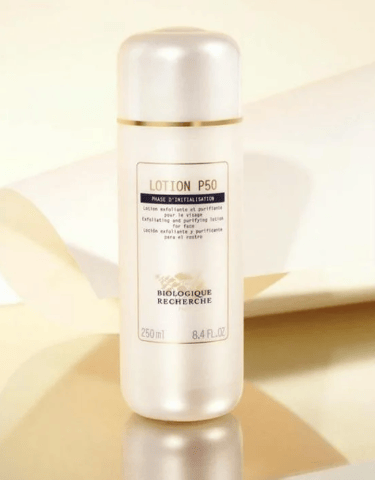
1990s: The Icon: Lotion P50

The 1990s brought the product that would become a legend: Lotion P50.

Often called “the holy grail of exfoliants,” P50 became a global phenomenon because it was clinically formulated, biologically active, professionally controlled and unlike anything else on the market.

It wasn’t glamorous — it was effective. And effectiveness became its luxury.

P50 is now considered one of the most influential skincare products in modern beauty history.

2000s — Global Expansion Without Losing Heritage

As BR expanded internationally, it refused to adopt mainstream beauty marketing. 
No celebrity campaigns. 
No Sephora shelves. 
No mass‑market dilution.

Instead, it maintained:

  • professional exclusivity
  • clinical protocols
  • heritage formulations
  • spa‑based distribution

This is why BR is considered high‑end in Canada: it is sold through luxury spas, medi‑clinics and professional estheticians — never mass retail.

2010s–2020s: Cult Status and Modern Recognition

In recent decades, Biologique Recherche has become a global cult favourite, especially in luxury skincare circles, dermatology‑adjacent communities, Canadian high‑end spas and professional esthetics programs.

Yet it remains true to its roots: clinical, concentrated, heritage‑driven and uncompromising.

This is why B.R. is not just a luxury brand — it is beauty history.

Why Biologique Recherche Belongs in Beauty History

BR is historically significant because it represents the clinical evolution of beauty:

  • the shift from fragrance‑driven cosmetics to science‑driven skincare
  • the rise of professional esthetics
  • the birth of cold‑formulated, high‑concentration products
  • the merging of biology, physiotherapy, and dermatology
  • the creation of luxury through results, not packaging

It is not vintage glamour like Bésame. It is clinical heritage, equally important in the beauty timeline.

Biologique Recherche is more than a high‑end brand — it is a landmark in the history of professional skincare. Its origins in 1970s French clinical science, its rise through luxury spas, and its cult‑status formulations make it a heritage brand worth documenting.

In the beauty timeline, BR represents the moment when skincare became scientific, professional and results‑driven — a turning point that helped shaped the industry we know today.

I’m Stacey Hobbs, thanks for reading Face by Stace! Until next time.
do you feel fabulous today?
Patou & Chanel: The Friendship Before the Feud

Two modernists, one Paris — and a rivalry born from respect.

Before Jean Patou and Gabrielle Chanel became the opposing poles of 1920s fashion, they were something far more surprising: friendly contemporaries moving through the same Parisian circles.

In the early years of their careers, the two designers shared a mutual admiration that rarely gets discussed. They were both modernists, both disruptors, both determined to free women from the stiffness of pre‑war fashion. They attended the same salons, dressed the same social class and were often mentioned in the same breath by editors who saw them as the future of couture.

Chanel respected Patou’s intelligence — unusual for her, given how dismissive she often was of male designers. Patou admired Chanel’s discipline and her ability to distill chic into something almost architectural. They were not intimate friends, but they were aligned, collegial and curious about each other’s work.

For a brief moment, Paris had two geniuses walking in parallel.

But fashion is never static and neither were they.

As the decade progressed, their philosophies began to diverge. Chanel pushed toward radical simplicity — jersey, straight lines, the erasure of the waist. Patou moved toward elongated elegance — luxury sportswear, aristocratic glamour, the return of the feminine silhouette.

What began as mutual respect slowly hardened into ideological opposition.

By the time the Hemline War of 1929 erupted, the warmth between them had cooled. Chanel refused to lengthen skirts; Patou dropped his dramatically. Editors called it a “battle of inches,” but it was really a battle of ideas.

Their early friendship made the later feud sharper, more personal and far more fascinating.

Two designers who once walked side by side ended up altering fashion by pulling in opposite directions — and Paris loved every moment of the tension.

I’m Stacey Hobbs, thanks for reading Face by Stace! Until next time.
do you feel fabulous today?
Patou: Part 3: The War of Silhouettes (Chanel vs. Patou)

Chanel may have liberated women, but Patou taught them how to be seen.

By the late 1920s, Paris fashion had become a battlefield — not of fabric, but of ideology. And at the centre of it stood two titans who could not have been more different: Jean Patou and Gabrielle Chanel.

They were not rivals in the petty sense. They were rivals in the philosophical sense — two designers fighting for the soul of modern womanhood.

Chanel believed in stripping everything down:

  • jersey
  • simplicity
  • uniformity
  • the democratization of chic

Patou believed in elevating everything:

  • luxury sportswear
  • elongated lines
  • aristocratic ease
  • the glamour of movement

Where Chanel flattened the silhouette, Patou lengthened it. Where Chanel erased the waist, Patou sculpted it. Where Chanel insisted women should dress like themselves, Patou insisted they should dress like their best selves.

And Paris noticed.

The feud wasn’t loud — it was architectural.

Chanel’s women walked like they were ready to take over the office. Patou’s women walked like they were ready to take over the room.

Chanel gave women freedom. Patou gave them presence.

The press began to pick sides. Fashion editors whispered that Patou’s lines were “a rebuke to Chanel’s severity.” Chanel, famously territorial, dismissed Patou’s elegance as “too much effort.”

Patou responded the only way a couturier could: He made the long, vertical, Patou silhouette the look of the decade.

And then came the moment that cemented the feud:

The Hemline War of 1929.

Chanel kept her hems stubbornly short. Patou dropped his — dramatically — almost overnight.

Women followed Patou.

The fashion world gasped. Chanel was furious. Patou smiled.

It wasn’t just a hemline. It was a declaration.

Patou had changed the direction of fashion with a single gesture — and he had done it in direct opposition to Chanel’s aesthetic rule.

I’m Stacey Hobbs, thanks for reading Face by Stace! Until next time.
do you feel fabulous today?
Chanel’s Artistic Circle: Picasso, Stravinsky, Cocteau

The couture house was only half her empire — the other half was the avant‑garde.

Long before Chanel became a global symbol of luxury, she was something far more interesting: a woman at the centre of Paris’s artistic vanguard. Her salon on the Rue Cambon was not just a fashion headquarters — it was a crossroads where painters, composers, poets, dancers and modernists collided.

Chanel didn’t simply dress artists. She collaborated with them. She influenced them. And she allowed their ideas to reshape her own.

Her circle was a constellation of geniuses.

Pablo Picasso: The Architect of Modern Vision

Picasso and Chanel were not lovers, but they were deeply connected through the Ballets Russes and the modernist movement. Chanel admired Picasso’s ability to fracture reality and rebuild it through geometry — a sensibility that echoed her own discipline of line, proportion and restraint.

Picasso saw Chanel as more than a couturier. He saw her as a designer with a painter’s mind.

Their conversations were famously sharp, intellectual and un-sentimental — two modernists dissecting the world through form.

Igor Stravinsky: The Composer Who Changed Her Life

Stravinsky entered Chanel’s orbit during the creation of The Rite of Spring, a work that shattered classical music and scandalized Paris. Chanel adored his audacity — the way he broke rules with elegance rather than chaos.

Their relationship became personal when Chanel invited Stravinsky and his family to live in her villa, Bel Respiro, during a difficult period in his life.

It was a friendship built on:

  • discipline
  • innovation
  • mutual respect
  • and the shared belief that beauty required courage

Stravinsky’s modernism influenced Chanel’s own evolution — especially her move toward sharper silhouettes and architectural simplicity.

Jean Cocteau: The Poet Who Understood Her Best

Cocteau was the closest to Chanel emotionally and intellectually. He saw her as a woman who designed with the precision of a mathematician and the imagination of a poet.

Their friendship produced some of Chanel’s most important artistic collaborations:

  • Antigone (1922)
  • Orphée
  • Le Train Bleu for the Ballets Russes

Cocteau’s surrealism seeped into Chanel’s jewelry, her motifs and her fascination with symbols. Chanel’s discipline refined Cocteau’s theatrical minimalism.

They were creative mirrors — each sharpening the other.

Chanel’s genius wasn’t only in her designs. It was in her ability to absorb the energy of the avant‑garde and translate it into fashion.

Picasso gave her abstraction. 
Stravinsky gave her rhythm. 
Cocteau gave her symbolism.

Together, they shaped the Chanel aesthetic:

  • clean lines
  • modern geometry
  • emotional restraint
  • intellectual elegance

Chanel didn’t just dress the modern woman — she dressed the modern mind.

I’m Stacey Hobbs, thanks for reading Face by Stace! Until next time.
do you feel fabulous today?