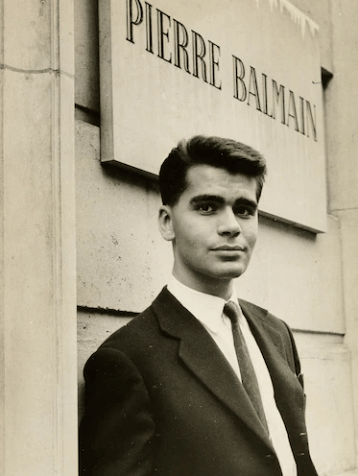
Pierre Balmain Mentoring Karl Lagerfeld: The Forgotten Origin Story

Before Chanel, Before Fendi, Before the Global Empire — There Was Balmain

Karl Lagerfeld is remembered as the man who resurrected Chanel, reinvented Fendi, and re-shaped the modern fashion industry. But long before he became a global icon, he was a young designer standing at the threshold of Parisian couture, learning from one of the great masters of elegance: Pierre Balmain.

This chapter is the forgotten origin story — the mentorship that shaped Karl’s discipline, his precision, and his understanding of couture architecture.

This mentorship is one of the most important — and most overlooked — relationships in fashion history.

Karl Lagerfeld at Balmain
Karl Lagerfeld

1. Paris, 1950s: A Young Karl Arrives

Karl Lagerfeld entered the Paris fashion world as a teenager — ambitious, sharp and already intellectually formidable. He won the International Wool Secretariat competition in 1954 (the same competition where Yves Saint Laurent won for dress design), and the prize opened the doors to the couture houses.

Balmain hired him immediately.

Karl was not yet the Karl the world would come to know. This young emerging artist was observant, disciplined, hungry, technically gifted and eager to understand the structure of couture.

Balmain became his first teacher.

2. Pierre Balmain: The Architect of Post‑War Elegance

Balmain was one of the great couturiers of the 1950s — refined, aristocratic and deeply committed to craftsmanship. His house was known for:

  • sculpted silhouettes
  • impeccable tailoring
  • architectural gowns
  • couture discipline
  • Parisian sophistication

Balmain’s philosophy was rooted in structure. He believed that elegance came from engineering, proportion, restraint and technical mastery.

This was the perfect environment for a young Karl.

3. The Mentorship: Discipline, Precision, and Couture Architecture

Balmain didn’t treat Karl like a prodigy. He treated him like an apprentice.

Karl learned:

  • how to cut a jacket
  • how to engineer a bodice
  • how to build volume without weight
  • how to structure couture from the inside out
  • how to maintain discipline in design
  • how to work within the rules before breaking them

Balmain taught Karl the architecture of fashion — the foundation he would later use to reinvent Chanel’s suit and Fendi’s fur.

Karl once said that Balmain taught him:

“Elegance is discipline.”

This became one of Karl’s lifelong principles.

4. The Balmain House: Karl’s First Battlefield

Balmain’s atelier was demanding. It was not a place for ego. It was a place for excellence.

Karl learned:

  • speed
  • precision
  • professionalism
  • atelier hierarchy
  • couture etiquette
  • the politics of Parisian fashion houses

He also learned how to navigate:

  • clients
  • fittings
  • press
  • couture presentations

This was Karl’s first exposure to the power structures of Paris — knowledge he would later use masterfully.

5. The Divergence: Karl Leaves to Build His Own Path

After several years under Balmain, Karl moved to Jean Patou, where he became head designer at only 21. This was the moment he stepped out of mentorship and into leadership.

But he carried Balmain’s lessons with him:

  • discipline
  • structure
  • architectural thinking
  • couture engineering
  • the importance of reinvention

These principles shaped every house Karl touched.

Balmain was the root. 
Karl was the evolution.

6. Why This Origin Story Matters

Because Karl Lagerfeld’s genius didn’t appear out of nowhere. It was shaped — sharpened — by one of the great couturiers of the 20th century.

Balmain gave Karl:

  • his foundation
  • his discipline
  • his technical mastery
  • his architectural eye
  • his understanding of couture structure

Without Balmain, Karl’s later revolutions at Chanel, Fendi, and Chloé would not have been possible.

This mentorship is one of the most important — and most overlooked — relationships in fashion history.

7. The Legacy of Their Connection

Balmain’s legacy lives in:

  • Karl’s tailoring
  • Karl’s structural silhouettes
  • Karl’s disciplined approach to design
  • Karl’s ability to reinvent heritage houses
  • Karl’s understanding of couture architecture

Every time Karl re-imagined a classic silhouette, Balmain’s influence was present.

Their connection is a reminder that even the greatest designers begin as students — and that mentorship is one of the most powerful forces in fashion.

I’m Stacey Hobbs, thanks for reading Face by Stace! Until next time.
do you feel fabulous today?
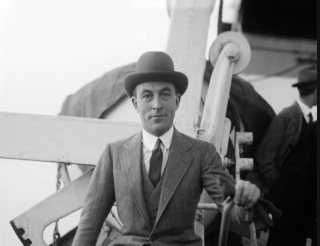
Jean Patou: The Forgotten Architect of Modern Elegance

Before Chanel, Before Lagerfeld, Before Modern Luxury Had a Language, There Was Patou! 

Jean Patou is one of the most influential designers of the 20th century — yet he is rarely mentioned in contemporary fashion conversations. His name has faded from mainstream memory but his impact is everywhere: in sportswear, in perfume history, in modern elegance and in the careers of designers who came after him.

To understand modern fashion, you must understand Jean Patou.

This is the introduction he deserves.

1. The Rise of a Modernist

Jean Patou founded his couture house in 1914, but it was the 1920s that made him a star. While Paris was still recovering from the war, Patou saw a new kind of woman emerging — active, modern, independent and ready to break from the rigid femininity of the Belle Époque.

Patou designed for her.

He created:

  • clean lines
  • modern silhouettes
  • luxury sportswear
  • effortless elegance
  • clothing meant for movement

He wasn’t interested in fantasy. 
He was interested in reality — and in elevating it.

2. The Inventor of Luxury Sportswear

Patou revolutionized fashion by introducing sportswear as couture.

He designed:

  • tennis dresses
  • golf skirts
  • swimwear
  • knitwear
  • streamlined separates

His muse was Suzanne Lenglen, the tennis superstar whose Patou dresses became cultural icons. She played in couture — something un-heard of at the time.

Patou made athleticism glamorous. 
He made comfort luxurious. 
He made modernity beautiful.

Every designer who touches sportswear today echoes Patou.

3. The Perfume That Changed the World

In 1930, during the Great Depression, Patou released Joy — a perfume so expensive, so luxurious and so refined that it became known as:

“the costliest perfume in the world.”

Joy was not about excess. It was about optimism.

It became one of the most successful fragrances in history — rivaling Chanel No. 5 and shaping the future of luxury perfumery.

Patou understood that scent could be a cultural statement.

4. The Patou Woman

Patou’s clientele were women who embraced modernity without abandoning elegance.

She was:

  • active
  • cultured
  • cosmopolitan
  • confident
  • refined
  • modern

She didn’t want fantasy. She wanted reality — elevated.

Patou dressed the woman who lived in the world, instead of the woman who lived in a salon.

5. The House That Shaped Future Legends

Patou’s influence didn’t end with his death in 1936.

His house became a training ground for young designers, including:

  • Karl Lagerfeld, who became head designer at Patou at just 21
  • designers who later shaped Chloé, Fendi, and modern couture

6. Why Jean Patou Matters Today

Patou shaped:

  • modern sportswear
  • luxury fragrance
  • streamlined elegance
  • the concept of “active luxury”
  • the foundation of modern couture thinking

He is the missing link between:

  • Poiret’s theatrical modernism
  • Chanel’s minimalist modernism
  • Dior’s post‑war romanticism
  • Lagerfeld’s intellectual modernism

Patou is the bridge.

I’m Stacey Hobbs, thanks for reading Face by Stace! Until next time.
do you feel fabulous today?
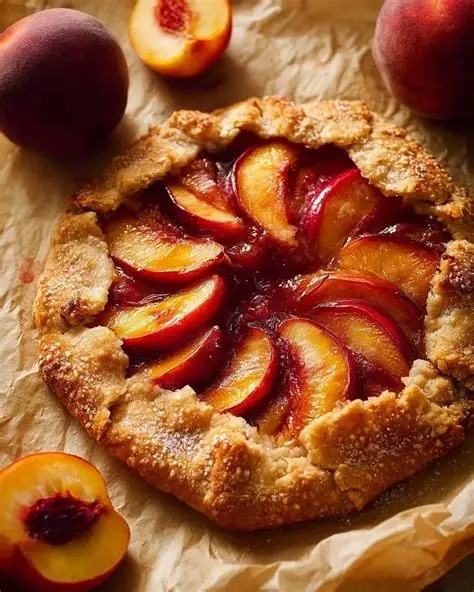
Food + Beauty Recipes: The Peach Series: Ricardo Cuisine–Inspired Peach Galette

There are ingredients that feel like sunlight the moment they touch the tongue, and peaches have always been one of them. Soft, fragrant, golden and gently sweet, peaches carry a kind of warmth that doesn’t shout — it glows. 
Long before they became a symbol of summer desserts and beauty, peaches were woven into ancient traditions as emblems of vitality, longevity and the quiet luxury of seasonal fruit.

Historical Notes

Peaches trace their origins back thousands of years to ancient China, where they were revered as symbols of immortality, youth, and feminine radiance. Their blossoms were celebrated in poetry, their fruit offered in rituals, and their trees planted as markers of prosperity and renewal. As trade routes expanded, peaches traveled westward through Persia and the Mediterranean, eventually becoming beloved in Greek and Roman kitchens for their perfume and softness.

By the Renaissance, peaches were considered a delicacy — served at royal banquets, painted in still‑life portraits and prized for their fleeting season. In France, they became intertwined with pastry traditions, inspiring rustic galettes, clafoutis and elegant tarts. When peaches reached North America, they found new expression in cobblers, crisps and preserves becoming a hallmark of Southern hospitality and summer abundance.

Today, peaches remain one of the world’s most popular summer fruits — a symbol of glow, softness and the sweetness of warm weather. Their appeal endures because of their dual identity: a culinary ingredient that brings comfort and elegance, and a beauty ingredient that brings radiance and nourishment.

Beauty Benefits

Glow & Radiance
Peaches are rich in vitamin C and natural fruit acids that brighten the complexion, support collagen, and create a soft, dewy glow.

Hydration & Plumpness
Their high water content helps hydrate the skin from within, supporting elasticity and a youthful finish.

Gentle Exfoliation
Natural alpha‑hydroxy acids provide a mild, skin‑smoothing effect that enhances clarity and softness.

Antioxidant Protection
Beta‑carotene and polyphenols help defend against environmental stress and support long‑term skin vitality.

Inner Wellness
Peaches support digestion, hydration and overall energy — internal pathways that reflect directly on the skin.

Peaches remind us that beauty doesn’t always come from intensity — sometimes it comes from softness, sweetness and the kind of glow that feels effortless.

This series will explore peaches through both food and beauty, revealing how gentleness can be nourishing, comforting and radiance‑enhancing.

Ricardo Cuisine: Inspired Peach Galette

Rustic, warm and softly sweet — exactly the kind of approachable Québécois comfort Ricardo is known for.

Peach desserts have a way of feeling both nostalgic and elegant and a galette is the perfect expression of that balance. Ricardo’s cooking celebrates approachable comfort — dishes that feel familiar, warm and meant to be shared — and this peach galette fits beautifully into that world. It’s rustic in shape, refined in flavour and effortlessly charming, the kind of dessert that looks stunning without ever trying too hard.

Peaches bring their own natural beauty to the table: juicy, fragrant and sun‑kissed, they soften into a luscious filling that pairs perfectly with a crisp, buttery crust. This recipe honours the simplicity of seasonal fruit while adding just enough technique to make it feel special. It’s the kind of dessert that invites people in, encourages conversation, and fills the kitchen with a sweetness that feels like summer itself.

Prep 20 minutes  Cook 35–40 minutes Serves 6–8

Rustic Peach Galette/quickhomemaderecipes.com
Rustic Peach Galette – Lisa Recipe/lisarecipe.com

Ingredients

  • 1 1/4 cups all-purpose flour
  • 1 tbsp sugar
  • 1/2 tsp salt
  • 1/2 cup cold unsalted butter, cubed
  • 1/4 cup ice water (plus extra if needed)
  • 4–5 ripe peaches, sliced
  • 1/4 cup sugar
  • 1 tbsp cornstarch
  • 1 tsp vanilla extract
  • 1/2 tsp lemon zest
  • Pinch cinnamon (optional)
  • 1 egg (for egg wash)
  • 1 tbsp coarse sugar
  • Drizzle honey (optional, for finishing)

Instructions

  1. Make the crust
    Whisk flour, sugar, and salt. Cut in cold butter until coarse crumbs form. Add ice water gradually until dough comes together. Shape into a disk, wrap, and chill for 20 minutes.
  2. Prepare the peaches
    Toss peach slices with sugar, cornstarch, vanilla, lemon zest, and cinnamon. Let sit for 10 minutes to release juices.
  3. Assemble the galette
    Roll dough into a rustic 12-inch circle. Place peaches in the center, leaving a 2-inch border. Fold edges over fruit, pleating naturally.
  4. Bake
    Brush crust with egg wash and sprinkle with coarse sugar. Bake at 400°F (200°C) for 35–40 minutes until golden and bubbling.
  5. Finish
    Cool slightly and drizzle with honey for a glossy finish.

Peach desserts remind us that elegance doesn’t need to be complicated. A galette is proof that simple ingredients — ripe fruit, a buttery crust, a touch of sweetness — can create something beautiful, memorable and deeply comforting. It’s the kind of dessert that feels timeless, rooted in tradition yet endlessly adaptable.

This peach galette celebrates everything peaches represent: softness, warmth, glow and the luxury of seasonal fruit. Whether served warm with ice cream or enjoyed on its own, it brings a sense of ease and joy to the table — a reminder that beauty often lies in simplicity.

Beauty and nourishment have always been intertwined and peaches embody that connection with a kind of softness that feels almost luminous. From ancient orchards to modern kitchens, peaches have carried a story of radiance, a glow that comes from sweetness, hydration and the warmth of summer itself. Their fragrance, their colour, their delicate texture all speak to a kind of beauty that doesn’t demand attention; it simply offers it.

Historically, peaches have symbolized youth and vitality. Their journey across continents turned them into cultural icons — celebrated in poetry, painted in still‑life portraits and cherished in seasonal rituals. In the kitchen, they became the heart of rustic pastries, sun‑soaked salads and comforting desserts. On the vanity, their natural acids and antioxidants inspired treatments that smooth, brighten, and hydrate. Peaches remind us that glow can come from gentleness, from softness, from the luxury of fruit that ripens slowly under warm skies.

Throughout this series, peaches have shown their versatility — slipping easily between comfort and refinement, between nourishment and beauty. Each recipe has revealed a different facet of their personality: rustic, elegant, refreshing or indulgent. And each one has reinforced the idea that radiance is never one‑dimensional. It’s flavour, it’s history, it’s ritual and it’s the way small, thoughtful choices accumulate into something luminous.

Peaches teach us that beauty doesn’t always come from intensity. Sometimes it comes from softness, sweetness and the kind of glow that feels effortless — the kind that lingers long after the last bite.

I’m Stacey Hobbs, thanks for reading Face by Stace! Until next time.
do you feel fabulous today?
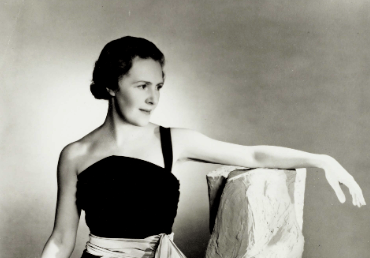
The Feud Series: Lanvin vs. Schiaparelli: Part 2 — The Clients Who Chose Sides: Society vs. Surrealism

Parisian Women Didn’t Just Buy Couture — They Declared Allegiance

In the 1930s, couture wasn’t simply fashion. It was identity. It was politics. It was social alignment.

To choose a couturier was to choose a worldview.

And nowhere was this more visible than in the divide between Jeanne Lanvin’s clientele and Elsa Schiaparelli’s devotees — two groups of women who embodied two completely different visions of femininity.

This wasn’t just a feud between designers. It was a feud between women.

1. The Lanvin Woman: Aristocratic, Romantic, Refined

Lanvin’s clients were the women who lived inside Parisian tradition — the salons, the soirées, the old‑world elegance.

They were aristocrats, society hostesses, philanthropists, mothers and daughters, women with generational wealth, and women who valued refinement over rebellion.

They chose Lanvin because she offered:

  • embroidery as art
  • femininity as heritage
  • elegance as identity
  • couture as emotional expression

Lanvin’s world was safe, beautiful and deeply rooted in tradition.

Her clients didn’t want shock. They wanted continuity.

2. The Schiaparelli Woman: Artistic, Modern, Unpredictable

Schiaparelli’s clients were the women who lived at the edge of culture — the artists, the intellectuals, the avant‑garde.

They were actresses, surrealists, writers, dancers, bohemian aristocrats and women who embraced modernity.

They chose Schiaparelli because she offered:

  • fashion as performance
  • femininity as provocation
  • surrealism as identity
  • couture as rebellion

Schiaparelli’s world was loud, witty and modern.

Her clients didn’t want tradition. They wanted transformation.

3. Society vs. Surrealism: Two Social Worlds

Lanvin’s salons were filled with:

  • pearls
  • soft pastels
  • quiet conversation
  • refined manners
  • generational prestige

Schiaparelli’s salons were filled with:

  • artists
  • cigarette smoke
  • laughter
  • eccentricity
  • experimental glamour

Lanvin’s world was about status. 
Schiaparelli’s world was about expression.

Parisian women didn’t just buy dresses — they chose which world they belonged to.

4. The Couture Divide Became a Cultural Divide

Lanvin’s clients believed:

  • beauty should be timeless
  • femininity should be elegant
  • couture should be emotional
  • fashion should be dignified

Schiaparelli’s clients believed:

  • beauty should be provocative
  • femininity should be intellectual
  • couture should be conceptual
  • fashion should be disruptive

This divide shaped:

  • magazine coverage
  • salon gossip
  • society events
  • cultural commentary
  • fashion photography
  • museum curation

Lanvin represented the past. 
Schiaparelli represented the future.

4. The Couture Divide Became a Cultural Divide

Some women bought from both houses — but even they had to navigate the tension.

A Lanvin woman wearing Schiaparelli was:

  • making a statement
  • signaling modernity
  • stepping outside tradition

A Schiaparelli woman wearing Lanvin was:

  • embracing softness
  • acknowledging heritage
  • choosing elegance

Crossing over was never neutral. It was always symbolic.

6. Why This Chapter Matters

Because the Lanvin vs. Schiaparelli feud wasn’t just about two designers.

It was about:

  • two types of women
  • two visions of femininity
  • two cultural identities
  • two social worlds
  • two definitions of beauty

Lanvin’s clients shaped the image of classic Parisian elegance. 
Schiaparelli’s clients shaped the image of modern Parisian rebellion.

Together, they defined the cultural landscape of 1930s Paris.

I’m Stacey Hobbs, thanks for reading Face by Stace! Until next time.
do you feel fabulous today?
Patou: Part II: The House That Re-wrote Parisian Ease

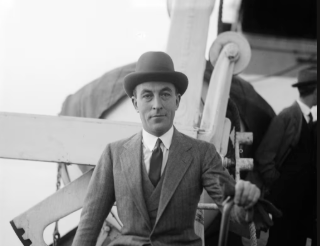
If Part I explored Jean Patou as the couturier who rescued modern women from the constraints of pre‑war fashion, Part II turns toward the evolution of Patou — the way the house carried his ethos forward, re-shaping Parisian elegance for a new century while preserving the un-mistakable Patou signature: clarity, freshness and a refusal to overcomplicate beauty.

Patou’s legacy has always been defined by a paradox — a couture house that championed ease. While other maisons built their reputations on drama, Patou built his on lightness. His silhouettes were clean, his lines architectural, his colours deliberate. He believed that a woman’s beauty should never be overshadowed by her clothing but rather illuminated by it.

That philosophy became the backbone of the brand’s revival.

The Revival: A Return to Purity

When Guillaume Henry stepped in to re-launch Patou in 2018, he didn’t attempt to modernize the house through shock or reinvention. Instead, he returned to the original Patou values: joy, clarity, and Parisian simplicity.

Henry’s Patou is not nostalgic — it’s restorative. He reintroduced:

  • Crisp cottons that feel like Paris in spring
  • Rounded collars reminiscent of Patou’s 1930s day dresses
  • Playful volume without heaviness
  • A feminine silhouette that moves with the body
  • A youthful spirit that never slips into frivolity

Patou’s revival is one of the rare modern fashion stories where the house didn’t chase trends — it returned to its DNA.

Patou and the Democratization of Couture

One of the most compelling aspects of the modern Patou era is its commitment to accessibility. Historically, Patou was a couture house serving the elite — actresses, aristocrats and the international set. Today, the brand has repositioned itself as couture‑informed ready‑to‑wear, offering:

  • luxury fabrics
  • couture‑level finishing
  • Parisian design integrity

at a price point that invites a broader audience into the world of French fashion.

This democratization is a continuation of Jean Patou’s original mission. He was one of the first designers to understand that modern women needed clothes that were beautiful but also functional, refined but also realistic.

Henry’s Patou honours that philosophy.

The Patou Woman Today

The Patou woman of today is defined more by taste than anything else. She gravitates toward clean lines, thoughtful details, ease, Parisian restraint and subtle luxury.

She is the woman who prefers a perfectly cut cotton blouse over a logo‑heavy trend piece. She values craftsmanship, not spectacle. She dresses for herself, not for the algorithm.

Patou’s modern collections speak to women who understand that elegance is not loud — it’s intentional.

Beauty, Fragrance, and the Patou Sensibility

Although the fragrance division is no longer under the Patou umbrella, the house’s beauty legacy remains one of the most influential in French perfume history. Joy, launched in 1930, became the world’s most expensive perfume — not because of marketing but because of its un-precedented concentration of jasmine and rose.

Patou’s approach to beauty mirrored his approach to fashion which was purity, clarity and luxury through simplicity. 

Even today, the Patou aesthetic carries that same sensibility — a kind of Parisian freshness that feels both timeless and modern.

Patou’s Place in Contemporary Fashion

In a landscape dominated by maximalism, digital noise and fast‑cycle trends, Patou stands out as a house that has reclaimed the value of luxury — not the trend but the philosophy.

Patou is not about being seen. 
Patou is about being understood.

It’s a brand for women who appreciate:

  • heritage
  • craftsmanship
  • cultural literacy
  • understated beauty
  • Parisian refinement

And that is precisely why Patou’s revival feels so significant. It’s not just a return — it’s a reminder.

A reminder that fashion can be joyful. 
A reminder that elegance can be simple. 
A reminder that beauty can be honest.

I’m Stacey Hobbs, thanks for reading Face by Stace! Until next time.
do you feel fabulous today?
PRADA Part 4: Prada and the Power of Subversion

When Fashion Became Commentary

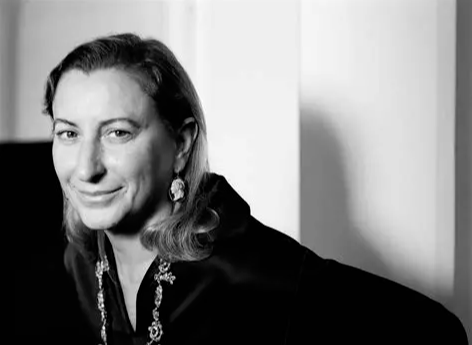
By the time Prada entered the 2000s and 2010s, the brand had already established itself as the intellectual heartbeat of luxury. But Part 4 marks the era when Prada shifted from provocation to subversion — when Miuccia Prada began using fashion not just to challenge beauty but to critique culture itself.

This is the chapter where Prada becomes a mirror, reflecting society’s contradictions with elegance, irony, and razor‑sharp intelligence.

1. Subversion as a Design Principle

Prada’s power lies in its refusal to flatter. Instead, it confronts.

Subversion at Prada looks like:

  • beauty that feels slightly wrong
  • silhouettes that disrupt expectations
  • fabrics that contradict their purpose
  • colours that clash intentionally
  • styling that challenges the viewer

Miuccia Prada once said she was drawn to “the ugly,” not because she disliked beauty, but because she believed truth lives in imperfection.

This philosophy shaped the next era of Prada.

2. The Intellectual Runway

Prada’s runway shows became cultural — visual critiques of:

  • consumerism
  • femininity
  • nostalgia
  • modern anxiety
  • the performance of identity

Collections featured:

  • librarian chic
  • retro futurism
  • awkward glamour
  • distorted tailoring
  • heavy knits paired with delicate silks
  • orthopedic‑looking shoes with couture dresses

Prada wasn’t designing outfits. She was designing ideas.

3. The Subversive Woman

The Prada woman of Part 4 is not trying to be admired. She is trying to be understood.

The Prada woman is complex, ironic, culturally literate, self-aware, un-interested in traditional glamour and drawn to contradiction.

She wears clothes that challenge the viewer to think — not clothes that beg for approval.

Prada became the uniform of:

  • editors
  • curators
  • filmmakers
  • architects
  • intellectuals
  • women who lead with mind over spectacle

This is the era when Prada became synonymous with cultural intelligence.

4. The Rise of Retro Subversion

Prada’s use of retro references — 1940s shoulders, 1970s prints, 1990s minimalism — was never nostalgic. It was critical.

Retro elements were used to:

  • expose the absurdity of past beauty standards
  • question the performance of femininity
  • highlight the artificiality of fashion history
  • create tension between memory and modernity

Prada made nostalgia un-comfortable — and that discomfort became modern.

5. The Accessories That Became Cultural Symbols

Prada’s subversion extended into accessories, which became icons of intellectual luxury.

The Prada Galleria Bag
Structured, minimal, architectural — a symbol of power.

The Ugly‑Chic Shoe
Chunky, awkward, orthopedic — a rejection of traditional femininity.

The Nylon Backpack
A luxury item made from a non‑luxury material — the ultimate contradiction.

Prada accessories became shorthand for:

  • intelligence
  • irony
  • cultural awareness
  • modern rebellion

6. The Miu Miu Counterpoint (Again)

While Prada leaned into subversion, Miu Miu leaned into:

  • youth
  • play
  • sensuality
  • experimentation
  • nostalgia

Together, they created a duality:

  • Prada = intellect
  • Miu Miu = impulse

This duality strengthened the Prada universe, giving women two sides of the same cultural conversation.

7. Prada’s Cultural Impact

Prada’s subversive era influenced:

  • editorial photography
  • museum exhibitions
  • fashion criticism
  • runway styling
  • the rise of “ugly chic”
  • the acceptance of irony in luxury

Designers influenced by Prada include:

  • Raf Simons
  • Phoebe Philo
  • Nicolas Ghesquière
  • Demna
  • Daniel Lee

Prada became the blueprint for intellectual fashion.

8. Why This Era Matters

Because Prada proved that fashion can be:

  • critical
  • ironic
  • uncomfortable
  • cerebral
  • culturally engaged

Prada turned subversion into luxury. She made contradiction beautiful. She made intellect desirable.

This is why Prada remains one of the most influential houses in the world.

I’m Stacey Hobbs, thanks for reading Face by Stace! Until next time.
do you feel fabulous today?