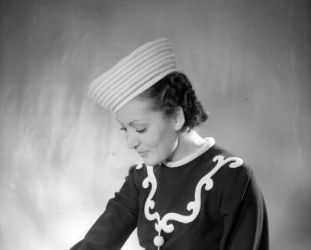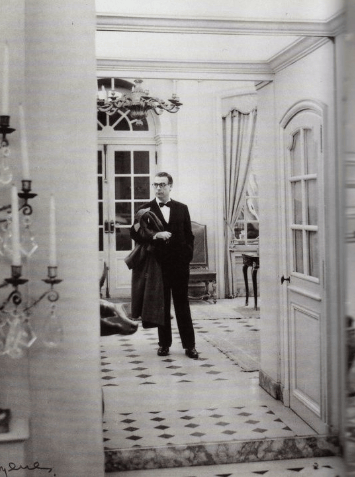
PART VIII: The Balenciaga Clients: Women Who Wore Architecture

Balenciaga’s clients were unlike anyone else’s. They were not women who wanted to be seen; they were women who wanted to be transformed. To wear Balenciaga was to step into a different relationship with clothing, one where the garment didn’t flatter the body in the traditional sense but re-defined it. His clients understood that his silhouettes were not decoration; they were architecture. And they approached his work with the reverence one brings to sculpture.

These women were confident, private and discerning. Many avoided the press entirely. They came to Balenciaga because his clothes offered something no other couturier could provide: purity of line, mastery of proportion and a kind of structural serenity that made the wearer feel both protected and powerful. His garments didn’t cling; they enveloped. They didn’t exaggerate; they refined. They didn’t shout; they whispered — and only women with a certain kind of inner authority could hear the message.

Among them were some of the most influential women of the twentieth century: Mona von Bismarck, one of the world’s wealthiest women, who famously wore Balenciaga almost exclusively; the elegant Countess de Ribes, whose sophistication matched his own; and the American elites who crossed the Atlantic not for Parisian spectacle but for Balenciaga’s discipline. These women did not need fashion to validate them. They needed fashion to challenge them — and Balenciaga did.

Fittings in his atelier were legendary. Clients stood silently as Balenciaga adjusted a seam by millimeters, re-shaped a sleeve or altered a curve with the precision of an architect refining a blueprint. He spoke little but his hands communicated everything. Women described the experience as transformative: they felt as though he saw not just their bodies but their potential. His clothes didn’t impose beauty; they revealed it.

To wear Balenciaga was to enter a world where elegance was not about embellishment but about intention. His clients understood that his silhouettes required a certain posture, a certain stillness, a certain self‑possession. They were not clothes for women who needed attention. They were clothes for women who already had it — and didn’t need to prove anything.

Part VIII marks the moment when Balenciaga’s work becomes inseparable from the women who wore it. They were not muses in the traditional sense; they were collaborators in silence. Through them, his architecture came alive. Through them, his modernism found its human form. And through them, his legacy became undeniable.

I’m Stacey Hobbs, thanks for reading Face by Stace! Until next time.
do you feel fabulous today?
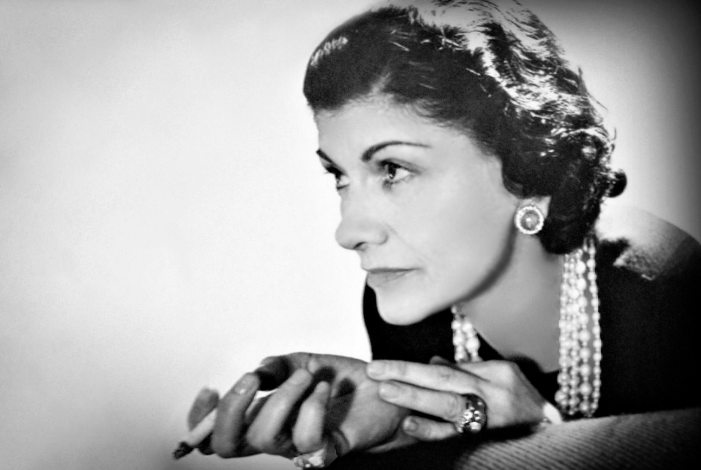
Coco Chanel & Early 20th‑Century Beauty (1910s–1930s): French Beauty History Series

The Birth of Modern Beauty

The early 20th century was a turning point in beauty culture. Women were stepping out of Victorian restraint and into a new world of independence, movement and modernity. At the centre of this transformation stood Coco Chanel, whose influence extended far beyond fashion. She altered how women saw themselves — and how they presented themselves to the world.

This era marks the beginning of modern French beauty: clean, intentional, liberated and quietly radical.

1. The 1910s: Liberation Begins

Beauty in the 1910s was still tied to:

  • powdery complexions
  • soft, natural makeup
  • discreet grooming
  • understated femininity

But Chanel introduced a new idea: beauty as freedom.

Her early designs — jersey dresses, sailor tops, menswear‑inspired silhouettes — required a beauty look that matched their simplicity. Women began embracing:

  • natural skin
  • minimal makeup
  • effortless hair
  • understated elegance

This was the beginning of the “French girl” vibe.

2. The 1920s: The Chanel Face Emerges

The 1920s were electric — jazz, nightlife, modernity. Women cut their hair, danced, smoked and embraced a new identity.

Chanel’s beauty philosophy aligned perfectly with the decade’s energy.

Her signature look included:

  • short, bobbed hair
  • clean skin
  • bold lips (yes, Chanel loved a strong lip)
  • dark, defined eyes
  • confident and modern 

She wasn’t trying to make women pretty. She was trying to make them powerful.

3. The Creation of Chanel No. 5 (1921)

No beauty history is complete without Chanel No. 5 — the fragrance that changed everything.

It was abstract, modern, aldehydic, intentionally artificial and a break from traditional floral perfumes.

Chanel wanted a scent that smelled like:

“A woman, not a flower.”

No. 5 became the first truly modern perfume, a symbol of French femininity and a global cultural icon.

It remains the most famous fragrance in the world.

4. The 1930s: Elegance Refined

The 1930s brought:

  • sculpted brows
  • matte skin
  • deeper lip colours
  • more structured hairstyles

Chanel adapted her beauty philosophy to the decade’s sophistication.

Her beauty ideals emphasized:

  • restraint
  • polish
  • glamour
  • architectural simplicity

This era cemented the idea that French beauty is about intention, as opposed to excess.

5. Chanel’s Beauty Philosophy

Chanel’s influence on beauty can be summarized in four principles:

1. Effortless Skin
Skin should look like skin — clean, fresh, alive.

2. One Statement Feature
A bold lip or a defined eye, never both.

3. Hair as Identity
Short hair = freedom. Long hair = elegance. But always purposeful.

4. Fragrance as Character
Perfume is not decoration — it is identity.

These principles still define French beauty today.

6. Why This Era Matters

Because Chanel didn’t just create a look. She created a beauty philosophy that shaped:

  • French cinema
  • French fashion
  • French femininity
  • global beauty standards
  • modern minimalism
  • the “effortless chic” aesthetic

She made beauty intellectual, intentional and modern.

Her influence is still visible in:

  • French pharmacy beauty
  • luxury fragrance culture
  • editorial beauty trends
  • runway makeup
  • everyday French women

Chanel didn’t follow beauty. She defined it.

I’m Stacey Hobbs, thanks for reading Face by Stace! Until next time.
do you feel fabulous today?
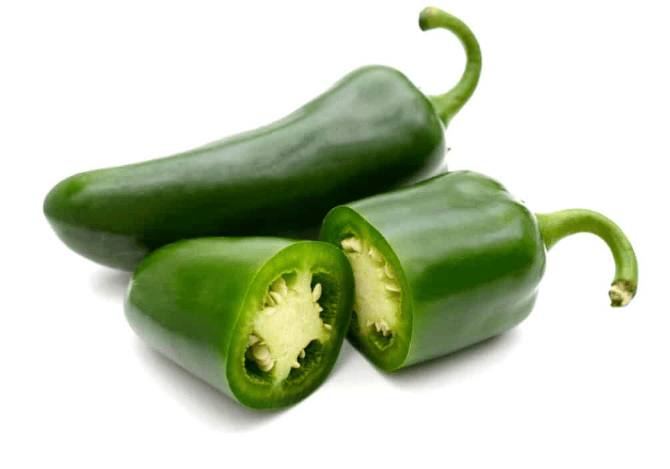
Food + Beauty Recipes: The Jalapeño Series: Ricardo Cuisine–Inspired Jalapeño Corn Chowder

There are ingredients that feel alive the moment they touch the tongue, and jalapeños have always been one of them. Bright, green, fiery and bold, jalapeños carry a kind of heat that wakes up both food and the senses. Long before they became a modern culinary staple, jalapeños were woven into Indigenous and Mexican food traditions — a symbol of vitality, warmth, and the kind of inner fire that shows on the skin.

Historical Notes
Jalapeños trace back thousands of years to Mesoamerican cultures, where chiles were used not only for cooking but for medicine, ceremony, and preservation. The Aztecs cultivated chiles as essential crops, believing their heat supported strength, stamina, and purification.

In traditional Mexican cooking, jalapeños became a cornerstone of salsas, stews, and healing broths. Their heat was seen as balancing — warming the body, stimulating digestion, and supporting circulation. When Spanish influence blended with Indigenous foodways, jalapeños spread across the Americas, eventually becoming a defining ingredient in Tex‑Mex cuisine.

By the 20th century, jalapeños entered global kitchens, celebrated for their versatility: fresh, pickled, roasted, smoked (as chipotle), or blended into sauces. Today, they remain one of the most recognizable peppers in the world — a symbol of bold flavour, warmth, and culinary personality.

Jalapeños endure because of their dual identity: a food ingredient that awakens flavour, and a beauty ingredient that awakens circulation.

Jalapeño Beauty Benefits

Circulation Boost
Capsaicin — the compound responsible for jalapeño heat — increases blood flow when applied topically. This can create a natural flush, support glow, and enhance nutrient delivery to the skin.

Detox Support
Spicy foods stimulate digestion and lymphatic movement, helping the body process inflammation and eliminate waste — an internal pathway to clearer skin.

Warmth & Revitalization
Jalapeño‑infused oils or balms can provide gentle warmth to tight muscles, stiff joints, or dull skin, making them ideal for invigorating beauty rituals.

Antioxidant Protection
Jalapeños contain vitamin C and carotenoids, which help protect skin from environmental stress and support collagen production.

Inner Wellness
Eating jalapeños can support metabolism, digestion, and circulation — all of which contribute to a brighter, more energized complexion.

Jalapeños remind us that beauty isn’t always soft — sometimes it’s warm, bold, and full of personality.

This series will explore jalapeños through both food and beauty, revealing how heat can be nourishing, balancing, and glow‑enhancing.

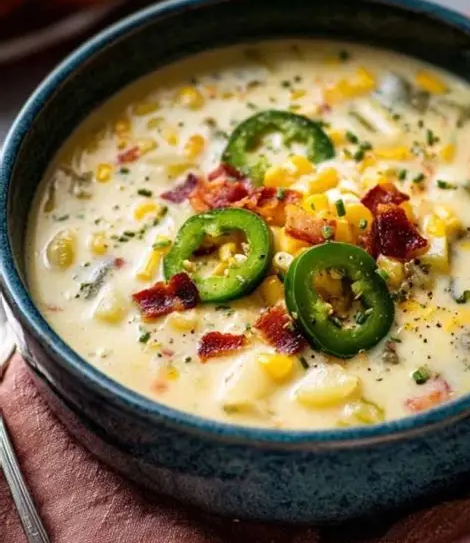
Ricardo Cuisine–Inspired Jalapeño Corn Chowder

Jalapeno Corn Chowder: 7 Remarkable Tips for Creamy, Spicy Flavour/www.chefify.net

Prep 15 minutes  Cook 30 minutes Serves 4

Ingredients

  • 1 tbsp Butter
  • 1 tbsp Olive oil
  • 1 Medium onion, diced
  • 2 Garlic cloves, minced
  • 2 Fresh jalapeños, seeded and finely chopped
  • 2 cups Corn kernels (fresh or frozen)
  • 2 cups Diced potatoes
  • 3 cups Chicken or vegetable broth
  • 1 cup Milk or light cream
  • 1/2 tsp Smoked paprika
  • To taste Salt and pepper
  • Optional Crispy bacon, chives, extra jalapeño slices for garnish

Instructions

  1. Sauté aromatics
    In a large pot, heat butter and olive oil over medium heat. Add onion and cook until soft, about 5 minutes. Stir in garlic and jalapeños and cook 1 minute.
  2. Add vegetables
    Add corn and potatoes. Stir to coat in the aromatics.
  3. Simmer
    Pour in broth, add smoked paprika and season with salt and pepper. Bring to a boil then reduce heat and simmer 15–20 minutes until potatoes are tender.
  4. Add cream
    Stir in milk or light cream. Simmer gently for 5 minutes. Do not boil.
  5. Blend (optional)
    Blend half the soup for a creamier texture or leave chunky for a rustic feel.
  6. Finish
    Taste and adjust seasoning. Ladle into bowls and garnish with bacon, chives and jalapeño slices.

Why This Fits Ricardo Cuisine

Ricardo’s cooking style is:

  • comforting
  • family‑friendly
  • creamy, warm and cozy
  • rooted in approachable Québécois home cooking

A jalapeño corn chowder fits his brand perfectly — familiar, hearty and gently elevated with spice.

Beauty Benefits

Jalapeño (capsaicin) Boosts circulation → natural glow. Supports detox pathways. Enhances nutrient delivery to the skin

Corn Rich in antioxidants that support skin brightness

Potatoes Contain vitamin B6 for skin renewal

Milk/Cream Healthy fats support the skin barrier

This chowder is warming, delivers radiance and deeply nourishing.

Historical Context
Corn chowder has roots in North American comfort cooking especially in New England and Québec, where creamy soups became staples during cold seasons. Jalapeños introduce a Mesoamerican heat element, blending Indigenous spice traditions with classic French‑Canadian comfort.

This fusion creates a dish that feels both familiar and exciting — a warm bowl with a lively jalapeño kick.

Beauty and nourishment have always been intertwined and every ingredient tells its own story — from the kitchen to the vanity, from ancient rituals to modern wellness. Whether used to warm the body, brighten the skin or elevate a simple meal, these ingredients remind us that radiance is never one‑dimensional. It’s flavour, it’s history, it’s ritual and it’s the quiet way small choices accumulate into something luminous.

I’m Stacey Hobbs, thanks for reading! Until next time.
do you feel fabulous today?

Food + Beauty Recipes: The Jalapeño Series: Jalapeño Scalp‑Stimulating Hair Oil Treatment

There are ingredients that feel alive the moment they touch the tongue, and jalapeños have always been one of them. Bright, green, fiery and bold, jalapeños carry a kind of heat that wakes up both food and the senses. Long before they became a modern culinary staple, jalapeños were woven into Indigenous and Mexican food traditions — a symbol of vitality, warmth, and the kind of inner fire that shows on the skin.

Historical Notes
Jalapeños trace back thousands of years to Mesoamerican cultures, where chiles were used not only for cooking but for medicine, ceremony, and preservation. The Aztecs cultivated chiles as essential crops, believing their heat supported strength, stamina, and purification.

In traditional Mexican cooking, jalapeños became a cornerstone of salsas, stews, and healing broths. Their heat was seen as balancing — warming the body, stimulating digestion, and supporting circulation. When Spanish influence blended with Indigenous foodways, jalapeños spread across the Americas, eventually becoming a defining ingredient in Tex‑Mex cuisine.

By the 20th century, jalapeños entered global kitchens, celebrated for their versatility: fresh, pickled, roasted, smoked (as chipotle), or blended into sauces. Today, they remain one of the most recognizable peppers in the world — a symbol of bold flavour, warmth, and culinary personality.

Jalapeños endure because of their dual identity: a food ingredient that awakens flavour, and a beauty ingredient that awakens circulation.

Jalapeño Beauty Benefits

Circulation Boost
Capsaicin — the compound responsible for jalapeño heat — increases blood flow when applied topically. This can create a natural flush, support glow, and enhance nutrient delivery to the skin.

Detox Support
Spicy foods stimulate digestion and lymphatic movement, helping the body process inflammation and eliminate waste — an internal pathway to clearer skin.

Warmth & Revitalization
Jalapeño‑infused oils or balms can provide gentle warmth to tight muscles, stiff joints, or dull skin, making them ideal for invigorating beauty rituals.

Antioxidant Protection
Jalapeños contain vitamin C and carotenoids, which help protect skin from environmental stress and support collagen production.

Inner Wellness
Eating jalapeños can support metabolism, digestion, and circulation — all of which contribute to a brighter, more energized complexion.

Jalapeños remind us that beauty isn’t always soft — sometimes it’s warm, bold, and full of personality.

This series will explore jalapeños through both food and beauty, revealing how heat can be nourishing, balancing, and glow‑enhancing.

Jalapeño Scalp‑Stimulating Hair Oil Treatment 

Prep Time: 5 minutes  Treatment Time:20–30 minutes 
Skin/Hair Type: Normal to dry scalp, dull hair, slow growth
Frequency: 1–2 times weekly

Ingredients

  • 2 tbsp jojoba oil (closest to natural scalp sebum)
  • 1 tbsp sweet almond oil (shine + softness)
  • ½ tsp agave nectar (humectant, moisture‑locking)
  • 1–2 thin slices of jalapeño (for gentle heat infusion)
  • 3 drops rosemary essential oil (growth‑supporting)
  • 1 tsp aloe vera gel (to balance heat and soothe scalp)

Instructions

  1. Warm the oils
    Gently heat jojoba and almond oil until warm — never hot. Warmth helps activate the jalapeño infusion.
  2. Add jalapeño slices
    Let them steep for 3–5 minutes. This releases capsaicin in a controlled, gentle way.
  3. Strain
    Remove jalapeño slices to avoid direct scalp irritation.
  4. Add aloe + rosemary
    Aloe calms, rosemary stimulates circulation and growth.
  5. Massage into scalp
    Use slow, circular motions for 3–5 minutes. This is where the glow magic happens.
  6. Leave on for 20–30 minutes
    You’ll feel a mild warmth — that’s the circulation boost.
  7. Rinse and shampoo
    Follow with a hydrating conditioner.

Beauty Benefits

Jalapeño (Capsaicin)

  • Boosts scalp circulation → encourages hair growth
  • Enhances nutrient delivery to follicles
  • Awakens dull, sluggish scalp

Jojoba + Almond Oil

  • Nourish and soften hair
  • Strengthen the moisture barrier
  • Add natural shine

Aloe Vera

  • Calms heat
  • Reduces irritation
  • Adds hydration

Rosemary Oil

  • Historically used for hair growth
  • Stimulates follicles
  • Adds a fresh, herbal scent

This treatment is warming, glossy and deeply revitalizing.

Historical Context
Heat‑based scalp treatments have roots in Indigenous Mesoamerican beauty rituals, where chiles were used to stimulate circulation and awaken the senses. In Mediterranean traditions, rosemary oil was used for centuries to strengthen hair and encourage growth. This recipe blends both worlds — jalapeño heat and rosemary heritage — creating a modern ritual that feels ancient, sensory and luxurious.

Beauty and nourishment have always been intertwined and every ingredient tells its own story — from the kitchen to the vanity, from ancient rituals to modern wellness. Whether used to warm the body, brighten the skin or elevate a simple meal, these ingredients remind us that radiance is never one‑dimensional. It’s flavour, it’s history, it’s ritual and it’s the quiet way small choices accumulate into something luminous.

I’m Stacey Hobbs, thanks for reading! Until next time.
do you feel fabulous today?

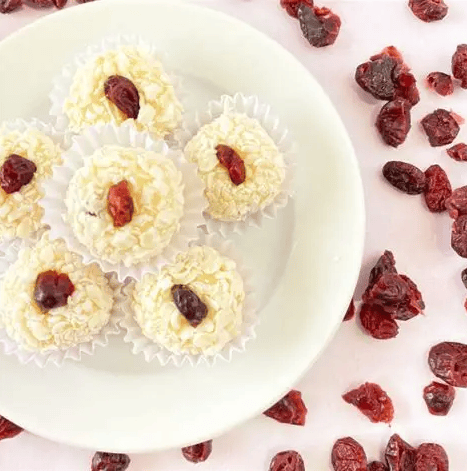
Brazilian Inspired: Cranberry Brigadeiros

A ruby‑red twist on Brazil’s most beloved confection. These cranberry brigadeiros are soft, chewy, glossy little truffles made by simmering sweetened condensed milk with tart cranberries until they melt into a vibrant, fruity caramel. Rolled in sugar or coconut, they’re festive, modern and still deeply true to the spirit of classic brigadeiros — joyful, celebratory and perfect for gifting or holiday entertaining.

Prep 10 minutes Cook 12–15 minutes Serves 18–22 brigadeiros

Brigadeiro de Cranberry – The CheesecakeHouse
Brigadeiro de Cranberry – The CheesecakeHouse/thecheesecakehouse.com

Ingredients

1 can (300 mL) sweetened condensed milk
1 tbsp butter
1 cup fresh or frozen cranberries
1/4 cup sugar
1 tsp vanilla
Pinch salt
As needed granulated sugar (for rolling)
As needed shredded coconut (for rolling)
Optional freeze‑dried cranberry powder

Instructions

  1. Cook the Cranberries
    Add cranberries and sugar to a small saucepan. Cook 5–7 minutes until cranberries burst and form a thick, jammy mixture. Mash lightly and set aside.
  2. Make the Brigadeiro Base
    In a nonstick pan, add condensed milk, butter, cranberry mixture, vanilla, and salt. Cook over medium heat, stirring constantly, until thick and pulling away from the bottom of the pan (10–12 minutes). Transfer to a greased plate and cool completely.
  3. Roll the Brigadeiros
    Grease your hands lightly with butter. Roll teaspoon‑sized portions into balls. Coat in sugar, coconut or cranberry powder.
  4. Serve
    Enjoy at room temperature. Store in mini paper cups for a classic Brazilian presentation.

Beauty Benefits

  • Vitamin C from cranberries supports collagen and brightens the complexion.
  • Antioxidants help protect skin from environmental stressors.
  • Healthy fats from butter support skin barrier moisture.
  • Natural fruit hydration contributes to overall skin vitality.
  • Vanilla aromatics promote relaxation, which can support skin radiance.

Health Benefits

  • Cranberries provide immune‑supporting antioxidants.
  • Lower‑sugar twist compared to chocolate brigadeiros.
  • Natural fruit fibre supports digestion.
  • Energy‑supporting carbohydrates make these perfect for celebrations.
  • Gluten‑free and simple whole‑ingredient confection.

Storage

  • Room temperature: 2–3 days
  • Refrigerator: 5–7 days
  • Freezer: Up to 2 months (thaw in fridge)
  • Make‑ahead tip: Roll brigadeiros the day before serving for best texture.

Substitutions

  • Cranberries: Sour cherries, raspberries or red currants
  • Sugar coating: Coconut, sprinkles, cocoa powder or powdered milk
  • Butter: Coconut oil for a dairy‑free version
  • Flavour boosters: Orange zest, cinnamon or vanilla bean
  • Texture: Add 1 tbsp cream cheese for a softer brigadeiro

History + Cultural Context

Brigadeiros are Brazil’s most iconic sweet — soft, chewy chocolate truffles traditionally served at birthdays, holidays and celebrations. This cranberry version introduces a North‑American fruit while preserving the classic brigadeiro technique: slow‑cooked condensed milk transformed into a glossy caramel.

Cranberries mirror the tartness of Brazilian fruits like acerola and pitanga making this fusion feel culturally aligned. The result is a festive, brigadeiro that still honours Brazil’s joyful dessert tradition.

I’m Stacey Hobbs, thanks for reading Face by Stace! Until next time.
do you feel fabulous today?
The Feud Series: Lanvin vs. Schiaparelli: Tradition vs Art: Part 1 — Elegance vs. Surrealism: When Two Visions of Femininity Collided

Paris, 1930s: A City Split Between Two Queens

The 1930s were one of the most glamorous decades in Parisian fashion — a moment when couture was at its artistic peak and designers were treated like cultural monarchs. But beneath the satin, embroidery and salon lights, Paris was divided.

On one side stood Jeanne Lanvin, the grande dame of refinement. On the other stood Elsa Schiaparelli, the high priestess of surrealism.

They were opposites in every possible way — and that made their rivalry inevitable.

This is the story of how elegance and surrealism collided, shaping one of the most fascinating feuds in fashion history.

1. Jeanne Lanvin: The Architect of Elegance

Lanvin’s world was built on embroidery, femininity, mother‑daughter intimacy, couture craftsmanship, romantic silhouettes and the iconic Lanvin Blue.

Her designs were soft, refined, emotionally intelligent, rooted in tradition and devoted to beauty.

Lanvin believed that fashion should protect, celebrate and elevate women. Her couture was a sanctuary — a place where femininity was honoured, instead of it being challenged.

She represented continuity.

2. Elsa Schiaparelli: The Surrealist Rebel

Schiaparelli’s world was built on shock, wit, surrealism, artistic rebellion, bold colour and un-expected shapes.

Her designs were loud, intellectual, humorous, confrontational and avant‑garde.

She collaborated with:

  • Salvador Dalí
  • Jean Cocteau
  • Man Ray

Her fashion wasn’t about beauty — it was more about ideas.

She represented disruption.

3. Two Women, Two Philosophies

Lanvin and Schiaparelli weren’t just different designers. They had different worldviews. They were night and day.

Lanvin’s Philosophy:
Beauty is devotion. Femininity is emotional. Craft is sacred. Elegance is timeless.

Schiaparelli’s Philosophy:
Beauty is irrelevant. Femininity is a performance. Fashion is art. Shock is power.

Paris adored both — but Paris also loved conflict.

4. The Couture Clash

Their feud wasn’t loud like Chanel vs. Schiaparelli. It wasn’t bitter like YSL vs. Karl. It was quieter — but sharper.

Lanvin saw Schiaparelli as:

  • too theatrical
  • too modern
  • too un-serious
  • too gimmicky

Schiaparelli saw Lanvin as:

  • too traditional
  • too sentimental
  • too safe
  • too conservative

They competed for:

  • the same clients
  • the same press
  • the same couture spotlight
  • the same Parisian social circles

But they offered completely different visions.

5. The Battle of Colour

Lanvin had Lanvin Blue — serene, noble, celestial.
Schiaparelli had Shocking Pink — loud, electric, unapologetic.
These colours became symbols of their rivalry:

  • blue = elegance
  • pink = rebellion

Parisian women chose sides based on colour alone.

6. The Battle of Silhouette

Lanvin offered robe de style, soft draping, romantic volume and historical references.

Schiaparelli offered sharp tailoring, surrealist motifs, sculptural shapes and un-expected proportions.

Lanvin dressed women like royalty. 
Schiaparelli dressed women like art.

7. The Social Divide

Lanvin’s clientele:

  • aristocrats
  • elite women
  • mothers and daughters
  • traditional Parisian families

Schiaparelli’s clientele:

  • artists
  • actresses
  • intellectuals
  • avant‑garde circles

Parisian salons became battlegrounds of taste.

8. Why This Feud Matters

Because Lanvin vs. Schiaparelli is the purest expression of two competing visions of femininity:

Femininity as elegance vs. Femininity as rebellion

Their feud shaped:

  • couture aesthetics
  • fashion photography
  • museum curation
  • modern runway storytelling
  • the divide between classic and avant‑garde fashion

Every modern designer echoes one of them:

  • Valentino → Lanvin
  • Dior → Lanvin
  • Iris van Herpen → Schiaparelli
  • Viktor & Rolf → Schiaparelli
  • Pierpaolo Piccioli → Lanvin
  • Daniel Roseberry → Schiaparelli (direct lineage)

Their rivalry still defines Paris.

9. The Legacy

Lanvin’s legacy craftsmanship, elegance, emotional beauty and couture heritage.

Schiaparelli’s legacy surrealism, shock, artistic fashion

  • conceptual design

Both women changed fashion. 
Both women shaped history. 
Both women built worlds that still exist today.

Paris crowned neither — because Paris needed both.

I’m Stacey Hobbs, thanks for reading Face by Stace! Until next time.
do you feel fabulous today?
Elsa Schiaparelli designs, circa 1930s