Spanx: The Rise of Modern Shapewear: How Spanx Rewired the Female Silhouette

From Control Garments to Cultural Phenomenon

Before Spanx, shapewear was a relic of the past — a category associated with girdles, pantyhose and restrictive undergarments that belonged more to the 1950s than the 2000s. Women wore them out of obligation not empowerment.

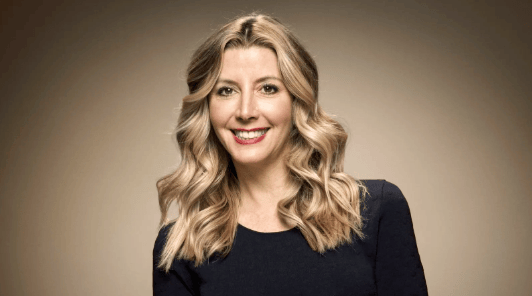
Then came Sara Blakely.

With one pair of scissors and a pair of pantyhose, she didn’t just create a product. She created a movement.

Spanx became:

  • a cultural reset
  • a red‑carpet secret
  • a modern necessity
  • a symbol of female entrepreneurship
  • a new definition of body‑supporting fashion

This is the story of how Spanx re-shaped the modern silhouette.

1. The Problem: Shapewear Was Outdated

Before Spanx, the shapewear landscape was bleak.

Women had:

  • bulky girdles
  • un-comfortable boning
  • visible seams
  • rolling waistbands
  • garments that squeezed instead of smoothing

Shapewear was designed to control, not support.

It was a category begging for reinvention.

2. The Invention: A Pair of Scissors and a Vision

Sara Blakely famously cut the feet off her pantyhose to create a smoother line under white trousers.

That moment revealed the gap:

  • women wanted smoothing, as opposed to squeezing
  • they wanted invisibility, not structure
  • they wanted comfort, not punishment

Spanx was born from a lived experience — not a corporate boardroom.

This authenticity became its superpower.

3. The Spanx Effect: A New Silhouette for the 2000s

Spanx arrived at the exact moment fashion demanded a new kind of undergarment.

The early 2000s silhouette was:

  • body‑skimming
  • minimalistic
  • clingy
  • un-forgiving

Prominent figures needed something that:

  • smoothed lines
  • eliminated panty seams
  • worked under silk, jersey and satin
  • stayed invisible under flash photography

Spanx became the secret weapon of:

  • actresses
  • stylists
  • editors
  • publicists
  • brides
  • everyday women

It wasn’t just shapewear. It was confidence infrastructure.

4. The Cultural Shift: From Shame to Empowerment

Spanx reframed shapewear from something women hid to something women celebrated.

It became a symbol of female entrepreneurship, a red‑carpet talking point, a product women proudly admitted to wearing and a brand associated with empowerment, not restriction.

Spanx didn’t change bodies. 
It changed attitudes.

It made shapewear:

  • modern
  • acceptable
  • aspirational
  • mainstream

This was a cultural shift, not just a fashion one.

5. The Business Revolution

Spanx wasn’t just a fashion innovation — it was a business revolution.

Sara Blakely:

  • self‑funded the company
  • wrote her own patent
  • became the youngest self‑made female billionaire
  • built a global brand without outside investment
  • changed the narrative around female founders

Spanx became a case study in:

  • entrepreneurship
  • branding
  • product innovation
  • female leadership

It proved that fashion could be both practical and powerful.

6. Why Spanx Matters Today

Spanx shaped:

  • the rise of modern shapewear
  • the normalization of smoothing garments
  • the evolution of red‑carpet styling
  • the acceptance of body‑supporting fashion
  • the business landscape for female founders

It is the bridge between:

  • 1950s girdles
  • 1990s minimalism
  • 2000s celebrity culture
  • today’s body‑positive shapewear market

Spanx didn’t just change what women wore. It changed how women felt.

I’m Stacey Hobbs, thanks for reading Face by Stace! Until next time.
do you feel fabulous today?
Chanel + Diaghilev: The Ballets Russes Era

Where couture met choreography — and modernism found its stage.

Before Chanel became synonymous with the little black dress and the discipline of line, she was transforming another world: the avant‑garde stage. Her collaboration with Sergei Diaghilev and the Ballets Russes was one of the most important — and least discussed — chapters of her career.

Diaghilev didn’t choose collaborators lightly. He chose visionaries.

And Chanel was exactly that.

A Modernist Among Modernists

The Ballets Russes was the epicentre of artistic revolution — Picasso, Matisse, Stravinsky, Cocteau, Nijinsky. Chanel entered this circle not as a spectator but as a creator.

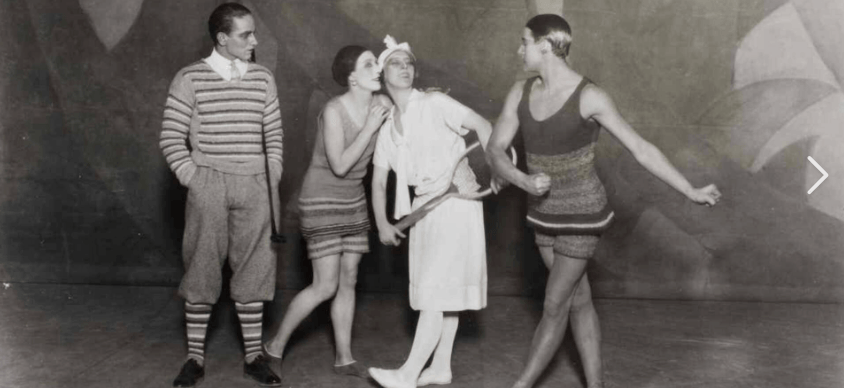
Her costumes for Le Train Bleu (1924) were radical for their time:

  • athletic silhouettes
  • jersey fabrics
  • clean, geometric lines
  • a rejection of theatrical excess

Chanel didn’t dress dancers as fantasy creatures. 
She dressed them as modern women.

It was a shock to Paris — and a revelation.

The Chanel–Diaghilev Dynamic

Diaghilev admired Chanel’s discipline. Chanel admired Diaghilev’s audacity.

Their collaboration was built on mutual respect, as opposed to ego. Chanel even helped fund Diaghilev during challenging times, providing absolute support towards the company that had become her artistic home.

The Ballets Russes shaped Chanel’s aesthetic:

  • her love of movement
  • her architectural simplicity
  • her fascination with modern geometry
  • her belief that beauty must serve life

Chanel did much more than design costumes, she designed the stage. 

I’m Stacey Hobbs, thanks for reading Face by Stace! Until next time.
do you feel fabulous today?
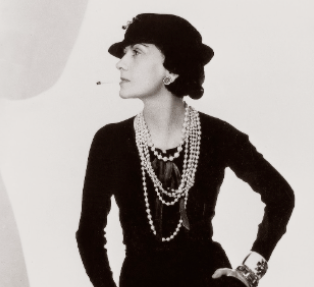
How Chanel’s Artistic Friendships Influenced No. 5, Costume Design, and Her Later Collections

The perfume, the silhouettes, the symbols — all touched by the avant‑garde.

Chanel No. 5 wasn’t just a fragrance. It was a manifesto.

And its creation was deeply influenced by the artistic circle she lived in.

No. 5 — The Abstract Perfume

Picasso’s cubism taught Chanel the power of abstraction. Stravinsky taught her the beauty of structure. Cocteau taught her the symbolism of simplicity.

No. 5 reflected all three:

  • no floral bouquet
  • no romantic packaging
  • no ornate bottle
  • just pure, modern abstraction

It was the first perfume that that smelled like an idea, an idea that was about to become the beginning of the most sold and the most popular fragrance, parfum in the world. 

Costume Design

Her work with Cocteau and Diaghilev sharpened her understanding of:

  • movement
  • geometry
  • negative space
  • the body as architecture

This translated directly into her couture:

  • the clean lines
  • the disciplined silhouettes
  • the refusal of excess
  • the elegance of restraint

Later Collections

Her artistic friendships influenced:

  • her monochrome palette
  • her fascination with symbols (stars, comets, wheat)
  • her minimalist jewelry
  • her belief that fashion must serve life, not decorate it

Chanel didn’t borrow from the avant‑garde. She absorbed it — and transformed it into couture.

I’m Stacey Hobbs, thanks for reading Face by Stace! Until next time.
do you feel fabulous today?
Marilyn Monroe’s Love for Chanel No. 5

The nightgown she never wore — and the perfume that became a legend.

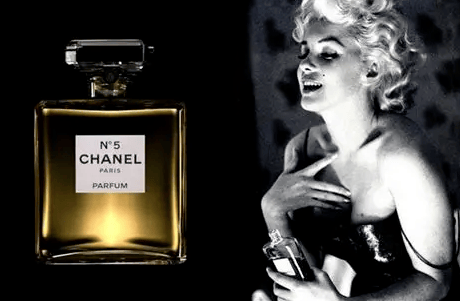
There are beauty quotes, and then there are beauty myths — the kind that crystallize into cultural memory. Marilyn Monroe’s devotion to Chanel No. 5belongs to the latter. It is one of the most famous intersections of Hollywood glamour and French luxury ever recorded and it transformed a perfume into an icon.

But the story didn’t begin with marketing. It began with Marilyn being Marilyn — candid, luminous, and disarmingly honest. 

The Interview That Changed Everything

In 1952, a young reporter asked Marilyn a question that could have been forgettable:

“What do you wear to bed?”

Marilyn paused, smiled, and answered with the kind of breathless simplicity only she could deliver:

“Just a few drops of Chanel No. 5.”

It was not scripted. 
It was not sponsored. 
It was not a campaign.

It was a moment — spontaneous, intimate, and instantly immortal.

That single sentence did more for Chanel No. 5 than any advertisement ever could. It turned the perfume into a symbol of sensual minimalism: the idea that a woman could be naked yet fully dressed in her fragrance.

Why Marilyn Chose No. 5

Marilyn was drawn to No. 5 for the same reason modern women still are:

  • its abstraction
  • its clean, aldehydic brightness
  • its refusal to smell like a garden
  • its modernity
  • its confidence

No. 5 wasn’t a floral fantasy. It was a statement — bold, architectural, and unmistakably feminine.

Marilyn loved that it didn’t smell like anything else. It smelled like her.

Chanel’s Reaction — Decades Later

Here’s the part most people don’t know.

Chanel didn’t use Marilyn’s quote in advertising until 1987, long after her death. The house waited 35 years before officially linking Marilyn to the fragrance — a testament to how sacred her words were.

When Chanel finally released the campaign, they didn’t embellish. They simply used her voice.

Because Marilyn didn’t endorse No. 5. She anointed it.

The Mythology of Scent and Skin

Marilyn’s relationship with No. 5 wasn’t about glamour. It was about intimacy.

Perfume is the most personal beauty ritual — worn on the pulse points, absorbed into the skin, becoming part of the body’s warmth. Marilyn understood that. She didn’t wear No. 5 for the world. She wore it for herself.

Her quote reframed perfume as:

  • a night ritual
  • a private luxury
  • a form of self‑adoration

It was the birth of the “naked perfume” concept — the idea that scent alone can dress a woman.

Marilyn’s love for Chanel No. 5 endures because it captures something rare: the intersection of authenticity and glamour.

She didn’t say it to be seductive. She said it because it was true.

And in that truth, she gave No. 5 a legacy that transcends fashion, beauty, and time.

Chanel No. 5 is not just a perfume. It is a cultural artifact — and Marilyn Monroe is the woman who made it eternal.

I’m Stacey Hobbs, thanks for reading Face by Stace! Until next time.

do you feel fabulous today?
Karl Lagerfeld x Balmain

Before Chanel, before Fendi — Karl Lagerfeld learned couture under the house that defined Parisian discipline.

Long before Karl Lagerfeld became the architect of modern Chanel, he was a young designer absorbing the strict, sculptural discipline of Pierre Balmain — one of the great post‑war couturiers. Their relationship wasn’t just professional. It was formative. Balmain shaped Lagerfeld’s eye, his rigor and his understanding of silhouette.

This is the chapter of Lagerfeld’s life most people forget — the Balmain years.

Balmain: The House of Architectural Elegance

Pierre Balmain was known for:

  • long, columnar lines
  • sculpted waists
  • impeccable tailoring
  • a kind of aristocratic restraint

His couture was architectural — not decorative. He believed a dress should stand on its own and not like a building.

This philosophy became the foundation of Lagerfeld’s later work.

Karl Lagerfeld Arrives at Balmain (1955)

At just 21, Karl Lagerfeld won the International Wool Secretariat competition — the same competition Yves Saint Laurent won in the same year. Balmain hired him immediately.

This was Lagerfeld’s first real job in couture. Inside Balmain’s atelier, he learned:

  • discipline
  • construction
  • the mathematics of silhouette
  • the importance of proportion
  • the power of a controlled line

Balmain was strict. 
Lagerfeld was brilliant. 
The combination was electric.

The Balmain–Lagerfeld Dynamic

Their relationship was complex — part mentorship, part rivalry, part creative tension.

Balmain saw Lagerfeld’s talent but also his ambition. Lagerfeld admired Balmain’s discipline but resisted his rigidity.

Balmain was the architect. 
Lagerfeld was the provocateur.

This tension shaped Lagerfeld’s future aesthetic: classic structure with modern irreverence.

Why Balmain Mattered to Lagerfeld’s Evolution

You can see Balmain’s influence throughout Lagerfeld’s career:

At Chloé
The softness and femininity were new but the underlying structure — the way the garments held shape — came from Balmain.

At Fendi
The architectural approach to fur, the sculptural coats, the precision — pure Balmain discipline.

At Chanel
The clean jackets, the controlled silhouettes, the razor‑sharp tailoring — all rooted in Balmain’s couture training.

Balmain gave Lagerfeld the skeleton. Lagerfeld built the empire.

The Aesthetic Contrast: Balmain vs. Lagerfeld

Balmain believed in:

  • elegance
  • restraint
  • aristocratic femininity

Lagerfeld believed in:

  • modernity
  • provocation
  • constant reinvention

Balmain was the old world. 
Lagerfeld was the new.

Their relationship is one of the great generational handoffs in fashion — the passing of couture discipline from one master to the next.

The Legacy: Balmain in Lagerfeld’s DNA

Even at Chanel, decades later, Lagerfeld often said:

“You must know the rules to break them.”

Those rules were Balmain’s.

Every sharp shoulder, every sculpted jacket, every architectural silhouette Lagerfeld sent down the runway carried the imprint of his first teacher.

Balmain didn’t make Lagerfeld. But he made Lagerfeld possible.

I’m Stacey Hobbs, thanks for reading Face by Stace! Until next time.
do you feel fabulous today?

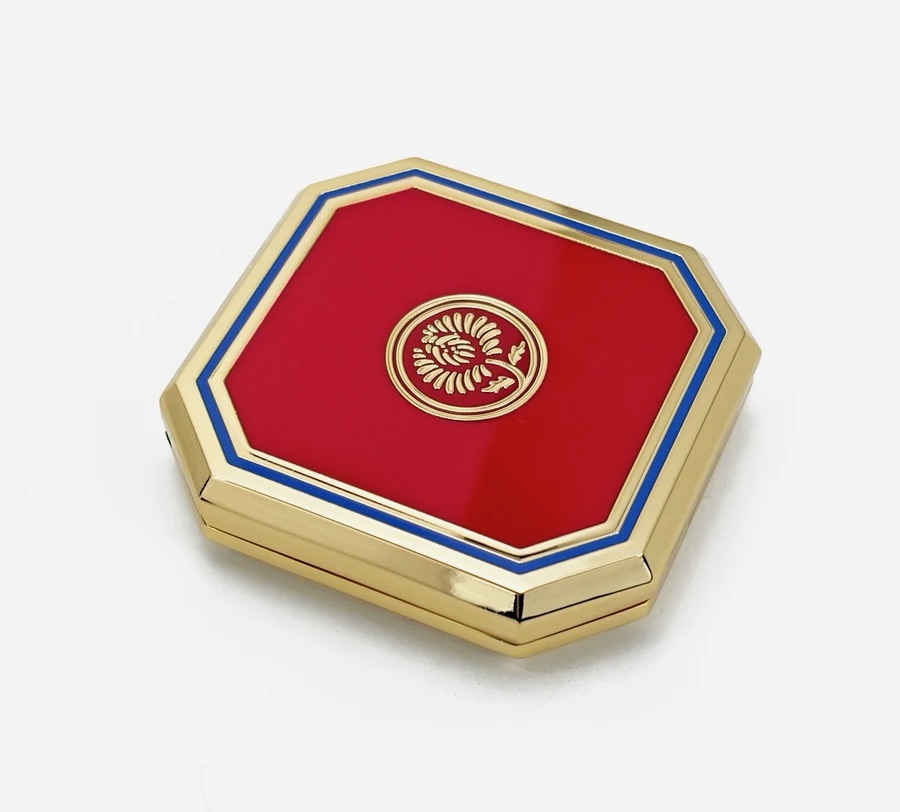
The Optimist Slim Refillable Compact with Powder — Bésame Cosmetics

Retro Sophistication. Endless Versatility.

Bésame’s Optimist Slim Refillable Compact with Powder is one of the brand’s most thoughtful releases — a piece that blends old‑Hollywood vanity culture with today’s sustainability values. It’s designed for women who love the ritual of beauty as much as the result.

The compact itself is a slim, gold‑tone metal case inspired by mid‑century travel compacts. It feels like something you’d find in a 1950s handbag: elegant, discreet and meant to be seen. Inside, a mirror sits above a pressed translucent powder formulated to blur pores, soften shine and set makeup without flattening the skin’s natural glow.

The powder has a satin‑matte finish — never chalky, never heavy — and works across skin tones. It’s the kind of formula that disappears into the complexion rather than sitting on top of it, giving that polished, candlelit look Bésame is known for.

One of the most appealing features is the refill system. The powder pan attaches magnetically, allowing you to replace the product without discarding the compact. It’s part of Bésame’s “Optimist” eco‑minded line which focuses on reducing single‑use packaging while preserving the glamour of vintage beauty tools.

Price: $121

The Optimist Slim Refillable Compact with Powder/Besame Cosmetics

For more information, visit: The Optimist Slim Refillable Compact with Powder – Besame Cosmetics

In a beauty landscape dominated by plastic packaging and disposable trends, the Optimist Compact feels like a return to ritual — a reminder that beauty can be both luxurious and responsible. It’s a small object with big intention and a perfect addition to any vanity that values history, elegance and sustainability.

Have you tried The Optimist Slim Refillable Compact with Powder? Let me know, I’d love to hear from you!

I’m Stacey Hobbs, thanks for reading Face by Stace! Until next time.
do you feel fabulous today?