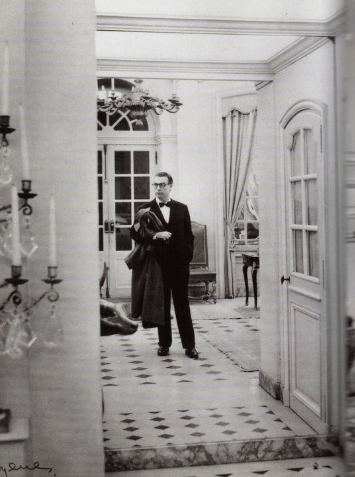
Balenciaga’s story ends not with a final show, a triumphant farewell or a grand public gesture but with silence — the same silence that shaped his work from the beginning. In withdrawing from fashion, he revealed the truth that had guided him all along: that creation does not require noise and that mastery does not require spectacle. His silence was not absence. It was intention. It was discipline. It was the final expression of a designer who believed that fashion at its highest level is an art of clarity.
Looking back across his career, the pattern becomes un-mistakable. Constraint sharpened him. Architecture defined him. Precision sustained him. And silence protected him. Balenciaga never allowed the world to rush him, distract him or dilute him. He built his own pace, his own vocabulary, his own universe — one where fabric behaved like structure, where silhouette carried meaning and where beauty emerged from restraint rather than excess. His work reminds us that innovation is not always loud. Sometimes it is the quiet curve of a sleeve, the purity of a seam, the discipline of a line.
This is why Balenciaga still feels modern. His ideas were not tied to the mid‑century world he lived in; they were structural truths about design itself. Every oversized coat, every sculptural silhouette, every minimalist collection that appears on a runway today carries a trace of his thinking. His influence is not nostalgic. It is foundational. He did not give fashion a style. He gave it a method.
And perhaps that is the greatest lesson of all: that fashion can be both radical and refined, both bold and quiet, both innovative and disciplined. Balenciaga showed that the future of design lies not in decoration but in intention. Not in noise but in clarity. Not in spectacle but in structure. His silence changed fashion because it forced the world to look more closely — to see the architecture behind the garment, the thought behind the shape, the discipline behind the beauty.
Part XV closes the story of a designer who re-shaped fashion without ever raising his voice. Balenciaga’s legacy endures because he built something stronger than trend, stronger than fame, stronger than time. He built a blueprint — one that continues to guide designers, inspire creators and remind the world that true innovation begins with purity, precision and the courage to be quiet.
I’m Stacey Hobbs, thanks for reading Face by Stace! Until next time. do you feel fabulous today?
The quiet lineage of elegance between two masters of couture.
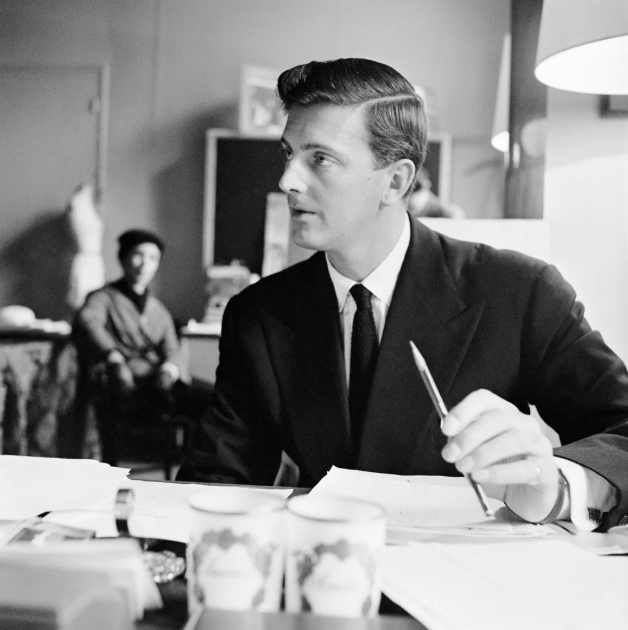
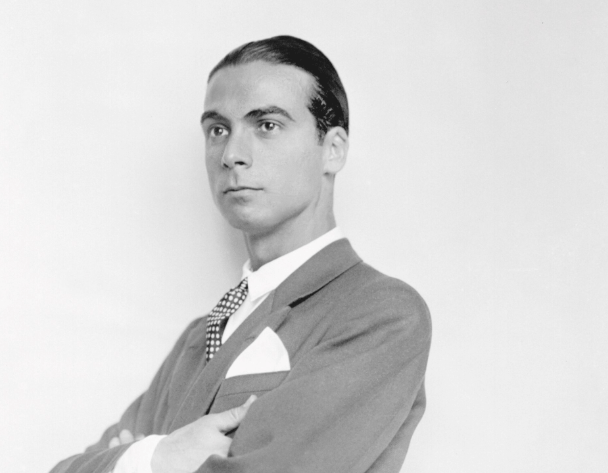
In the history of Paris couture, few relationships are as quietly powerful as the one between Cristóbal Balenciagaand Hubert de Givenchy. Their connection wasn’t loud, dramatic or defined by rivalry. It was built on discipline, admiration and a shared belief that fashion should be an art of purity.
Givenchy is often remembered for Audrey Hepburn, for the little black dress, for the swan‑like silhouettes that defined mid‑century elegance. But before he became the couturier of modern femininity, he was a young designer shaped by the most exacting master of them all: Balenciaga.
Balenciaga: The Architect of Purity
Balenciaga was known for:
sculptural silhouettes
architectural construction
un-compromising standards
a devotion to form over decoration
He didn’t follow trends. He built worlds.
Givenchy recognized this immediately. Balenciaga’s work wasn’t just beautiful — it was disciplined. It demanded respect.
Givenchy’s Early Years: Learning the Language of Line
Before founding his own house in 1952, Givenchy absorbed the aesthetic climate Balenciaga created. Even though he did not apprentice directly under Balenciaga, he was deeply influenced by the master’s philosophy — a philosophy that shaped the entire generation of designers around him.
Givenchy learned:
the importance of proportion
the elegance of restraint
the power of a clean silhouette
the value of architectural tailoring
These principles became the backbone of his own work.
A Relationship Built on Mutual Respect
Balenciaga admired Givenchy’s purity of line. Givenchy admired Balenciaga’s discipline.
Their relationship was not hierarchical — it was symbiotic. Givenchy often referred to Balenciaga as “the architect of haute couture,” and he carried that reverence throughout his career.
Balenciaga, in turn, saw in Givenchy a designer who understood the deeper meaning of couture: not decoration but structure; not trend but timelessness.
The Givenchy Aesthetic: A Balenciaga Echo
You can see Balenciaga’s influence in Givenchy’s most iconic work:
the elongated evening gowns
the crisp daywear
the sculpted shoulders
the clean, swan‑like silhouettes
the refusal of un-necessary ornament
Even Audrey Hepburn’s most famous looks — the Breakfast at Tiffany’s dress, the Sabrina gowns — carry Balenciaga’s architectural DNA filtered through Givenchy’s romantic lens.
Givenchy softened Balenciaga’s severity but he never abandoned the structure.
Balenciaga gave Givenchy the foundation. Givenchy gave the world the refinement.
Together, they shaped the silhouette of modern couture.
I’m Stacey Hobbs, thanks for reading Face by Stace! Until next time. do you feel fabulous today?
How one dress re-shaped fashion, celebrity culture and the internet itself.
Some fashion moments are iconic. A few are historic. And then there are the rare, once‑in‑a‑generation moments that change everything — fashion, celebrity, media and even technology.
Jennifer Lopez’s Versace Jungle Dress, worn to the 2000 Grammy Awards, is one of those moments.
It wasn’t just a dress. It was a cultural reset.
The Dress That Broke the Internet Before “Breaking the Internet” Existed
When Jennifer Lopez stepped onto the red carpet in the sheer, tropical‑print Versace gown — plunging to the navel, flowing behind her like a green flame — the world stopped.
People wanted to see the dress. People needed to see the dress.
But in February 2000, the internet didn’t work the way it does now. Search engines were text‑based. You could search for “Jennifer Lopez Grammys dress,” but you couldn’t see it.
Millions of people tried anyway.
The demand was so overwhelming that Google’s servers saw an un-precedented spike in searches for one thing:
Jennifer Lopez’s green Versace dress.
Google’s Response: A New Feature Was Born
Google realized something crucial:
People didn’t just want information. They wanted images.
Eric Schmidt, Google’s former CEO, later said:
“At the time, it was the most popular search query we had ever seen. But we had no way of giving users what they wanted — a picture of Jennifer in that dress.”
The solution?
Google Images.
The dress didn’t just make headlines. It forced Google to innovate.
In July 2001, Google launched Google Image Search, directly inspired by the public’s obsession with J.Lo’s Versace moment.
One dress changed how the world searches.
Why the Dress Was Revolutionary
1. It redefined red‑carpet fashion. The Jungle Dress wasn’t safe, classic or expected. It was daring, sensual and un-apologetically bold — a shift from 1990s minimalism into 2000s maximalism.
2. It cemented Jennifer Lopez as a fashion icon. This was the moment she became Jennifer Lopez — not just a singer or actress but a global style force.
3. It transformed Versace’s cultural relevance. Donatella Versace became synonymous with fearless glamour. The dress revived the house’s visibility and set the tone for Versace’s 2000s identity.
4. It changed the internet forever. The demand for this one image altered how search engines function. Fashion literally influenced technology.
The Dress’s Legacy
The Jungle Dress has been re‑worn, re‑interpreted and re‑imagined:
J.Lo wore a re‑designed version for Versace’s Spring 2020 runway show.
It remains one of the most searched red‑carpet looks of all time.
It is still referenced in fashion, pop culture and tech history.
It is considered the most influential red‑carpet dress ever made.
Few garments have this kind of power.
I’m Stacey Hobbs, thanks for reading Face by Stace! Until next time. do you feel fabulous today?
There are ingredients that feel like sunlight the moment they touch the tongue, and peaches have always been one of them. Soft, fragrant, golden and gently sweet, peaches carry a kind of warmth that doesn’t shout — it glows. Long before they became a symbol of summer desserts and beauty, peaches were woven into ancient traditions as emblems of vitality, longevity and the quiet luxury of seasonal fruit.
Historical Notes
Peaches trace their origins back thousands of years to ancient China, where they were revered as symbols of immortality, youth, and feminine radiance. Their blossoms were celebrated in poetry, their fruit offered in rituals, and their trees planted as markers of prosperity and renewal. As trade routes expanded, peaches traveled westward through Persia and the Mediterranean, eventually becoming beloved in Greek and Roman kitchens for their perfume and softness.
By the Renaissance, peaches were considered a delicacy — served at royal banquets, painted in still‑life portraits and prized for their fleeting season. In France, they became intertwined with pastry traditions, inspiring rustic galettes, clafoutis and elegant tarts. When peaches reached North America, they found new expression in cobblers, crisps and preserves becoming a hallmark of Southern hospitality and summer abundance.
Today, peaches remain one of the world’s most popular summer fruits — a symbol of glow, softness and the sweetness of warm weather. Their appeal endures because of their dual identity: a culinary ingredient that brings comfort and elegance, and a beauty ingredient that brings radiance and nourishment.
Beauty Benefits
Glow & Radiance Peaches are rich in vitamin C and natural fruit acids that brighten the complexion, support collagen, and create a soft, dewy glow.
Hydration & Plumpness Their high water content helps hydrate the skin from within, supporting elasticity and a youthful finish.
Gentle Exfoliation Natural alpha‑hydroxy acids provide a mild, skin‑smoothing effect that enhances clarity and softness.
Antioxidant Protection Beta‑carotene and polyphenols help defend against environmental stress and support long‑term skin vitality.
Inner Wellness Peaches support digestion, hydration and overall energy — internal pathways that reflect directly on the skin.
Peaches remind us that beauty doesn’t always come from intensity — sometimes it comes from softness, sweetness and the kind of glow that feels effortless.
This series will explore peaches through both food and beauty, revealing how gentleness can be nourishing, comforting and radiance‑enhancing.
A warm, custardy, softly sweet French classic — elevated with Ricardo’s signature comfort‑driven simplicity.
Prep 15 min Cook 35–40 mins Serves 6–8
Ingredients
3–4 ripe peaches, sliced
3 large eggs
1 cup whole milk
1/2 cup heavy cream
1/2 cup granulated sugar
1/2 cup all‑purpose flour
1 tsp vanilla extract
1/4 tsp almond extract (optional, very French)
1/4 tsp fine salt
As needed powdered sugar for dusting
Instructions
Prepare the dish Preheat oven to 350°F (175°C). Butter a ceramic baking dish generously.
Arrange the peaches Slice peaches and lay them evenly across the bottom of the dish.
Make the custard Whisk eggs, sugar, salt, vanilla and almond extract. Add flour and whisk until smooth. Slowly pour in milk and cream until fully combined.
Pour and bake Pour custard over peaches. Bake 35–40 minutes until puffed, golden and just set in the centre.
Finish Cool slightly. Dust with powdered sugar before serving.
Clafoutis is exactly that: rustic, custardy, un-fussy, and deeply comforting — a perfect match for his culinary personality.
Beauty Benefits
Peaches are a glow ingredient:
Vitamin C → collagen support + brightness
Beta‑carotene → even tone + radiance
Natural fruit acids → gentle exfoliation
Hydration → plump, dewy skin
Warm, custard‑based desserts also support digestion.
Historical Context
Clafoutis originated in the Limousin region of France, traditionally made with cherries. As the dessert spread, cooks adapted it to seasonal fruit — peaches being one of the most beloved variations. Its charm lies in its simplicity: a baked custard that feels both rustic and refined, a dessert that bridges countryside tradition with modern comfort.
Beauty and nourishment have always been intertwined and peaches embody that connection with a kind of softness that feels almost luminous. From ancient orchards to modern kitchens, peaches have carried a story of radiance, a glow that comes from sweetness, hydration and the warmth of summer itself. Their fragrance, their colour, their delicate texture all speak to a kind of beauty that doesn’t demand attention; it simply offers it.
Historically, peaches have symbolized youth and vitality. Their journey across continents turned them into cultural icons — celebrated in poetry, painted in still‑life portraits and cherished in seasonal rituals. In the kitchen, they became the heart of rustic pastries, sun‑soaked salads and comforting desserts. On the vanity, their natural acids and antioxidants inspired treatments that smooth, brighten, and hydrate. Peaches remind us that glow can come from gentleness, from softness, from the luxury of fruit that ripens slowly under warm skies.
Throughout this series, peaches have shown their versatility — slipping easily between comfort and refinement, between nourishment and beauty. Each recipe has revealed a different facet of their personality: rustic, elegant, refreshing, or indulgent. And each one has reinforced the idea that radiance is never one‑dimensional. It’s flavour, it’s history, it’s ritual and it’s the way small, thoughtful choices accumulate into something luminous.
Peaches teach us that beauty doesn’t always come from intensity. Sometimes it comes from softness, sweetness and the kind of glow that feels effortless — the kind that lingers long after the last bite.
I’m Stacey Hobbs, thanks for reading Face by Stace! Until next time. do you feel fabulous today?
Ava Gardner’s beauty was legendary — not delicate, not manufactured but elemental. She had a face that didn’t need embellishment yet she understood the power of ritual. Her vanity was a place of sensuality, discipline and quiet transformation. Every product she used amplified her natural magnetism rather than masking it.
Ava didn’t chase glamour. She embodiedit — and her vanity reveals exactly how.
1. Skincare: The Glow of a Natural Beauty
Ava’s complexion was famously flawless — smooth, warm and luminous. She didn’t rely on heavy skincare routines but she was consistent.
On her vanity:
Cold cream for cleansing
Light moisturizers to maintain softness
Minimal oils for a subtle glow
Gentle tonics to keep her skin fresh
Her skin philosophy was simple: keep it clean, keep it soft, keep it natural.
2. Complexion: Bare, Warm, and Effortless
Unlike many of her contemporaries, Ava avoided heavy foundation. Her makeup artists often remarked that her skin needed very little help.
On her vanity:
Sheer cream foundation applied sparingly
Warm-toned powder to enhance her natural glow
Soft contouring to emphasize her cheekbones
A hint of highlight on the bridge of the nose
Her complexion was never chalky or overly powdered — it was warm, alive and sensual.
3. Eyes: Smoky, Seductive and Unmistakably Ava
Ava’s eyes were her most hypnotic feature — deep, expressive and framed with subtle drama.
On her vanity:
Brown and charcoal shadows for a soft smoky effect
Black liner smudged along the lash line
Mascara applied generously to enhance her natural lashes
Neutral brow pencil to maintain her full, natural brows
Her eye look was sultry without being heavy — a smoky softness that matched her screen presence.
4. Lips: Deep Reds and Sensual Neutrals
Ava’s lips were full, sculpted, and often painted in rich, warm tones.
On her vanity:
Deep red lipsticks for evening
Warm rose and brick shades for daytime
Lip liner to define her natural shape
Creamy textures that enhanced her sensuality
Her lip colours were bold but never harsh — always warm, always inviting.
5. Hair: Dark, Glossy and Voluminous
Ava’s hair was iconic — thick, dark and styled in soft waves that framed her face.
On her vanity:
Setting lotion for structured waves
Brushes for volume and shine
Pin curls for her signature shape
Glossing creams to enhance her natural sheen
Her hair was always polished, always glamorous, always Ava.
6. Fragrance: Warm, Sensual and Feminine
Ava gravitated toward fragrances that matched her personality — bold, warm and unforgettable.
On her vanity:
Rich florals
Soft orientals
Warm, sensual evening scents
Her perfume was part of her aura — a quiet, lingering signature.
7. Vanity Objects: Tools of Sensual Glamour
Ava’s vanity was elegant but not fussy — a reflection of her natural beauty.
You’d find:
Large mirrors for perfect lighting
Soft brushes for blending
Powder puffs for a velvety finish
Hair tools for sculpting her waves
Glass bottles of creams and tonics
Her vanity was a place of ritual, not excess.
Why Ava’s Vanity Matters
Ava Gardner’s beauty was not constructed — it was enhanced. Her vanity reveals a woman who understood her own magnetism and used beauty as a tool of expression rather than transformation.
She didn’t reinvent herself. She refined herself — with warmth, sensuality and confidence.
I’m Stacey Hobbs, thanks for reading Face by Stace! Until next time. do you feel fabulous today?
Balenciaga’s work endures because it offers a blueprint — a set of principles that modern designers still rely on when they want to create clothing with intention, clarity and architectural force. His designs were never about decoration; they were about structure. They were not about pleasing the eye; they were about re-shaping it. In an era where fashion moves quickly and trends evaporate overnight, Balenciaga’s philosophy remains a compass for designers who want their work to last.
The first principle is purity of line. Balenciaga believed that a garment’s power came from its silhouette not its surface. He stripped away anything that distracted from shape: embellishment, un-necessary seams, decorative flourishes. What remained was line — clean, deliberate, un-compromising. Modern designers who pursue minimalism, sculptural tailoring or architectural volume are working directly from this blueprint.
The second principle is discipline of proportion. Balenciaga understood that proportion could transform the body more radically than ornament ever could. He played with volume, dissolved the waistline, elongated the torso and created shapes that hovered around the wearer like architecture. Today, when designers experiment with oversized coats, cocoon silhouettes or engineered draping, they are echoing Balenciaga’s belief that proportion is a form of power.
The third principle is fabric as structure. Balenciaga treated textiles like building materials. He collaborated with mills to create gazar, a fabric that allowed him to sculpt impossible shapes. He believed that fabric should support architecture not merely decorate it. Modern couture houses still follow this rule, engineering textiles that behave like structural elements — a direct inheritance from Balenciaga’s atelier.
The fourth principle is silence as method. Balenciaga worked privately, obsessively, without spectacle. He believed that creativity required focus. Silence protects vision.
The final principle is integrity of intention. Balenciaga never compromised. He refused to dilute his work for commercial appeal or adapt to trends he did not believe in. His withdrawal from fashion was an act of preservation, as opposed to retreat. Modern designers who prioritize authenticity, who build collections around ideas are continuing his legacy.
Part XIV marks the moment when Balenciaga’s story becomes a guide — not just for designers, but for anyone who creates. His blueprint teaches that modern design is not about excess, it is about clarity. Not about speed, more about precision. Not about noise, but about conviction. Balenciaga’s principles remain relevant because they speak to the foundation of all great design: intention, architecture and the courage to pursue purity.
I’m Stacey Hobbs, thanks for reading Face by Stace! Until next time. do you feel fabulous today?