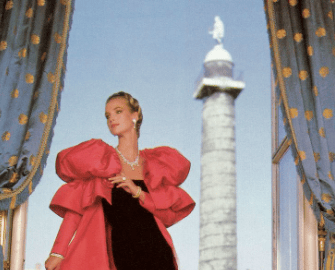
Modern French Beauty (1970s–Present)

French beauty has never been a trend. It has always been a philosophy — a way of moving through the world with intention, restraint and a refusal to be over‑styled. But the modern era, beginning in the 1970s and stretching into the present, marks a profound shift. French beauty became less about cinematic rebellion and more about lived elegance: a balance of sensuality, minimalism and quiet luxury.

This is the era that shaped the global idea of “French girl beauty.” But its roots are deeper, more nuanced and far more culturally layered than the clichés suggest.

1. The 1970s: Bare Skin, Intellectual Sensuality and the Rise of Natural Beauty

The 1970s in France were defined by:

  • political awakening
  • feminist movements
  • cultural experimentation
  • a rejection of rigid beauty norms

Women embraced beauty that felt:

  • natural
  • breathable
  • sensual without effort
  • intellectually grounded

Skin: The Era of Natural Radiance
Foundation became lighter. Powder became optional. Freckles were embraced. Skin looked like skin — not a canvas.

This was the decade when French women began to treat skincare as self‑care, instead of vanity.

Hair: The Undone Wave
Soft waves, air‑dried texture and fringe that fell into the eyes became signatures. The goal was movement, as opposed to control.

Makeup: Minimal But Meaningful
A touch of kohl. A smudge of mascara. A lip that looked kissed‑off.

Beauty was not performed. It was lived.

2. The 1980s: The French Response to Excess — Controlled Glamour

While the world embraced maximalism — neon, contour, heavy shadow — France responded with controlled glamour.

The French 1980s Look

  • satin skin
  • defined eyes
  • soft red lips
  • brushed‑up brows
  • hair with volume but minus the chaos

It was glamour without glitter. Luxury without loudness.

French beauty in the 1980s was about polish.

3. The 1990s: The Birth of “Effortless Chic”

The 1990s cemented the global mythology of the French woman:

  • the un-done bob
  • the bare face
  • the red lip
  • the masculine‑feminine wardrobe
  • the cigarette‑and‑coffee aesthetic (culturally iconic, not aspirational)

Skin: Matte Minimalism
The 90s French complexion was:

  • matte
  • clean
  • lightly perfected
  • never heavy

Lips: The Modern French Red
Not lacquered. Not theatrical. Just red — worn with ease.

Hair: The Iconic French Bob

Think:

  • Amélie
  • Inès de La Fressange
  • Caroline de Maigret

The bob became a symbol of independence.

4. The 2000s: Skincare as Identity

The early 2000s marked a shift from makeup to maintenance.

French women embraced:

  • pharmacy skincare
  • micellar water
  • retinol
  • vitamin C
  • minimalist routines

Makeup became secondary. 
Skin became the priority.

This is the era that birthed the global obsession with “French pharmacy beauty.”

5. The 2010s: The Globalization of French Beauty

Social media exported French beauty worldwide.
Suddenly, the world wanted:

  • effortless hair
  • red lips
  • natural skin
  • simple routines
  • neutral palettes
  • un-done chic

But the French approach remained rooted in philosophy, not products.

The Core Principles

  • less but better
  • quality over quantity
  • sensuality over perfection
  • individuality over trends
  • authenticity over performance

6. The 2020s–Present: Quiet Luxury, Soft Minimalism, and the Return of Depth

Modern French beauty is not about looking “French.” It’s about looking intentional.

Skin: Dewy, Healthy, Un-forced
Not glass skin. Not matte skin. Just healthy skin.

Makeup: Strategic Minimalism

  • soft liner
  • brushed brows
  • blurred lips
  • cream textures
  • monochrome palettes

Hair: Air‑Dried Elegance
The modern French woman’s hair is:

  • natural
  • slightly messy
  • perfectly imperfect

Fragrance: Identity, Not Accessory
French women wear fragrance like a signature — never as a trend.

7. The Philosophy: Beauty as a Life Practice

Modern French beauty is not a look. It is a lifestyle.

It communicates:

  • confidence
  • restraint
  • sensuality
  • intelligence
  • emotional depth
  • lived experience

It is beauty that comes from:

  • skincare
  • sleep
  • hydration
  • good fabrics
  • good lighting
  • good habits
  • good boundaries

Modern French beauty evolved from the intellectual rebellion of the 1960s into a global aesthetic defined by minimalism, sensuality and a subtle form of luxury. From bare 1970s skin to the polished restraint of the 1980s, the effortless chic of the 1990s, and the skincare‑first philosophy of the 2000s, French beauty has remained rooted in authenticity. Today, it is less about looking “French” and more about living with intention — beauty shaped by confidence, simplicity and the art of not trying too hard.

I’m Stacey Hobbs, thanks for reading Face by Stace! Until next time.
do you feel fabulous today?
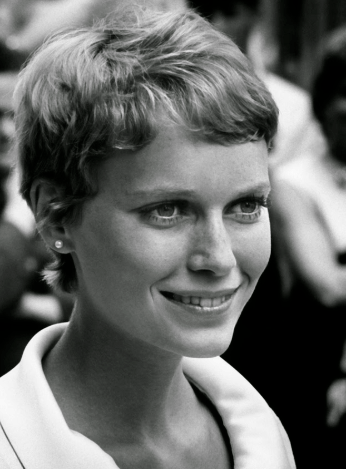
How Vidal Sassoon’s Pixie Cut Re-defined Modern Culture

When Vidal Sassoon introduced the pixie cut in the early 1960s, he didn’t just change hair — he changed culture. His geometric approach to styling transformed the haircut from a symbol of rebellion into an emblem of modernity. The pixie became the visual shorthand for a new kind of woman: independent, confident, and unafraid of structure.

1. The Revolution of Shape

Before Sassoon, hair was sculpted through setting, instead of cutting. Women slept in rollers, sat under dryers and relied on lacquer to hold their curls in place. Sassoon’s philosophy was radical: cut hair so that it falls into shape naturally.

He treated hair like architecture. Angles replaced curls. Precision replaced volume. Movement replaced rigidity.

The result was a haircut that moved with the woman. It was a hairstyle that was affiliated with the Mod look, such as with Twiggy. However, anyone lady could and did sport the pixie cut.

2. The Cultural Moment

The pixie cut arrived at the perfect time. The 1960s were an era of liberation — social and aesthetic. Some women were re-entering the workforce, rejecting domestic ideals and re-defining beauty standards.

Sassoon’s clients — Mary Quant, Nancy Kwan, Mia Farrow, and Jean Seberg — embodied this shift. 

The pixie was not about prettiness. It was about presence.

3. The Geometry of Freedom

Sassoon’s cuts were mathematical — yet sensual. He used geometry to create movement.

The Key Principles

  • Precision cutting over styling
  • Natural fall over artificial shape
  • Clean lines over ornamentation
  • Effortless maintenance over ritual

The pixie was the first haircut that didn’t require a salon to survive. It was self‑sustaining beauty — a concept decades ahead of its time.

4. The Feminine Shift

The pixie cut stripped away the decorative excess of the 1950s and replaced it with clarity.

Women who wore it projected:

  • confidence
  • independence
  • intellect
  • modernity

It was the haircut of the thinking woman — the same archetype that defined French New Wave cinema and the rise of minimalist fashion.

5. The Legacy

Sassoon’s pixie cut became the guide for modern hair design. Every contemporary short haircut — from the asymmetrical bob to the textured crop.

It also changed the relationship between women and their stylists. Hair became collaboration, no longer was it about maintenance.

The pixie cut remains timeless because it is not a style — it is a statement.

Vidal Sassoon’s pixie cut was more than a haircut; it was a cultural revolution. By treating hair as architecture, Sassoon liberated women from the tyranny of styling and introduced a new visual language of modern culture than instantaneously took over the decade as the “it” hairstyle, entering into pop-culture. The pixie became a symbol of independence, intellect and effortless beauty — a legacy that continues to shape the way we define “modern” today.

I’m Stacey Hobbs, thanks for reading Face by Stace! Until next time.
do you feel fabulous today?
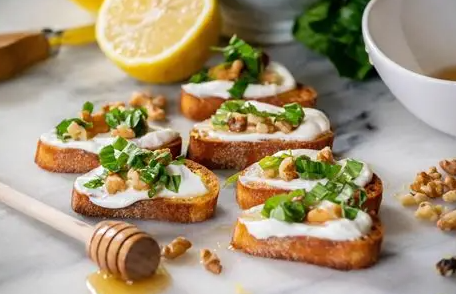
Food + Beauty Recipes: The Honey Series: Jillian Harris: Inspired Honey Lemon Ricotta Toast

Honey has always carried a sense of a subtle form of luxury — a beauty ingredient treasured in ancient rituals and a kitchen staple that feels both comforting and elegant. Victorian women used honey salves to achieve a glowing complexion, while today it remains one of the most beloved ingredients in modern wellness.

Honey is one of the oldest beauty ingredients in recorded history. Cleopatra famously used honey and milk baths to soften her skin, while ancient Greek women applied honey masks before festivals and ceremonies. In medieval Europe, honey was used as a healing salve for the skin — prized for its antibacterial properties long before modern science confirmed them. Victorian women used honey in homemade cold creams, believing it preserved youthfulness.

Honey’s beauty legacy spans continents and eras, always associated with luxury, femininity and natural radiance.

Beauty Benefits of Honey

Skin: Honey draws moisture into the skin, supports barrier repair and has natural anti-bacterial properties. 
Hair: A honey mask adds shine and softness especially when mixed with oils. 
Body: Its antioxidants support overall wellness and glow. 
Mood: Warm, floral, comforting — honey is a sensory cue for calm and sweetness.

Jillian Harris: Inspired Honey Lemon Ricotta Toast

Bright, feminine, brunch‑forward — the kind of effortless luxury Jillian is known for.

Prep 10 min  Cook 5 min  Serves 2

Whipped Ricotta Toasts with Lemon Honey Drizzle/jawnslcooked.com

Ingredients

  • 2 slices thick sourdough or country loaf
  • 1 cup whole‑milk ricotta
  • 1 tbsp honey (plus extra for drizzling)
  • 1 tsp fresh lemon zest
  • 1 tbsp lemon juice
  • 1/2 tsp vanilla extract
  • 1 pinch sea salt
  • 1/2 cup fresh berries (strawberries, raspberries, or blueberries)
  • A few leaves fresh mint

Instructions

  1. Toast the bread
    Toast the sourdough slices until golden and crisp at the edges.
  2. Whip the ricotta
    In a small bowl, whisk ricotta with honey, lemon zest, lemon juice, vanilla and a pinch of sea salt until light and fluffy.
  3. Assemble
    Spread a generous layer of whipped ricotta onto each slice of toast.
  4. Top with fruit
    Add fresh berries over the ricotta, arranging them casually for a relaxed brunch aesthetic.
  5. Finish with honey
    Drizzle additional honey over the top and garnish with fresh mint.

Sources:
Whipped Ricotta Toasts with Lemon Honey Drizzle : Jawns I Cooked
19 Delicious Ricotta Breakfast Recipes Creative – Simply Family Recipes

Historical Context
Honey, citrus, and soft cheese have been intertwined in breakfast culture for centuries. In ancient Greece, shepherds often paired fresh curd cheese with wild honeycomb — a combination considered both nourishing and beautifying. By the 1920s, honey was marketed to modern women as a “light, natural sweetener” that aligned with the era’s fascination with health, vitality and Hollywood’s glowing complexions.

Lemon, meanwhile, has long been associated with clarity — both culinary and cosmetic. Early Hollywood starlets were known to start their mornings with lemon water, believing its acidity “purified” the skin from within. The pairing of honey and lemon became a symbol of fresh, feminine wellness, which aligns beautifully with Jillian Harris’s bright, approachable, West Coast vibe.

Ricotta adds a subtle nod to Italian traditions, where soft cheeses were whipped with citrus for breakfast spreads. Its creamy texture and gentle tang create a modern brunch moment that feels both nostalgic and elevated — exactly the kind of effortless luxury Jillian brings.

Beauty Benefits of This Recipe

Even though this is a food recipe, the ingredients carry beauty‑forward properties:

Honey

  • Natural humectant: draws moisture into the skin
  • Antibacterial: supports clearer skin
  • Rich in antioxidants: helps protect against environmental stressors

Lemon

  • Vitamin C supports collagen production
  • Mild enzymatic brightening (internally, not topically)
  • Helps with digestion which often reflects in clearer skin

Ricotta (Lactic Acid)

  • Contains gentle lactic acid which supports skin turnover internally
  • Offers protein and fats that nourish hair and nails

Berries

  • High in antioxidants that help fight dullness
  • Vitamin C for radiance

Mint

  • Cooling properties that can help reduce puffiness
  • Supports digestion and reduces bloating

Honey has always been a quiet form of luxury in beauty and wellness—simple, natural and endlessly versatile. This recipe is one more way to bring that softness and radiance into everyday life, using ingredients that feel comforting. If you enjoyed this treatment, explore the rest of the Honey Series for more historically inspired, modern‑friendly recipes.

I’m Stacey Hobbs, thanks for reading Face by Stace! Until next time.
do you feel fabulous today?

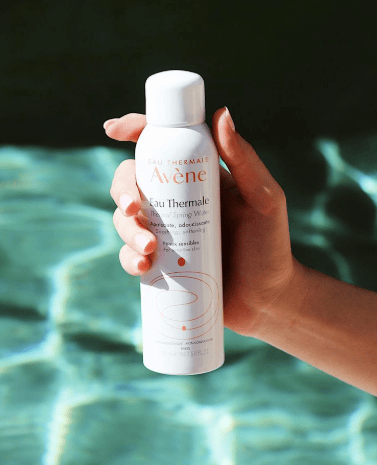
Avène’s Original Products: Thermal Spring Water Treatments (1736–1743)

Avène did not begin as a modern skincare line. Its earliest “products” were therapeutic treatments created entirely from the mineral-rich water of the Sainte‑Odile spring in Avène, France. For more than two centuries, Avène existed as a healing destination rather than a cosmetic brand — a place where dermatological relief came from nature itself.

Thermal Spring Water Treatments (1736–1743)

The very first “product” Avène offered was simply the water — applied directly to irritated or damaged skin. The brand’s origin story begins in 1736, when the Marquis de Rocozels’ horse was healed after bathing in the Sainte‑Odile spring, leading physicians to investigate the water’s unusual soothing properties.

By 1743, Avène built its first thermal pool, welcoming patients who travelled specifically to bathe in the water for relief from:

  • dermatitis
  • eczema
  • burns
  • itching
  • hyper-sensitive skin

These early treatments were not cosmetic. They were medical — prescribed by doctors, administered in thermal baths and used to calm chronic inflammation long before modern dermatology existed.

This is the foundation of the brand.

In 1826, Avène’s thermal spring facility is recommended by many scientific leaders in dermatology, including Jean Louis Alibert, a pioneer of dermatology.

In 1871, Avène Thermal Spring Water is sent to America to soothe burn victims of the Great Chicago Fire.

Stacey Says: It is absolutely incredible in how healing Avene Thermal Spring Water truly is. How effective and efficient it is. Relieving the pain from a burn and the burn itself. Family and friends of mine had first recommended this formula to me over a decade ago. Just like them, it is seldom if I don’t have this formula in my home. It is a clean beauty, natural relief that works impeccably well. As you can see, I cannot overcome how impressed I am with Avene Thermal Spring Water, this is my honest opinion. This is only the beginning of how impressed I am with Avene’s formulas. 
Their hand cream is a game changer for me. 

I’m Stacey Hobbs, thanks for reading Face by Stace! Until next time.
do you feel fabulous today?
Food + Beauty Recipes: The Honey Series: Love and Lemons: Inspired Honey Citrus Grain Bowl

Honey has always carried a sense of a subtle form of luxury — a beauty ingredient treasured in ancient rituals and a kitchen staple that feels both comforting and elegant. Victorian women used honey salves to achieve a glowing complexion, while today it remains one of the most beloved ingredients in modern wellness.

Honey is one of the oldest beauty ingredients in recorded history. Cleopatra famously used honey to soften her skin, while ancient Greek women applied honey masks before festivals and ceremonies. In medieval Europe, honey was used as a healing salve for the skin — prized for its antibacterial properties long before modern science confirmed them. Victorian women used honey in homemade cold creams, believing it preserved youthfulness.

Honey’s beauty legacy spans continents and eras, always associated with luxury, femininity and natural radiance.

Beauty Benefits of Honey

Skin: Honey draws moisture into the skin, supports barrier repair and has natural anti-bacterial properties. 
Hair: A honey mask adds shine and softness especially when mixed with oils. 
Body: Its antioxidants support overall wellness and glow. 
Mood: Warm, floral, comforting — honey is a sensory cue for calm and sweetness.

Love & Lemons: Inspired Honey Citrus Grain Bowl

A bright, plant‑forward, colour‑driven bowl that feels exactly like the Love & Lemons universe — fresh, seasonal and visually uplifting.

Prep 5 min  Cook 0 min  Serves 1

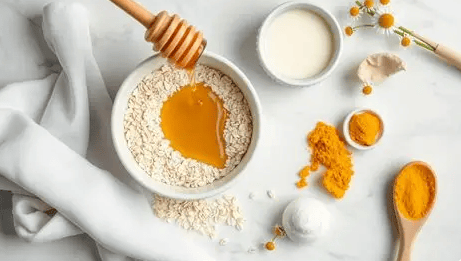
Honey and Oatmeal: Skin Benefits, 5 DIY Face Masks & How to Use | Raw Honey Guide/rawhoneyguide.com

Ingredients

For the bowl

  • 1 cup cooked quinoa (white or tri‑colour)
  • 1 small fennel bulb, shaved paper‑thin
  • 1 large orange, segmented
  • 1 cup chickpeas, drained and rinsed
  • ¼ cup toasted almonds
  • ¼ cup fresh herbs (mint, parsley, basil — mix for brightness)
  • Sea salt + cracked pepper

Honey‑Citrus Vinaigrette

  • 2 tbsp olive oil
  • 1 tbsp honey
  • 1 tbsp lemon juice
  • 1 tsp Dijon mustard
  • Pinch of salt

Instructions

  1. Prep the quinoa
    Fluff warm quinoa with a fork and season lightly with salt.
  2. Slice the fennel
    Use a mandoline or sharp knife to shave it into delicate ribbons.
  3. Segment the orange
    Cut away the peel and pith, then slice between the membranes for clean segments.
  4. Mix the vinaigrette
    Whisk olive oil, honey, lemon juice, Dijon, and salt until glossy.
  5. Assemble the bowl
    Layer quinoa → fennel → chickpeas → orange → herbs → almonds.
  6. Dress + finish
    Drizzle with the honey‑citrus vinaigrette and finish with pepper.

Historical Context
Grain bowls may feel modern but actually grain bowls stretches back centuries. In North African and Middle Eastern culinary traditions, grains like millet, barley and early forms of couscous were often paired with citrus and honey — ingredients that travelled along ancient trade routes. Honey was prized not only for sweetness but for its ability to preserve and balance acidity.

By the 1970s, the natural‑foods movement in North America revived these ancient pairings. Cookbooks of the era framed honey as a “clean sweetener,” aligning with the decade’s fascination with whole grains, vegetarianism and the idea of food as wellness. This aesthetic — bright produce, simple grains and citrus‑forward dressings — is the spiritual ancestor of Love & Lemons’ signature style.

The bowl’s colour story also echoes 1970s California kitchen culture, where food photography began celebrating freshness, sunlight and the beauty of raw ingredients. Today, Love & Lemons carries that lineage forward with a modern, minimalist, plant‑centric lens.

Beauty Benefits of This Recipe

Honey

  • Hydrates the skin from within
  • Supports gut‑skin harmony
  • Antioxidants help reduce dullness

Citrus (Orange + Lemon)

  • Vitamin C boosts collagen production
  • Brightens the complexion
  • Supports detox pathways

Fennel

  • Reduces puffiness
  • Supports digestion (which often shows up in clearer skin)

Chickpeas

  • Plant protein supports hair + nail strength
  • Zinc helps regulate oil production

Almonds

  • Vitamin E strengthens the skin barrier
  • Healthy fats support glow

Herbs

  • Mint reduces bloating
  • Parsley supports lymphatic flow
  • Basil offers antibacterial benefits

Honey has always been a quiet form of luxury in beauty and wellness—simple, natural and endlessly versatile. This recipe is one more way to bring that softness and radiance into everyday life, using ingredients that feel comforting. If you enjoyed this treatment, explore the rest of the Honey Series for more historically inspired, modern‑friendly recipes.

I’m Stacey Hobbs, thanks for reading Face by Stace! Until next time.
do you feel fabulous today?
Avène’s Original Products: Bottled Thermal Water (18th–19th Century)

Avène’s earliest commercial “product” was not a cream or a serum — it was bottled thermal water.
In the late 18th and early 19th centuries, physicians across Europe began requesting the mineral-rich water of the Sainte‑Odile spring so they could use it in hospitals and private treatments. This marked the first time Avène’s healing water left the village and became a portable remedy.

Bottled Thermal Water (18th–19th Century)

As Avène’s reputation grew, the thermal station began bottling small quantities of the spring water for medical use. These bottles were sent to doctors in France, England, and Germany who used the water to soothe:

  • burns
  • chronic dermatitis
  • eczema
  • hypersensitive skin
  • post‑injury irritation

The water was applied with linen compresses, poured over inflamed areas or used to prepare simple healing balms. Long before Avène became a modern skincare brand, these bottles represented the earliest form of “product” — pure therapeutic water, un-changed from its natural source.

This bottled water was Avène’s first step toward becoming a global name in sensitive‑skin care.

Stacey Says: It is absolutely incredible in how healing Avene Thermal Spring Water truly is. How effective and efficient it is. Relieving the pain from a burn and the burn itself. Family and friends of mine had first recommended this formula to me over a decade ago. Just like them, it is seldom if I don’t have this formula in my home. It is a clean beauty, natural relief that works impeccably well. As you can see, I cannot overcome how impressed I am with Avene Thermal Spring Water, this is my honest opinion. This is only the beginning of how impressed I am with Avene’s formulas. Also, I always maintained a bottle of Avene’s thermal spring water in my pro make-up kit, incase any client had dermatitis, eczema, burns, itching or hypersensitive skin. 
Their hand cream is a game changer for me. 

I’m Stacey Hobbs, thanks for reading Face by Stace! Until next time.
do you feel fabulous today?