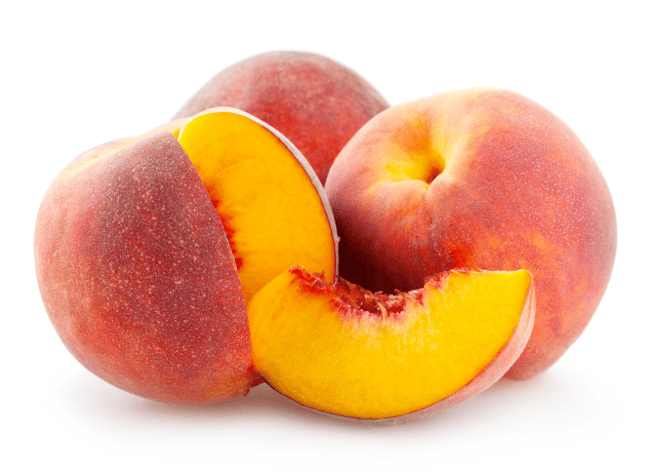
Food + Beauty Recipes: The Peach Series: Peach Silk Glow Facial Mask

There are ingredients that feel like sunlight the moment they touch the tongue, and peaches have always been one of them. Soft, fragrant, golden and gently sweet, peaches carry a kind of warmth that doesn’t shout — it glows. 
Long before they became a symbol of summer desserts and beauty, peaches were woven into ancient traditions as emblems of vitality, longevity and the quiet luxury of seasonal fruit.

Historical Notes

Peaches trace their origins back thousands of years to ancient China, where they were revered as symbols of immortality, youth, and feminine radiance. Their blossoms were celebrated in poetry, their fruit offered in rituals, and their trees planted as markers of prosperity and renewal. As trade routes expanded, peaches traveled westward through Persia and the Mediterranean, eventually becoming beloved in Greek and Roman kitchens for their perfume and softness.

By the Renaissance, peaches were considered a delicacy — served at royal banquets, painted in still‑life portraits and prized for their fleeting season. In France, they became intertwined with pastry traditions, inspiring rustic galettes, clafoutis and elegant tarts. When peaches reached North America, they found new expression in cobblers, crisps and preserves becoming a hallmark of Southern hospitality and summer abundance.

Today, peaches remain one of the world’s most popular summer fruits — a symbol of glow, softness and the sweetness of warm weather. Their appeal endures because of their dual identity: a culinary ingredient that brings comfort and elegance, and a beauty ingredient that brings radiance and nourishment.

Beauty Benefits

Glow & Radiance
Peaches are rich in vitamin C and natural fruit acids that brighten the complexion, support collagen, and create a soft, dewy glow.

Hydration & Plumpness
Their high water content helps hydrate the skin from within, supporting elasticity and a youthful finish.

Gentle Exfoliation
Natural alpha‑hydroxy acids provide a mild, skin‑smoothing effect that enhances clarity and softness.

Antioxidant Protection
Beta‑carotene and polyphenols help defend against environmental stress and support long‑term skin vitality.

Inner Wellness
Peaches support digestion, hydration and overall energy — internal pathways that reflect directly on the skin.

Peaches remind us that beauty doesn’t always come from intensity — sometimes it comes from softness, sweetness and the kind of glow that feels effortless.

This series will explore peaches through both food and beauty, revealing how gentleness can be nourishing, comforting and radiance‑enhancing.

Peach Silk Glow Facial Mask

A hydrating, brightening, collagen‑supporting peach treatment inspired by historical fruit‑based beauty rituals — soft, dewy, and perfect for your Peach Series.

Why Peaches Work in Beauty

Peaches are naturally rich in:

  • Vitamin C → brightening + collagen support
  • Beta‑carotene → radiance + tone evening
  • AHAs (fruit acids) → gentle exfoliation
  • Hydration → plump, dewy skin

They’re one of the most glow‑forward fruits in beauty history — soft, feminine, and deeply nourishing.

Prep Time: 5 minutes
Treatment Time: 10–15 minutes
Skin Type: Normal, dry, dull, uneven tone
Frequency: 1–2× weekly

Ingredients

  • 2 tbsp fresh peach purée (ripe, peeled)
  • 1 tsp honey (humectant + antibacterial)
  • 1 tsp yogurt (lactic acid for gentle exfoliation)
  • ½ tsp aloe vera gel (soothing + hydrating)
  • 2–3 drops jojoba oil (barrier support + softness)

Instructions

  1. Prepare the peach purée
    Mash or blend ripe peach flesh until silky smooth.
  2. Combine ingredients
    Mix peach purée, honey, yogurt, aloe, and jojoba oil until creamy.
  3. Apply to clean skin
    Use fingertips or a brush to spread evenly across the face.
  4. Relax for 10–15 minutes
    You’ll feel a gentle coolness followed by a soft, natural glow.
  5. Rinse with warm water
    Follow with your favourite moisturizer.

Beauty Benefits

Glow & Brightness
Peach vitamin C and fruit acids gently exfoliate and illuminate the complexion.

Hydration & Plumpness
Honey + aloe draw moisture into the skin, leaving it dewy and soft.

Softening & Barrier Support
Jojoba oil mimics natural sebum, reinforcing the skin’s moisture barrier.

Gentle Exfoliation
Yogurt’s lactic acid smooths texture without irritation.

This mask is the peach equivalent of a soft‑focus filter — hydrating, brightening and glow‑enhancing.

Historical Context

Fruit‑based beauty rituals date back thousands of years. In ancient China, peaches symbolized youth, vitality and feminine radiance — their blossoms used in teas and their fruit in early skin treatments. Across the Mediterranean, fruit acids were prized for smoothing and brightening the skin, forming the foundation of many modern exfoliating treatments.

Beauty and nourishment have always been intertwined and peaches embody that connection with a kind of softness that feels almost luminous. From ancient orchards to modern kitchens, peaches have carried a story of radiance, a glow that comes from sweetness, hydration and the warmth of summer itself. Their fragrance, their colour, their delicate texture all speak to a kind of beauty that doesn’t demand attention; it simply offers it.

Historically, peaches have symbolized youth and vitality. Their journey across continents turned them into cultural icons — celebrated in poetry, painted in still‑life portraits and cherished in seasonal rituals. In the kitchen, they became the heart of rustic pastries, sun‑soaked salads and comforting desserts. On the vanity, their natural acids and antioxidants inspired treatments that smooth, brighten, and hydrate. Peaches remind us that glow can come from gentleness, from softness, from the luxury of fruit that ripens slowly under warm skies.

Throughout this series, peaches have shown their versatility — slipping easily between comfort and refinement, between nourishment and beauty. Each recipe has revealed a different facet of their personality: rustic, elegant, refreshing, or indulgent. And each one has reinforced the idea that radiance is never one‑dimensional. It’s flavour, it’s history, it’s ritual and it’s the way small, thoughtful choices accumulate into something luminous.

Peaches teach us that beauty doesn’t always come from intensity. Sometimes it comes from softness, sweetness and the kind of glow that feels effortless — the kind that lingers long after the last bite.

I’m Stacey Hobbs, thanks for reading Face by Stace! Until next time.
do you feel fabulous today?
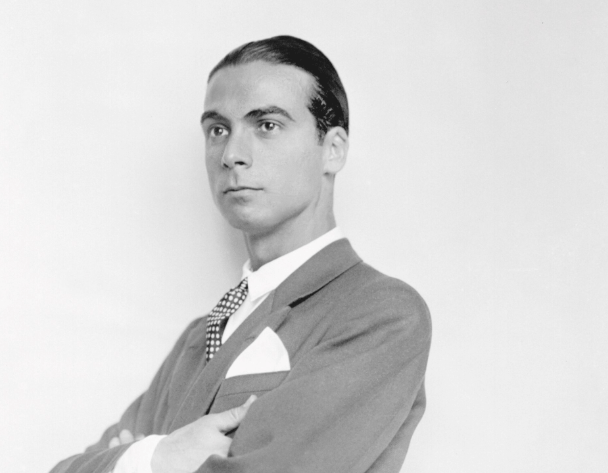
PART XIII: Why Balenciaga Still Matters: The Eternal Architect of Fashion

Balenciaga matters because he changed the very definition of fashion. He proved that clothing could be architecture, that silhouette could be language and that restraint could be revolutionary. In an industry built on spectacle, he demonstrated that the most powerful ideas often emerge from silence — from discipline, from clarity, from the refusal to compromise. His work did not chase trends or seasons. It pursued truth: the truth of proportion, the truth of structure, the truth of how fabric can shape space around the body.

His relevance today is not nostalgic; it is structural. Every designer who experiments with volume, who dissolves the waistline, who sculpts fabric into un-expected forms is working in a world Balenciaga built. Minimalism carries his fingerprints. Modern couture follows his blueprint. Even the avant‑garde owes him a debt, borrowing his belief that fashion can challenge the eye rather than flatter it. His ideas were not tied to the 1950s or 1960s. They were timeless principles — the kind that continue to evolve long after the designer himself has stepped away.

Balenciaga also matters because he protected his vision. By withdrawing from the industry at the height of his power, he preserved the purity of his archive. There are no diluted late collections, no compromises, no attempts to adapt to trends he did not believe in. His body of work remains intact — a rare, pristine record of a designer who never wavered. This integrity is part of his myth. It is why designers still speak of him with reverence, why his patterns are studied like architectural plans, why his name carries a weight that transcends fashion.

But perhaps the most enduring reason Balenciaga still matters is that he showed what fashion can be when it is treated as art. He believed that beauty begins with intention, that elegance is a form of discipline and that the body can be transformed through shape rather than decoration. His work invites contemplation. It asks the viewer to slow down, to look closely, to appreciate the precision of a curve or the quiet drama of a volume. In a world that moves quickly, Balenciaga’s designs remind us that true innovation requires patience.

Part XIII marks the moment when Balenciaga’s story becomes more than history. It becomes a lesson — a reminder that fashion is not defined by clarity. Not by excess, but by purpose. Not by trends, but by vision. Balenciaga still matters because he built a foundation strong enough to support the future. He remains the eternal architect of fashion.

I’m Stacey Hobbs, thanks for reading Face by Stace! Until next time.
do you feel fabulous today?
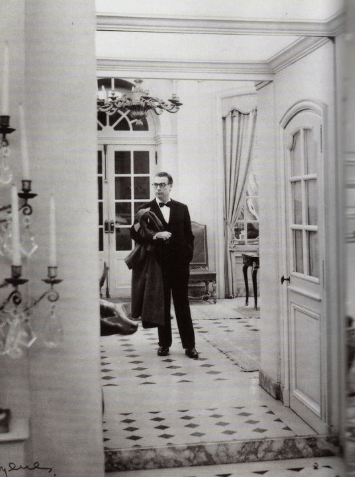
PART XII: Balenciaga’s Modern Descendants: Designers Who Carry His DNA

Balenciaga’s influence did not end when he closed his house in 1968. Instead, it dispersed — quietly, precisely, and powerfully — into the hands of designers who understood that fashion could be architecture, that silhouette could be language and that restraint could be revolutionary. His descendants are not defined by imitation but by philosophy. They are designers who build rather than decorate, who sculpt rather than embellish, who treat fabric as a structural material rather than a surface. Balenciaga’s DNA lives in the work of those who see fashion not as performance but as discipline.

The most direct heir is Hubert de Givenchy, Balenciaga’s protégé and spiritual successor. Givenchy absorbed Balenciaga’s purity of line, his devotion to proportion and his belief that elegance begins with intention. His clothes carried the same architectural serenity — clean, elongated, quietly powerful. Through Givenchy, Balenciaga’s philosophy entered the wardrobes of Audrey Hepburn, Jacqueline Kennedy, and the women who defined mid‑century chic.

André Courrèges inherited Balenciaga’s futurism. His sculptural silhouettes, geometric cuts and space‑age minimalism were direct extensions of Balenciaga’s cocoon era. Courrèges took the master’s architectural thinking and pushed it into modernity, proving that volume could be radical and that purity could be avant‑garde.

In the late twentieth century, Balenciaga’s influence re-surfaced in the work of Yohji Yamamoto and Rei Kawakubo, designers who treated clothing as conceptual architecture. Their silhouettes challenged convention, dissolved the waistline and re-defined proportion — all principles Balenciaga pioneered decades earlier. They embraced silence, discipline and abstraction, carrying his DNA into the world of intellectual fashion.

Even in contemporary couture, Balenciaga’s presence is un-mistakable. Nicolas Ghesquière, during his tenure at the modern Balenciaga house, revived the master’s structural daring with futuristic tailoring and engineered volumes. His work was not nostalgic; it was architectural evolution. Demna, in the current era, channels Balenciaga’s obsession with form through oversized silhouettes, sculptural coats and a relentless focus on shape. Though his aesthetic is louder, the underlying principles — proportion, volume, structure — remain rooted in the master’s blueprint.

Balenciaga’s descendants are united by one belief: that fashion is built, not decorated. They understand that silhouette is the foundation of beauty, that restraint is a form of power and that architecture can exist in fabric. His influence persists because his ideas were not tied to a decade or a trend. 
They were structural. 
They were philosophical. 
They were eternal.

Part XII marks the moment when Balenciaga’s story expands beyond his own lifetime. His work lives on in the designers who carry his discipline, his purity and his architectural vision into the future. They do not copy him. They continue him.

I’m Stacey Hobbs, thanks for reading Face by Stace! Until next time.
do you feel fabulous today?
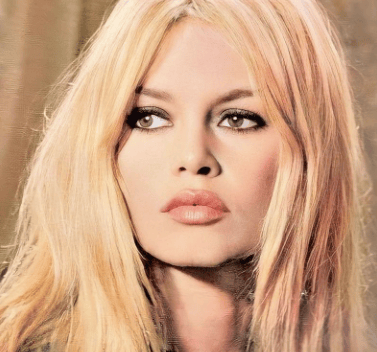
French New Wave Beauty (1960s): French Beauty History Series

French New Wave (La Nouvelle Vague) wasn’t simply a film movement — it was a cultural rupture. Emerging in late‑1950s Paris and cresting through the 1960s, it re-wrote the rules of cinema, femininity and beauty. The women of this era didn’t look “done.” They looked real.

Their faces became part of the movement: minimal, expressive, intellectual and quietly sensual. Beauty was no longer a mask. It was a mood.

The Cultural Shift: Anti‑Glamour as Identity

The decade before had been dominated by the polished perfection of studio beauty — powdered skin, sculpted lips and hair lacquered into submission. French New Wave women rejected all of it.

Their beauty communicated:

  • independence
  • spontaneity
  • emotional complexity
  • artistic sensibility
  • a refusal to conform

This was the first beauty movement where the woman looked like she was thinking — not posing.

The French New Wave Face

Skin: Bare, Breathable, Un-corrected
Skin was left intentionally natural. Not the “no‑makeup makeup” — simply less makeup.

The aesthetic:

  • sheer coverage
  • matte but not powdered
  • freckles visible
  • pores allowed to exist
  • foundation used sparingly

It was skin that looked lived‑in not perfected.

Eyes: The Signature Flick
The eyeliner flick became the defining gesture of the era.

Characteristics:

  • a thin, precise line
  • a subtle upward lift
  • minimal shadow
  • lashes defined but not theatrical

It created a gaze that felt alert, intelligent, and quietly seductive. Think Anna Karina, Jean Seberg, and Brigitte Bardot in her pared‑down moments.

Brows: Soft and Natural
Brows were:

  • lightly groomed
  • youthful
  • expressive
  • never over‑arched

They framed the eyes without dominating them.

Lips: The Unbothered Pout
Two lip moods defined the movement:

1. The Blotted Red
Applied, kissed off, softened — a red lip that looked lived‑in rather than lacquered.

2. The Bare Lip
Just balm. Natural. Effortless.

The French New Wave lip was never glossy, never over‑drawn and never “perfect.”

Hair: The Anti‑Salon Aesthetic
Hair was intentionally un-done — a rebellion against the rigid coiffures of the 1950s.

Styles included:

  • tousled bobs
  • soft bangs
  • natural waves
  • slightly messy ponytails
  • fringe that fell into the eyes

It looked like she woke up like this — because she had better things to do than perfect her hair. Think Brigitte Bardot, she famously styled her hair in this manner.

The Philosophy: Beauty as Intellectual Rebellion
French New Wave beauty wasn’t about products. It was about point of view.

It communicated:

  • a woman who thinks for herself
  • a woman who moves through the world with curiosity
  • a woman who is sensual without trying
  • a woman who is effortless because she is busy living

This was beauty as identity — not performance.

Modern beauty trends echo French New Wave constantly:

  • clean skin
  • blotted lips
  • minimal foundation
  • un-done hair
  • soft liner flicks
  • natural brows

But the original movement had something today’s trends often lack:

philosophical depth.

It wasn’t about looking effortless. It was about being effortless — because she had better things to do than chase perfection.

French New Wave beauty was the cinematic rebellion of the 1960s — a soft flick of liner, a blotted lip, and skin left intentionally bare. It rejected perfection in favour of authenticity, creating a beauty language rooted in intellect, spontaneity and the kind of sensuality that comes from not trying too hard. Its influence remains woven through modern beauty culture, proving that the most compelling faces are the ones that look like they’re thinking.

I’m Stacey Hobbs, thanks for reading Face by Stace! Until next time.
do you fabulous today?

PART XI: The Architecture of Silence: Why His Work Still Shapes Couture

Balenciaga’s influence endures because of silence. His work was built on an architectural philosophy that rejected spectacle and embraced purity — a discipline so rigorous that it continues to shape couture decades after his withdrawal. In an industry that thrives on visibility, Balenciaga proved that the most powerful ideas often emerge from restraint. His silhouettes were quiet but their impact was seismic. They challenged the conventions of beauty, redefined proportion and introduced a new way of thinking about the relationship between fabric and form.

The architecture of silence begins with his refusal to decorate. Balenciaga stripped away anything that distracted from structure: embellishment, ornament, un-necessary seams. What remained was line — clean, deliberate, un-compromising. His garments were not designed to be loud; they were designed to be understood. Every curve, every angle, every volume served a purpose. This clarity of intention is what makes his work timeless. Trends fade but architecture endures.

His silence also shaped the way couture is practiced. Balenciaga believed that fashion was a craft, not a performance. He worked privately, obsessively, often in near‑total quiet. He did not allow journalists into his fittings. He did not explain his choices. He did not chase publicity. Instead, he demanded that the garment speak for itself. This philosophy influenced generations of designers who saw in his discipline a model for how couture could transcend commerce and become art.

Even today, the echoes of his silence are everywhere. Modern designers study his patterns like architectural plans, searching for the logic behind his impossible shapes. His cocoon coats, tunics and sculptural dresses continue to inspire silhouettes on contemporary runways. Minimalism, volume play, purity of line — all of these movements trace their lineage back to Balenciaga’s quiet revolution. His work remains a benchmark for precision, a reminder that true innovation requires intention.

But perhaps the most enduring aspect of his legacy is the way his silence protected his vision. By withdrawing from the industry, he preserved the integrity of his work. He left behind no diluted late collections, no compromises, no attempts to adapt to trends he did not believe in. His archive remains pristine — a body of work un-touched by commercial pressure. This purity is why designers still fear him, still revere him, still measure themselves against the standard he set.

Part XI marks the moment when Balenciaga’s philosophy becomes clear: fashion is not defined by what is added but by what is removed. His architecture of silence continues to shape couture because it speaks to something deeper than trend — it speaks to discipline, clarity and the belief that beauty begins with intention.

I’m Stacey Hobbs, thanks for reading Face by Stace! Until next time.
do you feel fabulous today?

PART X: The Legacy: How Balenciaga Redefined Modern Fashion

Balenciaga’s legacy is not defined by a single silhouette, a single decade or a single collection. It is defined by a philosophy — a way of thinking about clothing that transformed the entire vocabulary of modern fashion. Long after he closed his house in 1968, designers continued to study his patterns. His work became a kind of sacred text: quiet, precise, un-compromising. 

His influence is everywhere. The purity of his lines shaped Givenchy’s elegance. The sculptural volumes of his cocoon coats inspired Courrèges and later the minimalists of the 1990s. His devotion to structure laid the groundwork for modern couture, where fabric is engineered rather than decorated. Even today, designers speak of Balenciaga with a kind of reverence reserved for architects and composers — people who build worlds rather than trends. His work did not chase beauty; it defined it.

Balenciaga also changed the relationship between designer and garment. He treated fashion as a discipline. He believed that silhouette mattered more than embellishment, that proportion mattered more than decoration and that the body could be transformed through shape rather than ornament. This philosophy became the foundation of modern minimalism. Every clean line, every architectural coat, every sculptural dress that appears on a runway today carries a trace of his thinking.

But perhaps his greatest legacy is the idea that fashion can be both quiet and revolutionary. Balenciaga never shouted. He never courted publicity. He never compromised. And yet his impact was seismic. He proved that innovation requires clarity. He showed that restraint can be more powerful than excess, that discipline can be more transformative than spectacle and that true modernism begins with intention.

His withdrawal from the industry only strengthened his myth. By stepping away, he preserved the purity of his vision. He left behind no diluted late work, no commercial compromises, no attempts to adapt to trends he did not believe in. His legacy remains intact because he protected it. And in doing so, he set a standard for designers who came after him: a reminder that fashion is not just about creation but about conviction.

Part X marks the moment when Balenciaga’s story becomes more than biography. It becomes a guide for how modern fashion can be built with discipline, shaped with architecture and elevated through silence. His legacy is not just what he made. It is how he made it. And that is why, decades later, Balenciaga remains the designer other designers still fear or admire — and still revere.

I’m Stacey Hobbs, thanks for reading Face by Stace! Until next time.
do you feel fabulous today?