Besame Golden Peach Cream Blush

Get that perfect, natural‑looking warmth with an unmistakable ’70s glow. Besame’s Golden Peach Cream Rouge is a bronzed‑peach dream — the kind of shade that flatters every skin tone and instantly brings the complexion to life. It delivers that healthy, sun‑kissed radiance the decade was famous for, the soft‑focus warmth seen on disco dance floors, beach‑blonde starlets and California‑cool beauty icons.

The formula is flecked with a fine golden shimmer that catches the light just enough to make skin look luminous and alive. Richly pigmented yet effortlessly blendable, it lets you build your look from a subtle wash of warmth to a full, glowing, bronzed cheek. It’s the kind of rouge that melts into the skin rather than sitting on top of it — a true nod to vintage cream blush traditions.

And in classic Besame fashion, it’s crafted with pure, thoughtful ingredients right here in California. Golden Peach isn’t just a blush; it’s a modern revival of the radiant, carefree beauty that defined the 1970s.

I’m Stacey Hobbs, thanks for reading Face by Stace! Until next time.
do you feel fabulous today?

Ancient Egypt Kohl Pots: The First Icons of Beauty Culture

Long before compacts, palettes and vanity tables, beauty lived inside small, carved vessels of stone, bone, and clay. Ancient Egypt’s kohl pots were more than containers — they were symbols of identity, ritual, protection and status. These vessels held the earliest form of eyeliner, a mixture of soot, galena, malachite and oils that created the dramatic, elongated eye look now synonymous with Egyptian beauty.

Kohl pots were crafted with extraordinary care. Some were simple and utilitarian; others were elaborate works of art carved from alabaster, ivory or faience. Their shapes varied — cylindrical jars, tiny flasks, animal‑shaped vessels and elegant containers with narrow openings designed to hold the applicator stick. Each pot reflected the owner’s social standing and aesthetic taste, functioning as both a beauty tool and a personal treasure.

Kohl itself served multiple purposes. It was cosmetic, yes — used to define the eyes, intensify expression and create the iconic almond‑shaped silhouette seen in Egyptian art. But it was also medicinal and spiritual. The ingredients protected the eyes from harsh desert sun, reduced glare and acted as an early antimicrobial. Kohl was believed to ward off evil spirits and invoke the protection of gods like Horus and Ra. Beauty, in Egypt, was never just surface; it was sacred.

These pots were part of daily life for both men and women. All of whom used kohl, making it one of the most beauty rituals in ancient history. The vessels themselves often accompanied the dead into tombs, placed beside jewelry, perfumes and amulets — a testament to how essential beauty was to identity, even in the afterlife.

Today, kohl pots stand as some of the earliest artifacts of cosmetic culture. They remind us that beauty rituals have always been intertwined with protection, spirituality, and self‑expression. In their small, carved forms, we see the beginnings of the global beauty industry — the first containers of glamour, artistry and human desire to adorn the self.

I’m Stacey Hobbs, thanks for reading Face by Stace! Until next time.
do you feel fabulous today?

Ancient Egypt Malachite Palettes: The First Green Shadows of Beauty History

Long before modern eyeshadow palettes lined vanities, Ancient Egyptians were grinding minerals into pigment and storing them in beautifully carved cosmetic palettes. Among the most treasured of these pigments was malachite — a vivid green copper ore that became one of the earliest recorded eyeshadows in human history. Malachite palettes weren’t just tools; they were symbols of status, ritual, protection and artistry.

Malachite in Antiques, Ancient Egypt/mayfairgallery.com

Malachite was prized for its striking colour. When ground into a fine powder and mixed with oils or animal fats, it created a creamy green pigment used to adorn the eyes. This shade wasn’t chosen for beauty alone — though its jewel‑tone vibrancy certainly enhanced the iconic Egyptian gaze. Malachite was believed to have protective properties, shielding the wearer from illness and invoking the healing power of the goddess Hathor. Beauty, in Egypt, was always intertwined with spirituality.

The palettes themselves were works of craftsmanship. Made from slate, schist or limestone, they were often carved into elegant shapes — animals, geometric forms or simple flat stones with shallow depressions for grinding pigment. Some were decorated with symbolic motifs, while others were purely functional. These palettes were kept on household vanities, carried by priests and buried in tombs alongside jewelry and perfumes, signifying their importance in both life and the afterlife.

Malachite’s green pigment created the soft, diffused eye look seen in early Egyptian art — a contrast to the dramatic black kohl lines that framed the eyes. Together, malachite and kohl formed the foundation of Egyptian eye makeup: colour for vitality, line for protection and ritual for identity.
The kohl liner represented the fish in the Nile River, while malachite represented the Nile River’s hue. 

Today, malachite palettes stand as some of the earliest artifacts of cosmetic culture. They remind us that eyeshadow didn’t begin in the 20th century — it began thousands of years ago, in a civilization that understood beauty as power, protection and divine expression. 

I’m Stacey Hobbs, thanks for reading Face by Stace! Until next time.
do you feel fabulous today?

What is on My Reading List Autumn/Winter 2026 Pt. Two

Autumn and winter always feel like the seasons made for reading, it is something comes to mind, to open a good book whether it be by a fire with either a tea or hot cocoa/hot chocolate when the cold whether sets in. Autumn and winter when it comes to mind is about coziness. The months when the air sharpens, routines settle and stories become a kind of warmth. This year’s list is shaped by exactly that feeling: a mix of mysteries, emotionally rich novels, sharp character studies and the kind of page‑turners that make early nights feel indulgent. Each title brings something different to the table whether it be a new world to dive into, a voice worth listening to or a story that lingers long after the last chapter.

These are the books I’m reaching for as the weather cools and the pace shifts. Stories with depth, tension and a little escapism. Enjoy this curated guide to the season’s most compelling reads.

Stay tuned for more.

  1. We Chase Shadows: A We Solve Murders Mystery by Richard Osman: Richard Osman’s We Chase Shadows brings the globe‑trotting “We Solve Murders” trio back together for their first truly high‑stakes case — one that begins at sunrise in the Italian hills where a body is discovered on the steps of a secluded private villa. A threatening note is found on the victim, signed by a mysterious figure whose motives are as murky as the shadows the team must chase. Amy, Rosie and Steve leap at the chance to prove themselves even though their new client seems suspiciously eager to avoid the police. What begins as a “simple” hunt for the note’s author quickly spirals into a maze of suspects — from Sweden’s most‑wanted criminal to a calculating ex‑wife and a ruthless business rival — each more slippery than the last.
    As the investigation stretches from Italy to Palm Springs, with detours through Barcelona and even Steve’s village pub, danger creeps closer to home, forcing the trio to confront just how far their quarry is willing to go to stay hidden.
  2. Redwood: The Untold Story of the Cold War’s Most Extraordinary Spy by Ben Macintyre: Ben Macintyre’s Redwood un-covers one of the most astonishing true stories of the Cold War: the life of a spy whose brilliance, nerve and moral complexity re-shaped the intelligence landscape of the 20th century. Known only by the codename Redwood, this elusive figure operated in the shadows of divided Europe, navigating double‑crosses, ideological fault lines and the constant threat of exposure. Macintyre traces Redwood’s journey from an unlikely recruit to a master operative whose information altered the course of global politics — all while maintaining a personal life built on secrets, sacrifice and the impossible choices demanded by espionage.
    With his signature blend of meticulous research and cinematic storytelling, Macintyre transforms classified history into a gripping narrative of loyalty, betrayal and the human cost of living a life that can never be fully told. Redwood is both a thrilling spy chronicle and a deeply human portrait of a man who operated at the razor’s edge of truth, proving once again that the most extraordinary stories are often the ones hidden in plain sight.
  3. The Heights by Ian Rankin: Ian Rankin’s The Heights is a sleek, high‑tension mystery set inside The Rise, a newly built luxury tower of steel and blackened glass overlooking Hyde Park — a place where only the ultra‑wealthy can afford to live. When the young night concierge is found murdered in the lobby, the building’s elite residents suddenly find their carefully curated lives under police scrutiny, and every locked door becomes a barrier between truth and privilege.
  4. Queen of Lombard Street by Lisa Kleypas: Lisa Kleypas’s Queen of Lombard Street is a sweeping Victorian drama about ambition, reinvention and the women who dared to re-shape Britain’s financial future. At its centre is Reina Martin, a brilliant economist who refuses to accept the era’s rigid limitations including the law that prevents women from opening their own bank accounts. Haunted by childhood poverty and the memory of unpaid bills and cold hearths, Reina channels her past into purpose, determined to build Britain’s first all‑women’s bank alongside her mentor, the powerful financier William Farlow. Around her, a household of recently paroled women forms an unexpected found family, each one rebuilding a life within the safety of Reina’s home and vision.
    But the future she’s fighting for is threatened when Reina discovers that her enigmatic butler, John Pembroke, is an undercover detective investigating Farlow for a massive financial crime capable of destabilizing the entire British economy. Drawn into a dangerous nighttime heist to secure incriminating evidence, Reina faces an impossible choice: betray the mentor who believed in her, or abandon the working‑class families who depend on the bank she’s building. Kleypas delivers a richly layered novel about courage, sacrifice and the women who quietly remade history inspired by real trailblazers like Mary Paley Marshall and Hetty Green, whose legacies echo through every page.
  5. Buckeye by Patrick Ryan: Patrick Ryan’s Buckeye is a sweeping, deeply human novel that traces the intertwined lives of two Midwestern families from the jubilant aftermath of World War II into the late twentieth century. The story begins in 1945, when Cal Jenkins, a man wounded not by battle but by the guilt of being unable to serve, shares a single impulsive moment with Margaret Salt, a woman determined to outrun her past. Their spouses — Becky, whose spiritual gifts allow the living to speak to the dead, and Felix, serving at sea and believed safe until a devastating telegram arrives — anchor the emotional complexity of a secret that binds all four lives in ways none of them foresee.
    As their small Ohio town transforms in the postwar boom, the Salt and Jenkins families remain locked in each other’s orbit, their choices echoing across generations and reshaping the lives of their children in profound, irreversible ways. Ryan’s prose is intimate yet expansive, capturing the weight of history, the cost of truth and the quiet reckonings that define a life. Buckeye is a transportive, emotionally resonant novel about love, loyalty, sacrifice, and forgiveness — the kind of multigenerational story that lingers long after the final page.
  6. Revenge Plot by Stephanie Wrobel: Stephanie Wrobel’s Revenge Plot is a taut, unsettling psychological thriller about obsession, ambition and the dangerous delusion of believing a story belongs to you alone. At its centre is Arnie Tenderton, a man who has spent decades writing novel after novel, each one falling short of the perfection he craves . Now, at Christmas, he finally believes he’s crafted his masterpiece — a book he’s certain will change everything. All he needs is the right literary agent. Not just any agent: Claudia Conley, the woman who rejected him once and whom he has never forgiven.
    When Arnie discovers Claudia is spending the holidays alone in a remote Catskills house, he decides to show up un-invited, determined to force her.
  7. Moonlight in Odessa by Janet Skeslien Charles: Janet Skeslien Charles’s Moonlight in Odessa is a wry, tender and sharply observed story about ambition, survival and the complicated pursuit of love in post‑perestroika Ukraine. After six months of fruitless job hunting, Daria Kirilenko finally lands a coveted position with a foreign firm — a rare opportunity in Odessa, where government employees work without pay and the mafia not the state, provides essentials like phone service and medical supplies. Her new job pays ten times the local average but it comes with a predatory boss who insists that “sleeping with me is part of the job”. Determined to support herself and her grandmother, Daria outmaneuvers him and secretly takes on a second job at a matchmaking agency, interpreting for Ukrainian women hoping to meet American men and escape westward.
    Though she tells herself she’s only moonlighting for extra money, Daria is persuaded to correspond with Tristan, a gentle teacher from California, even as she becomes entangled with Vladimir Stanislavski, an intimidating mobster who sees her as a challenge he intends to win.
    When Tristan travels to Odessa, Daria must choose between a dangerous, magnetic future at home and the promise of stability abroad — a choice that leads her to America only to discover it is nothing like she imagined. Blending humour, social commentary and the author’s firsthand experience in Ukraine, Moonlight in Odessa explores the sacrifices people make for love, safety and the hope of a better life and the un-expected truths that surface when dreams meet reality.

I’m Stacey Hobbs, thanks for reading Face by Stace! Until next time.
do you feel fabulous today?

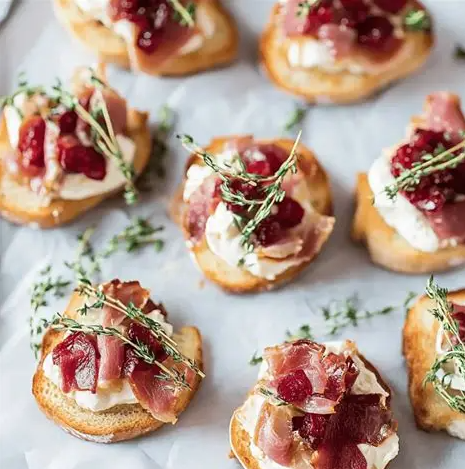
Giada De Laurentiis Inspired: Cranberry Prosciutto Crostini

Elegant, citrus‑herbal, Italian‑California freshness with a festive cranberry twist.

A bright, elegant crostini layered with creamy burrata, salty prosciutto, and a citrus‑rosemary cranberry topping. It’s festive, fresh, and effortlessly chic — the kind of appetizer Giada would serve at a holiday gathering or Italian‑California dinner party.

Prep 15 min Cook 10 min Serves 12 crostini

Fancy Friendsgiving Finger Food: Cranberry & Prosciutto Crostini

Fancy Friendsgiving Finger Food: Cranberry & Prosciutto Crostini/tastytreatideas.com

Ingredients

1 cup fresh or frozen cranberries
2 tbsp honey or maple syrup
1 tbsp lemon juice
1 tsp lemon zest
1 tsp fresh rosemary, finely chopped
Pinch sea salt
1 baguette sliced into ½‑inch pieces
3 tbsp olive oil
6 oz burrata or fresh mozzarella
6–8 slices prosciutto
Handful fresh basil leaves
To finish extra lemon zest + flaky salt

Instructions

  1. Make the Cranberry Topping
    Combine cranberries, honey, lemon juice, zest, rosemary and salt in a small saucepan. Simmer 5–7 minutes until berries burst and mixture thickens. Cool completely.
  2. Toast the Crostini
    Preheat oven to 400°F (200°C). Brush baguette slices with olive oil and bake 8–10 minutes until golden and crisp.
  3. Assemble
    Add a spoonful of burrata or mozzarella to each crostini. Tear prosciutto into smaller pieces and drape over the cheese. Spoon cranberry topping over the prosciutto.
  4. Finish + Serve
    Top with basil, lemon zest, and flaky salt. Serve immediately for the perfect balance of creamy, salty, tart and herbaceous.
Cranberry Brie Prosciutto Crostini - SweeRecipes
Cranberry Brie Prosciutto Crostini – SweeRecipes/www.sweerecipes.com

Beauty Benefits

  • Olive oil provides healthy fats for glowing skin
  • Cranberries brighten complexion with vitamin C
  • Lemon boosts collagen production
  • Basil offers anti‑inflammatory phytonutrients

Health Benefits

  • Cranberries support immune + urinary tract health
  • Prosciutto adds protein in small portions
  • Burrata provides calcium
  • Herbs aid digestion

Substitutions

  • Goat cheese instead of burrata
  • Arugula instead of basil
  • Orange zest instead of lemon
  • Toasted walnuts for crunch

Storage

  • Best assembled fresh
  • Cranberry topping keeps 5 days refrigerated
  • Toasted crostini keep 3 days in an airtight container
  • Assemble just before serving to maintain crispness

History

Crostini originated in Italy as a way to use day‑old bread, topped with fresh ingredients. Prosciutto has been part of Italian cuisine for centuries, prized for its delicate saltiness. Cranberries bring a North American seasonal twist, merging Italian tradition with California freshness — Giada’s signature style.

Enjoy Cranberry Prosciutto Crostini!
I’m Stacey Hobbs, thanks for reading Face by Stace! Until next time.
do you feel fabulous today?

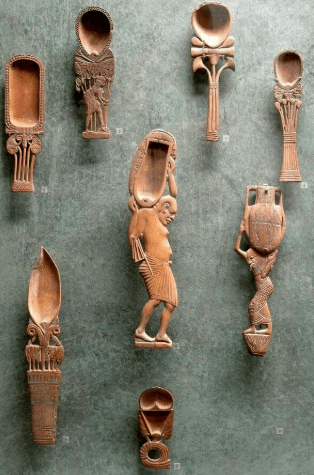
Ancient Egypt Carved Cosmetic Spoons: Beauty, Ritual and Symbolism in Miniature Art

Among the most enchanting objects in Ancient Egyptian beauty culture are carved cosmetic spoons — small, sculptural tools that blended artistry, ritual and daily grooming. These spoons weren’t simple utensils. They were devotional objects, status symbols and miniature works of craftsmanship designed to hold perfumes, unguents, oils and ground pigments like malachite and kohl.

Cosmetic spoons were carved from ivory, bone, wood or stone, often with extraordinary detail. Many took the shape of swimming girls, lotus flowers, fish, birds or deities — motifs tied to rebirth, fertility, beauty and the divine. The “swimming girl” spoon, one of the most famous designs, depicts a young woman gliding through water, her body forming the handle while the bowl of the spoon rests at her feet. It’s sensual, symbolic and deeply connected to Egyptian beliefs about purity and renewal.

These spoons were used to mix and apply beauty materials: fragrant oils, scented resins, powdered minerals and salves. In a world where scent was sacred and cosmetics carried spiritual meaning, the spoon became a bridge between the physical and the divine. Beauty wasn’t vanity — it was a ritual. Applying kohl or perfumed oils was an act of protection, devotion and identity.

Cosmetic spoons were often found in tombs, placed beside kohl pots, palettes, jewelry and perfume jars. Their presence in burial chambers shows how essential beauty was to Egyptian life — not just for adornment but for the journey into the afterlife. A carved spoon wasn’t merely a tool; it was a cherished personal object meant to accompany the soul.

Today, these spoons stand as some of the most exquisite artifacts of ancient cosmetic culture. They reveal a civilization that understood beauty as art, spirituality and storytelling. In their delicate carvings, we see the earliest expression of luxury beauty — handcrafted, symbolic and deeply human.

I’m Stacey Hobbs, thanks for reading Face by Stace! Until next time.
do you feel fabulous today?