Get the Look: Cher’s 1970s Contour

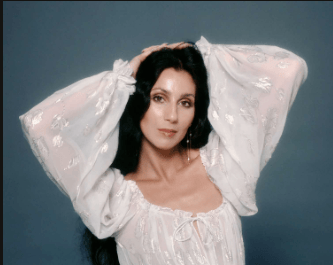
There are beauty looks that define a decade, and then there are beauty looks that define a woman. Cher’s 1970s contour belongs to the latter — a sculpted, dramatic, glamorous look that became part of her identity. It wasn’t just makeup. It was architecture. It was attitude. It was a woman who understood the power of bone structure and spotlight. Cher knew elevating her cheekbones only enhanced her already existing natural beauty. She also knew the power of studio lighting and how it reflects onto the face. 

Cher’s contour in the 1970s was built on three principles: shadow, lift, and linear precision. Her makeup artists didn’t soften her features, instead they sharpened them, amplifying her natural angles. 

1. The Sculpted Cheekbone

Cher’s contour on her cheeks sat high, almost touching the temples. This placement elongated her face and created the iconic “Cher line” — a diagonal shadow that carved out the cheekbone without warmth. 1970s contour wasn’t bronzed; it was cool‑toned, almost grey, mimicking natural shadow rather than sun.

2. The Seamless Jawline

Cher’s jaw contour was subtle. A shadow beneath the jaw created a clean, lifted frame that photographed beautifully under studio lights. This technique gave her face that un-mistakable “cut glass” definition.

3. The Nose Contour — Straight and Sleek

Cher’s nose contour was linear, not rounded. Two straight lines down the bridge, softened at the edges, created a sculpted, statuesque effect. It was never harsh, just architectural.

4. The Highlight — Satin, Not Shimmer

1970s highlight wasn’t glittery. Cher’s glow came from satin finishes: cream foundations, soft powders, and gentle reflectivity. The high points — cheekbones, brow bone, nose bridge — were lifted with light, not sparkle.

5. The Eyes — Smoky, Pulled, and Dramatic

Cher’s contour worked in harmony with her eye shape. Her eyeliner pulled upward, her crease was deepened, and her lashes were dramatic. The entire face moved in one direction, which is to lift.

6. The Ritual Behind the Look

Cher’s contour wasn’t rushed. Instead there was a ritual that was put into place — layered, blended, refined. Her make-up artists sculpted her face the way a designer sculpts fabric: with intention, precision, and an understanding of how light behaves.

Cher’s 1970s contour remains iconic because it was about identity, as opposed to identity, although when thinking of Cher from the 1970s, her makeup look is one aspect that defined her entire look. It was the beauty equivalent of her voice, her unmistakable, powerful, and entirely on her own voice.

I’m Stacey Hobbs, thanks for reading. Until next time!
do you feel fabulous today?
Pop Culture Moment: The Story Behind Farrah Fawcett’s Iconic 1976 Red Swimsuit Poster

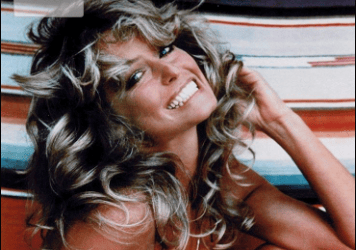
There are images that define an era, and then there are images that become part of cultural memory itself. Farrah Fawcett’s 1976 red swimsuit poster belongs to the latter — a photograph so instantly recognizable that it transcended celebrity and became a symbol of American pop culture, California optimism, and the shimmering glamour of the 1970s.

The poster, shot in the summer of 1976, captured Farrah at the exact moment her career was about to explode. Charlie’s Angels had not yet premiered, but her smile, bright, sun‑lit, impossibly warm, already carried the promise of stardom. Her feathered hair, soon to become the most requested hairstyle in North America, framed her face, highlighting her facial features. 

But the magic of the poster wasn’t just Farrah’s beauty. It was the mood, she brought with it.

It was the feeling of a carefree afternoon. It was the sun‑washed innocence of the 1970s. It was the relaxed sensuality that felt approachable.

The red swimsuit itself was simple — athletic, modest, almost girl‑next‑door. And yet, paired with Farrah’s natural charisma, it became unforgettable. The photographer captured her in a moment of genuine laughter, not posed glamour, and that authenticity made the image feel intimate. It felt like a glimpse into her real personality: playful, warm, effortlessly radiant.

The poster sold over 12 million copies, becoming the best‑selling pin‑up of all time. It wasn’t just a photograph — it was a cultural phenomenon. Teenagers taped it to their bedroom walls. College dorms were lined with it. It became a symbol of the decade; sun‑kissed, athletic, natural, and joyful.

Farrah herself later said that the poster represented her at her happiest, before fame became overwhelming, before the pressures of Hollywood intensified. It was a moment of pure, un-complicated youth.

Today, nearly fifty years later, the image remains iconic not because of nostalgia alone, but because it captures something timeless; the beauty of authenticity, the power of a genuine smile, and the enduring appeal of a lady who radiated confidence without trying to.

Farrah Fawcett’s red swimsuit poster wasn’t just a photograph. 
It was a mood. 
A moment. 
American pop culture of the 1970s, one that continues to shimmer in the collective memory to this very day.

I’m Stacey Hobbs, thanks for reading. Until next time!
do you feel fabulous today?

Saturday Night Fever: The Movie that Changed Fashion History

Saturday Night Fever entered into pop culture and into the fashion history, leaving a trail of white suits, gold chains and glossy swagger in its wake. When the film hit theatres in 1977, audiences weren’t just watching Tony Manero move — they were watching a new kind of man emerge: confident, sensual, and dressed like the night itself.

The movie didn’t invent disco style, it popularized it.
It turned nightclub fashion into mainstream aspiration. 
It made getting dressed a ritual — a transformation — a performance.

And it changed how men and women approached fashion for decades.

The White Suit That Became a Cultural Monument

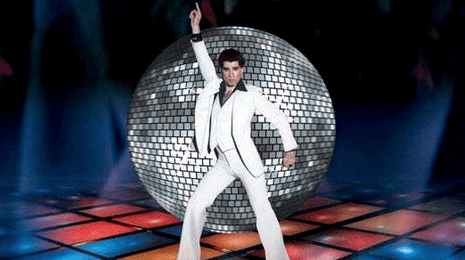
Designed by Patrizia Von Brandenstein, the Tony Manero’s white three‑piece suit wasn’t just clothing — it was a symbol. The crisp white fabric, the exaggerated lapels, the black shirt underneath, the gold chain glinting at the collar… it was disco distilled into a single silhouette.

The suit represented:

  • Purity meeting nightlife
  • Confidence meeting aspiration
  • Masculinity meeting glamour

It was a declaration that men could be sensual, stylish, and expressive — not just rugged or understated. The suit became a monument because it captured the fantasy of disco: a world where you could reinvent yourself under the lights.

Today, designers still reference it. 
Editorials still re-create it. 
Costume departments still borrow it. 
It remains one of the most recognizable outfits in film history.

The Birth of “Nightlife Dressing”

Before Saturday Night Fever, nightlife fashion existed — but it wasn’t mainstream. The film changed all of that. Suddenly, dressing for the night wasn’t just about going out; it was about becoming someone.

Tony’s ritual of getting ready — the hair, the shirt, the jewelry, the suit — created a template for nightlife dressing:

  • Dressing became a transformation
  • Clothing became performance
  • Nightlife became identity

This was the birth of “nightlife dressing” as we know it today. The idea that what you wear after dark is a different version of you, bolder, freer, more glamorous, traces directly back to this film.

How Disco Fashion Liberated Men

One of the most overlooked impacts of Saturday Night Fever is how it liberated men’s fashion. The 1970s had already begun loosening the rules, but Tony Manero kicked the door open.

He wore:

  • fitted shirts
  • flared trousers
  • platform shoes
  • jewelry
  • bold colours
  • sensual silhouettes

This was radical. Men were suddenly allowed to be glamorous, expressive, body‑conscious, stylish, and ornamental.

The film gave men permission to care about fashion, openly, proudly, and without apology. It was a cultural reset that still influences menswear today, from Gucci’s maximalism to Saint Laurent’s disco‑slick tailoring.

The Feminine Side of Disco: Halters, Metallics, and Movement

While Tony’s suit became the icon, the women of Saturday Night Fever shaped the feminine side of disco fashion. The film showcased:

  • halter tops
  • metallic fabrics
  • slinky dresses
  • fluid silhouettes
  • glossy lips
  • shimmering eyeshadow

Disco fashion for women was about movement — clothing that caught the light, swayed with the music, and turned the dance floor into a stage. It was sensual while remaining classy, glamorous without being stiff. It celebrated the body, the rhythm, and the freedom of nightlife.

This aesthetic still appears in modern fashion cycles: every time designers revive metallics, halters, or fluid eveningwear, they’re tapping into disco’s legacy.

Why Saturday Night Fever Still Influences Fashion Today

The film’s fashion impact endures because it wasn’t just about clothes, it was about identity. It taught us that dressing up is a ritual, a transformation, a way of stepping into a more confident version of ourselves.

Its influence lives on in:

  • modern menswear tailoring
  • nightlife fashion
  • capsule collections inspired by 1970s glamour
  • editorial styling
  • music‑driven fashion campaigns
  • runway revivals of disco aesthetics

Every time a designer sends a white suit down the runway, every time a fashion editorial channels disco lighting, every time nightlife dressing becomes a cultural conversation, it is all thanks to Saturday Night Fever. 

It wasn’t just a movie. 
It was a fashion revolution. 
And its dance floor is still spinning.

I’m Stacey Hobbs, thanks for reading. Until next time!
do you feel fabulous today?
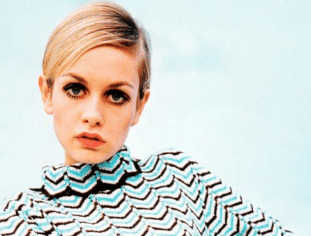
Get the Look: Twiggy’s Mod Make‑Up

In the mid‑1960s, when London was vibrating with youth culture, music, and fashion, a teenage girl named Lesley Hornby, soon to be known simply as Twiggy, redefined beauty with a look that felt both futuristic and innocent. Her Mod make‑up became one of the most iconic beauty signatures of the decade: graphic, doll‑like, and unmistakably hers.

Twiggy’s ritual was not about glamour. It was about expression. She turned her face into a canvas, using line, shadow, and contrast to create a new kind of beauty — one that captured the spirit of Swinging London.

The Eyes: The Mod Revolution

Twiggy’s eyes were the centerpiece of her ritual. She began with a pale, matte shadow across the lid — usually white, cream, or soft grey — to create a blank, bright surface. Then came the defining step: the drawn‑on lower lashes.

Using black eyeliner, Twiggy sketched tiny strokes beneath her eyes, mimicking the look of exaggerated doll lashes. This technique wasn’t accidental; it was deliberate artistry. She wanted her eyes to appear wide, round, and expressive — almost cartoon‑like, but still elegant.

Her upper lashes were equally dramatic. She applied mascara in thick, intentional coats, separating each lash with a pin to create definition. Sometimes she added false lashes for extra impact, but the ritual was always the same: precision, patience, and the belief that eyes could tell a story.

The Crease Line: Graphic Beauty

Another signature element was the cut crease, drawn with black or dark brown liner (pro makeup artists use either gel liner or cake liner, not liquid eyeliner). Twiggy traced a curved line above her natural crease, creating a graphic shadow that lifted and enlarged the eye. It was a beauty technique inspired by baby dolls of the 1960s, with clean lines and bold shapes that defined Mod fashion.

This crease wasn’t blended. It wasn’t softened. It was a statement.

The Skin: Pale, Matte, and Youthful

Twiggy’s complexion was intentionally matte, reflecting the era’s preference for powder‑finished skin. She used light foundation and translucent powder to create a soft, velvety canvas. Her look avoided bronzer or heavy contour; instead, she embraced a youthful, almost ethereal pallor that contrasted beautifully with her dramatic eyes.

The Lips: Soft and Understated

To balance the boldness of her eye ritual, Twiggy kept her lips subtle. Pale pinks, soft nudes, and muted peach tones were her go‑to shades. The lips were never the focus; it was all about her eyes, her beautiful eyes.

The Ritual: A New Kind of Beauty

Twiggy’s Mod make‑up wasn’t just a look; it was a cultural shift. She transformed beauty into something graphic, playful, and artistic. Her ritual captured the optimism of the 1960s, a decade obsessed with youth, innovation, and reinvention.

Her make‑up became a symbol of the Mod movement: bold, clean, and forward‑looking. Even today, her aesthetic feels fresh, modern, and editorial.

Twiggy didn’t follow beauty rules. 
She rewrote them — one drawn‑on lash at a time.

I’m Stacey Hobbs, thanks for reading. Until next time!
do you feel fabulous today?
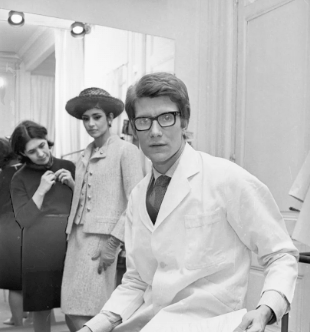
YSL + Morocco: Colour, Texture and Beauty Rituals

When Yves Saint Laurent first stepped into Morocco in the 1960s, he described the experience as a revelation — a place where colour, texture, and sensuality existed in a harmony he had never encountered before. Morocco did not simply inspire him; it awakened him. It became the spiritual axis of his creativity, the place where his imagination expanded into new dimensions of beauty.

In Marrakech, Saint Laurent found a world saturated with pigment: cobalt blues, saffron yellows, dusty rose terracottas, and the deep greens of hidden gardens. These colours were not decorative — they were emotional. They carried history, heat and memory. They became the palette of his couture, the undertone of his cosmetics and the heartbeat of his artistic identity.

Texture, too, played a central role. Morocco offered a tactile universe: carved wood, woven straw, hammered metal, embroidered fabrics, and the softness of desert sand. Saint Laurent translated these textures into fashion, velvet caftans, silk turbans, beaded jackets, and later into beauty, where texture became a ritual. The glide of kohl, the matte of a bold lip, the shimmer of gold on skin. Beauty was no longer an accessory; it was an extension of the senses.

But perhaps Morocco’s greatest gift to Saint Laurent was ritual. The slow rhythm of tea poured from silver pots. The quiet ceremony of fragrance — amber, rose, cedar, and musk drifting through warm air. The way beauty was woven into daily life, not as performance but as pleasure. Morocco taught him that beauty could be a moment of pause, a gesture of intimacy, a way of honouring oneself.

This philosophy shaped the YSL woman. She was bold, sensual, and unapologetically herself — a woman who understood that beauty was not about perfection, but about presence. She carried Morocco’s colours in her wardrobe, its textures in her accessories, and its rituals in her approach to beauty.

Even today, the legacy of Morocco lives within the YSL universe. In the gardens of Majorelle. In the museum dedicated to his work. In the pigments that define the brand’s cosmetics. In the spirit of a designer who found his soul in a place where colour, texture, and ritual converged.

Morocco was not simply an influence. 
It was Yves Saint Laurent’s muse — his sanctuary — his eternal palette.

I’m Stacey Hobbs, thanks for reading! Until next time.
do you feel fabulous today?

Farrah Fawcett’s Beach Sand as Exfoliation

Farrah Fawcett’s beauty was often described as effortless from sun‑kissed skin, feathered hair to her California glow that felt both natural and iconic. But behind that effortless look was a ritual that belonged entirely to her: beach sand exfoliation.

Long before exfoliating scrubs became a beauty‑counter staple, Farrah embraced the simplest form of skin renewal — the ocean, the sun, and the sand beneath her feet. For her, beauty was more of a practice, than it ever was a product. A ritual shaped by nature, movement, and the sensory experience of being outdoors.

Farrah would take handfuls of fine beach sand and gently massage it along her arms and legs, letting the grains buff away dryness/dehydrated skin while the salt air softened her skin. It wasn’t glamorous. It was a ritual born from the environment she loved most.

This natural exfoliation gave her skin that Farrah glow: smooth, radiant, and touched by the elements. The sand acted as a physical exfoliant, the ocean water added minerals, and the sun warmed the skin, creating a trifecta of natural beauty care that felt uniquely Californian.

Farrah’s ritual reminds us that beauty doesn’t always come from a jar. Sometimes it comes from the world around us — from texture, from nature, from the simple act of being present. Her beach sand exfoliation wasn’t just a technique; it was a philosophy. A belief that beauty is something you live, not something you apply.

Even today, her approach feels refreshingly modern. In a world filled with complex routines and endless products, Farrah’s ritual offers a moment of simplicity — a reminder that beauty can be tactile, sensory, and deeply personal.

Farrah Fawcett didn’t just embody California beauty. 
She created it — one handful of sand at a time.

Courtesy via vintag.es

I’m Stacey Hobbs, thanks for reading! Until next time.
do you feel fabulous today?