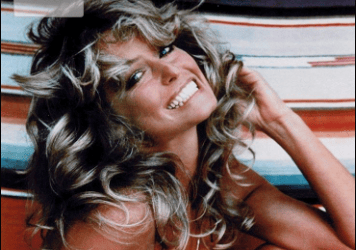
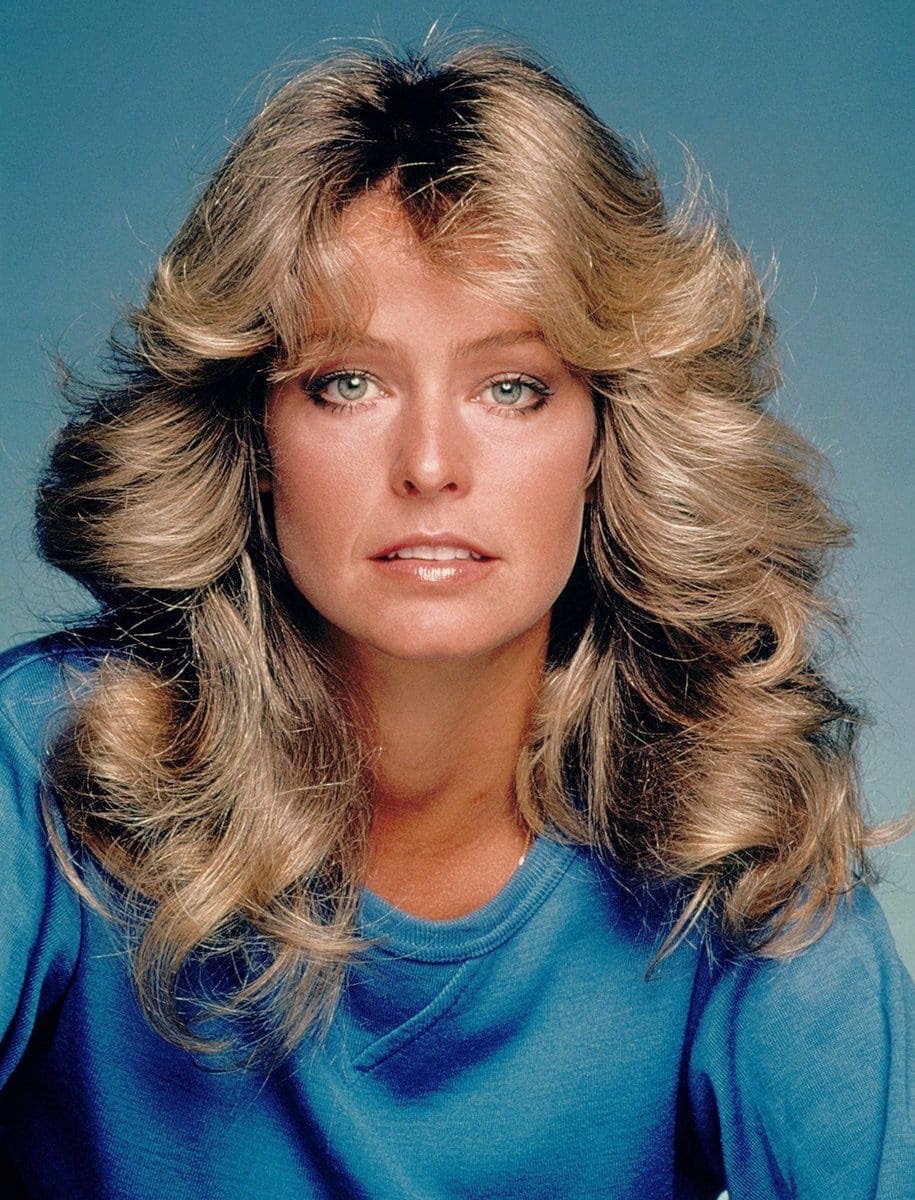
There are certain beauty moments that don’t just define an era — they crystallize it. Farrah Fawcett’s feathered hair, that sun‑lit halo of movement and ease, remains one of the most recognizable beauty signatures of the 1970s. It wasn’t simply a hairstyle; it was a cultural mood, a declaration of freedom, athleticism, and California‑coast nonchalance. And at the heart of it was a deceptively simple technique: the “no‑brush” flounce.
Farrah’s hair embodied a new kind of glamour, one that didn’t rely on the lacquered rigidity of earlier decades. Instead, her look celebrated air, lift, and spontaneity. The feathered flounce was created not through meticulous brushing, but through hands, heat, and movement. Hair was coaxed, not controlled. It was shaped by the body’s natural rhythm, not forced into submission. This “no‑brush” philosophy became a beauty rebellion wrapped in softness.
The genius of Farrah’s look was its duality. It appeared effortless, yet it was architecturally precise. The layers were cut to float, the ends flipped to catch light, and the crown lifted just enough to create that iconic silhouette, a shape that suggested both athletic vitality and feminine ease. It was the kind of hair that looked best in motion: running on the beach, laughing on a patio, leaning back on a skateboard. Movement was the styling tool.
Farrah’s feathered flounce also marked a turning point in American beauty culture. It shifted the conversation from “done” to “un-done,” from stiff to fluid, from perfection to personality. Women embraced the idea that beauty could be expressive rather than ornamental. The “no‑brush” technique encouraged touch, as in running fingers through hair, flipping it back, letting it fall where it wanted. It was sensual without being styled, glamorous without being formal.
Today, the feathered flounce remains a symbol of timeless American ease. It’s referenced in runway shows, revived in modern blowouts, and re-imagined in contemporary layers. But its essence hasn’t changed: beauty that moves, breathes, and feels alive.
Farrah Fawcett didn’t just give us a hairstyle. She gave us a philosophy — one that still resonates in an era that craves authenticity, softness, and effortless ritual.
I’m Stacey Hobbs, thanks for reading! Until next time. do you feel fabulous today?
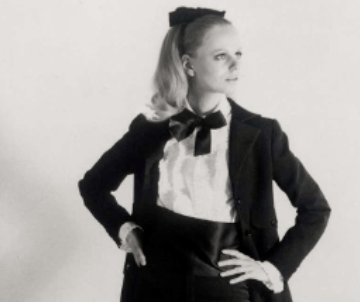
When Yves Saint Laurent introduced Le Smoking in 1966, he wasn’t simply designing a garment, he was re-writing the visual language of modern femininity. The tuxedo, long considered an exclusive symbol of masculine power, was re-engineered through Saint Laurent’s architectural eye: sharp lines, elongated proportions, and a deliberate tension between structure and sensuality.
Le Smoking was radical not because it was loud but because it was controlled. It offered women an alternative to the evening gown, an uniform of authority, eroticism, and restraint. In Saint Laurent’s hands, tailoring became a political act. The suit framed the body without exposing it, asserting presence through silhouette rather than skin. It was elegance stripped to its essentials.
The cultural impact was immediate. Photographers, editors, and avant‑garde artists recognized Le Smoking as a visual manifesto. Helmut Newton’s 1975 image of the tuxedo-clad woman in a Paris alleyway cemented the suit as an icon of modern power; a woman who occupies space.
More than a garment, Le Smoking marked the beginning of a new aesthetic — one that allowed women to claim the codes of menswear without surrendering their identity. It remains one of Saint Laurent’s most enduring contributions to fashion; a symbol of autonomy, sophistication, and the quiet force of a perfectly cut jacket.
I’m Stacey Hobbs, thanks for reading. Until next time! do you feel fabulous today?
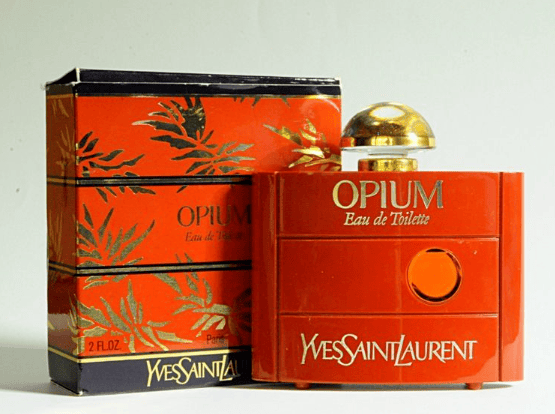
The 1970s were Yves Saint Laurent’s most decadent decade — a period defined by excess, sensuality, and a new kind of glamour that blurred the line between fashion, nightlife, and fantasy. If the 1960s established Saint Laurent as a revolutionary designer, the 1970s crowned him as a cultural force. His work didn’t just reflect the era; it shaped it. And nowhere is this more evident than in the creation of Opium, the fragrance that became both a symbol of the decade’s indulgence and one of the most controversial launches in beauty history.
The Mood of the 1970s: Nightlife, Fantasy, and Escape
By the early 1970s, Saint Laurent had become synonymous with a particular kind of Parisian glamour — one that thrived after dark. The decade’s cultural mood leaned toward escape: disco clubs, exotic travel, sensual fabrics, and a fascination with the East. Saint Laurent absorbed all of it, translating the era’s hedonism into collections that felt cinematic, luxurious, and un-apologetically bold.
His runways glowed with gold lamé, velvet, embroidery, and silhouettes that moved like smoke. The YSL woman of the 1970s was not simply fashionable; she was magnetic. She lived in kaftans, tuxedos, turbans, and jewels that caught the light. She was a creature of nightlife — glamorous, mysterious, and slightly dangerous.
Opium: The Fragrance That Defined a Decade
In 1977, Saint Laurent released Opium, a fragrance that captured the decade’s spirit with almost provocative precision. It was rich, spicy, resinous, which was a departure from the fresh florals dominating the market. Opium smelled like lacquered boxes, incense, silk, and heat. It was sensual, hypnotic, and deliberately excessive.
The name alone sparked controversy. Critics accused Saint Laurent of glamorizing addiction; supporters praised him for daring to push beauty into new territory. The campaign imagery, a reclining woman, jewel-toned fabrics, and an atmosphere of erotic mystery, cemented Opium as more than a perfume. It was a cultural statement.
Opium became one of the most successful fragrance launches in history. It defined the YSL woman of the 1970s: bold, glamorous, and un-afraid of indulgence.
Fashion as Fantasy: YSL’s Eastern Influence
Saint Laurent’s fascination with Eastern aesthetics reached its peak in the 1970s. His collections drew inspiration from China, Japan, India, and North Africa, not as literal reproductions, but as imaginative re-interpretations. He created clothing that felt like artifacts from a dream: embroidered jackets, silk tunics, brocade gowns, and accessories that shimmered like treasure.
This fantasy-driven aesthetic aligned perfectly with the decade’s appetite for escape. The world was changing — politically, socially, economically — and Saint Laurent offered beauty as refuge. His designs allowed women to step into a different reality, one filled with colour, texture, and sensuality.
The YSL Woman: Glamour Without Apology
The YSL woman of the 1970s was unlike any fashion archetype before her. She was glamorous, but not fragile. Sensual, but not submissive. She wore tuxedos with the same ease as she wore silk gowns. She moved through the world with confidence, mystery, and a touch of danger.
Saint Laurent understood that glamour was not just about clothing — it was about attitude. His designs gave women permission to be bold, to take up space, to embrace beauty as power. In the 1970s, glamour became a form of self-expression, and Saint Laurent was its most influential architect.
Opium’s Legacy: Excess as Art
Opium’s impact extended far beyond its launch year. It became a symbol of the decade’s aesthetic, lush, indulgent, and dramatic. It also marked a turning point in beauty advertising, introducing a new dialogue built on fantasy, sensuality, and narrative.
Saint Laurent’s 1970s work remains some of the most referenced in fashion history. Designers still borrow from his silhouettes, his colour palettes, and his theatrical approach to glamour. Opium continues to be one of the most iconic fragrances ever created, a reminder of a decade when beauty was allowed to be extravagant.
The 1970s: YSL’s Decade of Glamour
The 1970s were Yves Saint Laurent’s most intoxicating era — a decade where fashion, fragrance, and fantasy collided. Opium remains its most enduring symbol, capturing the excess, sensuality, and glamour that defined both the designer and the world he shaped.
Saint Laurent didn’t just design clothing. He designed a mood — and in the 1970s, that mood was pure and glamourous.
I’m Stacey Hobbs, thanks for reading. Until next time! do you feel fabulous today?
1. Cold cream as an all‑in‑one ritual. Women in the 1970s swore by cold cream as a universal beauty staple — cleanser, moisturizer, night mask, and makeup remover in one. It wasn’t just a product; it was a nightly ritual of massaging the skin until it felt warm, soft, and nourished, a practice that modern skincare has replaced with multi‑step routines but never fully replicated in simplicity or comfort.
2. Beer rinses for glossy hair. A surprising but beloved trick was rinsing hair with beer to add shine and volume. The natural hops and barley acted like a primitive volumizing treatment, leaving hair fuller, bouncier, and with a soft, natural sheen that women felt modern conditioners couldn’t quite mimic.
3. Ice‑water facials for instant lift. Before “skin icing” became trendy again, 1970s women dunked their faces into bowls of ice water to tighten pores, reduce puffiness, and create a fresh, lifted look before makeup. It was a quick, inexpensive ritual that made the skin feel alive.
4. Vaseline for everything. Petroleum jelly was a beauty Swiss‑army knife — lip balm, brow tamer, highlighter, cuticle conditioner, and even a nighttime eye cream. Women used it to create the decade’s signature dewy, glossy look long before highlighters existed.
5. Lemon juice for natural highlights. Long before balayage, women squeezed lemon juice into their hair and sat in the sun to create soft, natural highlights. It was a slow, gentle lightening method that gave hair a sun‑kissed glow without bleach.
6. Baby powder as dry shampoo. Baby powder was the original dry shampoo. Women dusted it into their roots to absorb oil, add volume, and refresh their hair between washes — especially during the era of feathered Farrah Fawcett styles.
7. Witch hazel as a universal toner. Witch hazel was a staple for tightening pores, calming irritation, and refreshing the skin. Women applied it after cleansing to create a clean, matte canvas for the decade’s minimalist makeup looks.
8. Olive oil for hair and skin nourishment. Mediterranean women popularized olive oil as a beauty treatment — massaged into the scalp, used as a deep conditioner, or applied to dry elbows and knees. Its simplicity and richness made it a beauty hero.
9. Egg‑white masks for tightening. Egg whites were whisked into a frothy mask that dried into a firm, tightening layer. Women used it before events to create a lifted, smoothed look that makeup sat beautifully on.
10. Aloe straight from the plant. Aloe vera leaves were kept in kitchens and bathrooms, sliced open to reveal the gel inside. Women used it for burns, blemishes, hydration, and soothing, which is a natural remedy that felt luxurious in its simplicity.
11. Brushing hair 100 strokes a night. The “100 strokes” ritual wasn’t just about detangling — it was believed to distribute natural oils, stimulate the scalp, and create shine. It was a nightly moment of calm and self‑care. (This is true.)
12. Milk baths for softness. Inspired by old Hollywood, some women added powdered milk to bathwater to soften the skin. The lactic acid gently exfoliated, leaving skin silky and luminous.
13. Rosewater as a daily refresher. Rosewater was spritzed or dabbed onto the skin to hydrate, tone, and add a soft floral scent. It was a feminine ritual that made women feel instantly polished.
14. Baking soda for teeth whitening. Before whitening strips, women brushed with baking soda to brighten their smiles. It was a simple, effective method passed down through generations.
15. Hot oil treatments for hair repair. Women heated small vials of oil and applied them to their hair under a warm towel. These treatments restored softness and shine, especially for chemically treated or sun‑damaged hair.
16. Lipstick as blush. A dab of lipstick blended onto the cheeks created a natural flush that matched the lips — a quick, cohesive beauty trick used by women who preferred minimal makeup.
17. Sleeping on satin pillowcases. Satin pillowcases were prized for reducing hair breakage, preserving blowouts, and preventing facial creases. It was a glamorous yet practical beauty secret.
18. Baby oil for glowing legs. Women applied baby oil to their legs for a glossy, luminous finish, especially in summer. It gave the skin a healthy sheen that felt effortless and sensual.
19. Vinegar rinses for scalp health. Apple cider vinegar was used to remove buildup, balance the scalp, and leave hair incredibly shiny. It was a clarifying ritual long before clarifying shampoos existed.
20. Minimal makeup with strong features. The 1970s embraced natural skin with one emphasized feature — bold lashes, glossy lips, or defined cheekbones. Women relied on subtlety rather than layers, creating a fresh, effortless look.
21. Homemade sugar scrubs. Sugar mixed with honey or oil created a simple exfoliant that left skin smooth and glowing. Women used it on hands, lips, and elbows for instant softness.
22. Sunning for a “healthy glow.” Before SPF awareness, women sought a golden tan as a symbol of vitality. They used tanning oils and spent time outdoors, believing sunlight improved mood and appearance.
23. Perfume layering with lotions. Women applied matching scented lotions before perfume to make the fragrance last longer. It created a soft, enveloping scent that lingered throughout the day.
24. Nail buffing instead of polish. Buffing nails to a natural shine was a chic alternative to polish. It created a clean, elegant look that felt refined and low‑maintenance.
25. Using steam for deep cleansing. Women leaned over bowls of hot water to steam their faces, opening pores and loosening impurities. It was a simple, spa‑like ritual done at home.
I’m Stacey Hobbs, thanks for reading. Until next time! do you feel fabulous today?
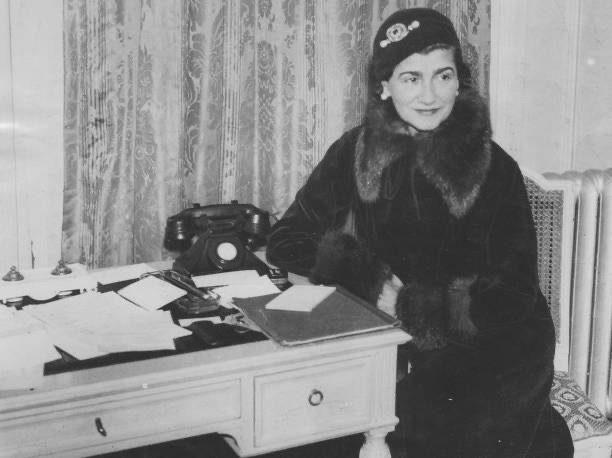
When the war ended in 1945, the balance of power between Chanel and the Wertheimers shifted decisively. Chanel returned to a France re-building itself, but her attempt to seize Parfums Chanel had left a trail of legal complications and reputational strain. The Wertheimers, meanwhile, had survived the war with their business intact — protected by the ownership transfer to Félix Amiot — and were ready to reclaim full control.
Pierre Wertheimer quietly resumed leadership of Parfums Chanel and began the process of re-building the fragrance house. Factories were restored, distribution networks re‑established, and No. 5 was positioned for a new era of global expansion. Chanel, recognizing that the wartime attempt had failed and that the Wertheimers held every legal advantage, entered negotiations. The result was a settlement that re-shaped the future of the brand.
The Wertheimers agreed to finance Chanel’s return to couture. They funded the re-opening of her fashion house in 1954, covering her operating costs and giving her the freedom to design without financial pressure. In exchange, Chanel accepted the existing ownership structure of Parfums Chanel — the Wertheimers retained control, and she continued to receive her share of profits.
It was an un-easy peace, but a lasting one. Chanel regained her place in fashion, launching the iconic 1954 comeback collection that redefined post‑war elegance. The Wertheimers, meanwhile, transformed Parfums Chanel into a global luxury powerhouse, expanding No. 5 into the American market and building the foundation of the modern Chanel empire.
By the time Chanel died in 1971, the Wertheimer family had become the stewards of her legacy — not through force but through strategy, investment, and an understanding of how to scale luxury in the modern world. The empire that bears her name today exists because of both sides of the conflict: Chanel’s vision and the Wertheimers’ business acumen.
What This Conflict Reveals About Chanel
The Wertheimers conflict exposes a side of Chanel that is often overshadowed by the mythology surrounding her name. It reveals a woman who understood the power of branding long before the term existed, yet struggled with the realities of modern business. Chanel was visionary, ambitious, and fiercely protective of her identity — but she was also impulsive, uncompromising, and willing to take morally fraught actions when she felt her legacy slipping out of her hands.
Her attempt to seize Parfums Chanel during the war shows how deeply she believed No. 5 belonged to her alone. Her resentment toward the Wertheimers underscores her discomfort with collaboration and her desire for absolute control. And yet, the post‑war settlement demonstrates a paradox at the heart of her story: Chanel needed the Wertheimers as much as she fought them. Their investment, infrastructure, and long‑term strategy built the global empire her creativity inspired.
In the end, the conflict reveals a truth that defines the modern Chanel brand. The house was shaped by two forces — Chanel’s aesthetic genius and the Wertheimers’ business acumen. The elegance, the mythology, the global reach: none of it exists without both sides of the struggle. The empire that bears her name is not the product of a single woman, but of a tension that pushed the brand into the future.
I’m Stacey Hobbs, thanks for reading. Until next time! do you feel fabulous today?
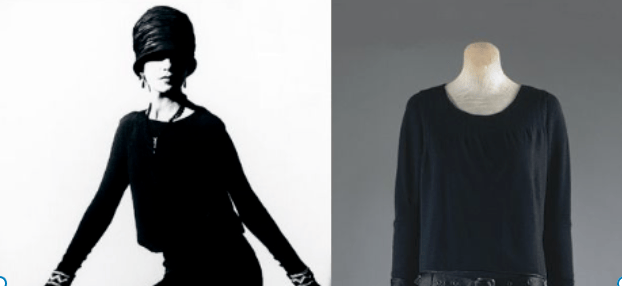
When Chanel introduced the little black dress in 1926, she wasn’t creating a trend. She was creating a language. Black, until then, belonged to mourning, uniforms, and the margins of fashion. It was not a colour of glamour, not a colour of modernity, not a colour a woman chose for herself. Chanel changed that with a single gesture: she stripped the dress of ornament, reduced it to pure line, and declared that black — simple, elegant, unadorned — could be the foundation of a woman’s wardrobe.
The brilliance of the little black dress lies in its restraint. Chanel understood that black has a unique ability to reveal silhouette. It sharpens proportion, clarifies shape, and allows the eye to focus on the architecture of the garment rather than its decoration. By choosing black, she removed distraction. By simplifying the cut, she removed artifice. What remained was intention, a dress that could be anything, go anywhere, belong to any woman.
Chanel 1926 for Vogue
Chanel’s original little black dress was not dramatic. It was not theatrical. It was a straight, long‑sleeved sheath made of crêpe de Chine, published in Vogue with the prediction that it would become “a sort of uniform for all women of taste.” And it did. Its power came from its neutrality. It was democratic, accessible, and endlessly adaptable. A woman could dress it up or down, wear it day or night, transform it with pearls, a cardigan, a hat, or nothing at all. It was a blank canvas but a canvas with perfect proportions.
The little black dress also reflected Chanel’s philosophy of liberation. She believed fashion should free women, not decorate them. Her dress allowed movement, simplicity and ease. It did not sculpt the body into an ideal; it followed it. It did not demand attention; it earned it through clarity. In a decade obsessed with embellishment, Chanel offered a silhouette that felt modern because it was honest. It acknowledged the realities of women’s lives — work, independence, mobility — and gave them a garment that could keep pace.
Its cultural impact was immediate and lasting. The little black dress became a symbol of modern femininity: chic, understated, intelligent. It appeared in films, in society photographs, in the wardrobes of women who understood that elegance did not require excess. Decades later, it would be immortalized by Audrey Hepburn in Breakfast at Tiffany’s, but its power had already been established long before Hollywood touched it. Chanel’s dress was not a costume. It was a philosophy.
Today, the little black dress remains one of the most enduring ideas in fashion. Every designer interprets it; every woman owns a version of it. Its longevity comes from the same qualities Chanel valued: simplicity, proportion, and intention. It is a garment that adapts to the woman, not the other way around. It is modern because it was born from clarity.
Chanel didn’t invent black. She re-invented what it meant. And in doing so, she gave women a dress that became not just a staple, but a symbol, symbol of freedom, of elegance, and of the quiet power of restraint.
I’m Stacey Hobbs, thanks for reading! Until next time. do you feel fabulous today?