How WWI Set the Stage for the Flapper

By the time the First World War ended in 1918, the world that women returned to was not the same one they had left behind. The war didn’t just re-shape borders — it re-shaped identity. It altered how women lived, worked, moved, dressed, and even how they understood themselves. And it is precisely this transformation that gave birth to the flapper: the modern woman of the 1920s whose beauty and fashion choices were not simply stylistic, but symbolic.

The flapper was not an invention of the Jazz Age. The flapper was the inevitable outcome of wartime change.

Louise Brooks, silent screen star of 1920s, flapper

1. Independence Became a Lived Reality — Not an Ideal

During WWI, women stepped into roles previously reserved for men. They worked in factories, drove ambulances, operated machinery, managed farms, and kept entire economies functioning. This wasn’t theoretical empowerment — it was lived, daily independence.

When the war ended, women did not simply return to pre‑war expectations.

They had earned their own wages, navigated public spaces alone, made decisions without male oversight, and proven their capability

This new confidence translated directly into beauty and fashion.

The flapper’s boldness was not rebellion — it was continuity.

She was simply living the independence she had already tasted.

2. Practical Wartime Styles Became the Outline for Modern Beauty

The beauty norms of the Victorian and Edwardian eras, heavy hair, restrictive corsetry, elaborate grooming, were incompatible with wartime life. Women needed practicality, speed, and mobility.

Shorter Hair

The proto‑bob emerged in factories long before it appeared in nightclubs. Women cut their hair for safety and convenience, not fashion.

By the 1920s, the bob became a symbol of modernity — but its roots were utilitarian.

Simplified Makeup

Wartime shortages altered women’s beauty routines long before the flapper emerged. With cosmetics difficult to obtain, women relied on the bare essentials: a light dusting of powder, minimal rouge, petroleum jelly to give lashes a hint of shine, and brows left in their natural shape. Beauty became practical, pared‑down, and almost improvised — a routine built from what was available rather than what was fashionable.

These habits didn’t disappear when the war ended. They evolved. The flapper’s signature look — clean powder, defined lips, and darkened eyes — grew directly out of these wartime constraints. What had begun as necessity became a style of streamlined face, a focus on the mouth, and eyes that carried more drama than the rest of the make-up combined. The flapper aesthetic was modern, but its roots were shaped by the scarcity and simplicity of WWI.

3. The Decline of the Corset Changed the Female Silhouette

Wartime industry reshaped women’s bodies as much as their wardrobes. With steel diverted to the war effort, corset production halted almost overnight. Women adapted quickly, replacing rigid boning with soft brassieres, lighter undergarments, and uncorseted silhouettes that allowed them to work, move, and breathe more freely. What began as necessity soon became habit: a body no longer cinched into an hourglass, but allowed to fall into a straighter, more natural line.

These changes didn’t vanish when peace returned. They carried directly into the 1920s, shaping the new ideal of the flapper. The straight, boyish figure associated with the decade wasn’t a sudden rebellion — it was the evolution of wartime practicality. Freed from corsetry, women embraced a silhouette that felt modern, youthful, and un-restrained. The flapper body was not invented in the Jazz Age; it was forged in the shortages, substitutions, and improvisations of WWI.

The flapper’s silhouette wasn’t a rejection of femininity; it was a reflection of wartime necessity.

Women had already spent years moving freely. The 1920s simply embraced that freedom aesthetically.

4. The Psychological Aftermath: A Desire for Joy, Youth, and Lightness

After years of loss, rationing, and uncertainty, the post‑war generation craved something the war had denied them: pleasure, novelty, youthfulness, escape. The emotional pendulum swung hard in the opposite direction. Women who had spent the war conserving, substituting, and simplifying suddenly wanted colour, movement, nightlife, and a sense of being alive again. Beauty culture responded instantly. Cosmetics became brighter, bolder, and more expressive; fashion embraced playfulness and modernity; and the idea of youth — not just in age, but in attitude — became a cultural ideal.

This longing for escape shaped the flapper’s aesthetic as much as any product or trend. Her powdered skin, defined lips, and darkened eyes were not merely stylistic choices — they were emotional ones. After a decade of restraint, women embraced beauty as a form of liberation, a way to reclaim joy and identity in a world rebuilding itself. The flapper look was modern, but its spirit was born from the collective desire to feel free again.

Short skirts, dancing, nightlife, lipstick, powder, perfume — these were not frivolous.

They were expressions of relief, resilience, and the desire to reclaim life.

The flapper’s beauty was a celebration after years of austerity.

5. Mass Media Amplified New Beauty Ideals

WWI accelerated technological innovation in ways that re-shaped beauty culture almost immediately. By the early 1920s, film, photography, advertising, and department store culture were expanding at a pace the pre‑war world had never seen. For the first time, women could see modern beauty ideals everywhere — in movie theatres, in glossy magazine spreads, in storefront displays, and in the new visual language of commercial advertising. Beauty was no longer local or private; it was public, shared, and increasingly aspirational.

Actresses appeared on screen with bobbed hair, defined lips, smoky eyes, and silhouettes that felt radically modern compared to the corseted figures of the previous generation. These images circulated widely, shaping how women imagined themselves and what they believed beauty could be. The flapper look didn’t emerge in isolation — it was amplified by the technologies that made beauty visible, repeatable, and accessible. In this new visual world, makeup became not just a personal ritual but a cultural statement, a way for women to participate in the modernity they saw reflected back at them.

The flapper was the first woman shaped by mass media.

Her look spread across Canada, America, and Europe with unprecedented speed.

6. Changing Gender Roles Made Visible Through Beauty

The war permanently altered gender expectations.

Women were no longer confined to domesticity. They had worked, contributed, sacrificed, and proven themselves.

Beauty became a language of this new identity:

  • Lipstick signaled confidence
  • Bobbed hair signaled autonomy
  • Powdered skin signaled modernity
  • Short hemlines signaled freedom
  • Visible makeup signaled self‑expression

The flapper was not merely fashionable — she became political.

I’m Stacey Hobbs, thanks for reading! Until next time.
do you feel fabulous today?
Section 3: WWII: Chanel’s Attempt to Seize Parfums Chanel

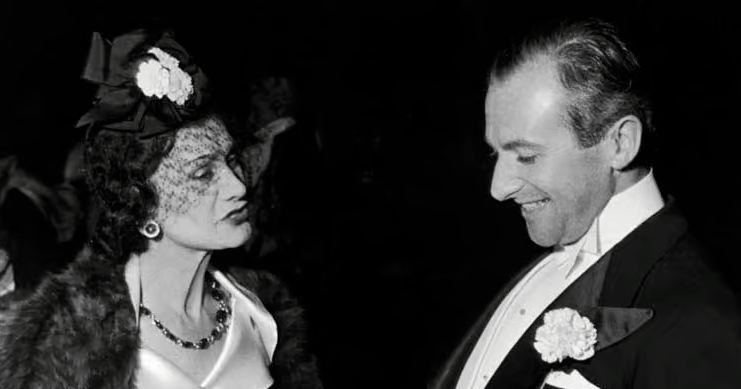
When war broke out in 1939, Chanel saw an opportunity she had been waiting for — a chance to reclaim the perfume empire she believed was rightfully hers. Under Nazi occupation, France introduced Aryanization laws that allowed the state to seize Jewish‑owned businesses. The Wertheimers, being Jewish, were suddenly vulnerable. Chanel recognized the implications immediately.

She petitioned German authorities to transfer Parfums Chanel to her, arguing that as the “Aryan partner,” she should assume full control of the company. It was a calculated move — one that revealed both her business ambition and the moral complexity of her wartime decisions. Chanel believed the moment had finally come to undo the 1924 contract and take back No. 5. 

Chanel No. 5, 1930s ad

But the Wertheimers were far ahead of her. Anticipating the danger, they quietly transferred ownership of Parfums Chanel to a non‑Jewish family friend, Félix Amiot, before fleeing France. This maneuver placed the company outside the reach of Aryanization laws and blocked Chanel’s attempt to seize control. She had made her move, and the Wertheimers had outmaneuvered her.

Throughout the war, Chanel continued to press her claim, but the legal and political landscape had shifted. The Wertheimers’ strategy held firm. By the time the war ended, Parfums Chanel remained intact, protected, and still legally theirs. Chanel’s attempt to reclaim her perfume empire had failed, and the conflict entered its next phase — one shaped not by wartime politics, but by post‑war reconstruction and the future of the Chanel brand.

I’m Stacey Hobbs, thanks for reading! Until next time.
do you feel fabulous today?

Section 2: The Contract She Regretted: Chanel’s Growing Resentment

As Chanel No. 5 surged through the late 1920s and early 1930s, Chanel began to understand the true scale of what she had given away. Parfums Chanel was expanding rapidly, new markets, higher production, international reach, and the Wertheimers were re-investing profits to grow the business even further. Chanel watched her name become a global commodity, yet she held only a small fraction of the company that controlled it.

Her 10% share, once a practical compromise, now felt like a constraint on her identity and her authority. Chanel believed the Wertheimers were profiting disproportionately from her creativity, her image, and her cultural influence. She accused them of withholding financial transparency, of exploiting her brand, and of failing to give her the control she felt she deserved.

Attempts to re-negotiate the contract went nowhere. The Wertheimers held the majority; they had no incentive to alter the terms. Chanel’s frustration hardened into resentment. She wanted ownership, not partnership. She wanted the empire that was forming around her name to be hers — fully, un-questionably, legally.

By the mid‑1930s, the conflict had shifted from dis-satisfaction to determination. Chanel was no longer simply un-happy with the deal; she was actively looking for a way to undo it. And when war broke out, she saw an opportunity — one that would take the dispute into its darkest and most controversial chapter.

I’m Stacey Hobbs, thanks for reading! Until next time.
do you feel fabulous today?
Section 1: The 1924 Deal: How Chanel Lost Control of Her Own Perfume

The story of Chanel’s empire is not just a tale of couture and perfume, it is a battle over ownership, ambition and the right to define a legacy. Behind the elegance of No. 5 lies a decades‑long conflict between Coco Chanel and the Wertheimer family, a struggle that altered the future of the brand more than any runway collection. What began as a practical business partnership in the 1920s evolved into one of the most consequential power disputes in luxury history.

Chanel was on top of the world, with full ownership of her couture house, until she forged a partnership that would change everything. Section One begins with the deal that cost Chanel control of her own perfume, No. 5.

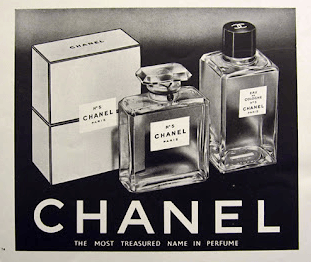
Chanel No. 5 1920s ad
Chanel No.5 perfume, 1920s ad

The 1924 Deal: 
The Beginning of a Power Imbalance

In 1924, Chanel entered a partnership that would define the rest of her career, and haunt her for decades. To scale No. 5 beyond boutique production, she needed industrial manufacturing, international distribution, and capital. The Wertheimer family, owners of Bourjois, had all three. They offered to create a new company, Parfums Chanel, and handle the production, marketing, and global expansion of No. 5.

Chanel agreed to the deal, but the terms were stark: she received only 10% of the company. The Wertheimers took 70%, and her trusted associate Théophile Bader received the remaining 20%. Chanel believed she was securing the future of her fragrance; instead, she had signed away control of what would become the most profitable part of her brand.

This moment — a single contract — set the stage for a decades‑long battle over ownership, power, and the right to define the Chanel empire.

I’m Stacey Hobbs, thanks for reading! Until next time.
do you feel fabulous today?

The Wertheimers vs. Chanel: Who Really Built the Empire?

The legend of Chanel often centers on one woman — the visionary, the rebel, the icon. But the truth behind the Chanel empire is far more complicated. While Coco Chanel created the aesthetic, the myth, and the un-mistakable style, it was the Wertheimer family who built the global business machine that turned her name into a century‑spanning empire.

And during World War II, the battle between them revealed exactly who held the real power.

Chanel: The Creative Genius with a Business Blind Spot

Coco Chanel was brilliant at branding before branding existed. She understood simplicity, modernity, and the psychology of desire. But she was not a business strategist. By 1924, she had already sold 90% of the rights to Chanel No. 5 to Pierre and Paul Wertheimer — a deal she later regretted bitterly.

Coco Chanel believed she deserved more. 
Chanel believed she had been cheated. 
And she spent decades trying to reclaim control.

The Wertheimers: The Quiet Architects of a Global Luxury House

The Wertheimers were not designers. They were industrialists — disciplined, discreet, and ruthlessly efficient. They financed the production of No. 5, built the factories, managed distribution, and turned the perfume into a worldwide phenomenon.

They understood something Chanel didn’t: 

A brand is only as powerful as its infrastructure.

World War II: The Power Struggle Reaches Its Peak

When Nazi occupation began, Chanel saw her chance. Because the Wertheimers were Jewish, she attempted to use Nazi “Aryanization” laws to seize full ownership of Parfums Chanel.

But the Wertheimers had anticipated her move. Before fleeing France, Pierre Wertheimer transferred his shares to a Christian businessman, Félix Amiot, placing the company safely out of Nazi reach — and out of Chanel’s reach.

It was a genius of a strategy, one may say. He outsmarted Coco Chanel. Chanel’s petition to take over the company failed instantly.

After the War: The Ultimate Irony

When the war ended, Amiot returned the company to the Wertheimers. Chanel had no legal claim, no leverage, and no path to ownership.

And yet — in one of the most astonishing twists in fashion history — the Wertheimers still chose to support her. They paid her a generous lifetime stipend and financed her 1954 couture comeback, ensuring the Chanel name remained relevant long after her influence had faded.

So Who Really Built the Empire?

Chanel built the vision. The Wertheimers built the empire.

One created the dream. The other ensured it survived wars, scandals, and the passage of time.

The modern House of Chanel — the global powerhouse worth billions — is the result of their uneasy, intertwined legacy: Chanel’s genius and the Wertheimers’ strategy, locked together forever.

I’m Stacey Hobbs, thanks for reading! Until next time.
do you feel fabulous today?

YSL’s Mondrian Dress: The Day Fashion Became Art

How a simple shift dress changed style forever

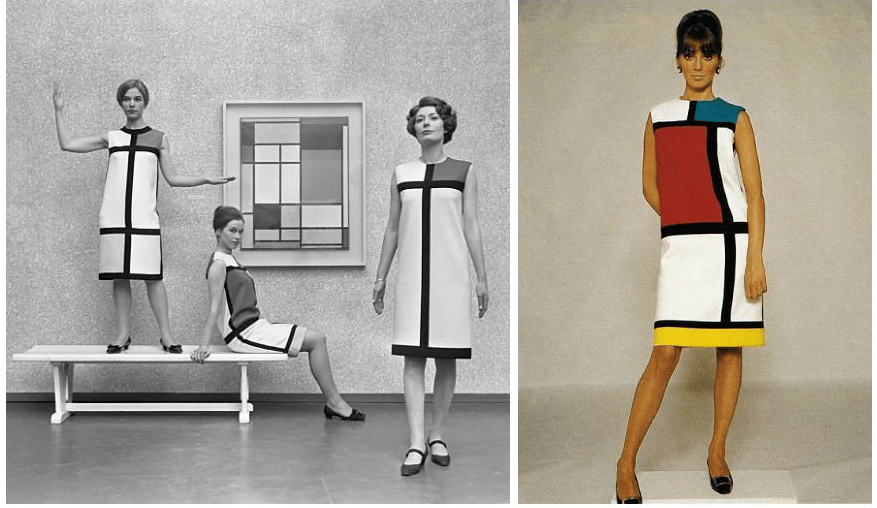
In 1965, Yves Saint Laurent did something no designer had ever dared to do so boldly: he turned a painting into a dress, oh and in doing so, he turned fashion into art. The day fashion became art. 

Yves Saint Laurent, Mondrian dress, circa 1965
theartnewspaper.com

The Mondrian dress, revealed in his Autumn/Winter 1965 collection, wasn’t just a garment. Oh, no no. It was a manifesto. A declaration that couture could be intellectual, modern and culturally alive.

It was the moment Yves Saint Laurent stepped beyond the legacy of Dior and into his own, a legend in the making. 

1. The Inspiration: 
Piet Mondrian’s Modernism

YSL had long admired the Dutch painter Piet Mondrian. His strict geometry, his purity of line, his disciplined use of primary colours. Mondrian believed in reducing art to its essential form.

Yves Saint Laurent saw in that philosophy a new way to dress the modern woman.

The dress wasn’t printed. It wasn’t painted. It was constructed with each block of colour a separate piece of wool jersey, meticulously joined so the seams disappeared into the geometry. It was engineering disguised as simplicity. So fascinating! So clever! 

2. The Dress That Broke the Rules

Let’s welcome the dress that broke all of the fashion rules! Throwing those fashion rules out the window. What fashion rules. Yves Saint Laurent following fashion rules? Since when? 

In a decade obsessed with youth, futurism, and clean lines, the Mondrian dress felt like a revelation. The shift dress, as with all shift dress of the Mod era were extremely popular and comfortable but they did not have any embellishment, ornament, no waist and nostalgia? Forget about it. Just pure form.

The Mondrian dress was couture stripped to its essence — a radical departure from the romantic silhouettes of the 1950s and even from YSL’s own early work at Dior.

This was the new modern woman: intellectual, confident, liberated.

3. The Cultural Explosion

The dress appeared on magazine covers around the world, including Vogue, where it became an instant symbol of the 1960s. It wasn’t just fashion — it was a cultural event. Women who had never worn couture suddenly wanted to wear art. Museums displayed the dress alongside paintings. Critics hailed it as a masterpiece of design. In one stroke, YSL bridged two worlds and elevated both.

4. Why the Mondrian Dress Still Matters

Because the Mondrian represented the moment fashion declared itself a serious cultural force. It proved that clothing could be intellectual, that couture could be modern, that art could be wearable and that simplicity could be revolutionary. In one bold gesture, it cemented Yves Saint Laurent as the designer who understood the future before it arrived.

I’m Stacey Hobbs, thanks for reading.! Until next time.
do you feel fabulous today?