Hydration (Moisture) vs. Oil (Subum)

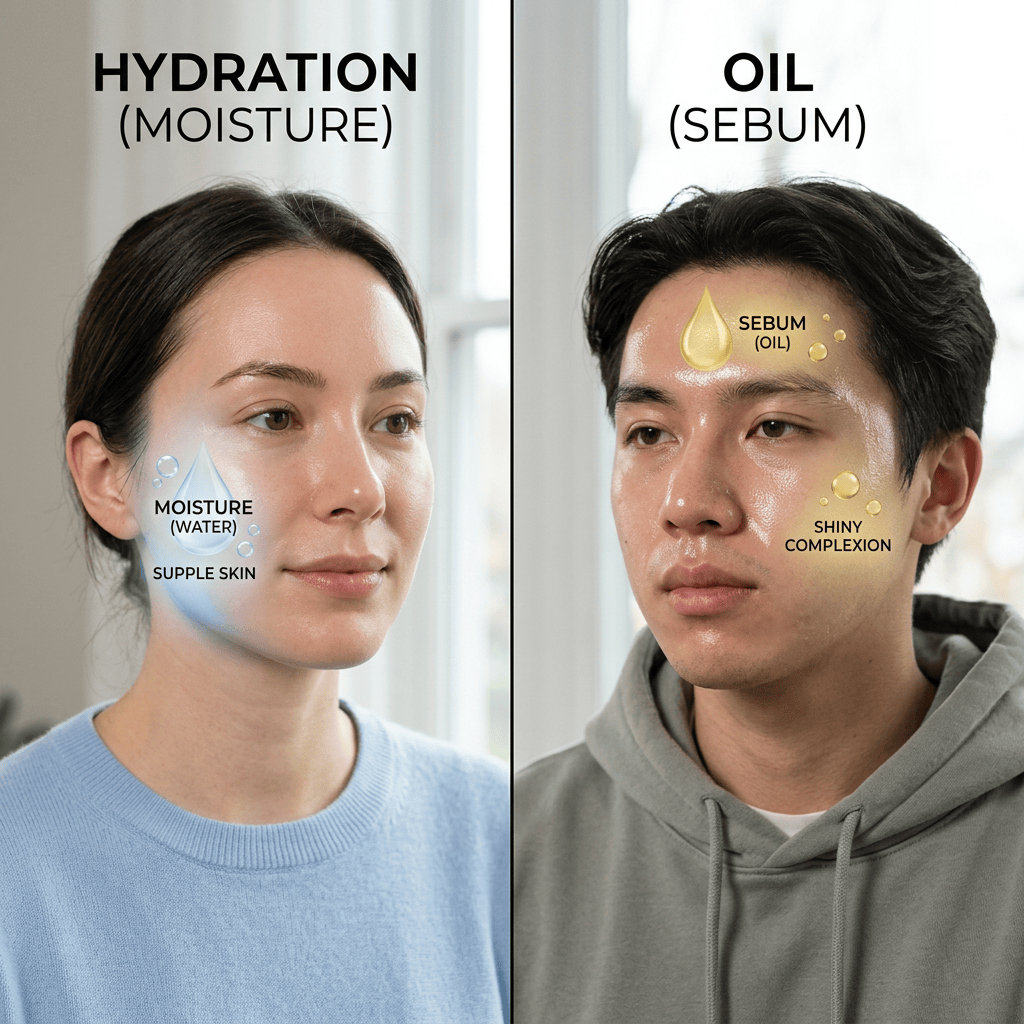
Hydration and oil are often confused but they play very different roles in skin health. Hydration refers to the skin’s water content — the moisture that keeps your complexion plump, bouncy and comfortable. When your skin is well‑hydrated, fine lines look softer, makeup sits smoothly and your barrier functions properly. Ingredients like hyaluronic acid, glycerin, aloe and urea attract and hold water in the skin, improving overall moisture levels.

Oil or sebum, is produced naturally by the sebaceous glands. Its job is to protect the skin, prevent moisture loss, and keep the barrier flexible. Sebum is not the same as hydration; you can have oily skin that’s dehydrated or dry skin that still needs help retaining water. Oils and oil‑based moisturizers help lock hydration in but they don’t replace water.
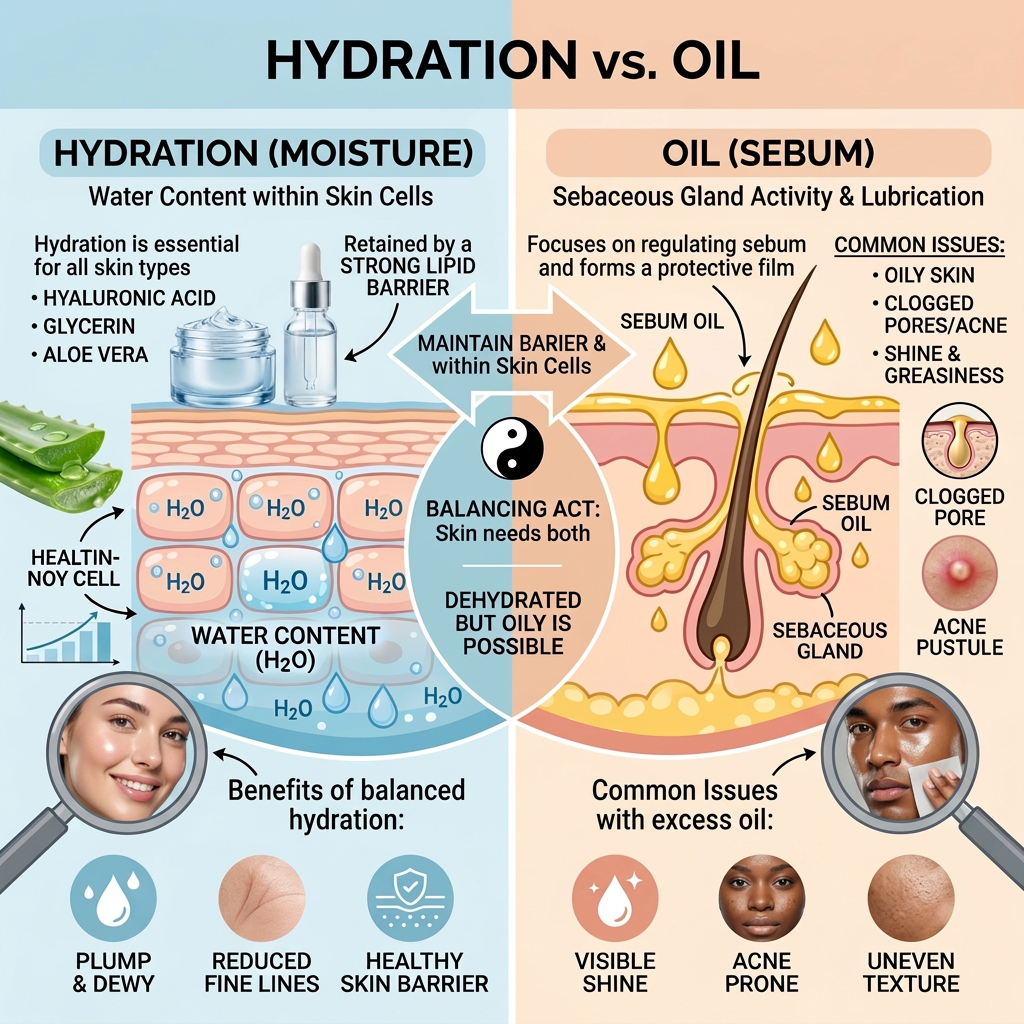
Split portrait labeled hydration moisture and oil sebum, comparing supple and shiny skin
A split portrait contrasts hydrated, supple skin with an oilier, shinier complexion.
Infographic comparing skin hydration, oil, benefits, and common skincare issues
This infographic explains how skin hydration and oil work together to support a healthy barrier.

Understanding the difference is key to choosing the right products.

  • If your skin feels tight, dull or papery, you likely need hydration.
  • If your skin feels rough, flaky or struggles to hold moisture, you may need oil or richer emollients.
  • If your skin is shiny but still feels thirsty underneath, you’re dealing with dehydrated oily skin — a very common combination.
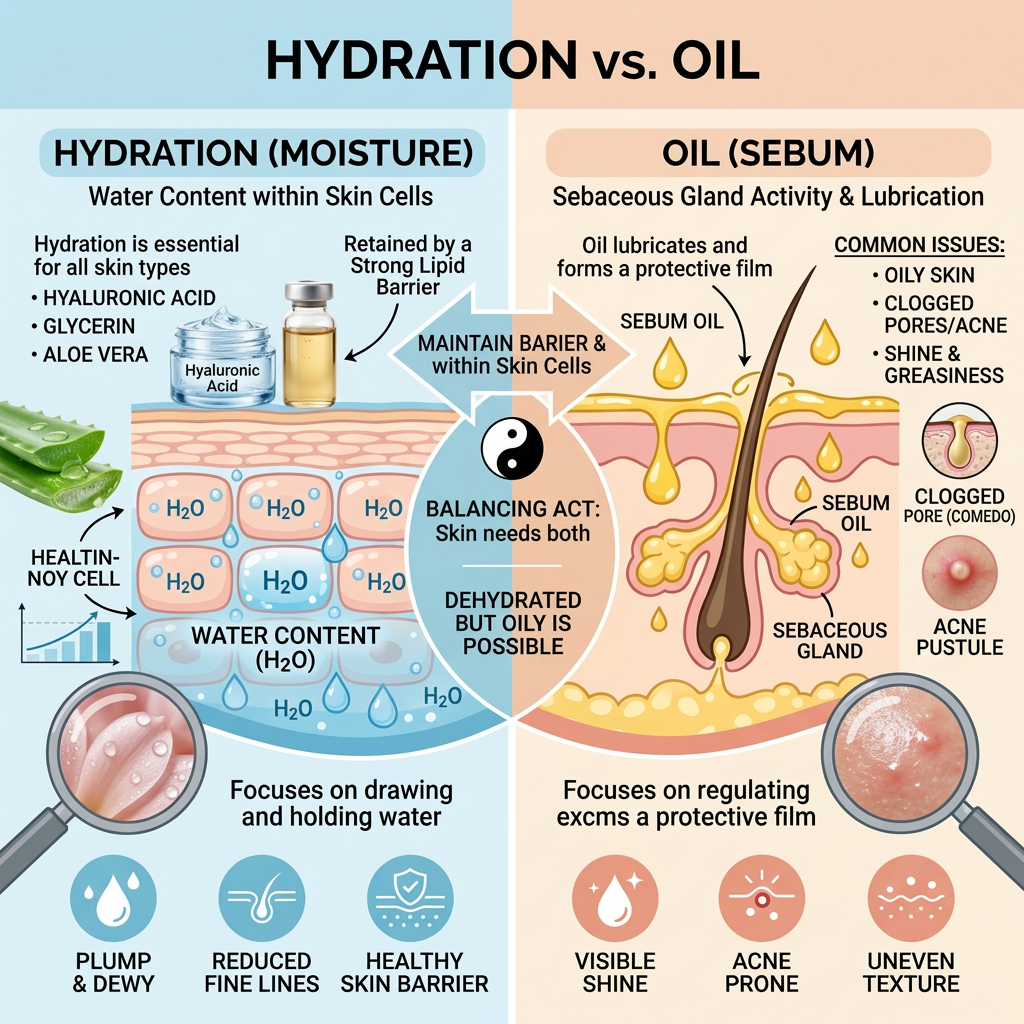
Infographic comparing skin hydration and oil, including benefits, common issues, and skin balance.
This split infographic explains how skin hydration and oil work together to support a healthy barrier.

Healthy skin needs both: water to hydrate and oil to seal that hydration in. When these two elements are balanced, your complexion looks smoother, brighter and more resilient — the foundation of any effective skincare routine.

I’m Stacey Hobbs, thanks for reading Face by Stace! Until next time.
do you feel fabulous today?
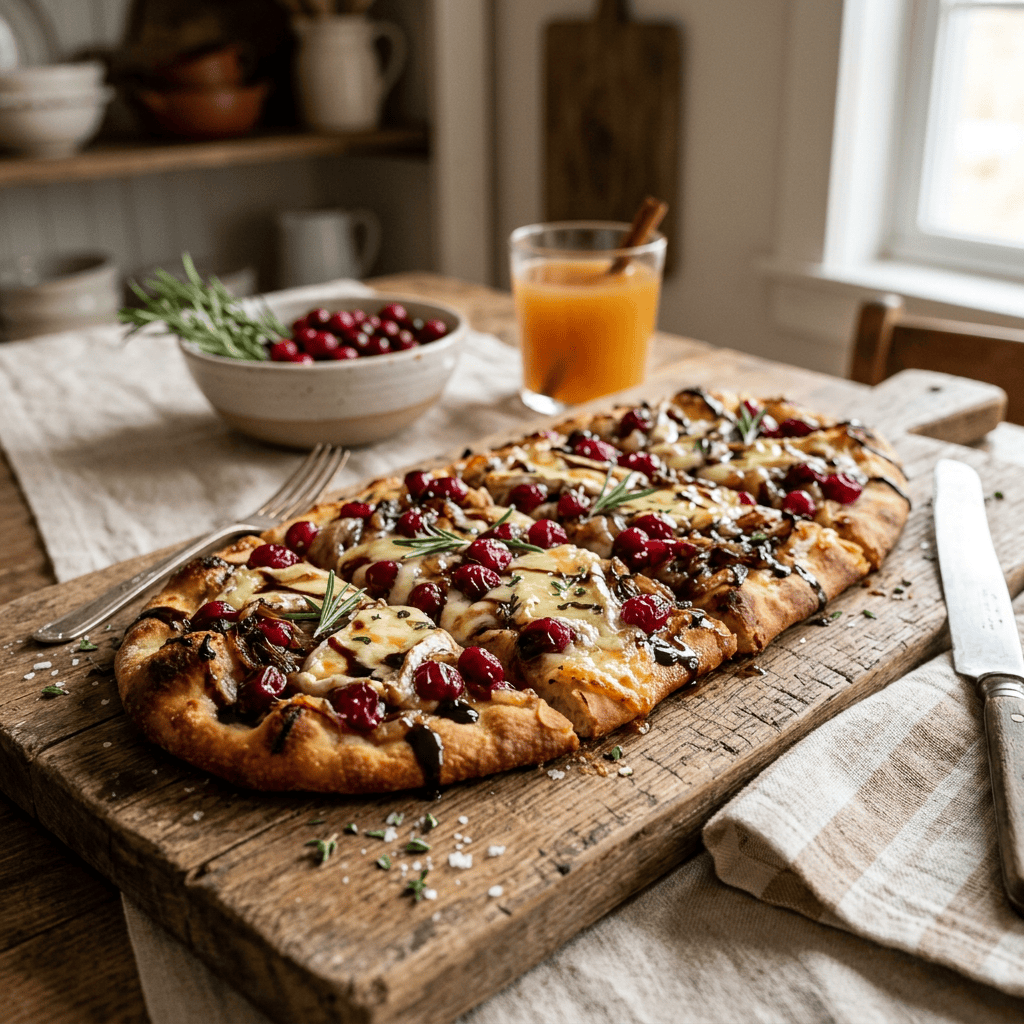
Jillian Harris Inspired: Cranberry, Brie & Caramelized Shallot Flatbread

This Cranberry, Brie & Caramelized Shallot Flatbread captures that signature Jillian Harris balance of cozy comfort and effortless elegance. The base is simple — a store‑bought naan or flatbread brushed with olive oil — but the toppings turn it into something truly special. Sweet, golden caramelized shallots melt into creamy brie, while fresh cranberries roasted with maple syrup add a bright, tart pop that cuts through the richness.

As the flatbread bakes, the brie softens into a glossy, indulgent layer and the cranberries burst just enough to release their ruby colour. A final sprinkle of fresh thyme and flaky salt brings everything together with a fragrant, savoury finish.

It’s festive without being fussy, perfect for holiday hosting, cozy nights in, or a chic appetizer that looks beautifully styled with minimal effort — exactly the kind of approachable luxury Jillian is known for.

Rustic flatbread topped with cheese, cranberries, onions, and rosemary
A rustic flatbread topped with melted cheese, cranberries, caramelized onions, and rosemary welcomes the holiday table.

Servings: 4
Prep Time: 20 minutes
Cook Time: 15 minutes

Category: Flatbread
Style: Cozy, feminine, holiday‑chic Jillian vibes

Ingredients

  • 1 store‑bought naan or flatbread
  • 1 cup fresh cranberries
  • 2 tbsp maple syrup
  • 2 shallots, thinly sliced
  • 1 tbsp butter
  • 100 g brie, sliced
  • 1 tsp fresh thyme leaves
  • 1 tbsp olive oil
  • Pinch of flaky salt

Instructions

  1. Preheat oven to 425°F (220°C).
  2. In a small pan, melt butter and sauté shallots over medium heat until golden and soft (8–10 minutes).
  3. In a separate bowl, toss cranberries with maple syrup.
  4. Brush flatbread with olive oil.
  5. Layer caramelized shallots, brie slices, and maple cranberries.
  6. Bake 12–15 minutes until brie melts and edges crisp.
  7. Finish with fresh thyme and flaky salt.

Storage

Best enjoyed fresh. Store leftovers in an airtight container for 1 day; reheat at 350°F for 5–7 minutes.

Substitutions

  • Brie → Camembert or goat cheese
  • Maple syrup → Honey
  • Shallots → Sweet onion

Enjoy!

I’m Stacey Hobbs, thanks for reading Face by Stace! Until next time.
do you feel fabulous today?

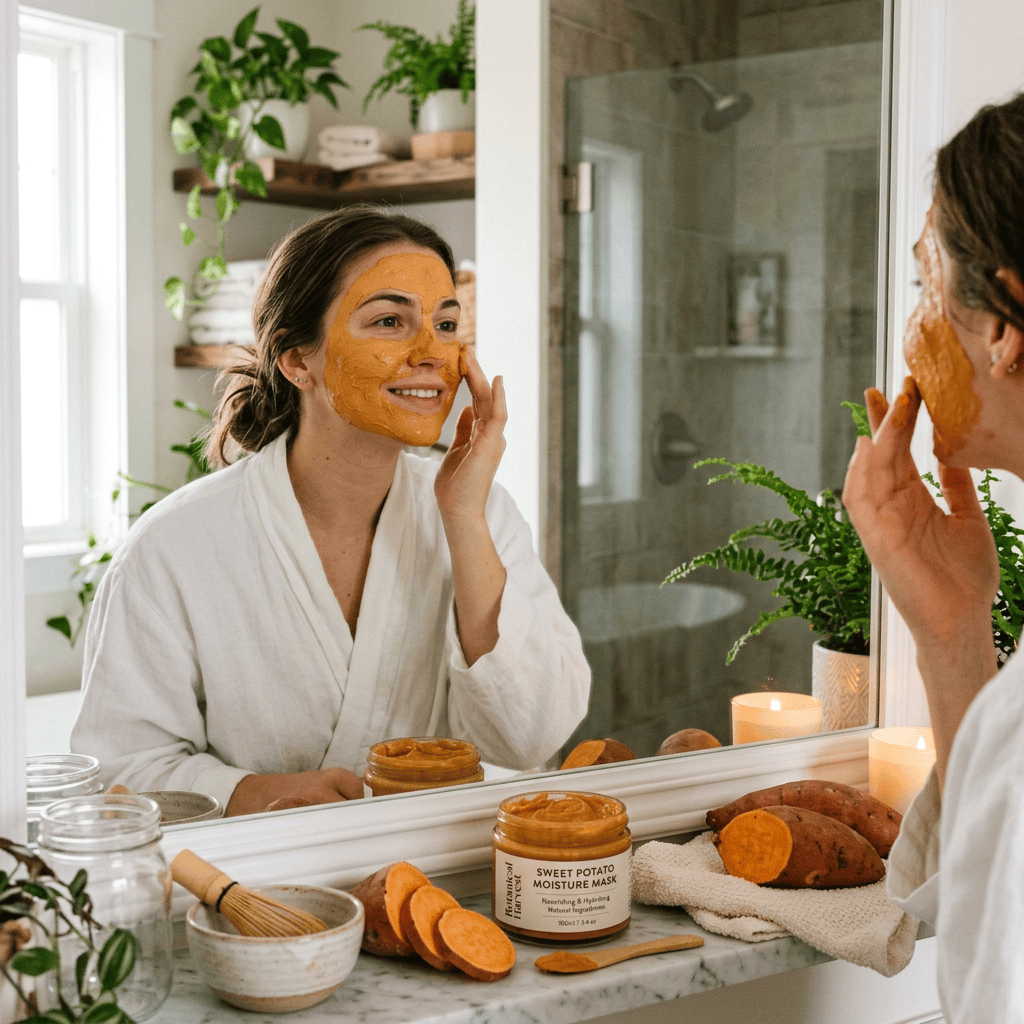
Sweet Potato Moisture Mask

A creamy, ultra‑hydrating mask for dry, tight Autumn skin.

Woman applying sweet potato moisture mask beside jar labeled Sweet Potato Moisture Mask
A woman applies a sweet potato moisture mask during a relaxing at-home skincare routine.

Ingredients

  • 2 tbsp mashed sweet potato
  • 1 tbsp yogurt
  • 1 tsp honey
  • ½ tsp olive oil

Instructions

  1. Blend sweet potato until silky.
  2. Add yogurt, honey, and olive oil.
  3. Apply for 10–15 minutes.
  4. Rinse with warm water.

Storage

Refrigerate 3 days.

Substitution

Sweet potato → carrot (if requested)
Olive oil → avocado oil
Yogurt → coconut cream

Beauty Benefits

Sweet potato is rich in beta‑carotene, vitamin B6, and hydrating starches, helping restore softness and elasticity. Yogurt adds gentle exfoliation. Honey locks in moisture. Olive oil provides deep nourishment.

I’m Stacey Hobbs, thanks for reading Face by Stace! Until next time.
do you feel fabulous today?
Renaissance Beauty: Hair Bleaching Rituals

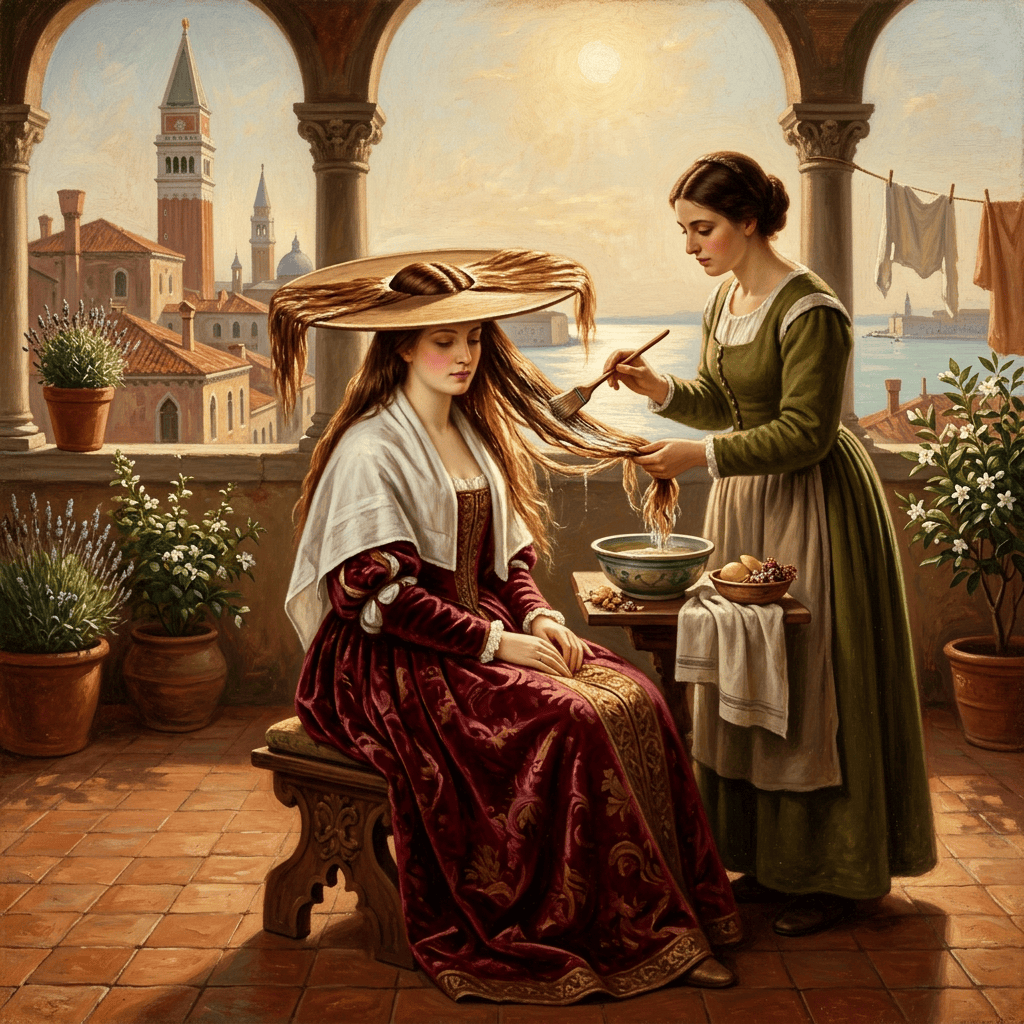
In Renaissance Europe, beauty was an art form and hair played a central role in expressing refinement, status, and femininity. Pale, golden hair became the era’s ideal, inspired by classical notions of purity and by the ethereal blondes painted by Botticelli, Titian, and Veronese. Achieving this coveted shade required elaborate hair‑bleaching rituals that blended vanity, ingenuity and a touch of danger.

Women created bleaching mixtures using lemon juice, saffron, alum, white wine, and even lye‑based pastes. These concoctions were applied generously to the hair, which was then combed through to ensure even saturation. The process didn’t stop there — sunlight was essential. Women sat outdoors for hours wearing wide‑brimmed bleaching hats with the crown cut out, allowing the sun to hit the hair while shielding the face from tanning. Fair skin and fair hair had to be preserved together.

The sun activated the citrus and herbal compounds, gradually lifting colour and creating the soft, golden tones associated with Renaissance beauty. The results were admired, but the methods were harsh. Repeated bleaching left hair dry, fragile, and prone to breakage — a sacrifice many women willingly made to embody the era’s aesthetic ideals.

Despite its risks, hair bleaching symbolized elegance, youth, and cultural sophistication. It reflected a period when beauty was intertwined with art, symbolism, and meticulous ritual — proving that the pursuit of the “ideal look” has always been both creative and complex.

I’m Stacey Hobbs, thanks for reading Face by Stace! Until next time.
do you feel fabulous today?
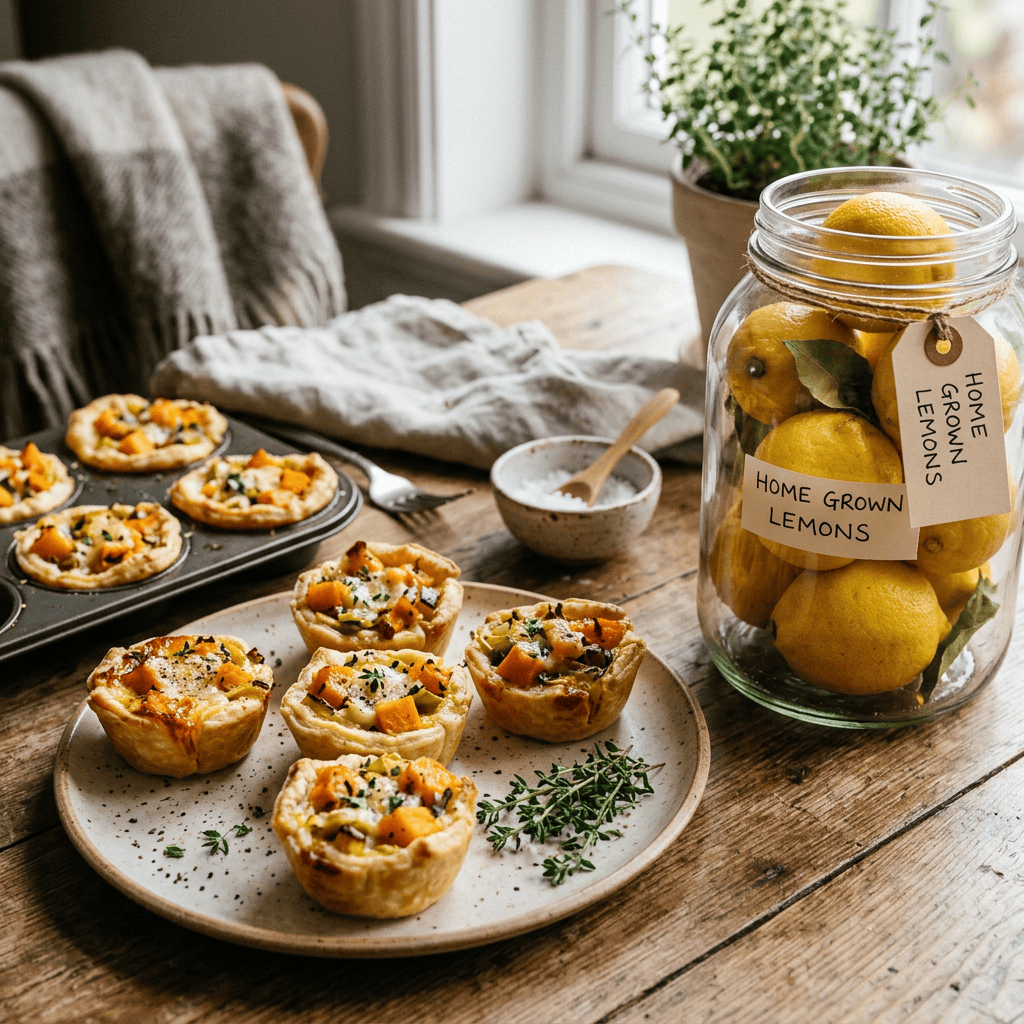
Jar of Lemons Inspired: Butternut Squash & Leek Mini Quiches (Light + Cozy)

These mini quiches are wholesome, comforting, and perfectly portioned. Roasted squash adds natural sweetness, while sautéed leeks bring gentle warmth. The texture stays light and silky — a signature Jar of Lemons balance of cozy and clean. Ideal for brunch, meal prep or a simple Autumn snack.

Savory tartlets on a plate beside a jar labeled HOME GROWN LEMONS
Golden savory tartlets and home-grown lemons create a warm, inviting kitchen-table spread.

Servings: 12 mini quiches
Prep Time: 20 minutes
Cook Time: 22 minutes

Ingredients

  • 1 refrigerated pie crust
  • 1½ cups roasted butternut squash
  • 1 cup sautéed leeks
  • ½ cup shredded mozzarella
  • 3 eggs
  • ¾ cup milk (dairy or almond)
  • ½ tsp salt
  • ¼ tsp pepper
  • 1 tbsp olive oil

Instructions

  1. Preheat oven to 375°F (190°C).
  2. Sauté leeks in olive oil until soft.
  3. Cut pie crust into circles and press into a mini muffin tin.
  4. Divide squash, leeks, and mozzarella among the cups.
  5. Whisk eggs, milk, salt, and pepper.
  6. Pour egg mixture into each cup.
  7. Bake 20–22 minutes until set.

Storage

Refrigerate up to 3 days. Reheat at 325°F for 6 minutes.

Substitutions

  • Mozzarella → Goat cheese
  • Butternut squash → Sweet potato
  • Milk → Oat milk

I’m Stacey Hobbs, thanks for reading Face by Stace! Until next time.
do you feel fabulous today?
What Causes Dehydrated Skin

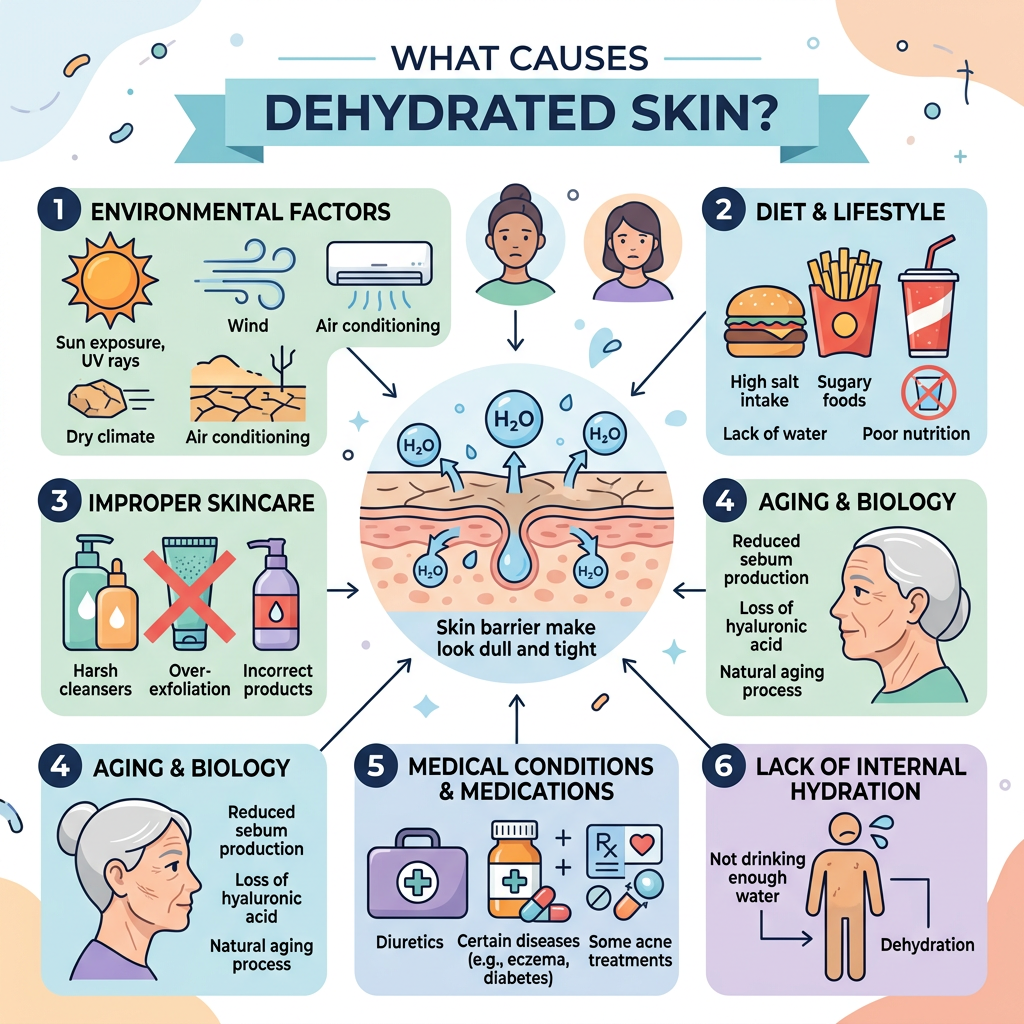
Dehydrated skin is caused by a lack of water, not a lack of oil — and it can happen to any skin type, including oily or combination. The most common causes are environmental, lifestyle‑related or linked to your skincare routine.

Infographic listing six causes of dehydrated skin, including environmental factors, diet, skincare, aging, medical conditions, and insufficient water intake.
This infographic explains six environmental, lifestyle, skincare, biological, medical, and hydration-related causes of dehydrated skin.

Environmental factors are the biggest culprits. Cold weather, indoor heating, dry air and wind all pull moisture out of the skin. Even hot showers can strip water from the surface, leaving your complexion tight and papery.

Lifestyle habits also play a role. Not drinking enough water, high caffeine intake, stress and lack of sleep can all reduce the skin’s ability to hold moisture. Air travel is another major trigger — cabin air is extremely dry, which is why skin often feels tight after a flight.

Skincare routines can un-intentionally cause dehydration. Over‑cleansing, harsh exfoliants, strong acne treatments or skipping moisturizers can weaken the barrier, making it harder for the skin to retain water. Even oily skin can become dehydrated if the barrier is compromised — it may produce more oil to compensate, creating shine on the surface but dryness underneath.

Makeup can contribute too. Long‑wear formulas, mattifying powders, and alcohol‑based products can pull moisture from the skin throughout the day.

Smiling woman reading an open book beside a mug of coffee
A smiling woman enjoys a book and coffee in a warmly lit home.

In short: dehydrated skin happens when the skin loses water faster than it can replace it. Replenishing hydration and protecting the barrier are the keys to restoring a plump, comfortable, healthy complexion.

I’m Stacey Hobbs, thanks for reading Face by Stace! Until next time.
do you feel fabulous today?