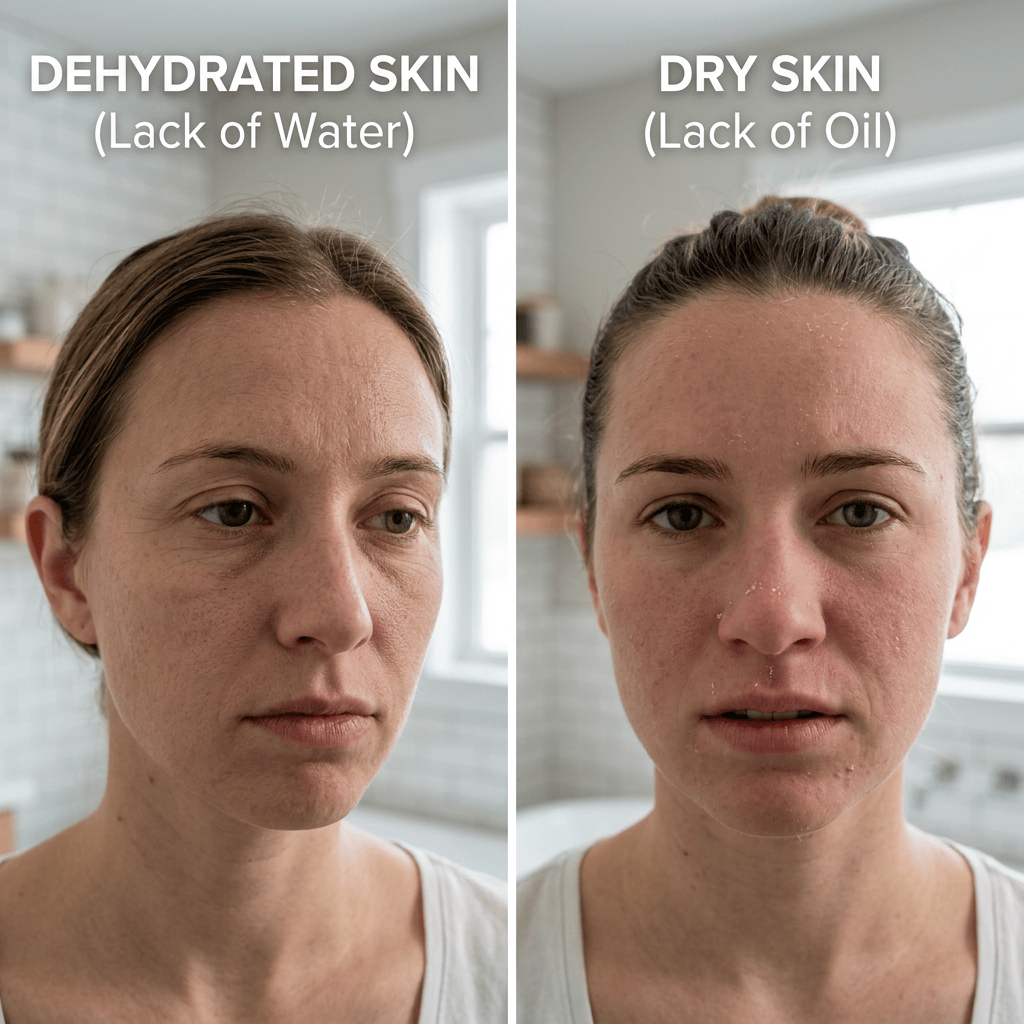
Dehydrated Skin vs Dry Skin

Although they’re often confused, dehydrated skin and dry skin are two completely different conditions — and understanding the difference is essential for choosing the right products.

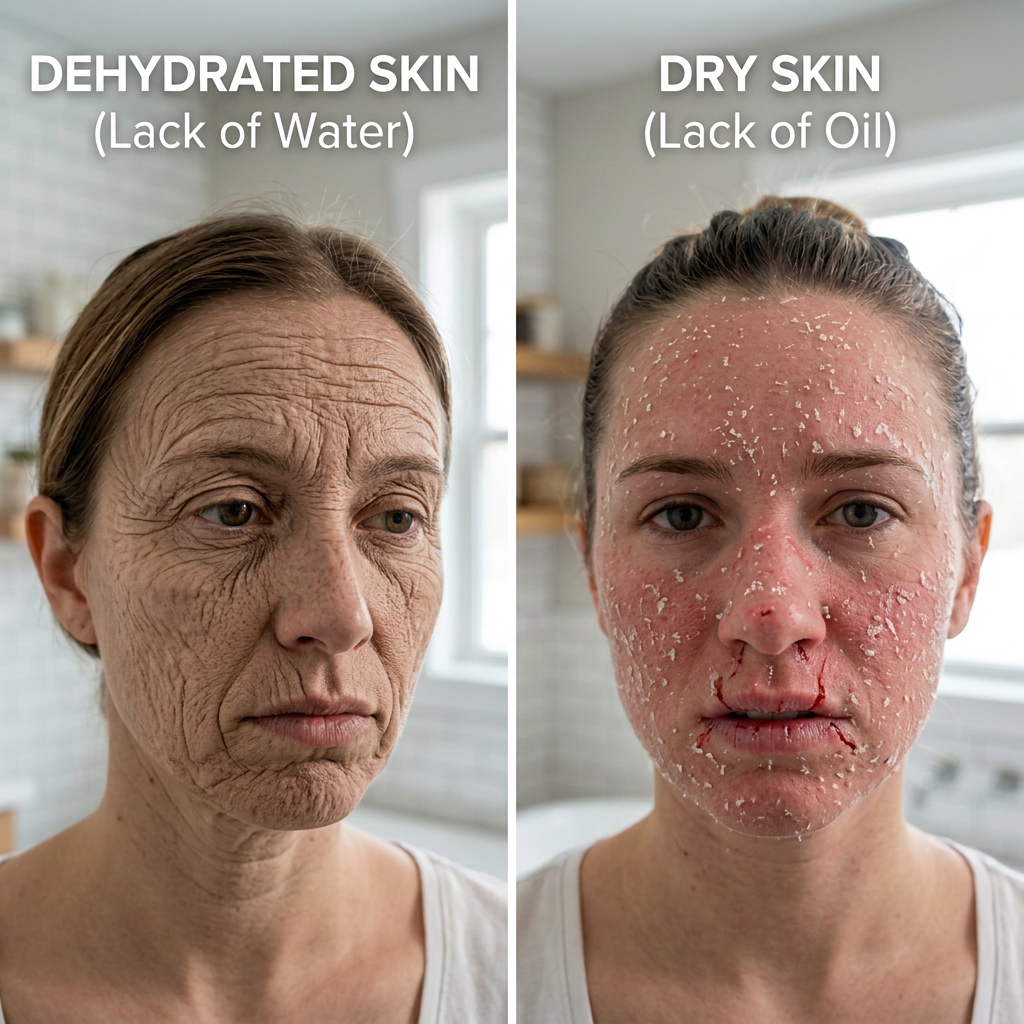
DEHYDRATED SKIN (Lack of Water) compared with DRY SKIN (Lack of Oil)
A side-by-side comparison distinguishes water-depleted dehydrated skin from oil-deficient dry skin.
DEHYDRATED SKIN (Lack of Water) compared with DRY SKIN (Lack of Oil)
A side-by-side comparison distinguishes water-depleted dehydrated skin from oil-deficient dry skin.

Let’s break it down, as we continue with Dehydrated Skin vs Dry Skin.

Dehydrated skin lacks water. It’s a temporary condition that can affect any skin type, including oily or combination. When the skin loses moisture, it becomes tight, dull, and easily irritated. You may notice fine lines looking more pronounced, makeup settling into creases, or a mix of oiliness and dryness at the same time. Dehydration is usually caused by environmental factors, lifestyle habits, or harsh skincare routines. The fix: add water back into the skin with hydrating ingredients, then seal it in with a moisturizer.

Dry skin, on the other hand, lacks oil. This is a skin type, not a condition. Dry skin produces less sebum, which means it struggles to stay soft, flexible, and protected. It often feels rough or flaky, especially in colder months, and may require richer creams, oils, and barrier‑supporting ingredients to stay comfortable. Hydration helps, but without enough oil, moisture evaporates quickly.

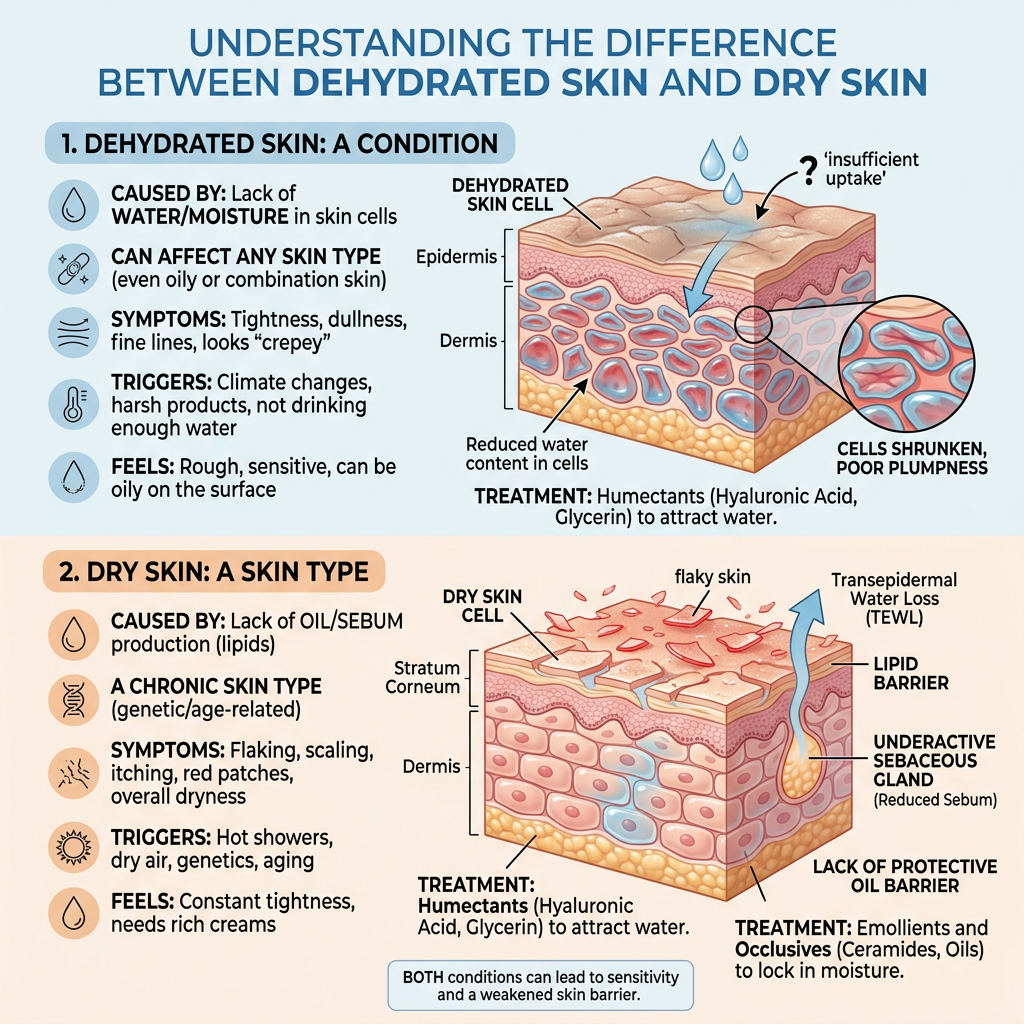
Infographic comparing dehydrated skin, caused by water loss, with dry skin, caused by reduced oil production.
This infographic compares the causes, symptoms, triggers, and treatments of dehydrated and dry skin.

The easiest way to remember it:

  • Dehydrated = needs water
  • Dry = needs oil

Both can happen at the same time, and both benefit from a balanced routine that restores moisture while supporting the skin’s natural barrier.

I’m Stacey Hobbs, thanks for reading Face by Stace! Until next time.
do you feel fabulous today?

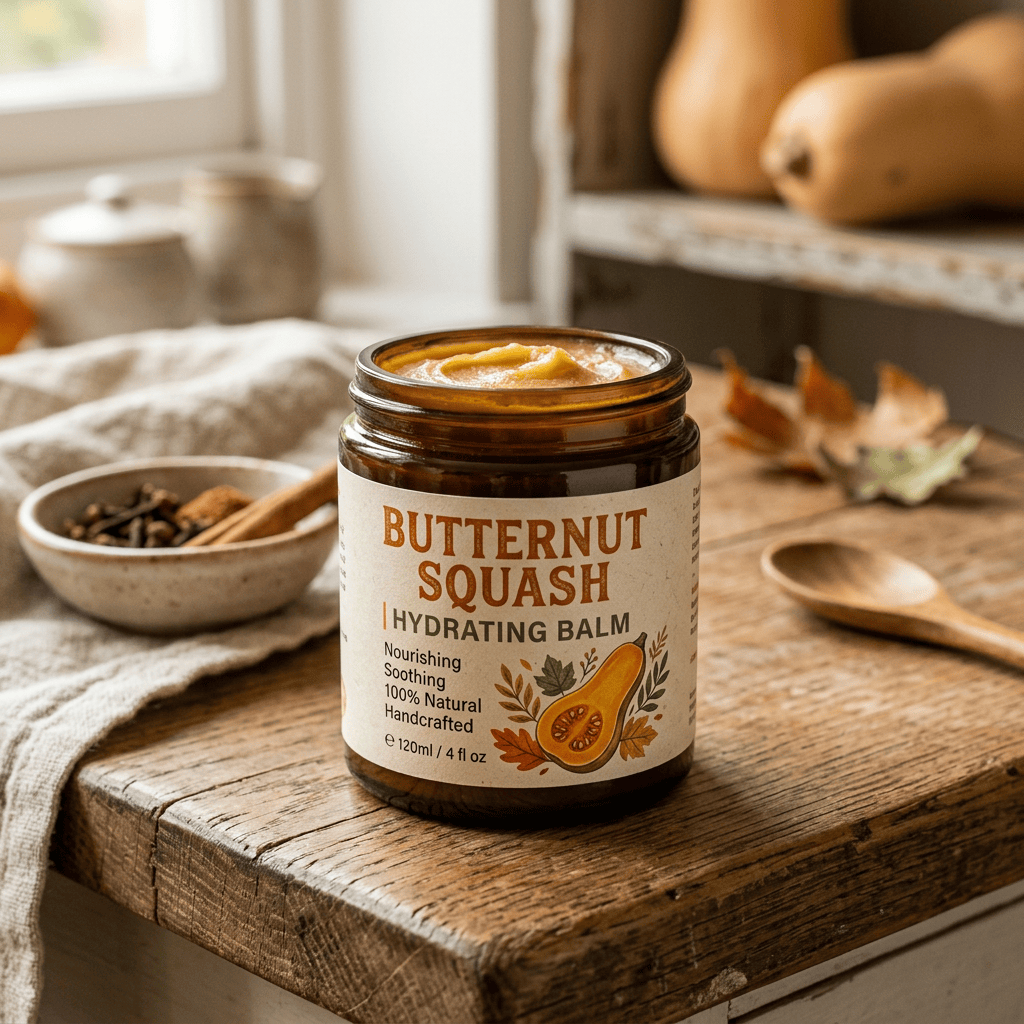
Butternut Squash Hydrating Balm

A deeply moisturizing balm that softens dry cheeks, elbows and cuticles.

Butternut squash hydrating balm

Ingredients

Instructions

  1. Blend squash purée until silky.
  2. Melt shea butter gently and stir in jojoba and vitamin E.
  3. Combine with squash and whisk until creamy.
  4. Chill 20 minutes to thicken.

Storage

Refrigerate 4–5 days. Stir before each use.

Substitution

Butternut squash → pumpkin Jojoba → sweet almond oil Shea butter → cocoa butter

Beauty Benefits

Butternut squash contains vitamin A, C, and hydrating polysaccharides that help reinforce the skin barrier. Shea butter provides occlusive protection against Autumn wind and dryness. Jojoba mimics the skin’s natural oils, making this balm ideal for dry, flaky areas.

I’m Stacey Hobbs, thanks for reading Face by Stace! Until next time.
do you feel fabulous today?

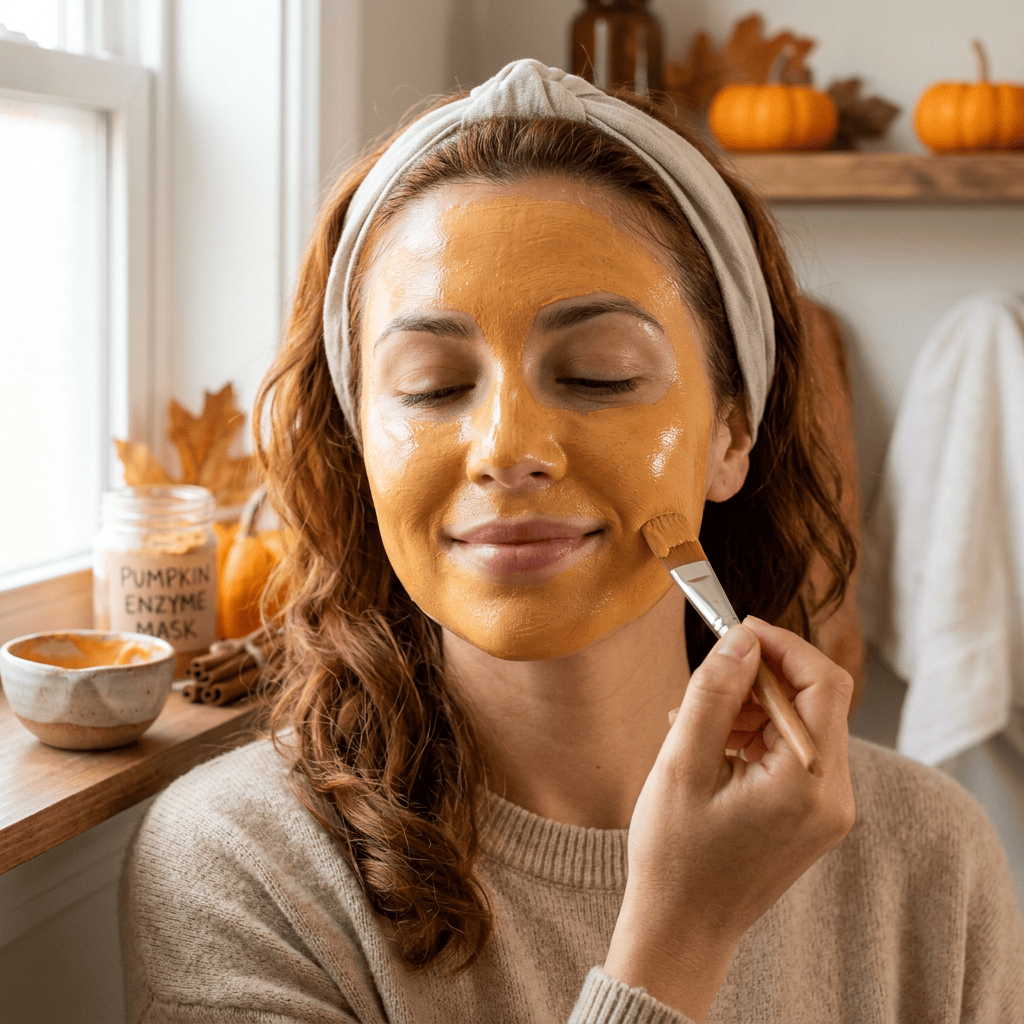
Pumpkin Radiance Enzyme Mask

A gentle, glow‑forward mask using pumpkin’s natural fruit enzymes and beta‑carotene to brighten dull Autumn skin.

Ingredients

  • 2 tbsp pumpkin purée (plain, unsweetened)
  • 1 tsp honey
  • 1 tsp yogurt (or coconut yogurt)
  • ½ tsp turmeric (optional for brightening)

Instructions

  1. Mix pumpkin, honey, yogurt, and turmeric until smooth.
  2. Apply a thin layer to clean skin.
  3. Leave on 10–12 minutes.
  4. Rinse with warm water and follow with moisturizer.

Storage

Refrigerate up to 3 days in a sealed glass container.

Substitution

Pumpkin → butternut squash purée

Honey → agave

Yogurt → aloe gel for sensitive skin

Beauty Benefits

Pumpkin is rich in natural AHAs, enzymes, and beta‑carotene, helping dissolve dead skin cells for a soft, refined texture. Honey draws moisture into the skin while providing antibacterial support. Yogurt’s lactic acid adds gentle resurfacing, making this mask ideal for dull, uneven Autumn skin.

I’m Stacey Hobbs, thanks for reading Face by Stace! Until next time.
do you feel fabulous today?

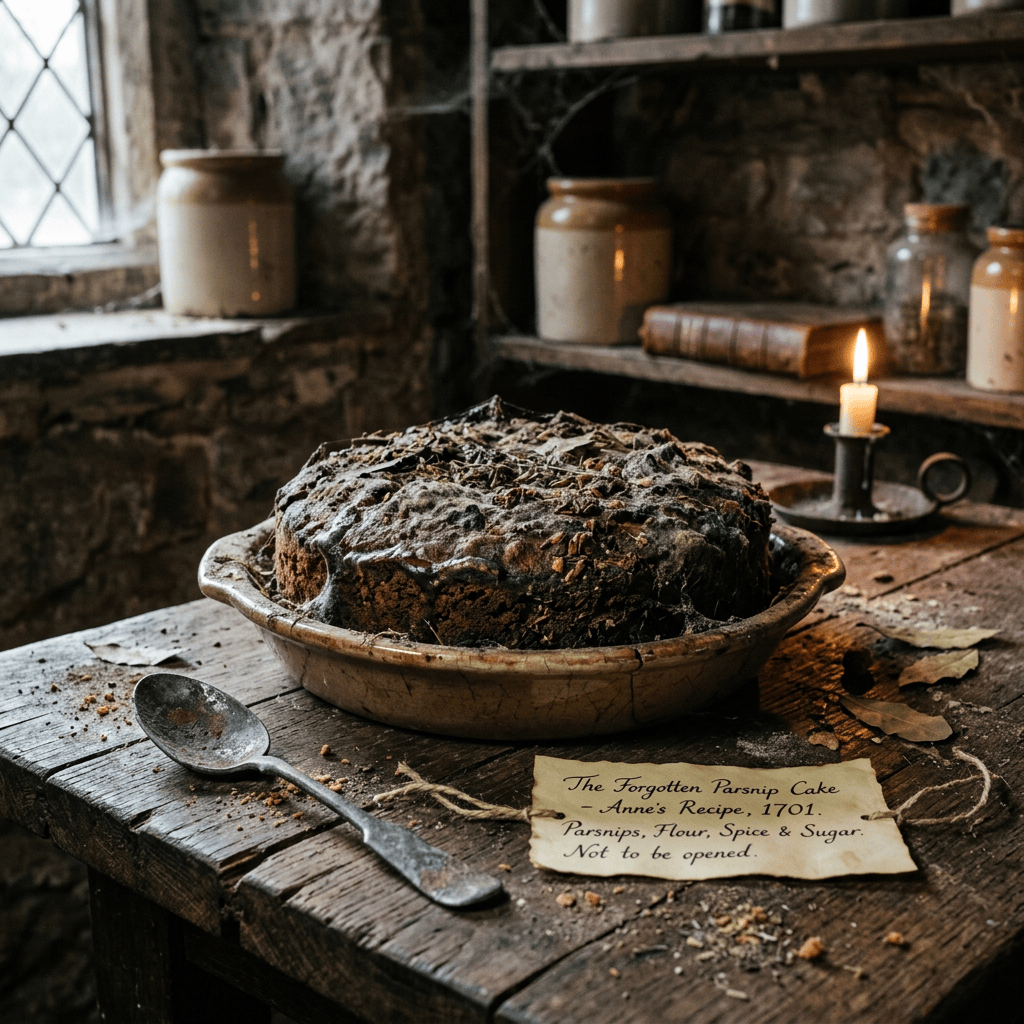
The Forgotten Parsnip Cake of 1701

Long before the potato conquered European kitchens, the parsnip reigned as Winter’s staple. It was sweet, dependable, and surprisingly elegant — a root vegetable that carried households through cold seasons when little else grew. By the early 1700s, English ladies were still boiling, mashing and frying parsnips into tender cakes, recording their methods in handwritten recipe books meant to be passed down through generations.

One such recipe, written in 1701 by Margarett Greene, captures the era’s rustic ingenuity. Her Parsnip Cakes to Fry begin with boiled parsnips pressed through a sieve while still hot. She enriches the mash with cream, milk, egg yolks, and a touch of flour, then seasons it with sugar, nutmeg, and a splash of sack — a fortified wine beloved in early modern kitchens. The mixture is fried in hot butter until golden, then served with more butter, sugar, and sack. It’s simple, comforting, and unmistakably luxurious for its time.

What makes this recipe remarkable today is not just its age, but its survival. Most everyday cooking from the 17th century was never formally documented. Yet here, in a modest household manuscript, we find a dish that bridges centuries — a reminder of how women cooked, improvised, and preserved flavour long before modern cookbooks existed.

By the 20th century, parsnips had faded from culinary fashion, overshadowed by the rise of the potato and Hollywood’s obsession with “beauty vegetables” like cucumbers and lemons. But this 1701 recipe offers a chance to revive a forgotten winter classic — and reconnect with the quiet elegance of early kitchen history.

Documented 1701 Parsnip Cake Recipe (Exact Transcription)

Source: Margarett Greene’s Recipe Book, 1701

Archive: Clark Library Collections (f MS.1980.004)

Verified transcription: Cooking in the Archives

Parsnip Cakes to Fry. Take Parsnips Boyle them tender peil them & rub them through a Seive whilst thay are hott. then take halfe a pinte of Creame & as much new milke, the yealkes of 6 Eggs & the whites of 3 make this as thick as a pudding with a Spoonefull of Flower & the parsnips. Season it with Salt Sugar, & Beaten Nutmeg & Sack to your tast. froy them with Boyleing hott Butter. Serve them with Butter Sack & Sugar.

This is the exact wording from the manuscript — spelling, punctuation, and phrasing preserved.

Contextual Manuscript Information

The 1701 recipe appears in a handwritten English household cookbook, now held at the Clark Library. It is part of a larger collection of culinary and medicinal recipes from the early 18th century.

The 1700 recipe comes from a digitized Folger Shakespeare Library manuscript, part of their early modern recipe book collection.

Both manuscripts are part of the broader category of 18th‑century English recipe books, which often contain hundreds of culinary and medical entries.

In 1700–1701:

  • Recipes were written as short paragraphs
  • They did not separate ingredients
  • They did not list measurements
  • They did not number steps
  • They assumed the cook already knew the basics

So the “ingredients” and “instructions” are embedded inside the paragraph itself — that is the recipe.
Tori Wesszer Inspired: Maple‑Roasted Cranberry & Goat Cheese Flatbread with Rosemary

This Maple‑Roasted Cranberry & Goat Cheese Flatbread with Rosemary captures the cozy, produce‑forward style Tori Wesszer is known for — simple ingredients elevated through thoughtful flavour pairing. The crisp flatbread becomes a warm base for creamy goat cheese, which softens beautifully in the oven. Maple‑roasted cranberries add a bright, tart pop that bursts into glossy ruby tones, balancing the tang of the cheese with gentle sweetness.

Fresh rosemary brings an aromatic lift, giving the flatbread a rustic, autumn feel that’s both comforting and chic. Every bite blends creamy, tart, sweet, and herbaceous notes — a perfect harmony that feels seasonal without being fussy.

It’s an effortless entertaining dish, ideal for holiday gatherings, cozy nights in, or a stylish appetizer that looks beautifully composed with minimal effort. Approachable, nourishing, and quietly elegant — classic Tori energy.

Category: Flatbread
Tone: Cozy, wholesome, West Coast autumn

Servings: 4
Prep Time: 15 minutes
Cook Time: 18 minutes

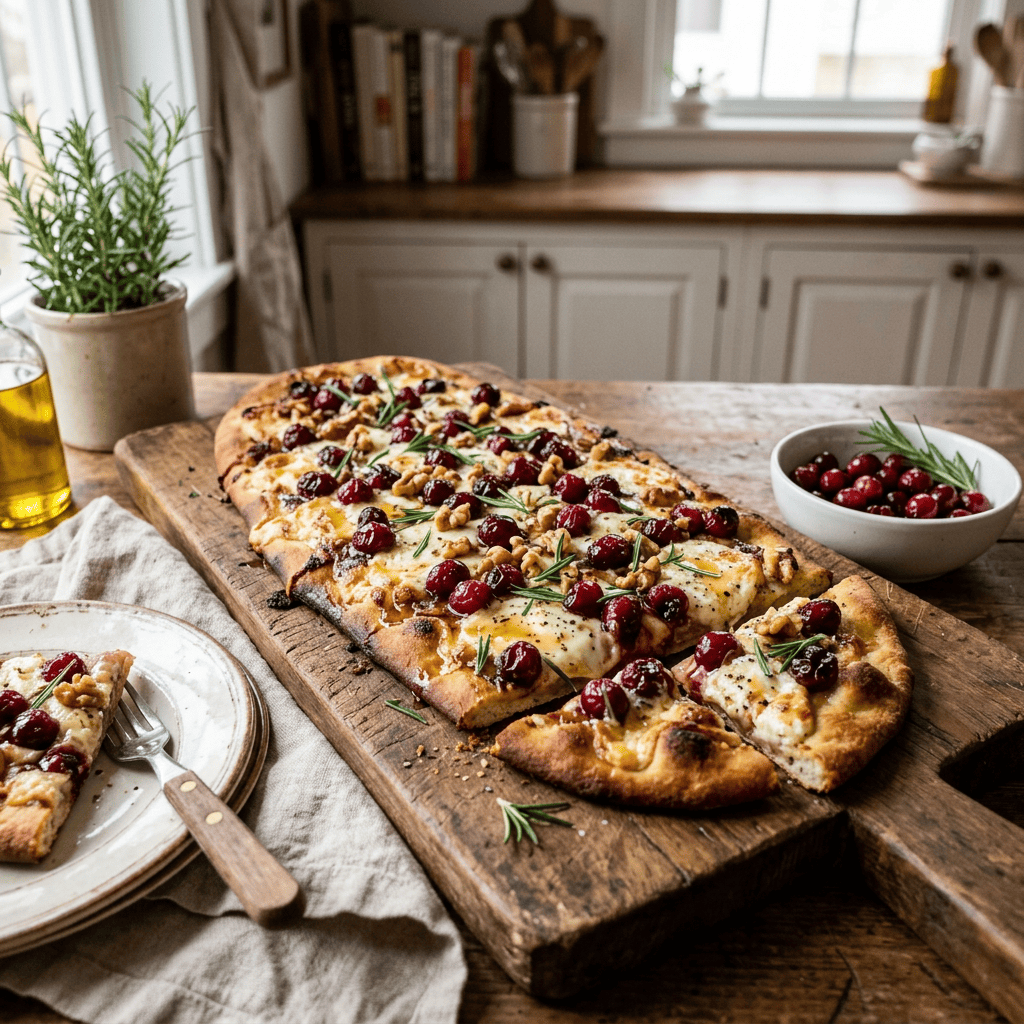
Cranberry, cheese, walnut, and rosemary flatbread on a wooden board
A rustic flatbread topped with cranberries, creamy cheese, walnuts, and rosemary awaits serving.

Ingredients

  • 1 whole‑wheat flatbread or naan
  • 1 cup fresh cranberries
  • 2 tbsp pure maple syrup
  • 1 tbsp olive oil
  • ½ cup soft goat cheese
  • 1 tbsp finely chopped rosemary
  • ¼ cup thinly sliced red onion
  • Pinch of sea salt
  • Fresh cracked pepper

Instructions

  1. Preheat oven to 425°F (220°C).
  2. Toss cranberries with maple syrup and a pinch of salt.
  3. Brush flatbread with olive oil.
  4. Scatter red onion slices over the base.
  5. Add dollops of goat cheese and spoon the maple cranberries on top.
  6. Bake 15–18 minutes until edges crisp and cranberries burst.
  7. Finish with rosemary and cracked pepper.

Storage

Best fresh. Store leftovers in an airtight container for 1 day; reheat at 350°F for 5 minutes.

Substitutions

  • Goat cheese → Feta or ricotta
  • Maple syrup → Honey
  • Red onion → Shallots

Enjoy!

I’m Stacey Hobbs, thanks for reading Face by Stace! Until next time.
do you feel fabulous today?

Cake Mascara, The King of Mascaras Meets Kurlash!

Cake mascara is one of beauty’s earliest lash icons — a product that defined glamour long before tubes, wands, and volumizing formulas took over. In the early 20th century, it was considered the king of mascaras, loved for its precision, longevity and elegant ritual. Women activated the solid cake with a few drops of water, then used a small brush to darken, lengthen and shape their lashes. It was artistry, technique and beauty tradition all in one.

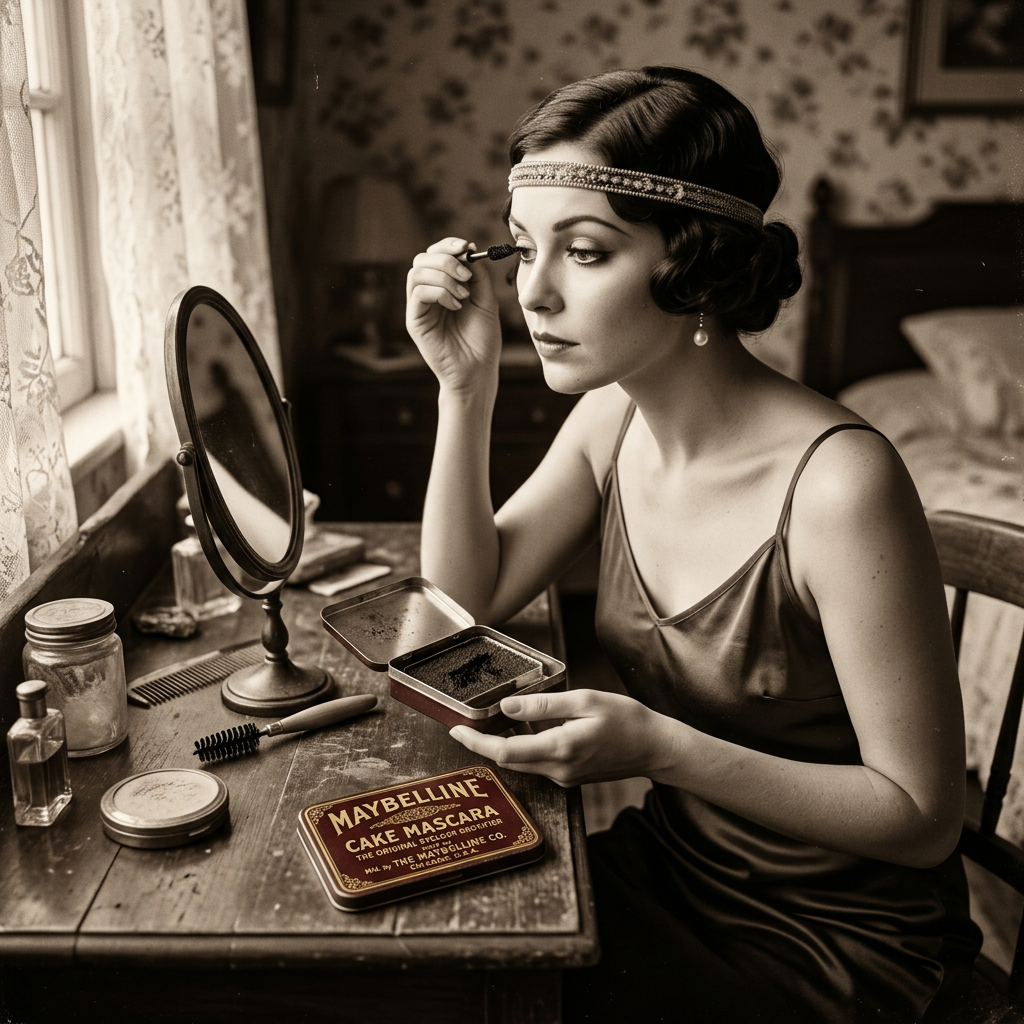
Woman applying mascara beside mirror; tin reads “MAYBELLINE CAKE MASCARA.”
A woman applies mascara beside a mirror while holding a vintage Maybelline cake mascara tin.
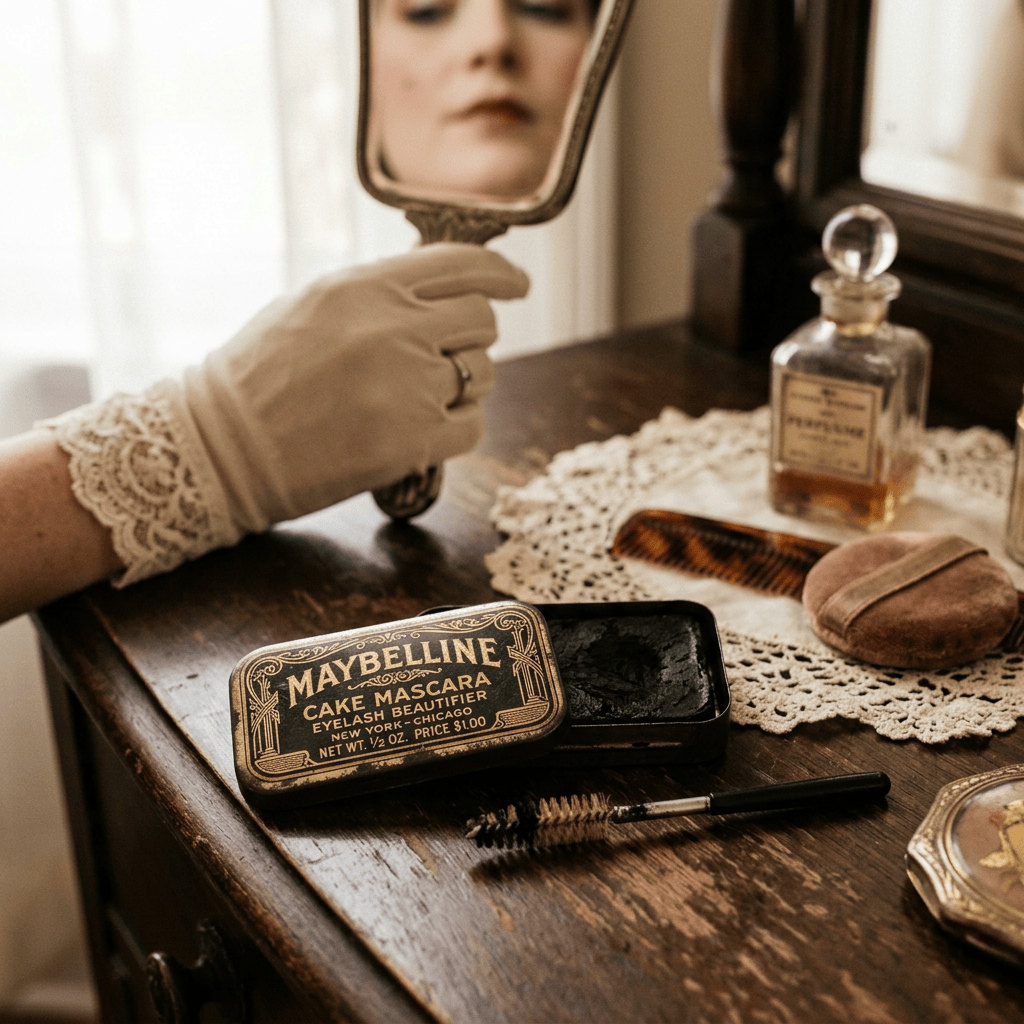
Maybelline Cake Mascara Eyelash Beautifier, New York-Chicago, Net Wt. 1/2 Oz., Price $1.00
A vintage Maybelline cake mascara set rests among classic beauty accessories on a wooden vanity.

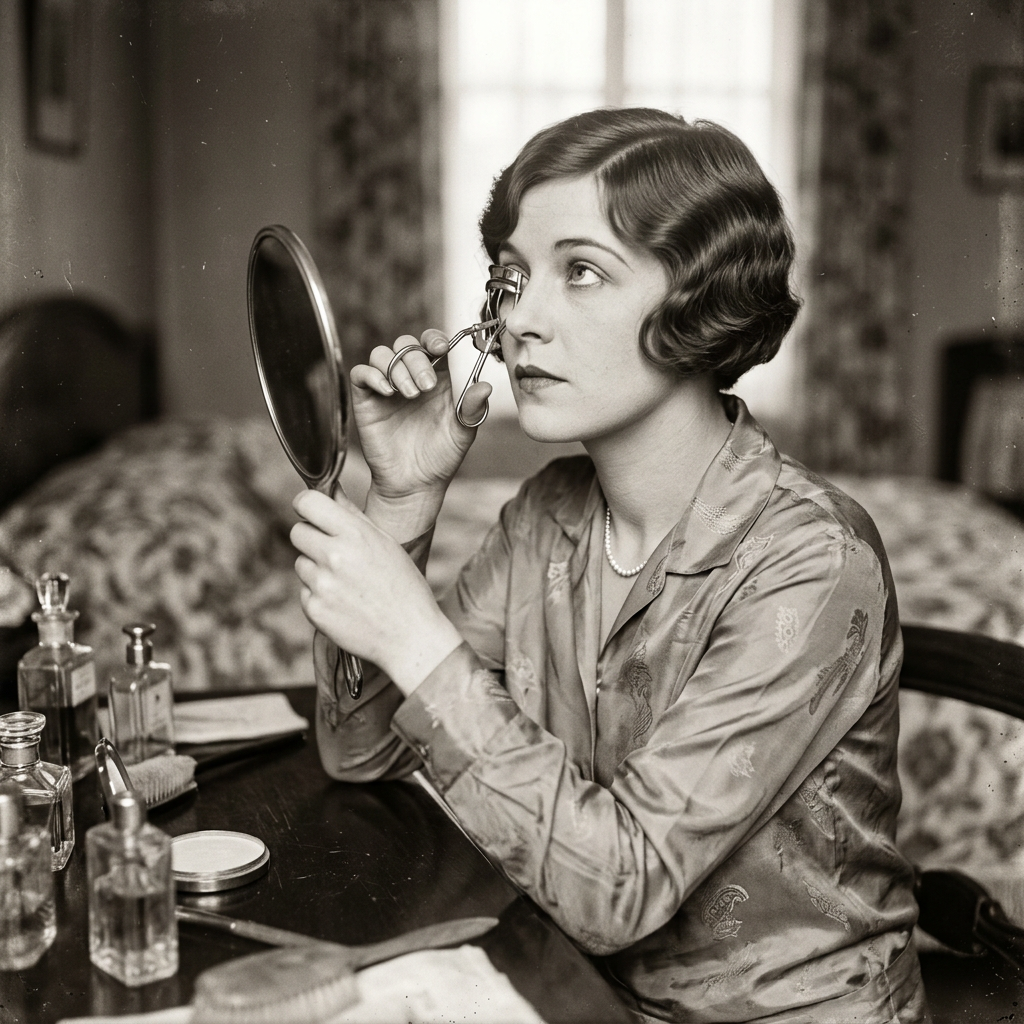
At the same time, another innovation was transforming lash styling: the Kurlash eyelash curler. Invented in the 1920s by the Kurlash Company in Rochester, New York, it was the first device designed specifically to lift and curl the lashes. Its gentle clamp and upward bend created a wide‑eyed look that instantly changed how lashes framed the face.

Woman using a handheld mirror during a vintage beauty routine
A stylish woman carefully applies makeup while examining her reflection in a handheld mirror.

While Max Factor didn’t invent Kurlash, he elevated its impact. In Hollywood, he paired cake mascara with lash‑curling techniques to create expressive, sculpted lashes that stood out under studio lights. The combination of deep pigment from cake mascara and the dramatic lift from Kurlash became a defining feature of early film beauty — a two‑step ritual that added both intensity and shape.

Together, cake mascara and Kurlash set the blueprint for modern lash styling. One provided rich definition; the other delivered height and openness. Their partnership transformed lashes into a true focal point of makeup artistry.

Cake mascara was the king — and Kurlash was the crown that lifted it to cinematic greatness.

I’m Stacey Hobbs, thanks for reading Face by Stace! Until next time.
do you feel fabulous today?