The Origin of Lash‑Brow‑Ine (1915)

In 1915, Tom Lyle Williams created Lash‑Brow‑Ine, a simple yet groundbreaking lash darkener that marked the beginning of modern mascara. The idea came from his sister Mabel, who had been using a homemade mixture of petroleum jelly and coal dust to define her lashes. Williams refined her kitchen‑table beauty trick into a commercial product, packaging it neatly and marketing it to women who wanted darker, more expressive eyes. Lash‑Brow‑Ine wasn’t mascara as we know it today but it was the first step — a small innovation that sparked an entire industry and set the stage for the creation of Maybelline Cake Mascara just two years later.

Woman writing in a notebook at a vintage desk by a window
A woman writes at a carefully arranged desk in a warmly lit vintage interior.

I’m Stacey Hobbs, thanks for reading Face by Stace! Until next time.
do you feel fabulous today?

Alyssa Rivers (The Recipe Critic) Inspired: Cranberry‑Fig Baked Brie Puff Pastry Appetizer

This Cranberry‑Fig Baked Brie Puff Pastry Appetizer is pure holiday indulgence — warm, glossy, and impossible to resist. A wheel of brie is wrapped in buttery puff pastry, turning molten and creamy as it bakes. Fresh cranberries sautéed in honey add a bright, festive pop, while sliced figs bring a soft, jammy sweetness that feels luxurious and seasonal.

As the pastry puffs and turns golden, the brie melts into a rich centre that spills out beautifully once sliced. The combination of tart cranberries, sweet figs, and warm honey creates a balanced, elegant flavour profile that feels right at home on any holiday table. It’s the kind of appetizer that draws a crowd instantly — dramatic, delicious, and effortlessly impressive.

Perfect for Christmas gatherings or any cozy Winter celebration, this baked brie delivers maximum wow‑factor with minimal effort.

Category: Appetizer
Tone: Holiday‑ready, indulgent, crowd‑pleasing

Servings: 8
Prep Time: 15 minutes
Cook Time: 25 minutes

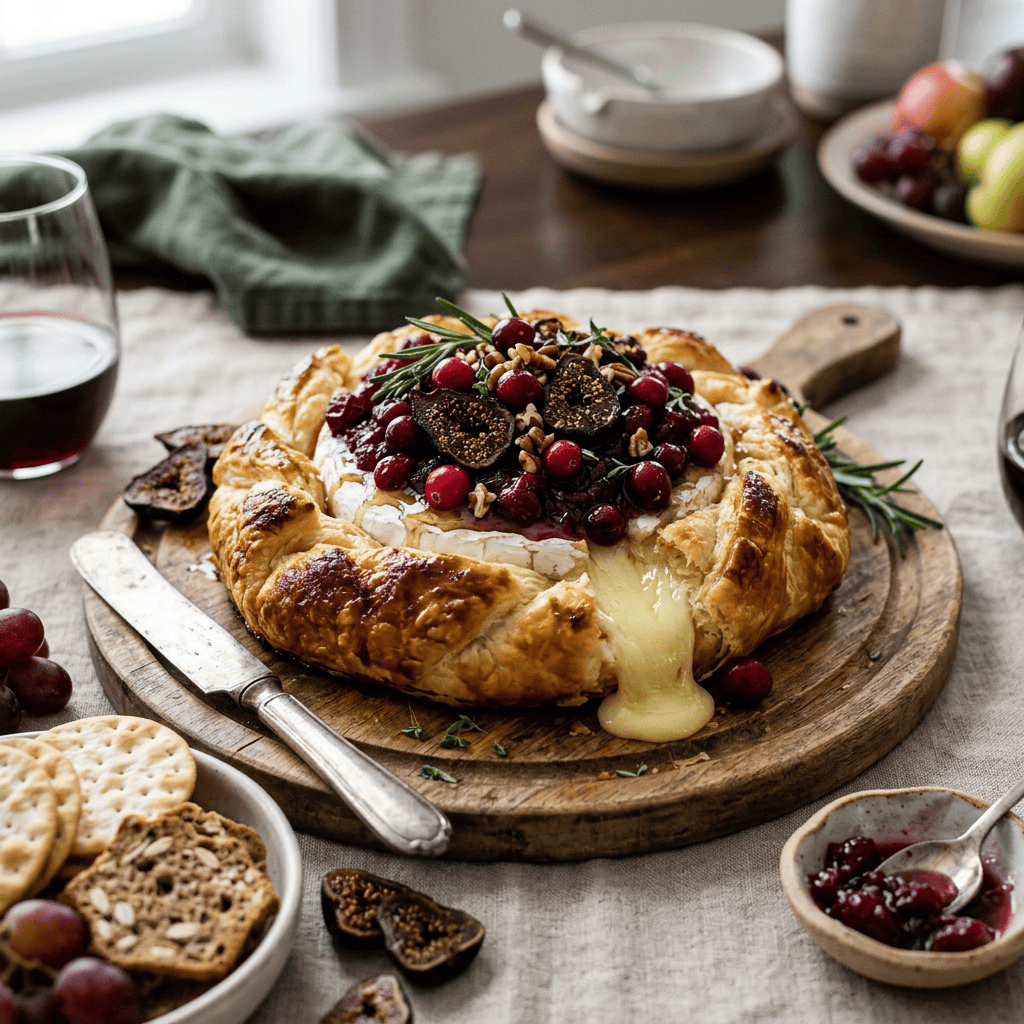
Baked brie topped with cranberries, figs, walnuts, and rosemary
Golden baked brie overflows with cranberry compote, figs, walnuts, and rosemary on a rustic serving board.

Ingredients

  • 1 sheet puff pastry, thawed
  • 1 wheel brie (200–250 g)
  • ½ cup fresh cranberries
  • 3 fresh figs, sliced
  • 2 tbsp honey
  • 1 tbsp butter
  • 1 egg (for egg wash)
  • Pinch of salt

Instructions

  1. Preheat oven to 400°F (205°C).
  2. In a small pan, melt butter and sauté cranberries until they begin to soften (3 minutes).
  3. Add honey and a pinch of salt; stir and remove from heat.
  4. Place brie in the center of the puff pastry.
  5. Spoon cranberry mixture and fig slices over the brie.
  6. Fold pastry over the brie and seal edges.
  7. Brush with egg wash.
  8. Bake 20–25 minutes until golden and puffed.

Storage

Best fresh. Can refrigerate for 1 day; reheat at 325°F for 6 minutes.

Substitutions

  • Brie → Camembert
  • Honey → Maple syrup
  • Figs → Pear slices

Enjoy!

I’m Stacey Hobbs, thanks for reading Face by Stace! Until next time.
do you feel fabulous today?

Alyssa Rivers (The Recipe Critic) Inspired: Butternut Squash & Sage Quiche with Crispy Pancetta

This Butternut Squash & Sage Quiche with Crispy Pancetta is a deeply savoury, restaurant‑worthy dish that brings together autumn comfort and refined flavour. Roasted butternut squash adds natural sweetness and a velvety texture, while pancetta delivers a salty, crispy contrast that anchors the quiche with richness. Shredded Gruyère melts into the custard, creating a glossy, luxurious filling that feels indulgent without being heavy.

Fresh sage infuses the egg mixture with warm, aromatic depth, giving each slice a beautifully layered flavour profile. As it bakes, the quiche develops a golden top and a perfectly set centre — the kind of finish you’d expect from a bistro brunch or a chef‑styled dinner menu.

It’s elegant, hearty, and incredibly satisfying. Serve it warm for a polished brunch, pair it with a simple green salad for a restaurant‑quality lunch, or enjoy it as a comforting yet elevated dinner. This quiche is the definition of rich, savoury perfection.

Category: Quiche
Tone: Rich, savory, restaurant‑quality

Servings: 6
Prep Time: 25 minutes
Cook Time: 40 minutes

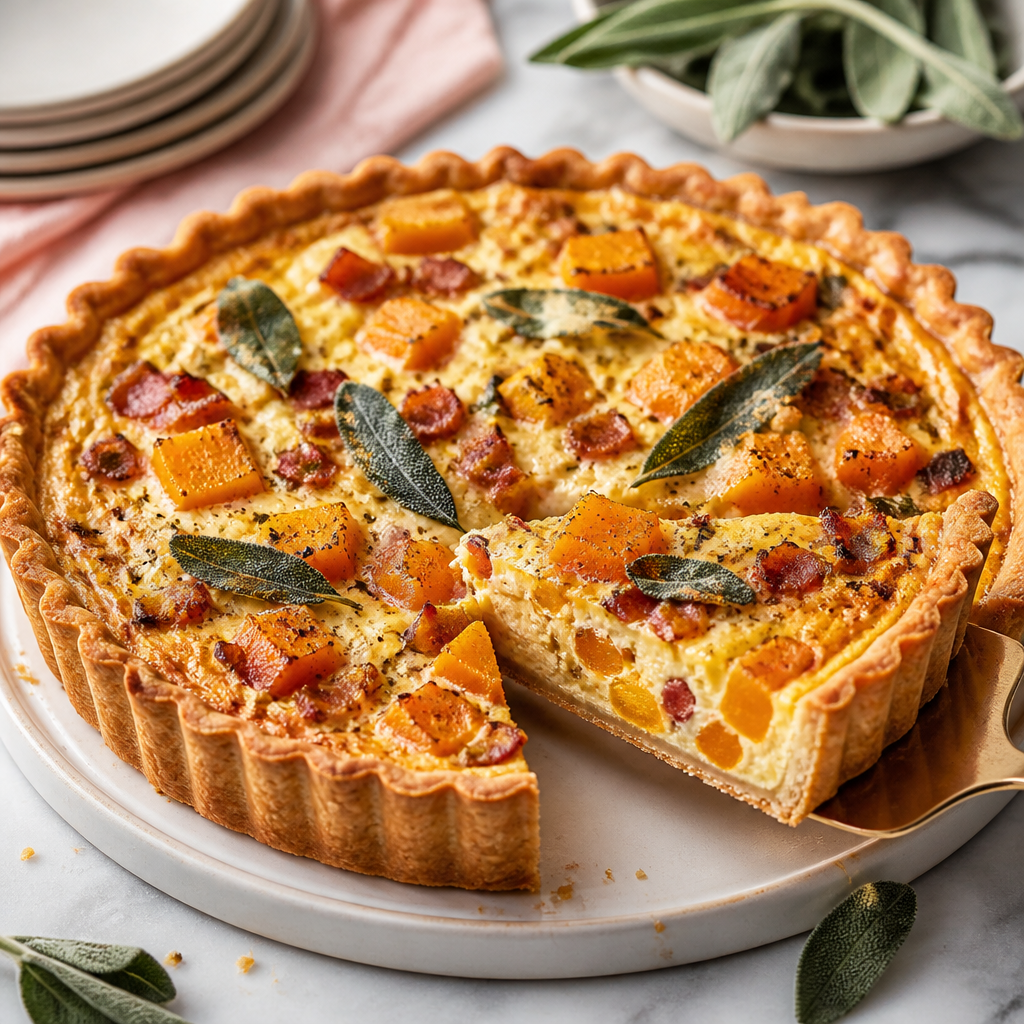
Butternut squash and bacon quiche with sage, one slice served on spatula
A golden butternut squash and bacon quiche is served with a slice lifted onto a spatula.

Ingredients

  • 1 refrigerated pie crust
  • 1½ cups roasted butternut squash cubes
  • ½ cup cooked pancetta
  • 1 cup shredded Gruyère
  • 4 eggs
  • 1 cup whole milk
  • 1 tbsp chopped fresh sage
  • ½ tsp salt
  • ¼ tsp pepper

Instructions

  1. Preheat oven to 375°F (190°C).
  2. Press pie crust into a 9‑inch pie dish.
  3. Layer squash, pancetta, and Gruyère evenly.
  4. Whisk eggs, milk, sage, salt, and pepper.
  5. Pour egg mixture over the filling.
  6. Bake 35–40 minutes until set and lightly golden.
  7. Cool 10 minutes before slicing.

Storage

Refrigerate up to 3 days. Reheat at 325°F for 8 minutes.

Substitutions

  • Pancetta → Bacon or turkey bacon
  • Gruyère → Swiss or white cheddar
  • Butternut squash → Roasted sweet potato

Storage

Best fresh. Can refrigerate for 1 day; reheat at 325°F for 6 minutes.

Substitutions

  • Brie → Camembert
  • Honey → Maple syrup
  • Figs → Pear slices

Enjoy!

I’m Stacey Hobbs, thanks for reading Face by Stace! Until next time.
do you feel fabulous today?

The 1700 Parsnips Cakes: A Winter Classic from England’s Past

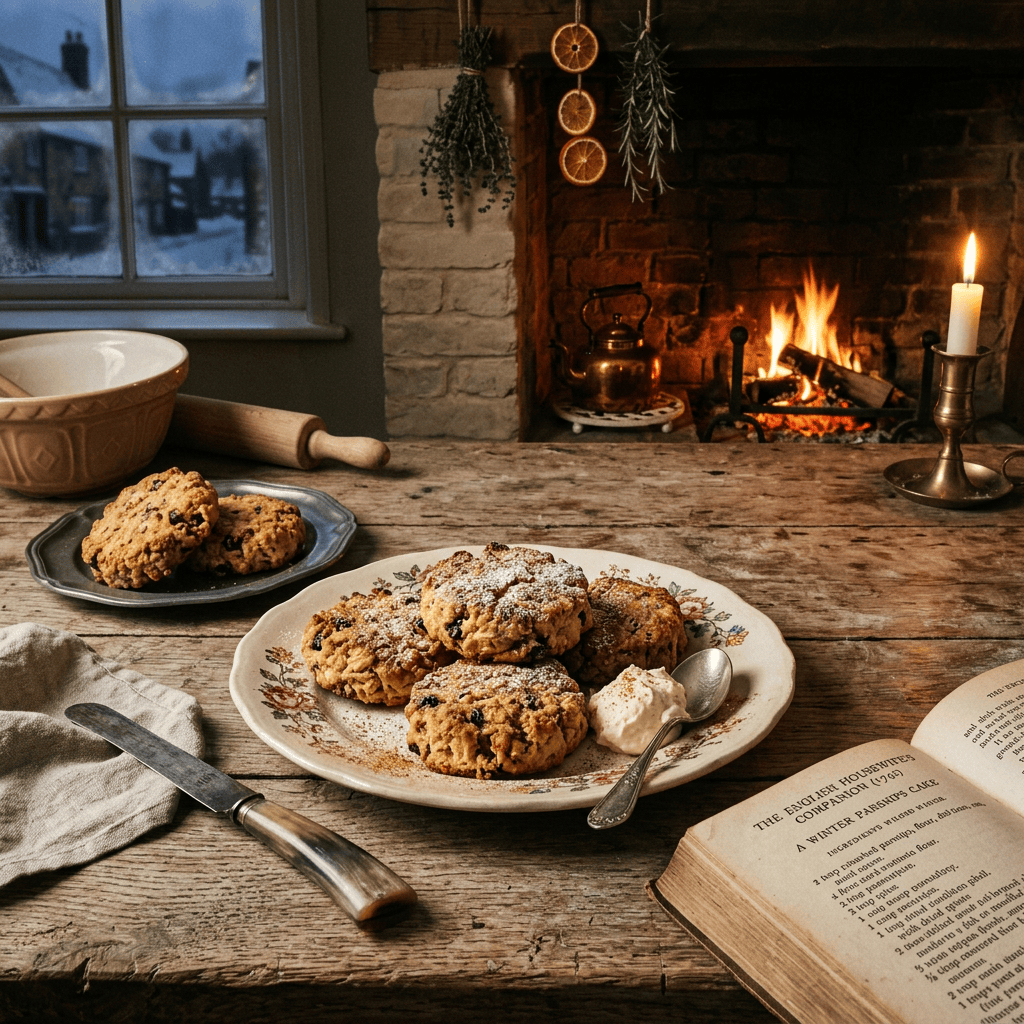
In the early 18th century, long before modern cookbooks and chefs, English households relied on handwritten recipe books to preserve their culinary knowledge. Among these treasures sits a humble yet striking dish: Parsnops Cakes, recorded around 1700 in an anonymous English receipt book. It’s a recipe that reveals how regular women cooked, improvised and nourished their families during long winters when fresh produce was scarce.

The method is simple but surprisingly refined. Ten parsnips are boiled until tender, then beaten smooth in a stone mortar — a technique that creates a velvety mash. Six eggs, with three whites removed, are whisked and enriched with a little cream before being folded into the warm parsnips. Sweetened to taste, the mixture is fried like small fritters, crisp at the edges and soft within. A warm sauce of melted butter, sugar, and either sack or rosewater finishes the dish, adding a touch of luxury that reflects the era’s fondness for fragrant, fortified flavours.

What makes this recipe compelling today is its blend of rustic practicality and gentle indulgence. Parsnips were a Winter staple, valued for their sweetness and reliability, yet this recipe transforms them into something celebratory — a reminder that early cooks found comfort and creativity even in the simplest ingredients.

By revisiting Parsnops Cakes, we reconnect with a forgotten culinary moment: a dish shaped by season, necessity, and the artistry of women whose recipes rarely made it into printed books. It’s a small piece of history worth bringing back to the table.

Documented 1700 Parsnip Cake Recipe (Exact Transcription)

Source: Anonymous Receipt Book, c. 1700

Archive: Folger Shakespeare Library

Verified transcription: Lost Kitchen Scrolls

To Make Parsnops Cakes Take 10 parsnops boyle ym tender & beat ym very small in a ston Morter & beat 6 eggs but leave out 3 whites when thay are well beaten mix a litle Cream with ym & put it both into ye beat parsnop & sweeten it to tast heat ye frying pan & frye ym as you doe ye litle fried fritters Make sauce for ym of melted butterr & sugar & a litle Sack or rose water.

This is the exact manuscript text, including period spelling (“ym,” “ye,” “parsnops”).

Contextual Manuscript Information

The 1701 recipe appears in a handwritten English household cookbook, now held at the Clark Library. It is part of a larger collection of culinary and medicinal recipes from the early 18th century.

The 1700 recipe comes from a digitized Folger Shakespeare Library manuscript, part of their early modern recipe book collection.

Both manuscripts are part of the broader category of 18th‑century English recipe books, which often contain hundreds of culinary and medical entries.

In 1700–1701:

  • Recipes were written as short paragraphs
  • They did not separate ingredients
  • They did not list measurements
  • They did not number steps
  • They assumed the cook already knew the basics

So the “ingredients” and “instructions” are embedded inside the paragraph itself — that is the recipe.

I’m Stacey Hobbs, thanks for reading Face by Stace! Until next time.
do you feel fabulous today?

Fig: Enzyme Renewal Mask

Figs are another forgotten fruit that is bypassed, much like with parsnips that would leave one not think of the beauty benefits it delivers, after all why would one turn to figs when the ever so popular pumpkins, apples, butternut squash enters when Autumn season hits.

Figs deliver a natural gentle form of exfoliation and deep hydration. Who would have thought? Figs have always carried an aura of softness and sensuality — a fruit that feels luxurious even before it touches the skin.

Enjoy this mask designed for the days when the skin feels dull, thirsty or un-even and needs a reset rather than an aggressive treatment.

Description

A creamy, enzyme‑rich mask that resurfaces the skin using fig’s natural fruit enzymes, humectants and antioxidants. Ideal for dull, dehydrated or un-even skin needing a fresh, plump glow.

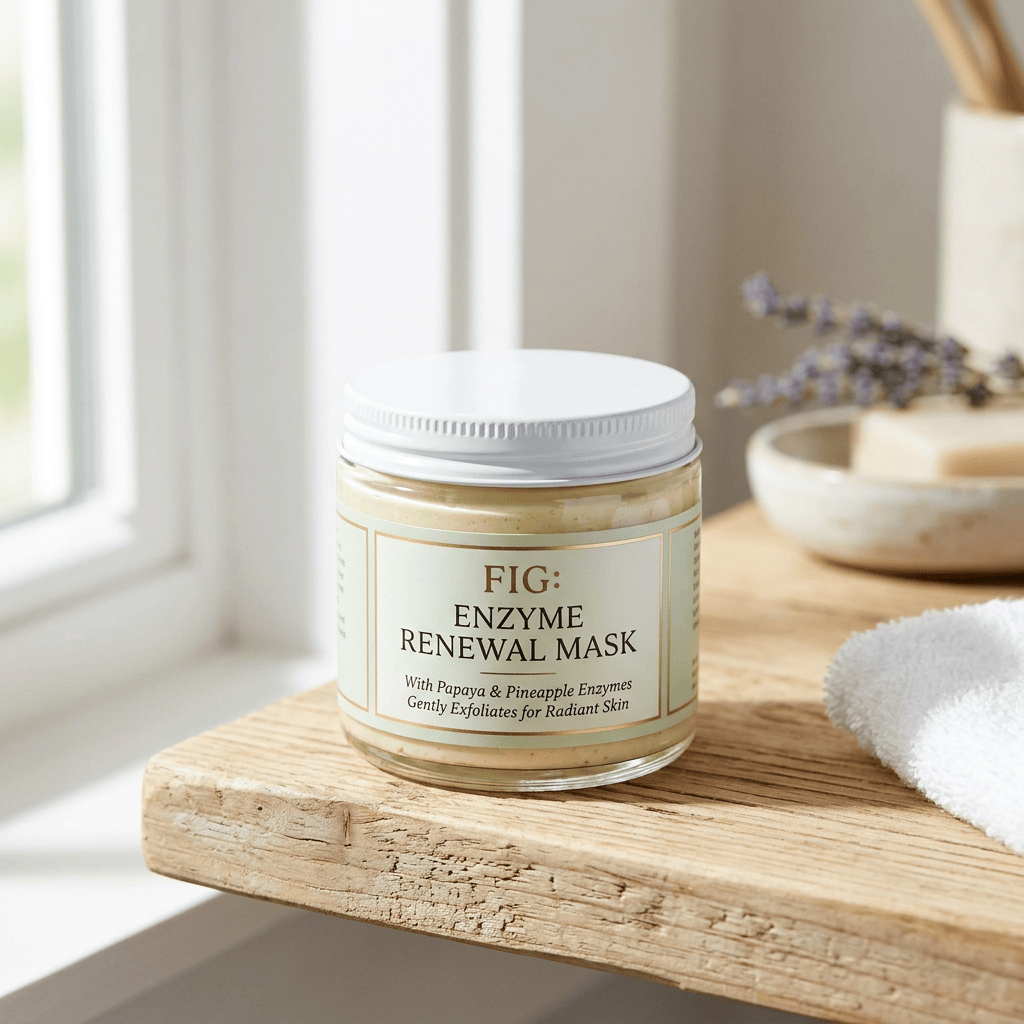
FIG: ENZYME RENEWAL MASK — With Papaya & Pineapple Enzymes; Gently Exfoliates for Radiant Skin
A jar of FIG Enzyme Renewal Mask sits in a softly lit, spa-inspired setting.

Ingredients

  • 2 fresh figs, mashed into a smooth paste
  • 1 tsp honey (humectant + soothing)
  • 1 tsp yogurt (lactic acid + creaminess)
  • ½ tsp aloe gel (calming + hydrating)

Instructions

  1. Mash figs until completely smooth.
  2. Stir in honey, yogurt and aloe until the mixture becomes creamy.
  3. Apply a generous layer to clean skin.
  4. Leave on for 10–15 minutes.
  5. Rinse with lukewarm water and follow with moisturizer.

Storage

This mask is fresh and enzyme‑active. Store in the fridge for up to 24 hours. Discard if the texture separates or darkens.

Substitutions

  • Replace yogurt with coconut cream for a vegan version.
  • Swap aloe for rosewater if you prefer a lighter consistency.
  • Use maple syrup instead of honey for a Canadian‑friendly humectant.

History

Figs were treasured across the Mediterranean for their ability to soften and rejuvenate the skin. Ancient Greek women used mashed figs as gentle poultices to restore radiance after sun exposure. Roman bathhouses incorporated fig balms into post‑steam treatments, believing the fruit’s natural sugars replenished moisture lost in heat. In Middle Eastern beauty traditions, figs were prized for their ability to hydrate skin in dry climates, often mixed with oils to create early moisturizing pastes. Their long-standing association with nourishment made them a quiet staple in early beauty rituals.

This fig mask is the kind of treatment that feels indulgent yet effortless — a fruit‑based ritual that leaves the skin looking refreshed, plump and luminous.

I’m Stacey Hobbs, thanks for reading Face by Stace! Until next time.
do you feel fabulous today?
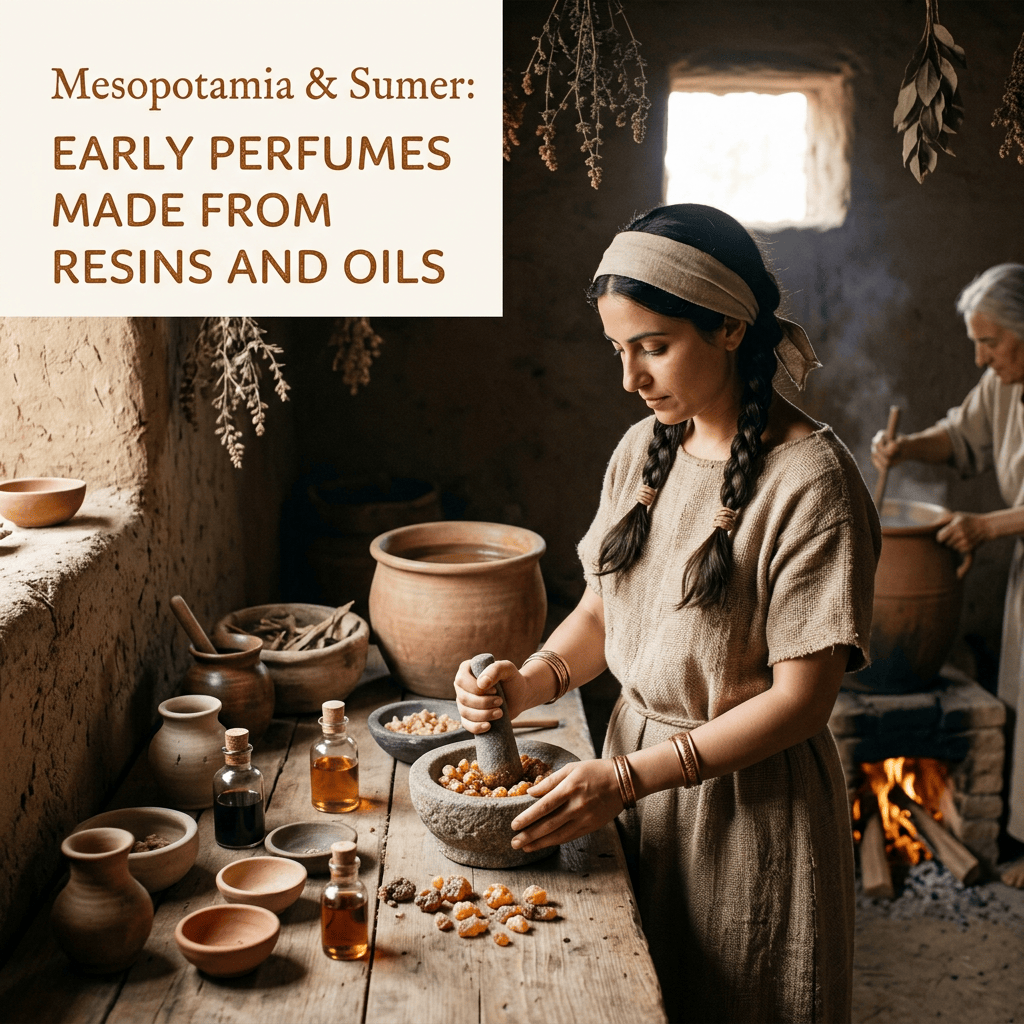
Mesopotamia & Sumer: Early Perfumes Made from Resins and Oils

In ancient Mesopotamia and Sumer, perfume was a luxury and yet, it was also a cultural symbol of status, spirituality and refinement. These early civilizations were among the first to experiment with fragrant resins, oils and botanicals, creating aromatic blends that laid the foundation for perfumery as we know it today.

Text reads “Mesopotamia & Sumer: Early perfumes made from resins and oils” above a woman grinding ingredients.
A historical scene depicts early remedies being prepared from resins, oils, and herbs in an ancient household.

Perfume‑making began with resins such as myrrh, frankincense, balsam, and storax. These materials were prized for their rich, smoky sweetness and their ability to hold scent over time. Resins were crushed, heated, or dissolved into oils to create balms, salves, and early fragrance pastes. Their aromas were used in temples, ceremonies and daily grooming — a way to honour the gods while elevating personal presence.

Alongside resins, Mesopotamian perfumers used plant oils extracted from sesame, cypress, and date palms. These oils acted as carriers for aromatics, creating smooth, skin‑friendly blends. Tablets from the region describe recipes combining oils with herbs, flowers, and spices — including juniper, cedar, saffron, and calamus — forming some of the earliest documented perfume formulas.

Perfume also held social meaning. Scent signified purity, wealth and divine favour. Royal households and priestesses used fragrant oils to anoint the body, soften the skin, and create an aura of elegance. These rituals reveal a world where beauty, spirituality, and craftsmanship were deeply intertwined.

Mesopotamia and Sumer transformed simple resins and oils into sophisticated fragrance traditions — proving that the desire to smell beautiful is as ancient as civilization itself.

I’m Stacey Hobbs, thanks for reading Face by Stace! Until next time.
do you feel fabulous today?