Ancient Rome: Glamour, Innovation & Cosmetic Danger

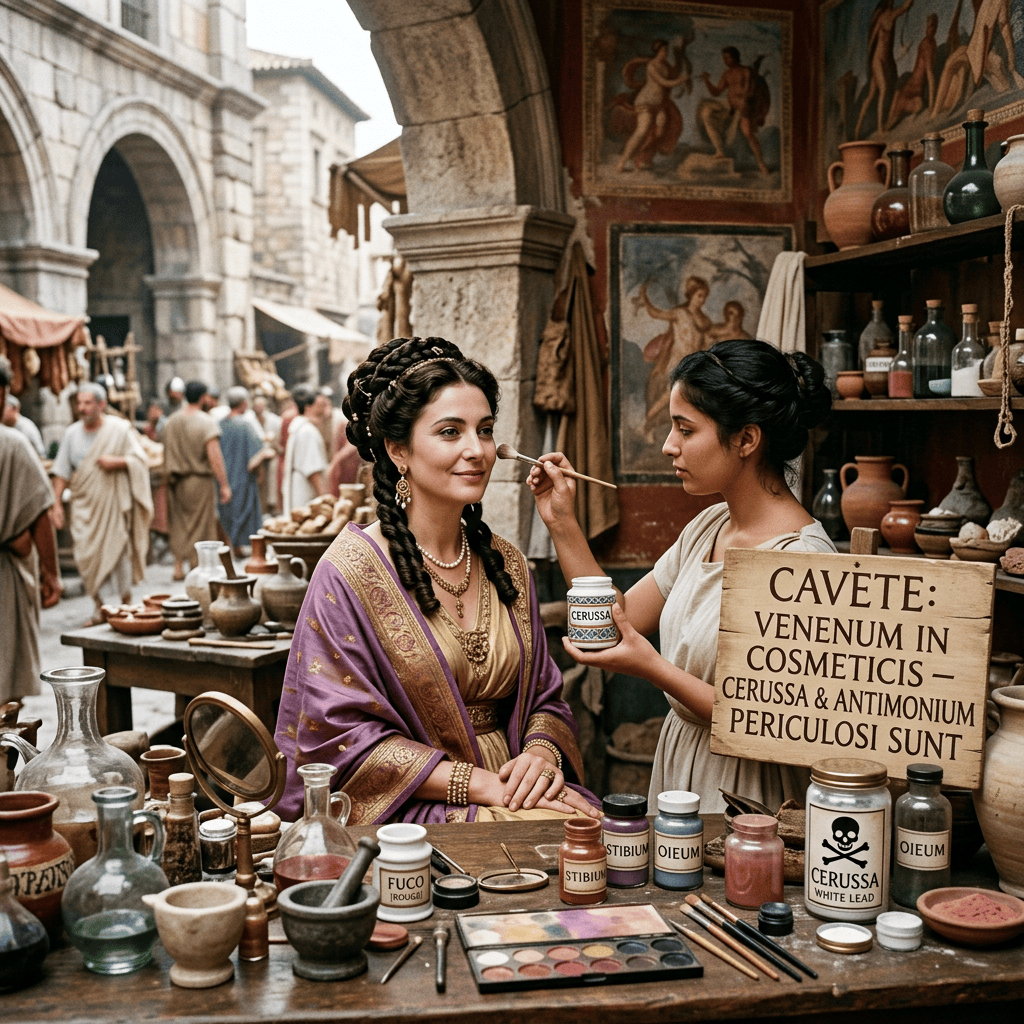
Ancient Rome was bold, glamorous, and experimental — and its beauty rituals reflected that ambition. Roman women embraced elaborate cosmetics, perfumes, and hair treatments, creating one of history’s most expressive beauty cultures. But with innovation came significant risk.

Romans admired pale skin, associating it with wealth and leisure. To achieve it, they used white lead paste, one of the most dangerous cosmetics in history. Lead created a smooth, luminous finish but caused irritation, premature ageing, and long‑term toxicity.

For colour, Romans turned to cinnabar, a mercury‑based red pigment used on lips and cheeks. Its vivid hue was striking, but mercury exposure carried serious health risks. Even everyday powders sometimes contained harmful minerals.

Hair rituals were equally intense. To lighten the hair, Romans used sulphur, ashes, and lye‑based mixtures, then sat in the sun to activate the bleaching process. These treatments weakened the hair, caused breakage, and occasionally burned the scalp.

Perfume was central to Roman identity. They adored strong, resin‑heavy scents made from myrrh, frankincense, balsam, and spices. While luxurious, burning resins indoors created smoke that irritated the lungs.

Despite these dangers, Roman beauty was influential. Their passion for glamour, fragrance, and artistry shaped Western beauty traditions for centuries. Rome reminds us that beauty history is both brilliant and imperfect — a blend of creativity, culture, and risk.

I’m Stacey Hobbs, thanks for reading Face by Stace! Unti next time.
do you feel fabulous today?

Jillian Harris Inspired: Cranberry‑Leek Mini Quiches with Gruyère

These Cranberry‑Leek Mini Quiches with Gruyère bring together bright, tart cranberries and buttery sautéed leeks in a warm, custard‑soft bite. The Gruyère melts into the filling, adding a nutty richness that balances the fruit’s sparkle and the leeks’ gentle sweetness. Each mini quiche sits in a flaky pie‑crust shell, creating a perfect contrast between crisp edges and silky interior.

They’re elegant enough for holiday entertaining yet simple enough for a cozy weekend brunch. The flavours feel seasonal, comforting and quietly luxurious — the kind of recipe that photographs beautifully and disappears quickly from the table.

Six savory cranberry and vegetable tarts arranged on a wooden serving board
Golden savory tarts topped with cranberries and herbs create a welcoming rustic brunch spread.

Category: Quiche
Style: Elevated comfort, brunch‑friendly

Servings: 12 mini quiches
Prep Time: 20 minutes
Cook Time: 22 minutes

Ingredients

  • 1 refrigerated pie crust
  • 1 cup thinly sliced leeks
  • ½ cup fresh cranberries, roughly chopped
  • ½ cup shredded Gruyère
  • 3 eggs
  • ¾ cup half‑and‑half
  • 1 tbsp butter
  • ½ tsp salt
  • ¼ tsp pepper

Instructions

  1. Preheat oven to 375°F (190°C).
  2. Sauté leeks in butter until soft (5 minutes).
  3. Cut pie crust into circles and press into a mini muffin tin.
  4. Divide leeks, cranberries, and Gruyère among the cups.
  5. Whisk eggs, half‑and‑half, salt, and pepper.
  6. Pour egg mixture into each cup.
  7. Bake 20–22 minutes until set and lightly golden.

Storage

Store in the fridge for 3 days. Reheat at 325°F for 6 minutes.

Substitutions

  • Gruyère → Swiss or white cheddar
  • Half‑and‑half → Milk + 1 tbsp cream
  • Cranberries → Diced roasted apples (if needed)

Enjoy this Jillian Harris Inspired: Cranberry‑Leek Mini Quiches with Gruyère!

I’m Stacey Hobbs, thanks for reading Face by Stace! Until next time.
do you feel fabulous today?
Ancient Egypt: Beauty Rituals & Cosmetic Risks

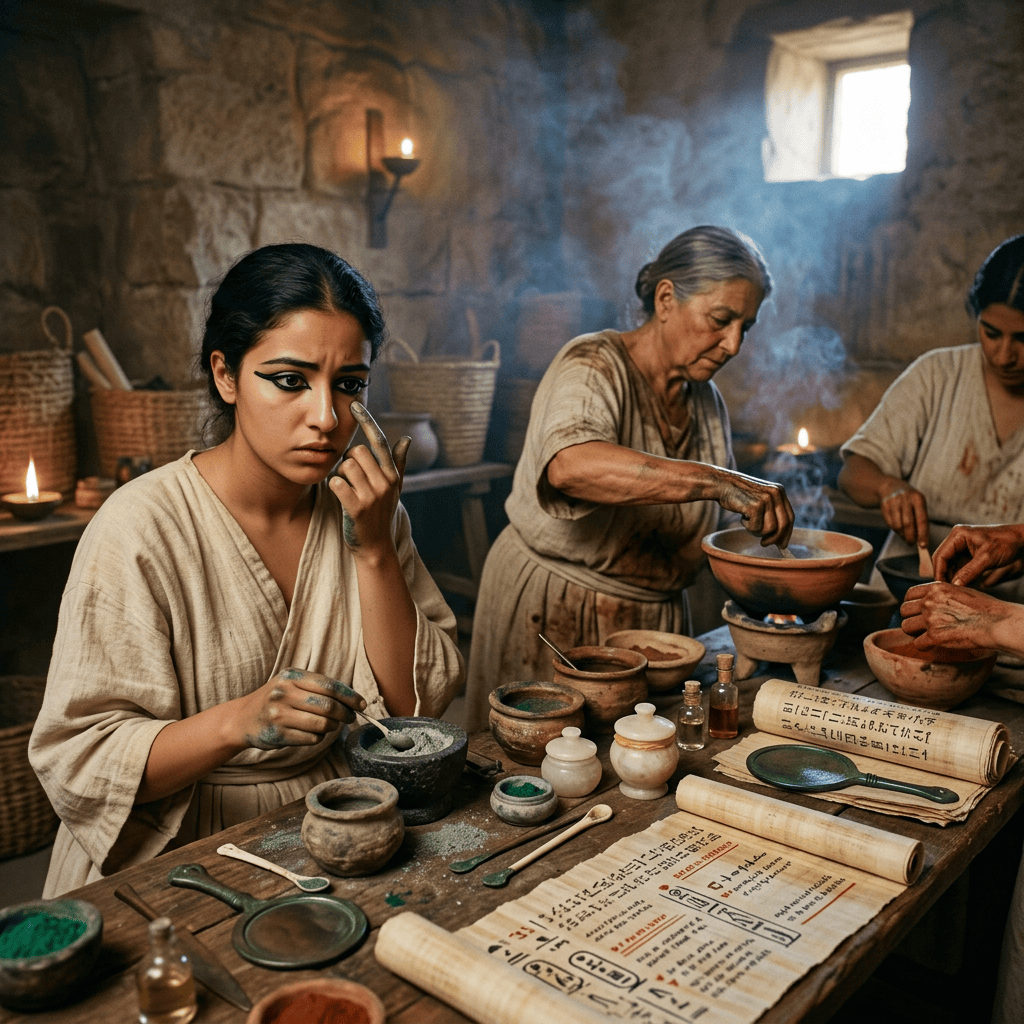
Ancient Egypt remains one of history’s most sophisticated beauty cultures. Cosmetics were not simply decorative — they carried spiritual meaning, medicinal value, and social status. Yet even with their advanced knowledge, some practices came with risks.

Artisans preparing herbal remedies beside manuscripts in a stone chamber
Artisans prepare herbal remedies beside illuminated manuscripts in a smoky stone chamber.

Egyptians famously used kohl eyeliner, a blend of soot, galena and other minerals. While kohl protected the eyes from sun glare and infections, certain lead‑based compounds could irritate the skin with repeated use. Still, Egyptians believed kohl offered divine protection, making it both a cosmetic and a ritual.

Face and body pigments were crafted from malachite, red ochre, and henna. Malachite’s green shimmer symbolized rebirth but its copper content could be harsh on sensitive skin. Red ochre, however, was generally safe and widely used to tint lips and cheeks.

Egyptians excelled in skincare. Perfumed oils made from moringa, almond, and sesame softened the skin and prevented dryness in the desert climate. These oils were often infused with frankincense or myrrh, creating luxurious balms that doubled as early anti‑ageing treatments. The only drawback was spoilage — rancid oils could irritate the skin.

Despite occasional risks, Egyptian beauty was remarkably advanced. Their formulas were intentional, symbolic, and often protective. They understood the connection between appearance, health, and spirituality, creating a beauty culture that still inspires modern rituals.

I’m Stacey Hobbs, thanks for reading Face by Stace! Until next time.
do you feel fabulous today?
Welcome Max Factor’s Invention the Iconic Lip Gloss!

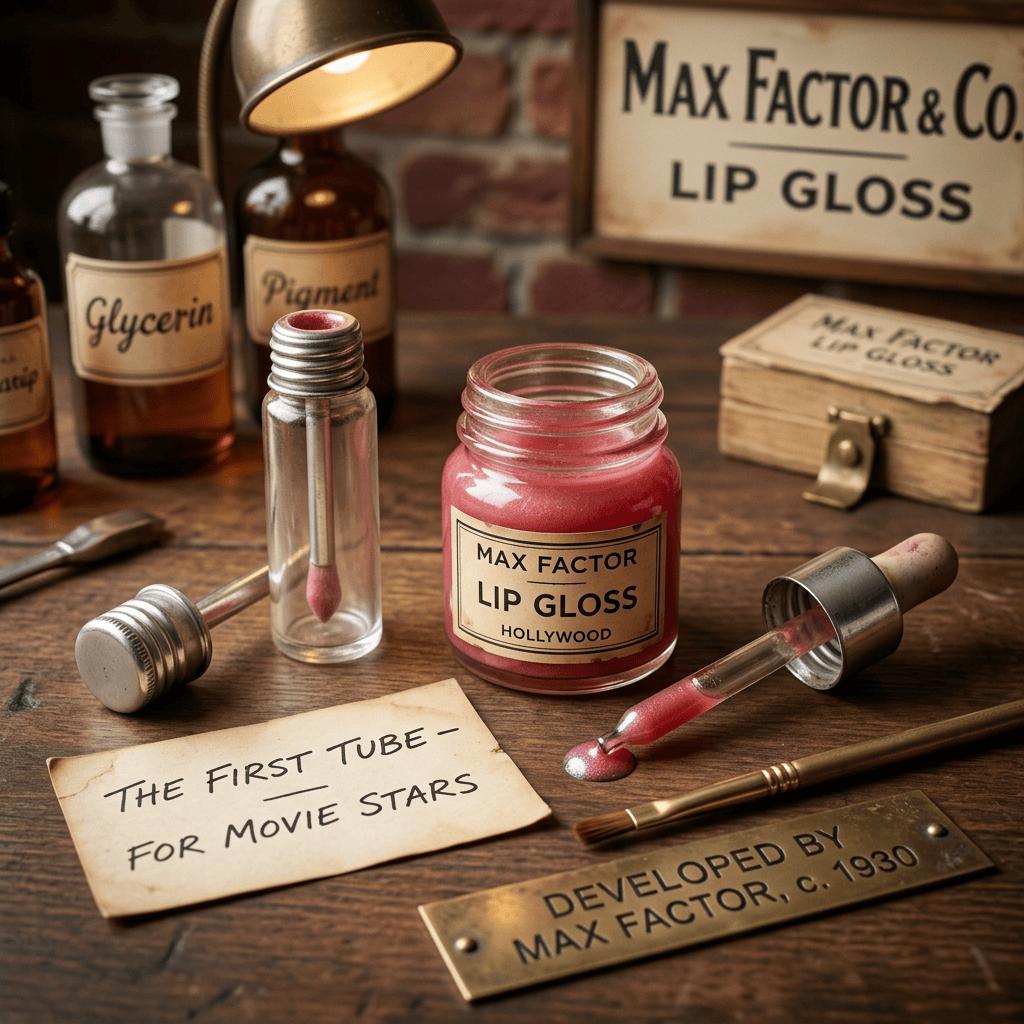
Lip gloss is one of beauty’s most iconic products but its origins are surprisingly cinematic. In 1930, Max Factor created the very first commercial lip gloss for Hollywood actresses who needed lips that looked dimensional under harsh studio lights. Early film stock flattened colour, making matte lips disappear on camera. Factor wanted shine — something that would catch the light, enhance expression and bring the mouth forward in close‑ups.

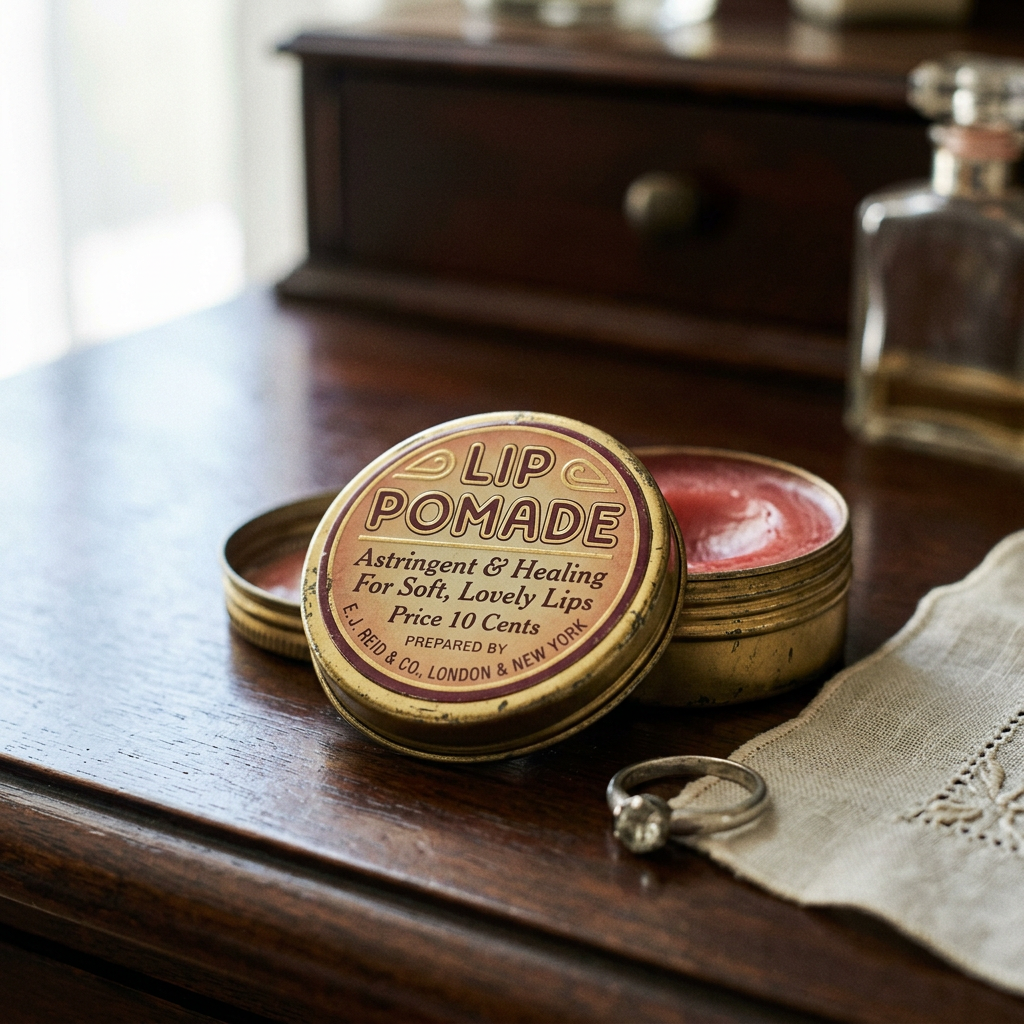
Vintage tin labeled LIP POMADE, Astringent & Healing For Soft, Lovely Lips, Price 10 Cents, Prepared by E.J. Reid & Co., London & New York
A vintage E.J. Reid lip pomade tin rests open on a polished wooden dresser.

His solution was a clear, reflective formula that added luminosity without heavy pigment. It created a soft, dewy sheen that instantly made lips look fuller and more alive on screen. Actresses loved it, directors noticed the difference and lip gloss quickly became a signature of Hollywood glamour.

By 1932, lip gloss, then called Lip Pomade in 1930, re-branded to X-Rated in 1932, Max Factor ensured his Lip Pomade would be available for the for consumer market, prior to this year, lip gloss was only available for Golden Age Hollywood actresses’ usage.

Vintage Max Factor lip gloss, labeled ingredients, and notes reading “The first tube for movie stars” and “Developed by Max Factor, c. 1930.”
A vintage-inspired display celebrates Max Factor’s early Hollywood lip gloss innovation.

By the 1950s, gloss moved from film sets to everyday beauty. Teen culture embraced its youthful shine, pairing it with pastel eyeshadow and powder compacts. The product evolved again in the 1970s with disco’s high‑gloss aesthetic, then surged in the 1990s with supermodel culture — think sheer browns, frosted nudes, and pocket‑sized tubes tucked into every handbag.

Today’s glosses are more comfortable, hydrating, and sophisticated, but the core idea remains unchanged: effortless shine that brings the face to life. Max Factor didn’t just invent a product; he created an entire beauty category that continues to evolve with every generation.

I’m Stacey Hobbs, thanks for reading Face by Stace! Until next time.
do you feel fabulous today?
Apple: AHA Glow Facial (Homemade Beauty Recipe)

Apples have always symbolized youth, vitality, and a fresh complexion. Their natural malic acid makes them one of the earliest fruit‑based exfoliants used in beauty. This facial captures that heritage and transforms it into a modern glow treatment.

Description

A brightening, smoothing facial powered by apple‑derived AHAs (malic acid). It gently exfoliates, refines texture, and boosts radiance without stripping the skin.

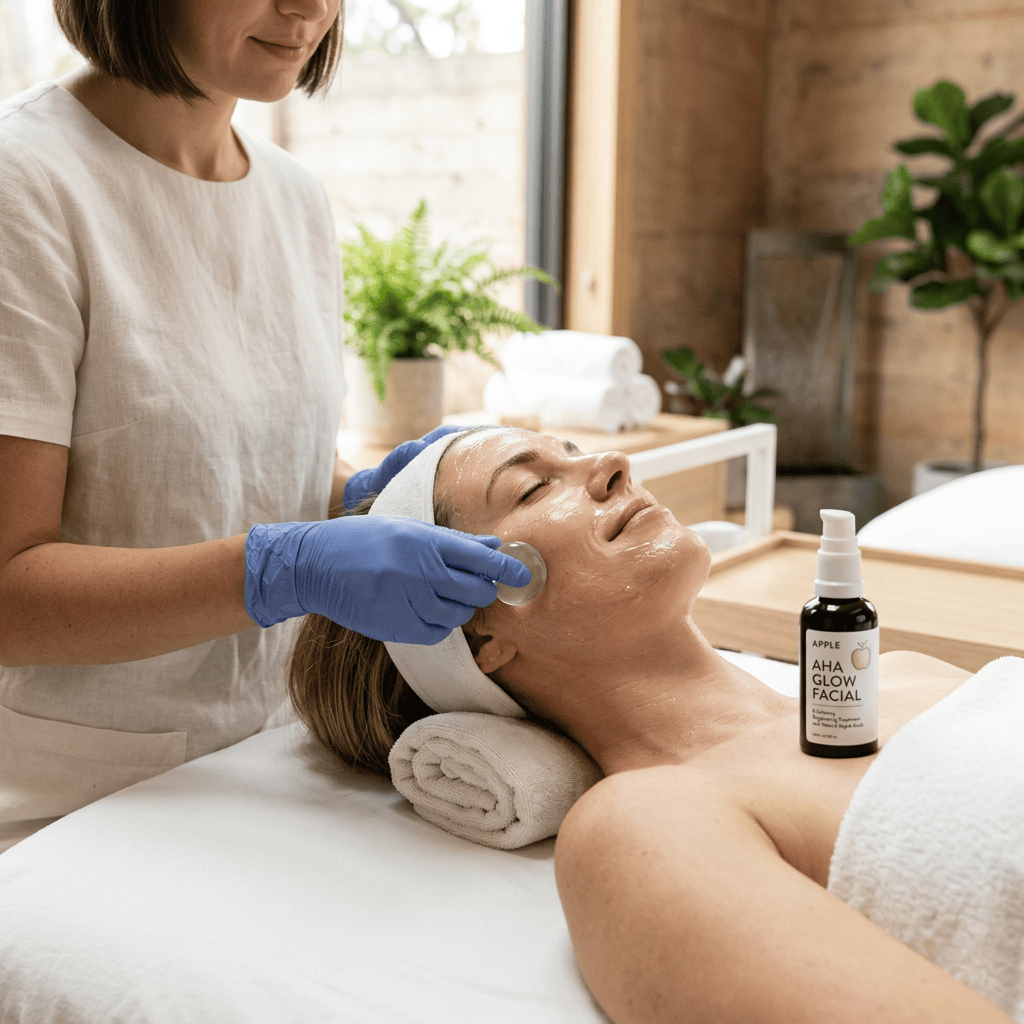
Esthetician applying facial treatment to client beside Apple AHA Glow Facial bottle
A skincare professional applies an exfoliating facial treatment in a calm, spa-like setting.

Ingredients

  • ½ apple, finely grated
  • 1 tsp apple cider vinegar (AHA boost)
  • 1 tsp honey
  • 1 tsp oatmeal (soothing + balancing)

Instructions

  1. Grate the apple and squeeze lightly to remove excess juice.
  2. Mix with apple cider vinegar, honey, and oatmeal.
  3. Apply to clean skin and leave for 5–10 minutes.
  4. Rinse thoroughly and moisturize.

Storage

Best used immediately. If needed, refrigerate for up to 12 hours. The acids oxidize quickly.

Substitutions

  • Replace oatmeal with yogurt for extra creaminess.
  • Use pear instead of apple for a gentler AHA effect.
  • Swap honey for agave if preferred.

History

Apples appear throughout European folk beauty traditions, especially in northern climates where winter dullness was common. Women in early Germanic and Scandinavian households used grated apple as a clarifying skin poultice. Apple cider vinegar became a staple in 18th‑ and 19th‑century rural beauty routines, used to refine texture and brighten the complexion. Its natural acids made apples one of the earliest accessible exfoliants long before commercial skincare existed.

This apple facial is a simple, effective way to revive the skin’s natural glow — a nod to old‑world beauty wisdom with a modern, editorial twist.

I’m Stacey Hobbs, thanks for reading Face by Stace! Until next time.
do you feel fabulous today?
Max Factor’s Invention that Changed the Game; Welcome Pan‑Cake Makeup!

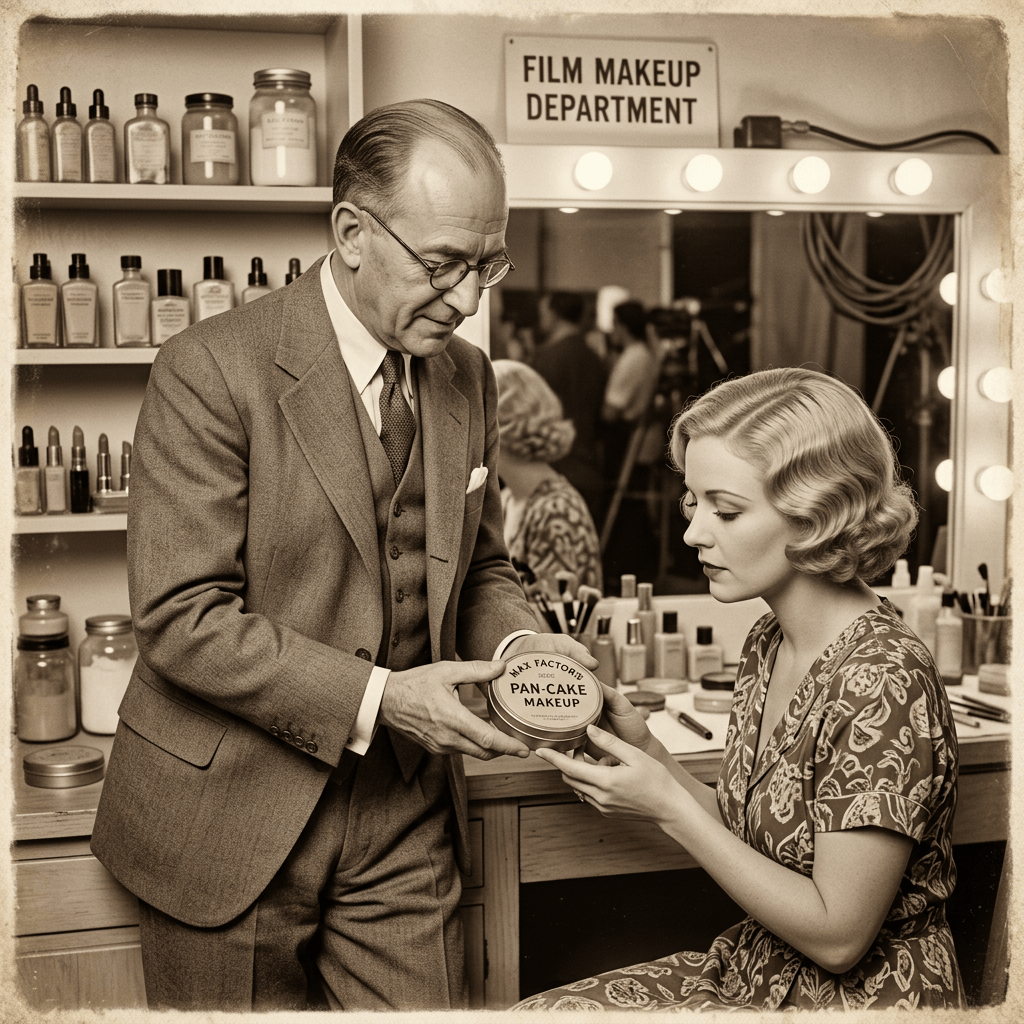
Pan‑Cake Makeup is one of Max Factor’s most groundbreaking inventions — a product that didn’t just solve a Hollywood problem but re-shaped everyday beauty. Introduced in 1935, Pan‑Cake was engineered specifically for the challenges of early Technicolour film, which often distorted skin tones and exaggerated imperfections on camera. Factor needed a formula that would smooth the complexion, reduce shine and photograph flawlessly under intense studio lighting.

Max Factor Pan-Cake makeup invention

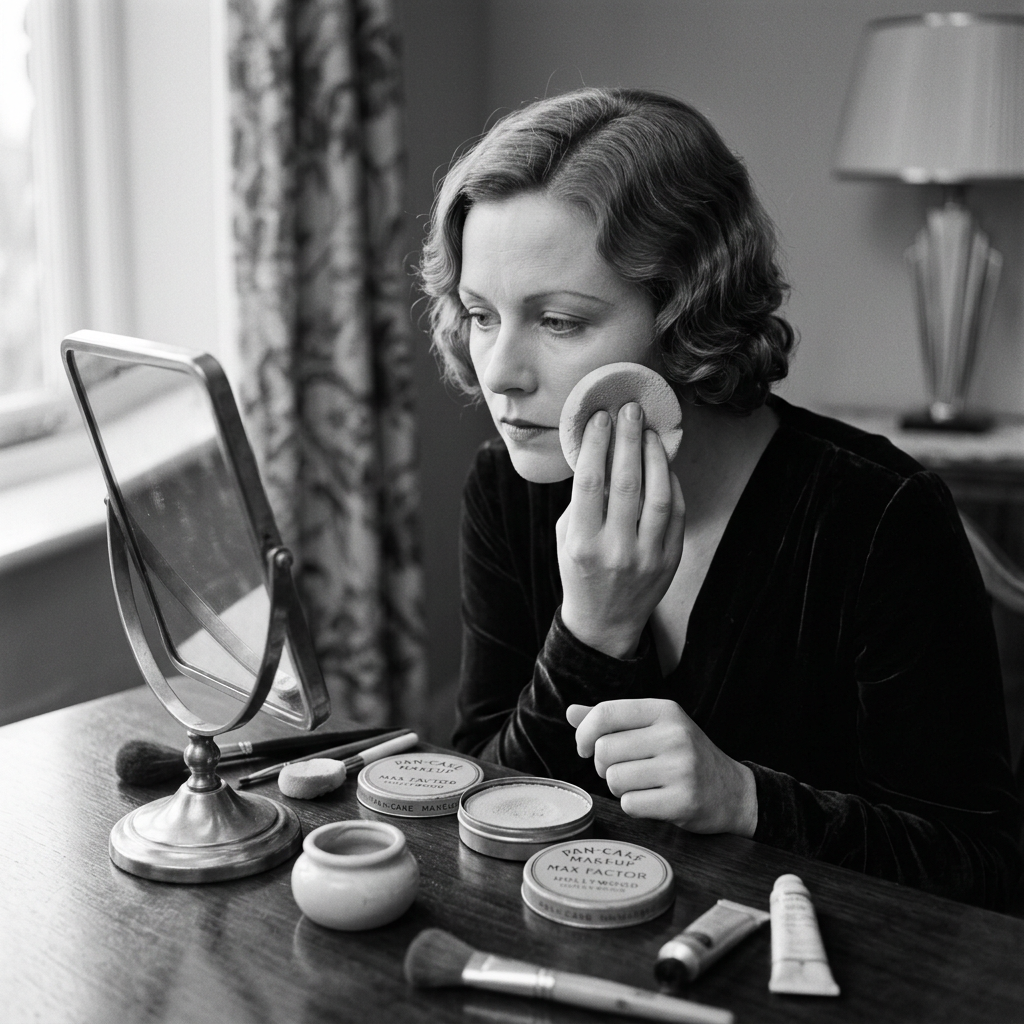
According to your tab’s source, Pan‑Cake Makeup was a solid cake formula applied with a damp sponge, designed to hide the un-natural skin discolourations caused by Technicolour’s early colour processes . It delivered even coverage, a matte finish and a natural‑looking complexion — a dramatic improvement over the heavy, oily theatrical paints used before.

Its impact was immediate. Actors looked better on film, directors loved the consistency, and makeup artists finally had a product that performed under demanding conditions. When Pan‑Cake Makeup was later released to the public, it became a massive consumer blockbuster, marking one of the first times a Hollywood innovation crossed over into everyday beauty culture.

1935 Pan-Cake makeup product

Pan‑Cake Makeup set the stage for modern foundation: portable, blendable and designed to enhance the skin rather than mask it. It remains one of Max Factor’s most influential contributions — a perfect example of how film technology and beauty innovation evolved together.

I’m Stacey Hobbs, thanks for reading Face by Stace! Until next time.
do you feel fabulous today?