Dior: Marcel Boussac & The Textile Empire Behind the New Look

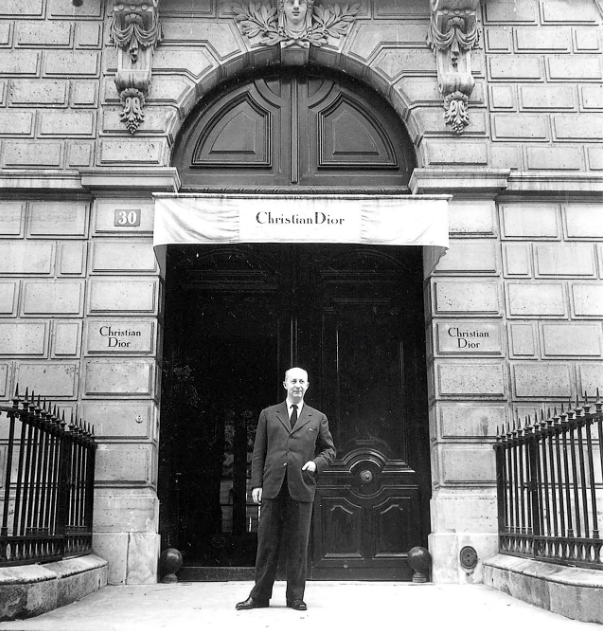
Christian Dior’s meteoric rise in 1947 was not only a triumph of design, it was the result of a powerful partnership with Marcel Boussac, the richest textile magnate in France. Known as “the king of cotton,” Boussac controlled vast mills, factories and distribution networks. When he chose Dior, he wasn’t simply backing a designer; he was strategically investing in the revival of French industry after the devastation of World War II.

Boussac originally wanted Dior to revive the failing house of Philippe et Gaston. Dior refused, insisting he would only work under his own name. Impressed by Dior’s conviction, Boussac made an unprecedented decision: he would finance a brand‑new couture house from the ground up. He provided Dior with full funding, complete creative control, and access to the finest textiles in France — a level of support no young couturier had ever received.

This partnership shaped the New Look itself. Dior’s 1947 silhouettes required extraordinary yardage — sometimes 15 to 30 meters of fabric for a single skirt. In a post‑war economy still recovering from rationing, this was shocking. But for Boussac, it was brilliant. Dior’s lavish designs showcased the strength of French textiles, stimulating demand and reasserting France’s dominance in global fashion manufacturing.

Boussac’s backing also enabled Dior to expand rapidly: perfumes, accessories, licensing, international salons. Dior became not just a designer but a global brand architect and Boussac’s industrial empire supplied the infrastructure to make it possible.

Their partnership was a fusion of artistry and industry. Dior provided the vision; Boussac provided the power. Together, they rebuilt French fashion from the ashes of war and created the modern luxury house.

I’m Stacey Hobbs, thanks for reading Face by Stace! Until next time.
do you feel fabulous today?
Chanel: The Tweed Suit as Post‑War Female Armor (1954 and Beyond)

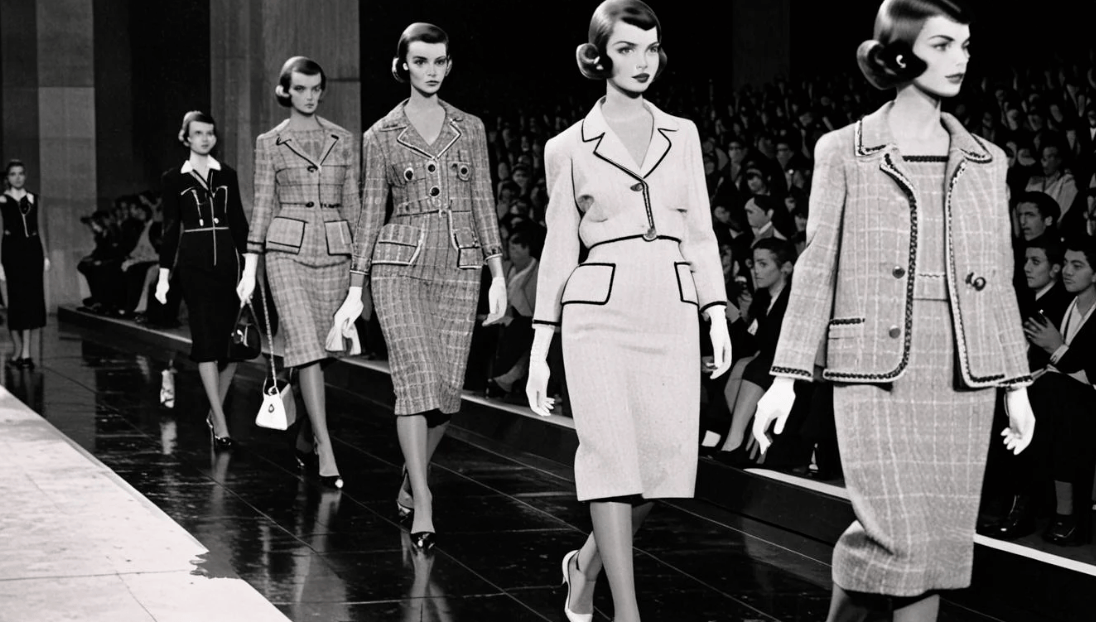
When Chanel returned to fashion in 1954, she did not revive the past — she reinvented the future. Her most powerful creation of this era was the Chanel tweed suit, a garment that became the unofficial uniform of post‑war female independence. At a time when women were entering offices, universities, and public life in unprecedented numbers, Chanel offered them clothing that functioned like armor: elegant, mobile, and unmistakably modern.

Tweed was an unconventional choice. Traditionally associated with British menswear and outdoor sports, it was not considered a couture fabric. Chanel saw something different. She admired its durability, its subtle irregularity, and its ability to drape without stiffness. Tweed allowed her to construct a suit that moved with the body rather than against it — a radical departure from the rigid tailoring of the 1940s and early 1950s.

The suit’s engineering was deceptively complex. Chanel lined the jacket with silk and weighted its hem with a delicate chain to ensure perfect balance. The skirt was slim but never tight, designed for walking, working, and living. The jacket’s open front, free of buttons, symbolized accessibility rather than restriction. Every detail served a purpose: pockets for practicality, braid trim for structure, and soft shoulders for ease.

Women embraced it instantly. The tweed suit projected confidence without aggression, refinement without fragility. It allowed women to step into boardrooms, galleries, and political spaces with a silhouette that was both feminine and authoritative. Chanel had created more than clothing — she had crafted an image for modern womanhood.

In the post‑war world, the tweed suit was not just fashion. It was liberation, strategy, and identity. It was armor.

I’m Stacey Hobbs, thanks for reading Face by Stace! Until next time.
do you feel fabulous today?
Chanel: Salon Beauty Routines (Cold Cream, Powder, Hair Ribbons)

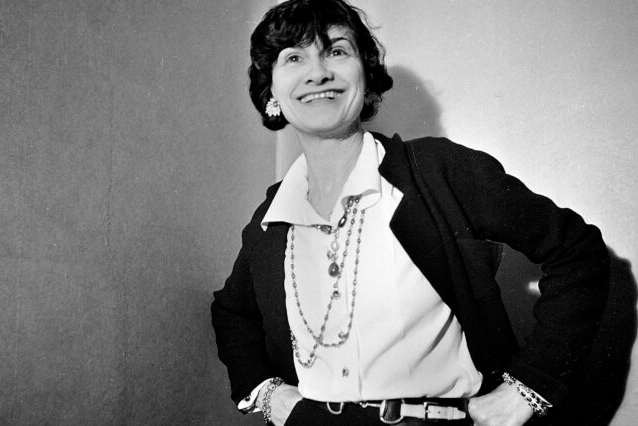
Chanel’s beauty philosophy was as radical as her fashion. At a time when women embraced heavy rouge, elaborate curls, and ornate accessories, Chanel insisted on a look that was clean, fresh, and deceptively simple. Her salon routine reflected the same discipline and restraint that defined her clothing — a beauty routine built on clarity, precision and a refusal to be overdone.

Her preferred complexion regime began with cold cream, a staple of early 20th‑century skincare. Chanel used it not as a luxury but as a practical tool: to cleanse, soften and prepare the skin. She believed beauty started with texture — a smooth, velvety canvas that required minimal correction. After cold cream, she applied powder, never thickly, but in a fine veil that muted shine without masking the face. Her powdering technique emphasized natural contours rather than artificial sculpting, reinforcing her belief that elegance should never feel theatrical.

Chanel’s approach to hair was equally intentional. She rejected elaborate curls and towering coiffures, favouring simple ribbons, low buns and clean lines that framed the face without distraction. Ribbons were not childish in her hands; they were architectural — a way to control movement, maintain symmetry and highlight the neck and jaw. Her hair rituals aligned with her broader look: minimalism with purpose.

In her salons, clients experienced this philosophy firsthand. Treatments emphasized grooming over glamour, freshness over artifice. Chanel’s beauty routines were not about transformation; they were about refinement. She believed a woman’s face should look effortless, modern and free — the same qualities she demanded from her clothes.

I’m Stacey Hobbs, thanks for reading Face by Stace! Until next time.
do you feel fabulous today?
Chanel: The Jersey Revolution (How a Poor Man’s Fabric Became Luxury)

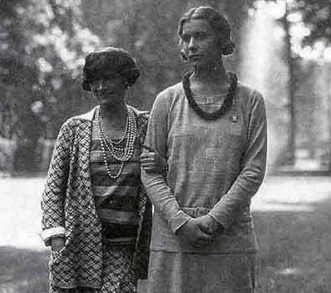
When Chanel introduced jersey into women’s fashion in the 1910s, she wasn’t simply choosing a new fabric, she was re-writing the rules of elegance. At the time, jersey was associated with men’s underwear, sailors’ shirts and utilitarian garments. It was cheap, stretchy and absolutely not considered couture material. No designer of her era would have dared to use it for women’s clothing. Chanel did — and it changed fashion forever.

Her decision came from necessity and instinct. During World War I, traditional dressmaking fabrics were scarce and jersey was one of the few textiles readily available. Chanel, already known for her un-conventional eye, recognized its potential: it draped beautifully, moved with the body and offered comfort at a moment when women were entering the workforce and abandoning restrictive corsetry. She saw modernity in its simplicity.

Chanel’s jersey garments — fluid skirts, relaxed sweaters, sailor‑inspired tops — shocked the fashion establishment. They were un-structured, minimalist and radically comfortable. Women loved them. Jersey allowed Chanel to create clothing that felt effortless, athletic, and liberating, aligning perfectly with her philosophy that elegance should never feel forced. Her designs offered a new silhouette: straight, clean and free from the stiffness of pre‑war fashion.

By elevating jersey, Chanel democratized luxury. She proved that refinement came from design, not from expensive materials. Her jersey revolution laid the foundation for modern sportswear, knitwear, and the casual chic vibe that defines contemporary fashion. What began as a wartime improvisation became one of the most influential innovations in couture history, which was a testament to Chanel’s ability to see beauty where others saw only utility.

I’m Stacey Hobbs, thanks for reading Face by Stace! Until next time.
do you feel fabulous today?
Chanel: Who Funded Chanel (Étienne Balsan & Arthur “Boy” Capel)

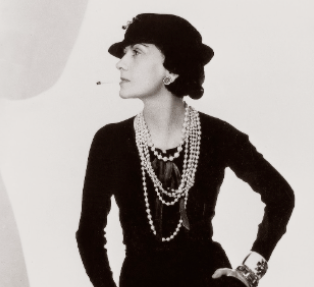
Chanel’s rise from orphanage seamstress to couture legend was not a solitary climb — it was financed, shaped and accelerated by two men whose influence defined her early career: Étienne Balsan and Arthur “Boy” Capel. Their support was not merely romantic; it was strategic, financial and deeply intertwined with Chanel’s transformation into a designer.

Étienne Balsan, a wealthy textile heir and former cavalry officer, was Chanel’s first gateway into elite society. Living on his estate at Royallieu, she observed the relaxed menswear worn by riders, hunters and aristocrats — clothing that would later inspire her signature jersey separates and tailored simplicity. Balsan provided her with space, materials and introductions. He offered her a room to sew hats, access to his social circle and the confidence to imagine a life beyond seamstress work. But Balsan did not fund a business; he opened a door.

The true financier — and the great love of her life — was Arthur “Boy” Capel. A self‑made English businessman with impeccable taste, Capel believed in Chanel’s talent with un-wavering conviction. In 1910, he financed her first boutique at 21 rue Cambon, covering rent, renovations and operating costs. He supported her expansion to Deauville and Biarritz, enabling her to hire staff, purchase fabrics and establish a recognizable brand. Capel’s influence extended beyond money: he refined her look, encouraged her independence and shaped her vision of elegance.

When Capel died in 1919, Chanel was devastated. She later said, “In losing Capel, I lost everything.” Yet his investment had already secured her future. Balsan opened the world to her; Capel built the foundation she would stand on forever.

I’m Stacey Hobbs, thanks for reading Face by Stace! Until next time.
do you feel fabulous today?
Chanel: How She Obtained the Nickname “Coco”

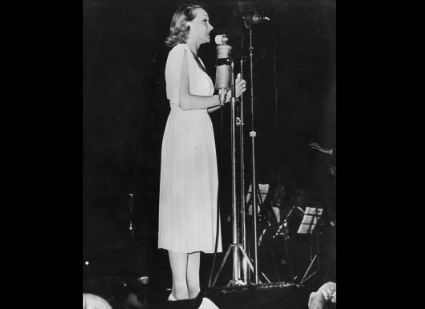
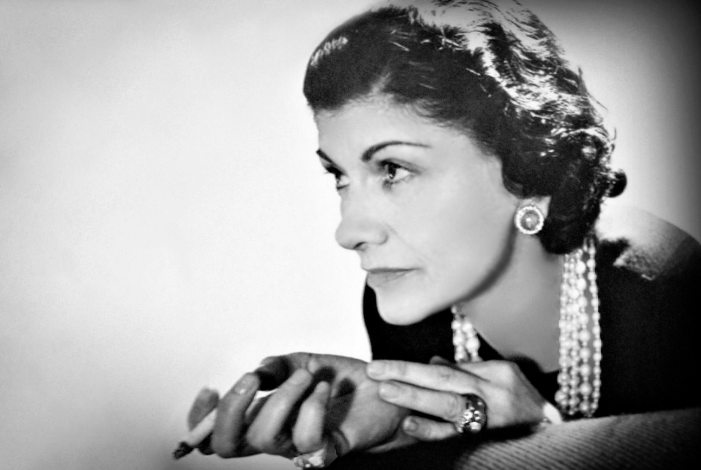
Long before Gabrielle Chanel became the architect of modern fashion, she was a young woman standing on café tables, singing playful cabaret songs to small crowds in Moulins. It was here, not in couture, not in society salons, that she became “Coco.” The name was not bestowed by aristocrats or clients; it was born from performance, humour and a touch of theatrical bravado.

In the early 1900s, Chanel worked as a seamstress by day and performed in local cafés by night. Her repertoire included two lighthearted songs: “Ko Ko Ri Ko” and “Qui qu’a vu Coco?” Audiences, amused by her spirited delivery, began calling her “Coco,” a nickname that blended the titles of her songs with the flirtatious energy she projected on stage. Chanel later claimed the name came from “cocotte,” a term for a kept woman — but this was typical of her habit of re-writing her own mythology, history of her past life. The cabaret origin is the historically supported one.

Gabrielle “Coco” Chanel singing

The nickname stuck because it suited her. “Coco” was bold, modern and memorable — a name that carried confidence and charm. It separated her from her past at Aubazine and from the anonymity of seamstress work. It became her persona, her brand and eventually her empire.

By the time she opened her first boutique in 1910, “Coco” was no longer a stage name; it was an identity. It captured the essence of the woman who would redefine elegance: playful yet disciplined, rebellious yet refined, a creator who understood that style begins with character.

I’m Stacey Hobbs, thanks for reading Face by Stace! Until next time.
do you feel fabulous today?