Chanel: Beginnings (Aubazine, Cabaret, Seamstress, Becoming Coco)

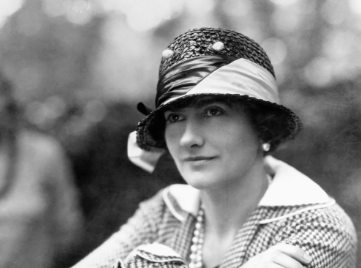
Gabrielle “Coco” Chanel’s beginnings were far removed from the glamour she later defined. Born in 1883 in Saumur, France, she spent her childhood in poverty, moving from place to place with her itinerant parents. Her father left, leaving Chanel’s mother to care for her kids. When her mother died, Chanel and her sisters were sent to the Aubazine orphanage, a stark Cistercian convent whose disciplined environment shaped her lifelong preference for simplicity, order and monochrome palettes. The nuns taught her to sew — a skill that would become the backbone of her future empire.

Gabrielle “Coco” Chanel as a child

As a young woman, Chanel worked as a seamstress in Moulins, stitching hems and mending garments for local clients. In the evenings, she performed in small cafés and cabarets, singing lighthearted songs such as “Ko Ko Ri Ko” and “Qui qu’a vu Coco?” Her spirited performances earned her the nickname “Coco,” a stage name she embraced long before she became a designer. These cabaret years introduced her to the world of leisure, elegance and wealthy patrons — a world she would soon enter more fully.

Her life changed when she met Étienne Balsan, a wealthy textile heir who introduced her to the equestrian elite. In his circle, Chanel observed the relaxed menswear that would later inspire her own designs. But it was Englishman Arthur “Boy” Capel, Balsan’s friend and Chanel’s great love, who financed her first boutique in 1910. Capel believed in her talent, encouraged her independence and helped her transition from seamstress to designer.

Chanel’s beginnings were not glamorous — they were disciplined, improvised and shaped by survival. Yet every element of her early life became part of her look: the convent’s austerity, the cabaret’s confidence, the sewing room’s precision and the borrowed elegance of the men who opened the doors she would soon walk through on her own.

I’m Stacey Hobbs, thanks for reading Face by Stace! Until next time.
do you feel fabulous today?
Ancient Romans & Their Love of Leeks: Food, Beauty, and Imperial Routines

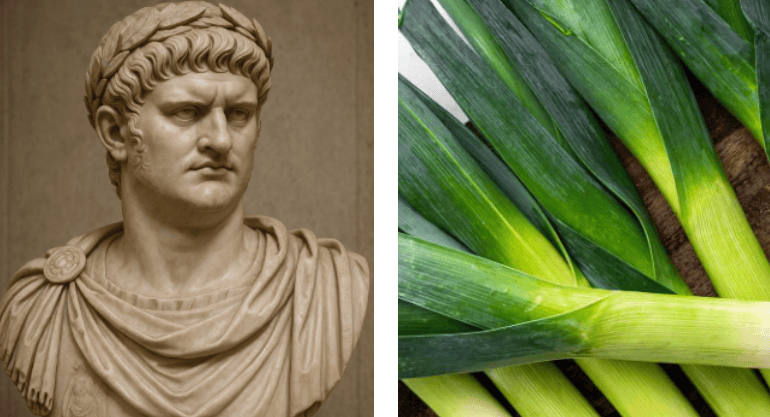
Leeks were more than a humble vegetable in Ancient Rome, they were a cultural staple, a medicinal ingredient and even a beauty ritual. Roman writers like Pliny the Elder describe leeks as one of the empire’s most‑used vegetables, added to broths, porridges, and herb‑oil braises. Their mild flavour made them essential in everyday cooking and Romans likely introduced them to Britain, where they later became symbolic in Welsh tradition.

No Roman is more famously tied to leeks than Emperor Nero. Pliny records that Nero consumed leeks for several days each month to strengthen and clarify his singing voice, earning him the nickname Porrophagus — “the Leek‑Eater.” This practice wasn’t just dietary; it was considered a vocal‑beauty regime. Romans believed leeks supported throat health, breath control and vocal clarity, making them one of the earliest documented beauty‑performance foods.

Roman medical texts also link leeks to complexion, digestion, and internal cleansing. While they didn’t know the science, modern research confirms leeks contain sulfur compounds and antioxidants that support skin clarity and reduce inflammation — aligning perfectly with Roman beauty logic.

From Apicius’ leek recipes to Nero’s vocal rituals, leeks held a unique place in Roman life. They were nourishing, medicinal and symbolically powerful

I’m Stacey Hobbs, thanks for reading Face by Stace! Until next time.
do you feel fabulous today?

Ancient Roman Inspired: Leeks with Dates (Roman Sweet Dish)

While I know my fair share of French recipes that include leeks, since leeks are a common ingredient in French cuisine, I came across all kinds of other recipes over the years from Ancient Roman recipes, which I have transforming into the inspired version, even if the recipes are authentic. I just think and feel food history, much like beauty history has a compelling past. Some of these ancient or historical dishes are worth re-creating. Why? They look delicious. That is the simplistic answer.

This dish is soft, aromatic sweet‑savoury dish inspired by Roman fruit cookery. Leeks are gently braised until tender, then paired with chopped dates, herbs and a drizzle of honeyed olive oil. The result is a warm, glossy, sweet dish that reflects the Roman love of fruit‑vegetable combinations — luxurious, rustic and deeply rooted in ancient Mediterranean flavour logic.

Prep 10 min Cook 15 min Serves 4

Roman Stuffed Dates: Sweet & Spicy Ancient-Inspired Treat
Roman Stuffed Dates: Sweet & Spicy Ancient-Inspired Treat/quickandsweetrecipes.com

Ingredients

2 large leeks, cleaned and sliced
12 Medjool dates, pitted
3 tbsp honey
2 tbsp white wine vinegar
2 tbsp olive oil
2 tbsp pine nuts
1 tbsp fresh herbs (mint, dill, or lovage)
Pinch sea salt

Instructions

  1. Prepare the leeks
    Trim, clean and slice the leeks. Sauté them gently in olive oil until soft and fragrant.
  2. Make the sweet-sour glaze
    Whisk honey and white wine vinegar together until glossy. Add a pinch of salt.
  3. Warm the dates
    Add dates to the pan with the leeks and pour the honey-vinegar mixture over top.
  4. Simmer
    Cook on low heat for 5–7 minutes until the dates soften and the glaze thickens.
  5. Finish with herbs
    Sprinkle pine nuts and fresh herbs over the dish before serving.

Beauty Benefits

  • Dates: rich in antioxidants that support collagen and glow
  • Leeks: sulfur compounds that help clarify the skin
  • Olive oil: healthy fats for moisture retention
  • Herbs: anti‑inflammatory properties that calm redness

This dish is naturally hydrating and glow‑supportive.

Health Benefits

  • High fibre from dates + leeks
  • Natural sugars balanced with healthy fats
  • Gut‑supportive prebiotics
  • Anti‑inflammatory herbs
  • Gentle digestion from warm, soft textures

Substitutions (Historically Accurate)

  • Dates → dried figs (Romans used both frequently)
  • Honey → date syrup (another Roman sweetener)
  • Mint → coriander or lovage
  • Olive oil → infused herb oil (Romans often infused oils with herbs)

Storage

  • Fridge: 3 days
  • Reheat: low heat, add a splash of water
  • Freezer: not recommended — dates become mushy
  • Sauce thickens beautifully over time

History

Dates were a prized Roman ingredient, imported from North Africa and the Near East. Romans stuffed dates with nuts, drizzled them with honey, and paired them with herbs — a combination documented in early culinary and agricultural texts. Leeks were a daily staple, appearing in Apicius and in stories about Emperor Nero, who famously consumed them for vocal clarity. Combining leeks with dates mirrors the Roman preference for sweet‑savoury dishes that balanced nourishment with pleasure.

I’m Stacey Hobbs, thanks for reading Face by Stace! Until next time.
do you feel fabulous today?

Chanel: Wartime Closure (1940–1944)

When Paris fell under German Occupation in June 1940, Gabrielle “Coco” Chanel made one of the most controversial decisions of her career. That decision was for her to close her couture house. At the height of her influence with 4,000 employees and a global reputation, Chanel abruptly declared, “Fashion is not important right now.” Her salons went dark, her ateliers emptied and her mannequins were stored away. For the first time since 1910, Chanel stepped back from the world she had dominated. Risking more than she would ever realize but would later discover upon returning in 1954.

Her decision was not purely patriotic or symbolic. Chanel had long resented the powerful unions within her workforce and the war offered a convenient moment to halt operations without negotiation. She dismissed her employees overnight, a move that would haunt her reputation for decades. While other couturiers — including Lelong, Balmain, and later Dior — kept Parisian fashion alive during the occupation, Chanel retreated entirely from couture.

During these years, she lived at the Ritz, a hotel favoured by high‑ranking German officers and entered a relationship with Baron Hans Günther von Dincklage, a German diplomat. This association further complicated her legacy, intertwining her personal life with the political tensions of wartime Paris. Her perfume business, however, continued to operate, controlled largely by the Wertheimer family, a fact that frustrated Chanel, who attempted to use wartime laws to regain ownership.

By 1944, as liberation approached, Chanel’s wartime choices cast a long shadow. Her closure symbolized both withdrawal and survival — a pause that allowed her to re-emerge in 1954 with a radically modern vision. But the years she spent away from couture remain one of the most debated chapters of her life.

I’m Stacey Hobbs, thanks for reading Face by Stace! Until next time.
do you feel fabulous today?

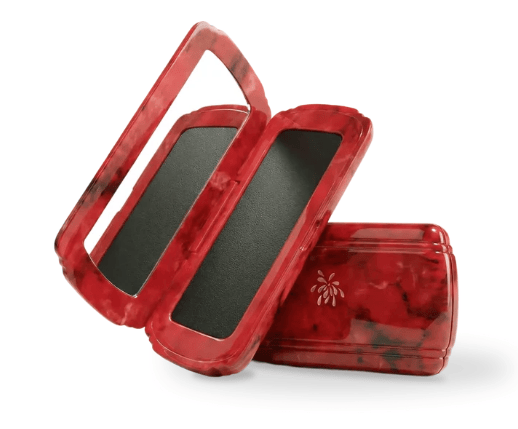
Best-Selling and Fave: Besame Aero Slim Refillable Cake Mascara with Refill

Cake mascara! The very first modern mascara to ever hit the market. A mascara that was invented or as some may say, innovate was Maybelline in 1917, just two years shy after developing their company in 1915, in Chicago, before transferring their company to New York. Maybelline is known for their mascaras, still to this day. I am getting ahead of myself. When Maybelline produced their mascara which came in cake form only, Max Factor quickly had to jump on the bandwagon. Of course, have to give the new kid on the block competition. After all, Maybelline cake mascara was selling like hot cakes. Everyone from women to makeup artists wanted to get their hands on this new modern type mascara. What has changed today with mascara? Not much. The applicator and product as remained the same, even if the formula has become liquid, you still need an applicator, in this case a wand to apply the formula.

If you really want to know the impact on the flapper culture story about Maybelline, check it out here.
Then you may want to check the origin story about Maybelline’s story here.
Oh, there is just one more delicious story you may find yourself to be interested in here.
Well, that is about it on the back story of Maybelline. Hope you enjoyed it 🙂
Oh, let’s not forget, cake mascara. Interested in reading more about why cake mascara was the king of all mascaras? Of course you are :), Check it out!

So, when Besame cosmetics decided to produce cake mascara that resembles as closely as possible to the actual formula from back in the day, is it any surprise how difficult it is for Besame to retain this formula in stock? Besame’s version can be used in multiple ways: cake mascara, cake liner, to fill in brows (I have yet try cake mascara or cake liner on the brows. I’m not saying it isn’t effective, I just have not tried it yet. Something new to discover.) and to even touch up roots, Besame claims.

With only seven ingredients, Besame’s formula includes a natural wax that flexes with the skin to prevent flaking, peeling or clumping.

The shade of blue has joined the cake mascara family. While the formula that has made this product ever so popular has maintained. Brushes are sold separately and can be found here.

Aero Slim Refillable Cake Mascara with Refill

A century-old beauty secret. A 3-in-1 Cake Mascara, that is water-activated made with only seven clean ingredients. Gentle on sensitive eyes, endlessly versatile. Brushes sold separately.

Shades Aero Slim Refillable Cake Mascara comes in: Black, Brown and now Blue.

Additional Information
Mineral oil free
Paraben free
Not tested on animals
Gluten free
Fragrance free
Vegan
Made for sensitive eyes

Price: $52

For more information, please visit: besamecosmetics.com

Have you tried Besame Aero Slim Refillable Cake Mascara with Refill? Please, let me know, I’d love to hear from you!

I’m Stacey Hobbs, thanks for reading Face by Stace! Until next time.
do you feel fabulous today?

Ancient Roman Inspired: Leeks with Fennel & Celery Leaf (Roman Herb Dish)

This dish is a bright, herb‑forward Roman vegetable dish built around leeks, fennel, celery leaf and a simple olive‑oil vinaigrette. The flavours are clean, aromatic and deeply Roman — earthy leeks lifted by fennel’s anise notes and celery leaf’s herbal sharpness. This is a minimalist, elegant interpretation of Roman herb cookery.

Prep 10 min Cook 20 min Serves 4

Leeks Vinaigrette Recipe | Natalie Penny | Fennel and lemon, Fennel recipes with fennel seeds ...
Leeks Vinaigrette Recipe | Natalie Penny | Fennel and lemon, Fennel recipes with fennel seeds …/www.pinterest.com

Ingredients

3 large leeks, halved lengthwise
2 tbsp olive oil
1 tsp mustard seeds
1 tsp fennel seeds
2 tbsp white wine or posca
2 tbsp fresh celery leaves
1 tbsp fresh dill or lovage
Pinch sea salt
Pinchred pepper flakes (optional)

Instructions

  1. Prepare the leeks
    Clean and trim the leeks, keeping them halved lengthwise for elegant plating.
  2. Sauté gently
    Warm olive oil in a pan and sauté the leeks until tender and lightly golden.
  3. Add Roman herbs
    Sprinkle mustard seeds and fennel seeds into the pan, letting them bloom in the oil.
  4. Deglaze
    Pour in white wine (or posca) and simmer until reduced and aromatic.
  5. Finish with greens
    Top with celery leaves, dill, and a pinch of salt. Add red pepper flakes if desired.

Beauty Benefits

  • Fennel: antioxidant‑rich, supports skin calmness
  • Leeks: sulfur compounds for clarity
  • Olive oil: glow‑boosting healthy fats
  • Celery leaf: mineral‑rich, supports hydration

A gentle, skin‑supportive vegetable dish.

Health Benefits

  • Anti‑inflammatory herbs
  • High fibre
  • Digestive support from fennel
  • Heart‑healthy olive oil
  • Naturally low‑glycemic

Substitutions (Historically Accurate)

  • Fennel → lovage or dill
  • Celery leaf → coriander leaf
  • Vinegar → posca (vinegar diluted with water)
  • Olive oil → herb‑infused oil

Storage

  • Fridge: 2–3 days
  • Reheat: warm gently or serve chilled
  • Freezer: not recommended — leeks soften too much

History

Romans used herbs extensively — lovage, dill, fennel, coriander, celery leaf — to season vegetables. Leeks were one of the most consumed alliums in the empire, appearing in broths, porridges, braises and herb dishes. Fennel was both a culinary and medicinal plant, praised for digestion and flavour. This dish reflects Roman agricultural writing, where vegetables were prepared simply with herbs, oil and acidity, allowing their natural flavours to shine.

I’m Stacey Hobbs, thanks for reading Face by Stace! Until next time.
do you feel fabulous today?